REVIEW · CHANIA
Chania: Authentic Cooking Class
Book on GetYourGuide →Operated by Chania Cooking Class · Bookable on GetYourGuide
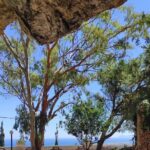
Cook dinner under olive trees. It’s a Chania cooking class where Veerna invites you into her home setting in Nerokourou and turns a Mediterranean meal into hands-on fun, starting with lamb roasting for over two hours in a wood-fired stone oven.
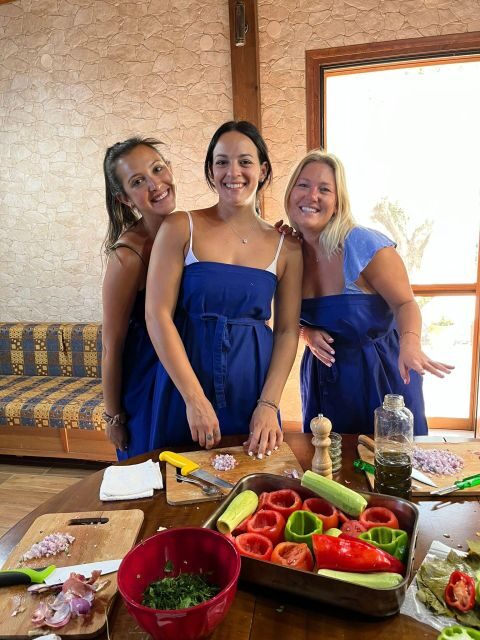
What I like most is the garden-to-plate approach: herbs and vegetables come from the garden or local farmers, and you actually pick ingredients for the stuffing. The other thing I really value is learning the techniques, not just eating well—things like rolling grape leaves and shaping kalitsounia dough.
One consideration: this isn’t a city-center class. It’s about 10–15 minutes from the center, so you’ll want a taxi or a paid transfer, and the ride can be shared in a semi-private setup.
In This Review
- Quick hits
- Where the class feels like family, not a factory
- The welcome and menu talk: how they set you up for success
- Thieves dinner in a wood-fired stone oven: the slow-roast moment
- Dolmades and stuffed vegetables: herb garden work and careful rolling
- Kalitsounia time: dough, rolling pins, and wild greens
- Appetizers first: tzatziki and dakos while the oven works
- Dinner on the table: local wine, raki, and finishing with dessert
- Getting there from central Chania without stress
- Who this cooking class is perfect for
- Price and value: is $129 really fair?
- Tips so you enjoy every minute of the 4 hours
- Should you book this Chania cooking class?
- FAQ
- How long is the Chania cooking class?
- Where is the cooking class located?
- Is transportation included?
- Will the class be taught in English?
- What will I cook during the class?
- Are wine and raki included?
- Is dessert included?
- Is the class wheelchair accessible?
- Is a vegetarian option available?
- Can I get a refund if my plans change?
Quick hits
- Garden picking with real stuffing prep for dolmades and stuffed vegetables
- Wood-fired stone oven timing keeps the pace moving while the lamb cooks
- Hands-on rolling skills for grape leaves and kalitsounia pies
- Thieves dinner history explained alongside the lamb you’ll make
- Tzatziki and dakos as taught appetizers you get to eat right away
- Local wine and raki with dessert at the table, not as an afterthought
Where the class feels like family, not a factory
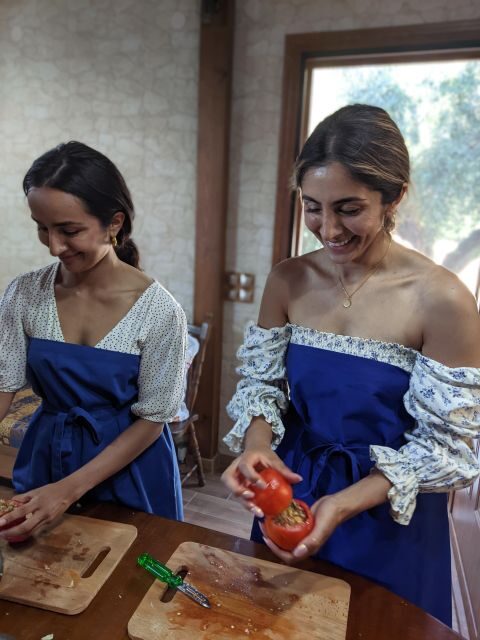
This is one of those Chania experiences that doesn’t feel staged. The cooking happens in a family home and olive-orchard setting just outside the center, in the neighborhood of Nerokourou. Right from the start, you’re treated like you’re joining the day, not signing up for a performance.
You’ll be greeted with a homemade refreshment or a Greek coffee, plus cookies. It sounds simple, but it sets the tone. Instead of rushing straight into chopping, you get a few minutes to settle in and start meeting the group.
And yes, the names matter here. Veerna is the main host and teacher. Her family is involved too—Kostas and other assistants show up, and you’ll feel the warm, busy rhythm of a real household running a real kitchen.
You can also read our reviews of more cooking classes in Chania
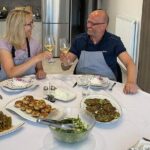
The welcome and menu talk: how they set you up for success
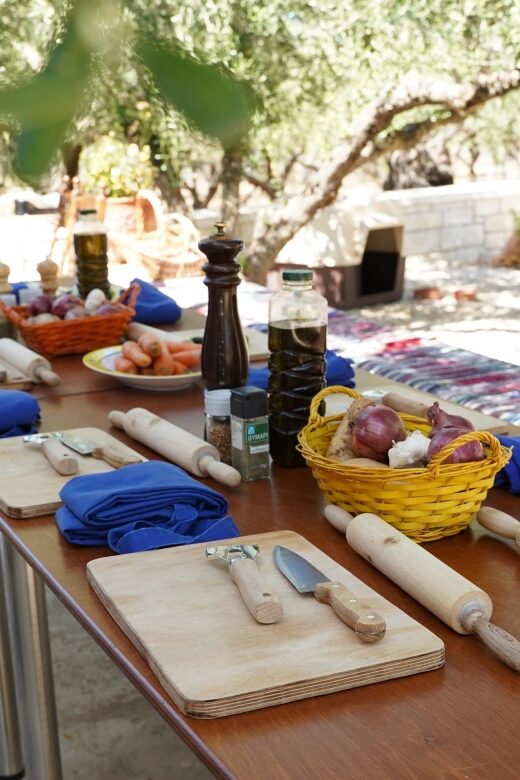
The first part is all about easing you in. You’ll sip your drink, snack on cookies, and get introduced to the Mediterranean-based menu. This matters because it tells you what you’re working toward: a full Cretan meal built around herbs, vegetables, olive oil, and slow-roasted meat.
Once you’re oriented, you start cooking in a sequence that makes sense for an oven-centered meal. The class isn’t just about recipes; it’s also about timing and order—when something should go into the oven, when dough should rest, and when you can switch tasks.
If you’ve ever taken a cooking class where everything feels rushed, this one tends to have a steadier rhythm. The lamb goes first so the oven time becomes your work window for the other dishes.
Thieves dinner in a wood-fired stone oven: the slow-roast moment

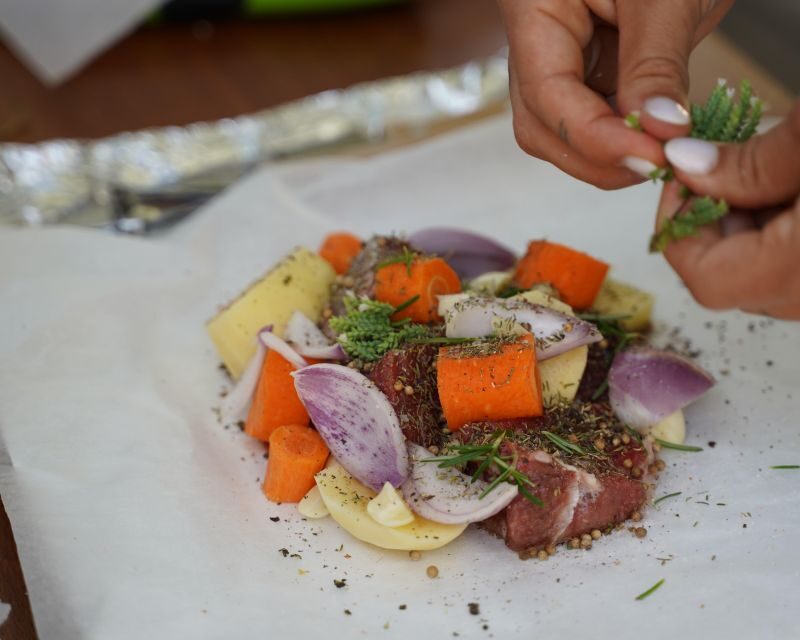
The first dish you prepare is oven-roasted lamb—part of what’s called the thieves dinner. It’s not just a cool nickname. You also get the historic significance of the dish, which gives the cooking a story you can actually remember.
Here’s why that lamb-first approach is smart: it cooks for over two hours in a wood-fired stone oven. While it roasts, you’re not left standing around with nothing to do. You move on to other items, so you stay busy during the time the oven is working.
For you, this means two things:
1) You learn the “why” behind the method, not just the steps.
2) You get a class flow that feels more like a shared kitchen day and less like a timed checklist.
Dolmades and stuffed vegetables: herb garden work and careful rolling
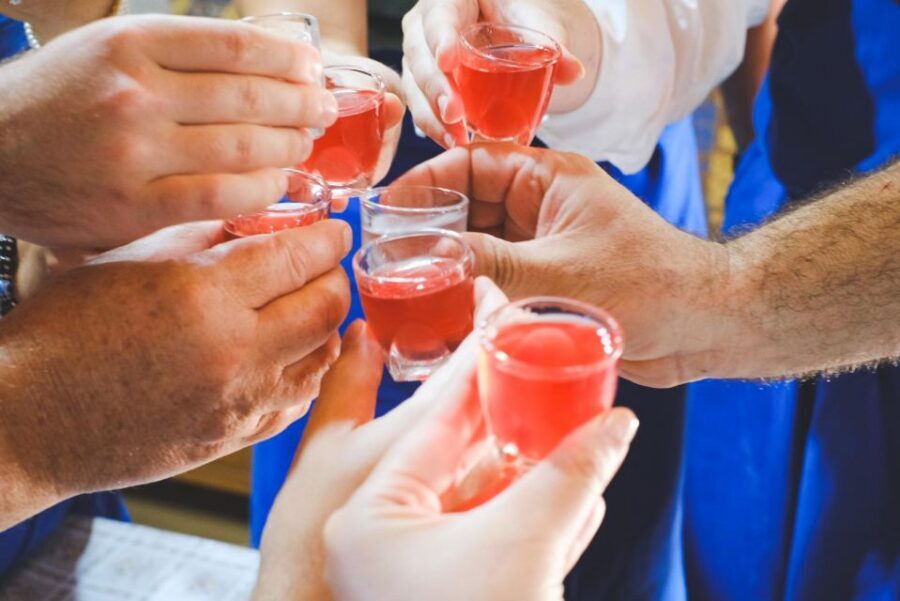
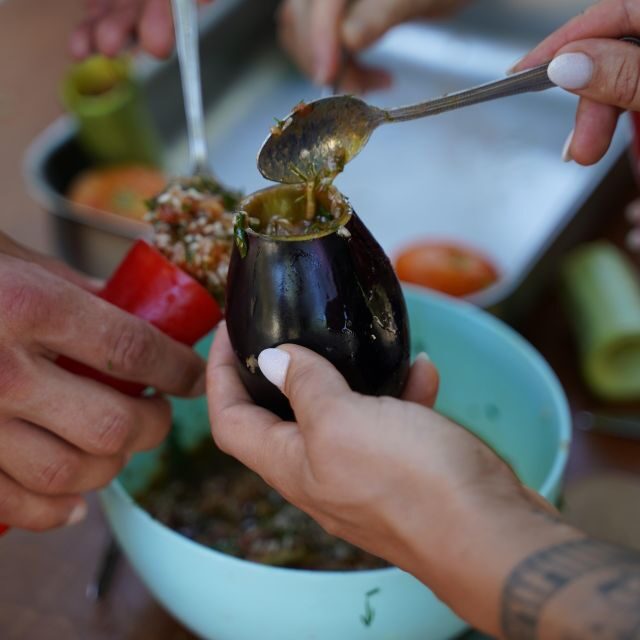
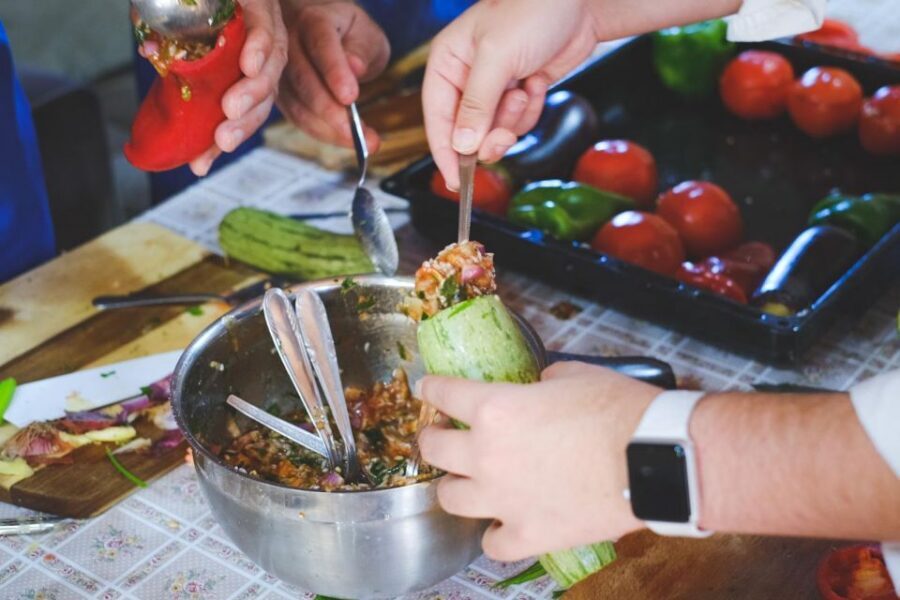
After the lamb gets going, you switch into the more delicate, hands-on Cretan cooking. You’ll make stuffed vegetables and stuffed grape leaves (dolmades).
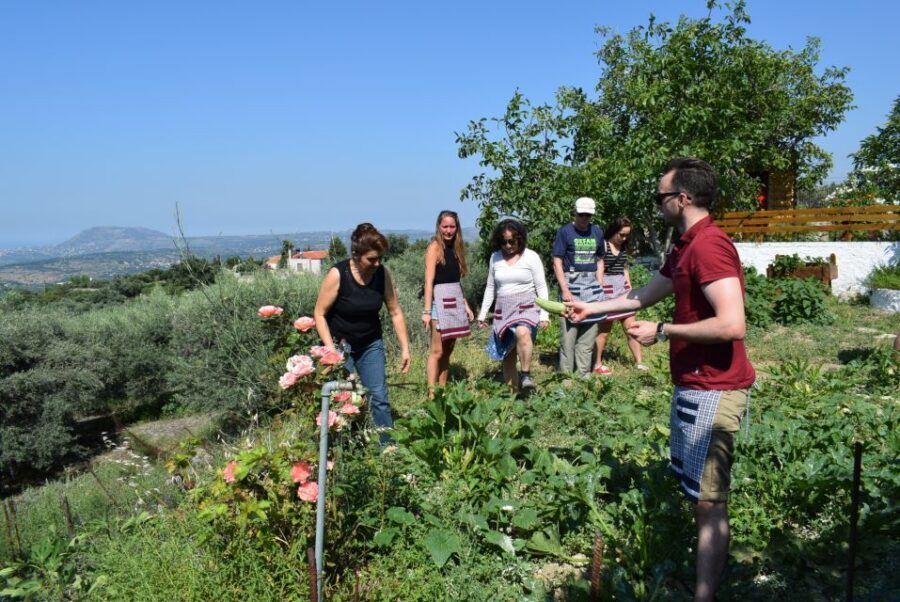
The best part of this segment is that you gather ingredients. You’ll pick herbs and vegetables from the garden for the stuffing. That makes the flavors feel more grounded, and it also teaches you a key Mediterranean habit: build the filling around fresh aromatics, not packaged shortcuts.
Dolmades are where technique shows up. Rolling grape leaves takes a steady hand and patience. You’ll learn the approach and the feel—how to size the filling, how to fold, and how to roll so they hold together through cooking. For me, that’s one of the most satisfying skills in the whole class because it’s practical. When you get it right back home, you’ll taste the difference.
What to watch for as you cook:
- Expect the rolling to take time. If yours isn’t perfect on the first try, that’s normal.
- Keep your fingers organized. The food work can get messy, and you’ll be handling dough and fillings later too.
- Don’t aim for speed. This is the kind of dish where careful work pays off.
Kalitsounia time: dough, rolling pins, and wild greens
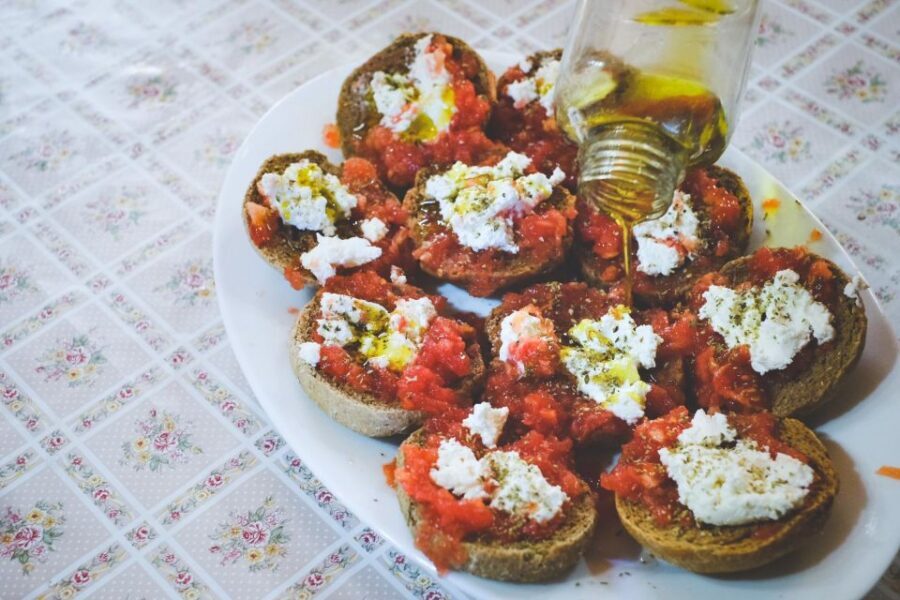
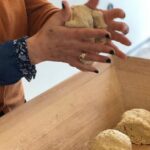
Next comes kalitsounia, traditional pies made with a dough you’ll roll out using rolling pins. This is the moment where the class shifts from vegetable prep into a more pastry-style workflow.
You’ll fill the pies with cheese and wild greens. That combination is very Cretan in spirit—simple ingredients treated with respect. And because you’re making the dough and shaping the pies yourself, you’re learning the texture you want, not just copying a final result.
The class also does something I appreciate: they let you practice. You’re not rushed into putting everything in the oven immediately. You shape, fill, and get confident with the process before the baking takes over.
Even if you’ve never worked with dough like this, the guidance is structured so you’re not lost. One of the repeated positives from the experience is that the recipes and instructions are accessible enough to try again when you’re back home.
You can also read our reviews of more tours and experiences in Chania
Appetizers first: tzatziki and dakos while the oven works
After the heavier rolling and pie shaping, the class brings you into a smart rhythm: appetizers are prepared last but enjoyed first. You’ll make tzatziki and dakos—simple, familiar ingredients, but done with real care.
Why this order works for you:
- It gives you an earlier break to taste what you’re building toward.
- It keeps the evening from dragging while the oven is finishing the main dishes.
- You get a chance to understand how the flavors relate—cool yogurt, crisp textures, olive-oil depth—before the full meal hits the table.
If you love the idea of recreating Greek flavors at home, this is the portion that translates best. These are dishes you can make without special gear, and you’ll understand the balance of ingredients in a hands-on way.
Dinner on the table: local wine, raki, and finishing with dessert
Now you eat what you made. The class turns into a full sit-down meal with copious amounts of local wine and raki. It’s not a small tasting plate. It’s a proper Cretan dinner built from the dishes you learned—lamb, stuffed vegetable items, dolmades, kalitsounia, and the appetizers.
This is also when the family atmosphere clicks into place. You’re not just consuming. You’re sharing the meal with the people who taught you, and you’ll hear more stories while you eat.
And please leave room for dessert. Something sweet is always offered at the end, which makes the last stretch feel like a true finish line instead of a polite wrap-up.
Practical tip: if you’re the type who wants to stay sharp for the drive back, pace the wine and raki. The food is filling, and the evening includes several cooking stages before you sit down.
Getting there from central Chania without stress
Here’s the plain logistics: the class is 10–15 minutes from the center of Chania, in Nerokourou. Transportation isn’t included in the base price, but there is pickup information tied to the exact location, and transfer service is available for an extra fee depending on where you are.
If you’re driving, park along the fence. If you’re using a taxi, it’s easy enough to reach with the address link you’ll have.
The ride is semi-private. They use a 9-seat van and a 5-seat EV, so you might share transport with other guests if you’re picked up with a group heading to the same class time.
This matters because it affects the feel:
- You still get a family-run cooking experience once you arrive.
- But you might not have a silent, personal commute.
Who this cooking class is perfect for
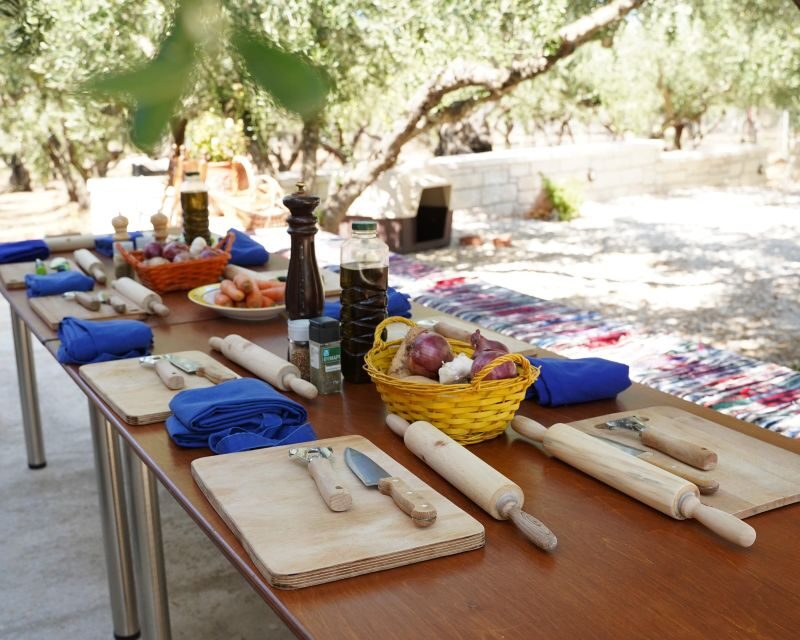
This is a great fit if you want more than a meal. You’ll learn skills you can repeat: rolling dolmades, shaping kalitsounia dough, and understanding how to plan oven timing. It’s also a good choice if you like the Mediterranean diet approach—fresh herbs, simple fillings, and comfort food that doesn’t feel heavy for the sake of being heavy.
It’s also family-friendly in practice. One group with teens said everyone ate the vegetables and had fun cooking together, which tells me the instructions and pace aren’t limited to adults.
You might enjoy this class most if you:
- want a Cretan home experience just outside the city center
- like hands-on technique more than watching from the sidelines
- don’t mind a semi-private group setting
- enjoy wine or at least don’t mind it being part of the meal
Price and value: is $129 really fair?
At $129 per person for about 4 hours, you’re paying for three things: instruction, ingredients, and a full meal with drinks.
Compared with many “hands-on” classes, the value here comes from the scope. You don’t just make one dish. You learn multiple Cretan staples and then eat them with generous wine and raki. You also aren’t stuck with pre-chopped mystery ingredients; you gather herbs and use produce from the garden or local farmers.
Is it expensive for some budgets? Yes. But it’s also not a quick demo with a small tasting. You get a full meal, a structured workflow, and recipes you can use later—so you leave with both memories and repeatable cooking knowledge.
If your priority is a cheap activity, keep looking. If your priority is a real-food, teach-me-to-cook day, this is priced in a sensible zone for what’s included.
Tips so you enjoy every minute of the 4 hours
A few small moves help a lot:
- Wear clothes you don’t mind getting flour or dough on. You’ll handle dough and fillings.
- Bring a plan for photos. One realistic note: hands get messy, so take photos early and then again when you’re cleaner.
- Ask questions during the oven timing. The lamb slow-roast gives a natural window for explanations about dishes and traditions.
- Pace the drinks. The combination of long cooking and a full sit-down dinner is a lot in the best way.
- If you need dietary adjustments, mention it ahead of time. A vegetarian alternative is provided for those who need it.
Also, be ready for the class to feel social. People often enjoy the family vibe and the chance to meet others, and the shared cooking tasks make it easy to talk without awkwardness.
Should you book this Chania cooking class?
If you want one “do-it-once” experience that feels like Cretan life—family kitchen, wood-fired oven, garden herbs, and a meal you help create—this is a strong yes.
Book it if:
- you enjoy hands-on cooking and want repeatable skills
- you like the idea of slow-roasting lamb while you learn other techniques
- you’re okay with a short drive outside the center and possible shared transport
Skip it if:
- you need a class in the middle of Chania with zero planning for transport
- you’re looking for a very private, no-sharing experience
- you’d rather take photos than get your hands dirty (this is a cooking class, not a museum stop)
If you’re deciding today, my advice is simple: pick this class when you can arrive relaxed and hungry. The best results come from showing up ready to cook, snack, learn, and then enjoy the meal the way it was meant to be enjoyed.
FAQ
How long is the Chania cooking class?
The class lasts about 4 hours.
Where is the cooking class located?
It’s about 10–15 minutes from the center of Chania, in the neighborhood of Nerokourou. You can park along the fence.
Is transportation included?
Transportation isn’t included in the price. Transfer service is available for an extra fee depending on your location, and pickup details are provided for the exact location.
Will the class be taught in English?
Yes. The instructor teaches in English.
What will I cook during the class?
You’ll cook oven-roasted lamb (the thieves dinner), stuffed vegetables, stuffed grape leaves (dolmades), kalitsounia, and appetizers including tzatziki and dakos.
Are wine and raki included?
Yes. There are generous amounts of local wine and raki included with the meal.
Is dessert included?
Yes. Something sweet is always offered at the end.
Is the class wheelchair accessible?
Yes, the activity is wheelchair accessible.
Is a vegetarian option available?
A vegetarian alternative is provided for those who need it.
Can I get a refund if my plans change?
There is free cancellation up to 24 hours in advance for a full refund.