REVIEW · CHANIA
Chania: Knossos Palace – Archaeological museum!
Book on GetYourGuide →Operated by Travel in Chania · Bookable on GetYourGuide
Knossos in one packed day feels doable. This tour pairs a guided Knossos Palace experience with time at Heraklion’s Archaeological Museum, so you get the story and the artifacts without stitching together your own day. I love the early start with an A/C bus and the photo time built into the Knossos visit. The main drawback to plan around is that pickups and drop-offs across Chania can stretch the day longer than the posted 10 hours.
You’ll leave your hotel (or near it) around 7:00, stop for coffee, reach Knossos around 10:00, then spend a guided 2 hours at the palace plus a bit of free time. After that, the program shifts to Heraklion for walking, lunch options, and a museum visit, with a short break on the return before you’re back around 18:00.
In This Review
- Key things I’d watch for on this day trip
- From Chania to Knossos: early pickup and that A/C ride
- Coffee stop plus pickup logistics: where time can slip
- Entering Knossos Palace: how the guide helps you read the site
- What Knossos is really about: myths and real archaeology
- Practical Knossos tips: dirt paths, steps, and photo time
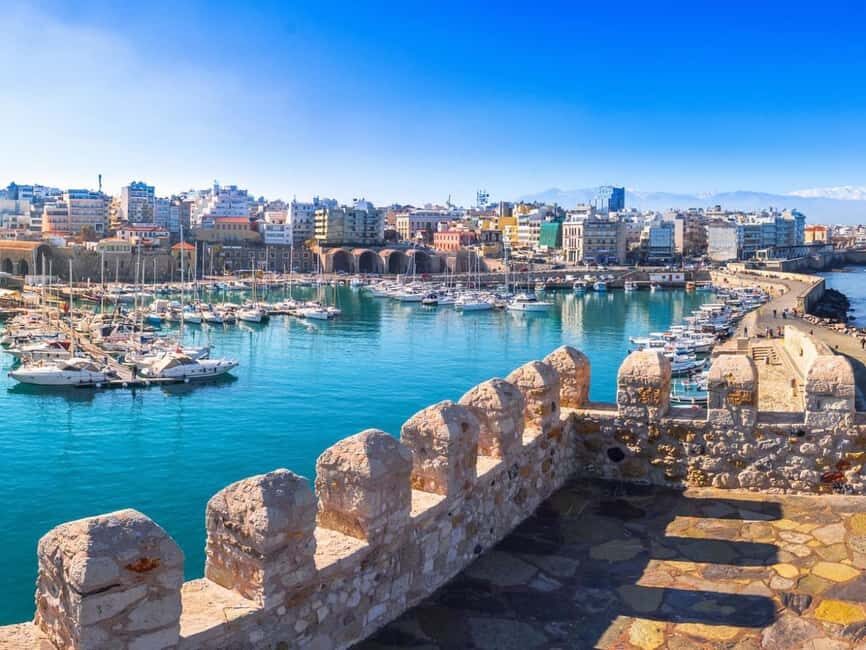
- Heraklion city stop: Lions Square, Agios Minas, and time for strolling
- Archaeological Museum of Crete: making 1.5 hours count
- Rethymno break on the way back: a short reset
- Price and real value: what $80 covers and what it doesn’t
- Who this tour fits best (and who should reconsider)
- Should you book the Knossos Palace and Heraklion museum day trip?
- FAQ
- How long is the tour?
- When does the day start?
- Is there a guided tour at Knossos Palace?
- Are entrance fees included?
- Do I skip the ticket line?
- How much free time do I get in Heraklion?
- Is there a visit to the Archaeological Museum of Crete?
- Is food included in the price?
- What should I bring, and what should I wear?
- Is the tour suitable for babies?
Key things I’d watch for on this day trip
- Guided Knossos Palace tour focused on how to read the ruins and the myths behind them
- Pickup and drop-off near your accommodation in multiple Chania areas (more convenience, sometimes more time)
- Skip-the-ticket-line for Knossos, plus listed entrance fees for the museum and palace
- Real walking at Knossos on dirt paths and up steps, so comfy shoes matter
- Heraklion old-town structure: you get time to orient yourself around Lions Square and Eleftherias Square
- Time-management depends on logistics: the itinerary can run long when pickup routes multiply
From Chania to Knossos: early pickup and that A/C ride
This is a one-day history hit, starting with a hotel pickup around 7:00 in the morning. That early departure is smart. By the time you reach Knossos later in the morning, you’re not wasting daylight sitting around. It also means you’re less likely to feel like you lost the whole day to transfers.
The transport is a new, luxury A/C bus, which you’ll appreciate once you leave the cooler morning behind. Add in the included coffee stop of about 20 minutes, and the ride feels less like a grind and more like part of the day’s rhythm. Still, don’t ignore the one real tradeoff: Chania pickups can be spread out, and that can influence timing later.
You can also read our reviews of more museum experiences in Chania

Coffee stop plus pickup logistics: where time can slip
Here’s the truth about day trips like this: the big variable is not Knossos. It’s the number of people being collected and dropped off.
The tour uses multiple pickup locations (for example, places like Kriti Hotel, Civitel Akali Hotel, Halepa Hotel, SanSal Boutique Hotel, and the bus stop Agora) and then returns you to several drop-off points. That’s convenient on paper. It also means the bus route can expand like a spider web, especially if you’re not first in the pickup line.
The itinerary is listed as about 10 hours, with a planned return around 18:00. But the day can run longer in real life when pickups are dense. My practical advice: treat the 10-hour estimate as the starting point, not a promise. If you have evening plans booked, schedule them with a buffer, or be ready to shift them.
Also, watch your timing closely the morning of departure. If your ticket and the operator’s call ever conflict, follow the most specific, last-minute message you receive. That single mistake costs you time at the meeting point.
Entering Knossos Palace: how the guide helps you read the site
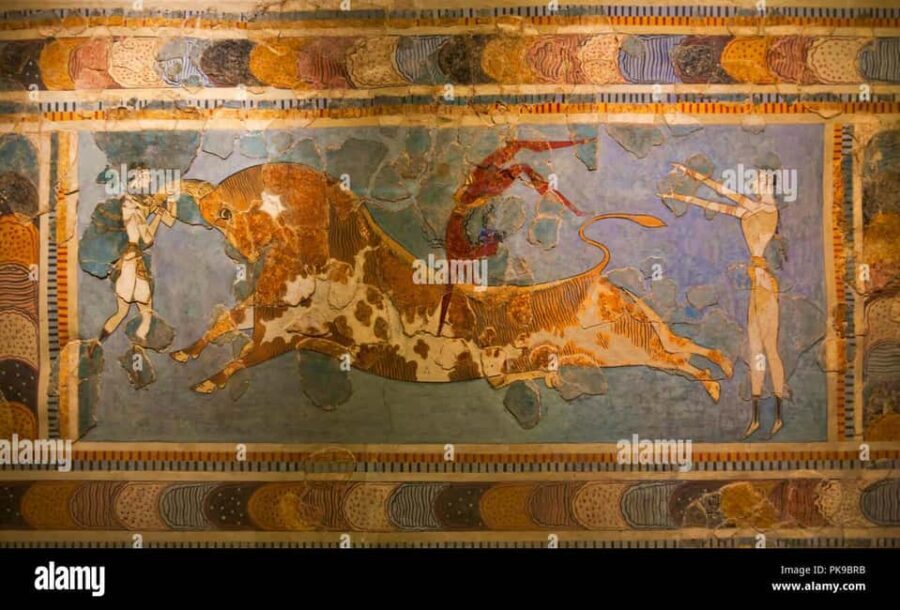
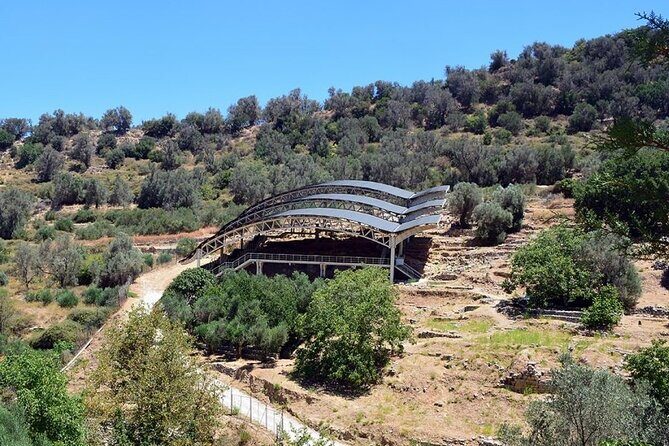
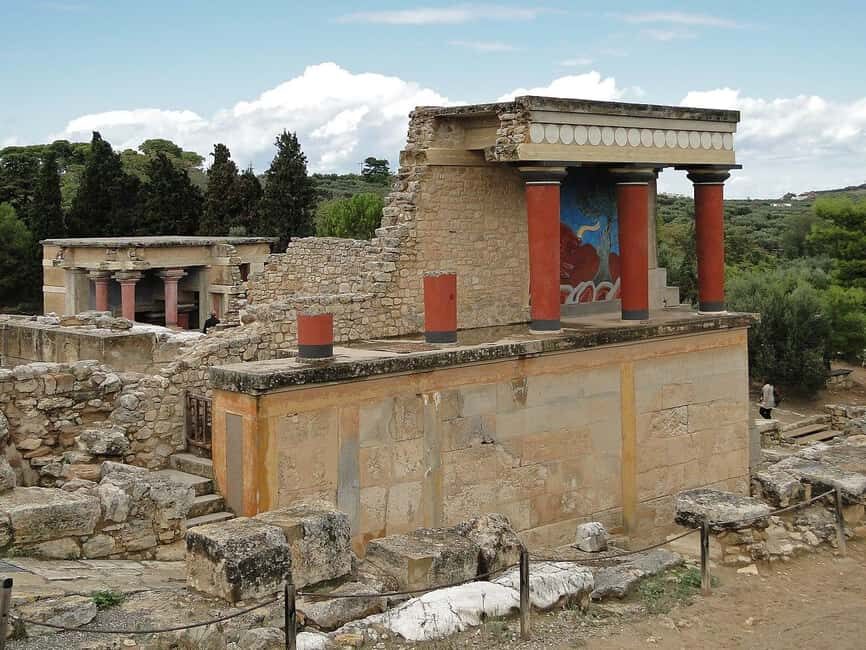
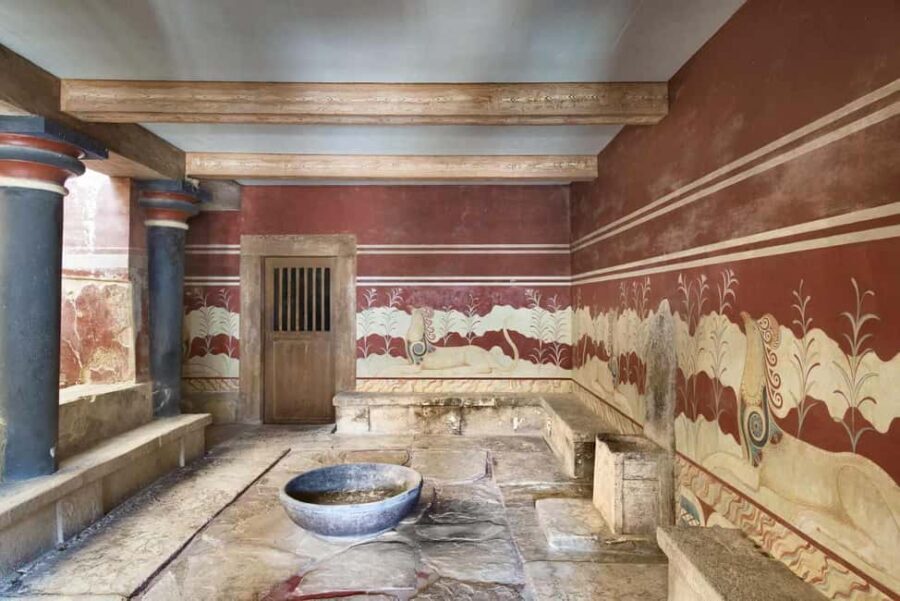
Knossos is the headline. It’s the most significant palace associated with the Minoan civilization, traditionally tied to King Minos and the labyrinth myth with the Minotaur, Daedalus, and Icarus. But the real value of a guided tour here isn’t just knowing the names. It’s learning how to look at what’s in front of you and connect it to what the site used to be.
Your Knossos portion is a guided visit lasting about 2 hours. That time matters because Knossos can feel like a jumble of stones if you arrive with no map in your head. A good guide turns the walking into a set of patterns: where daily life would have happened, why certain parts matter, and what makes the site special beyond its myth fame.
You also get free time for photos after the guided segment. This is a great balance. You’re not trapped following someone’s pace the whole time. You can step back, reframe your shots, and linger on the details that catch your eye once you know what you’re looking at.
What Knossos is really about: myths and real archaeology
Knossos isn’t only legend. It’s layers.
The palace site was inhabited from the Neolithic period to Roman times, and it reached renewed importance during the Hellenistic period, when it was taken by the Roman commander Quintus Caecilius Metelus Creticus in 67 B.C. In other words, the place keeps getting reused. That makes the ruins feel like a conversation across centuries, not a single frozen moment.
It was discovered in 1878 by Minos Kalokairinos, and then excavated from 1900 to 1931 by Arthur Evans. Evans is also connected to the restoration work that you’ll see referenced on-site. When you stand among the partial reconstructions, the guide can help you separate what’s ancient from what’s interpretive rebuilding, which keeps your visit grounded.
If you like stories you can actually verify, Knossos is the kind of place where the guide’s structure makes the myths feel less like a sideshow and more like a human way of remembering what mattered here.
Practical Knossos tips: dirt paths, steps, and photo time
Knossos comes with a heads-up: it’s not a smooth, flat museum floor. The route includes a dirt path and you’ll need to climb some steps. Comfortable shoes are the difference between a fun walk and a stiff-knee finish.
Bring a camera. You’ll want it, not just for the big sweeping views, but for the texture of the site and the way the restoration shapes your perception.
One more practical point: don’t count on food during the palace portion. Food and drinks are listed as not allowed, and the day does not include meals. So plan to eat during your scheduled breaks, not in the middle of the archaeology.




Heraklion city stop: Lions Square, Agios Minas, and time for strolling
Once you leave Knossos, you head to Heraklion. This is where the tour shifts from ruins to streets.
You get a 3-hour break to explore on your own. The time is flexible enough that you can make it your kind of stop:
- Coffee or lunch around Lions Square
- A look at Agios Minas church
- Shopping, including timepieces
- Or using the time to start orienting around the old-town core
Lions Square is anchored by the Lions Fountain, built by the Venetian governor Morozini in 1628. It’s a good landmark because it gives you a mental grid: from there, you can branch out into the old lanes.
If you like walking with clues, Heraklion old town is full of directional cues. For example, August 25th Street runs from the old Venetian Harbour toward the center. You can also connect the squares and streets into a simple loop: Town Hall is in the Venetian Loggia, and the Agios Titos cathedral is nearby. From the central area, Eleftherias Square is the direction to look if you’re heading toward the museum.
Archaeological Museum of Crete: making 1.5 hours count
The itinerary includes a visit to the Archaeological Museum of Crete for about 1.5 hours. Entrance to the museum is not included and is listed at €8 per person.
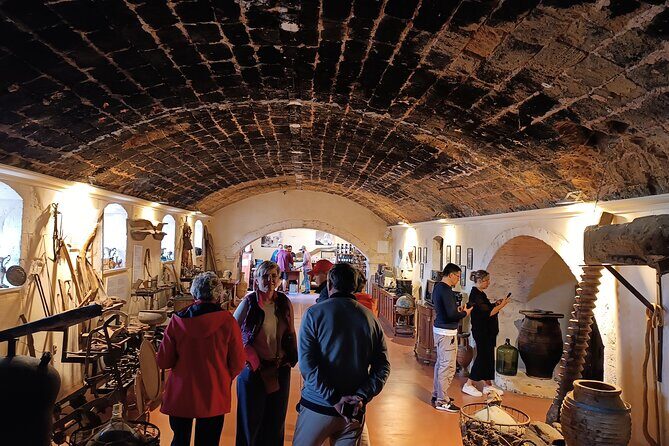
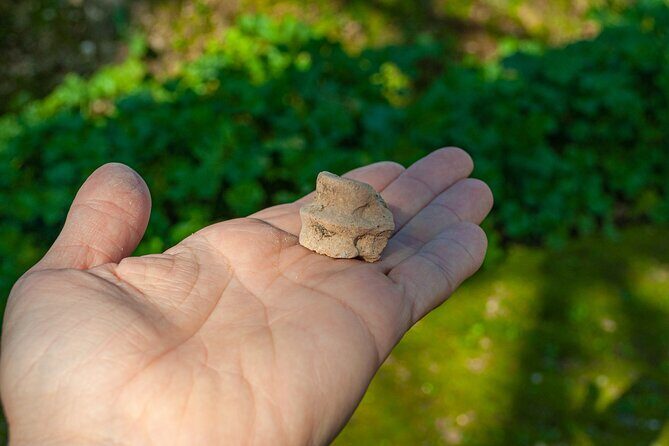
This is the moment where you can stop guessing and start seeing. Knossos gives you the big shapes: palace rooms, corridors, and the myth flavor. The museum gives you the objects that explain the everyday details: what people made, used, valued, and traded. In a limited time window, that pairing is efficient.
Since you only have 1.5 hours, don’t aim to read everything. Instead, aim to match museum items to what you saw at Knossos. If the guide explained a topic during the palace walk, look for related artifacts here. That’s how the museum visit feels more than a checklist.
If you’re buying tickets, remember: museum access is separate from the tour price, so plan for the extra cost.
Rethymno break on the way back: a short reset
On the return, the plan includes a short break in Rethymno or a nearby village for less than an hour. This is not a full second destination. It’s a reset—stretch your legs, grab a quick bathroom break, and be ready for the final drive back toward Chania.
Since the day can run long depending on pickup routing, this short stop can also help keep everyone comfortable on the last leg.
Price and real value: what $80 covers and what it doesn’t
The listed price is $80 per person for about 10 hours, including pickup/drop-off near your accommodation, an English live guide, the guided tour at Knossos, and a bus transfer. You also get listed full liability insurance and an organized excursion through a licensed agency.
But you still pay separate entrance fees:
- Knossos Palace entrance: €20 per person
- Archaeological Museum of Crete entrance: €8 per person
So your likely day total is roughly the tour price plus €28 in entrance fees (Knossos + the museum). Entrance at Knossos is also paired with skip-the-ticket-line, which can be a genuine time saver if lines are long.
Is this good value? For many people, yes—if you want a guided Knossos experience plus a museum visit without handling transport and ticket logistics yourself. If you’re the type who enjoys slow travel and independent planning, you might consider whether you’d rather go by bus or hire a taxi and take longer. But for a one-day window, the combination of guided palace + museum time is the core value.
Who this tour fits best (and who should reconsider)
This is a strong choice if you:
- Want a guided Knossos visit and don’t want to figure out what to look at
- Like the idea of pairing ruins with the Archaeological Museum of Crete
- Prefer pickup/drop-off convenience over independent transport
- Are okay with an early start and a long day
It’s less ideal if you:
- Have tight evening plans and cannot absorb timing slippage
- Have difficulty with steps or uneven ground at Knossos
- Are traveling with a baby under 1 year (the tour is not suitable for babies under 1 year)
Also note the basics: wear comfortable clothes, bring your camera, and plan a light day since food and drinks are listed as not allowed.
Should you book the Knossos Palace and Heraklion museum day trip?
If your priority is one-day Knossos with a guide plus Heraklion’s museum, book it. The structure is built for results: you get guided time at the palace, photo freedom, then you shift into the museum where the artifacts give meaning to what you saw.
But book with smart expectations. Assume you’ll be on a long day bus from Chania, and plan for the schedule to drift if the pickup route is heavy. If you can keep your evening flexible and you’re ready for dirt paths and steps at Knossos, this tour can be a very satisfying way to hit the highlights without doing logistics homework.
FAQ
How long is the tour?
The duration is listed as 10 hours, with return to your pickup point around 18:00.
When does the day start?
Pickup begins around 7:00 in the morning from your hotel or near your accommodation.
Is there a guided tour at Knossos Palace?
Yes. You get an informative guided tour at Knossos Palace for about 2 hours, plus free time for photos.
Are entrance fees included?
No. Knossos Palace entrance is listed at €20 per person, and the Archaeological Museum of Crete entrance is listed at €8 per person.
Do I skip the ticket line?
The tour includes skip-the-ticket-line for Knossos.
How much free time do I get in Heraklion?
You have a 3-hour break in Heraklion for walking and optional activities, plus a museum visit.
Is there a visit to the Archaeological Museum of Crete?
Yes. The itinerary includes a visit for about 1.5 hours.
Is food included in the price?
No. Food and drinks are not included, and food and drinks are listed as not allowed.
What should I bring, and what should I wear?
Bring a camera and comfortable clothes. Knossos involves a dirt path and some steps, so plan for walking.
Is the tour suitable for babies?
It is not suitable for babies under 1 year.