REVIEW · HERAKLION
Heraklion Through Local Eyes – A Walking Experience
Book on GetYourGuide →Operated by Pass4Crete · Bookable on GetYourGuide
Heraklion tastes better when you walk it. I like the start along the Venetian walls for quick city orientation, and I love the olive oil, honey, and herb tastings that turn food into stories. One watch-out: it’s 4 hours on foot, so wear comfy shoes.
What makes this feel different is the people behind it. You may get a guide like Marina, who grew up locally and knows how shop owners and neighborhoods actually work, so the whole walk lands with a relaxed, real-life rhythm—not a rigid script. Expect coffee and pastries, a market stop, plus a light lunch with wine near the end, with plenty of time to ask questions.
In This Review
- Key things I’d plan around
- Venetian walls: the smartest way to begin Heraklion
- The quiet urban forest stop (yes, it’s real)
- Traditional market walking and how tastings get explained
- Café time: Greek coffee, pastries, and local donut energy
- Olive oil, honey, herbs: what “local tasting” really means
- Wine tasting and a light lunch that keeps you moving
- Souvlaki finale: the ritual-style ending
- Walking pace, private group setup, and the practical feel
- Price check: is $115 per person worth it?
- Where to meet in Heraklion (and cruise-ship shortcut)
- Should you book Heraklion Through Local Eyes?
- FAQ
- How long is the Heraklion walking experience?
- What does the tour cost?
- What’s included in the price?
- Is transportation included?
- What languages are the guides?
- Where do I meet the guide?
Key things I’d plan around
- Venetian walls first: panoramic views and history tied to what you eat later.
- Urban-forest pause: a quiet green pocket that resets you mid-walk.
- Taste-led learning: honey, herbs, and olive oil served with context on Cretan daily life.
- Greek coffee plus local donuts: a café break that feels like a local habit, not a gimmick.
- Souvlaki as the finale: the tour ends with the kind of meal people return for.
- Private group format: easier pacing for questions, photos, and detours on request.
Venetian walls: the smartest way to begin Heraklion
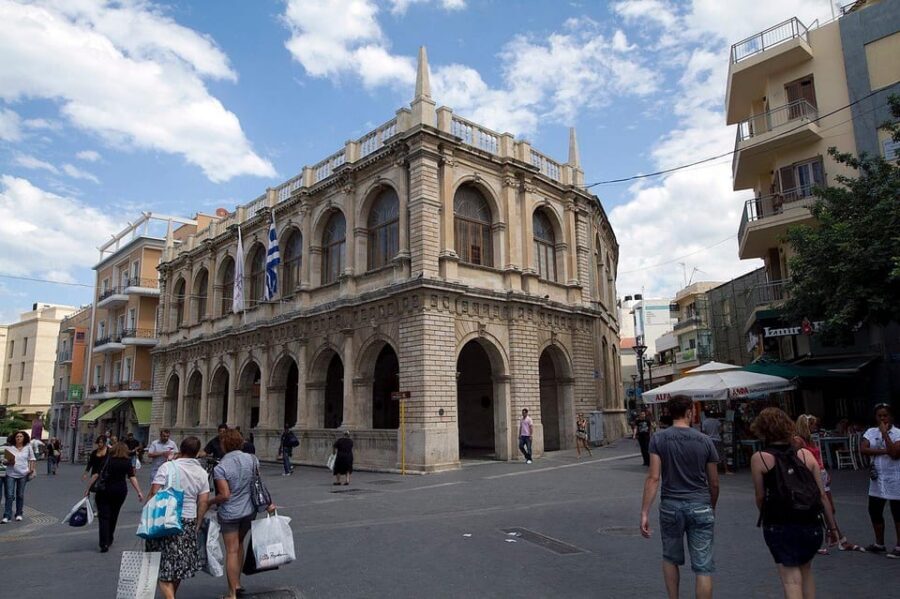
The tour starts near central Heraklion (Paas4Crete’s office on the main street, close to the central Heraklion Parking and the IBIS Hotel area). If you’re coming via the itinerary’s starting point, it’s basically the Evropis 7 side of town—easy enough to find once you’re in the central area.
From there, you walk along the Venetian walls. This matters more than it sounds. When you get that first view over Heraklion, you stop thinking of the city as a set of monuments and start seeing how the neighborhoods connect. Your guide also links the wall stories to the present-day city—how past rules and layouts still shape where people meet, shop, and eat.
It’s also a good warm-up. You’re not heading straight into a food counter. You get a few minutes to orient your body and your brain before the tastings start rolling in.
You can also read our reviews of more walking tours in Heraklion

The quiet urban forest stop (yes, it’s real)
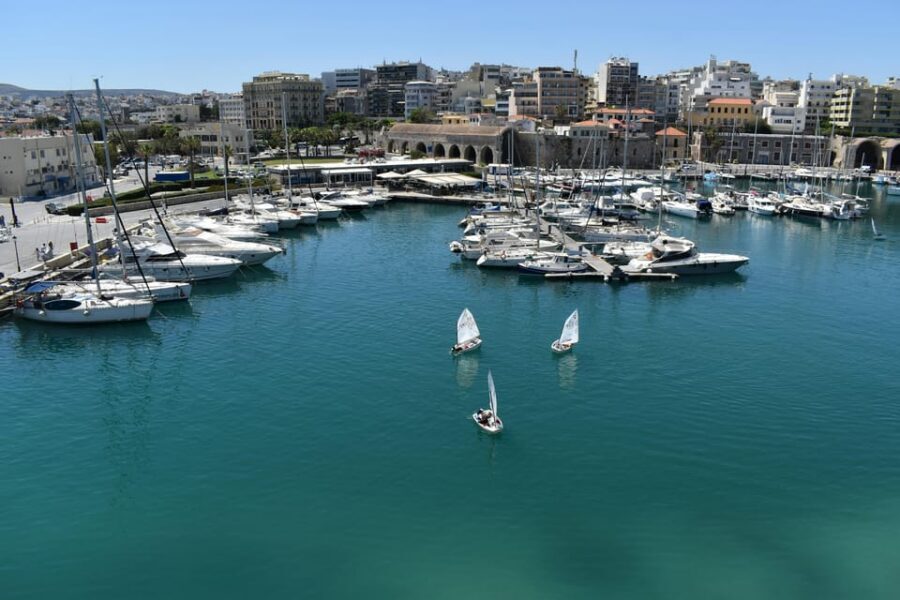
A big part of the charm is that the walk isn’t nonstop “see more” mode. Midway, you slip into a hidden urban forest—a small, peaceful green corner that even many locals don’t know about.
For me, stops like this are what make a food tour worth the money. If you only eat and only walk on busy streets, your sense of place gets blurry fast. This kind of pause lets you actually notice what’s around you: the way the air changes, the slower pace, the chance to breathe before you go back into the city’s busy edges.
Think of it as a palate cleanser, but for your whole day.
Traditional market walking and how tastings get explained
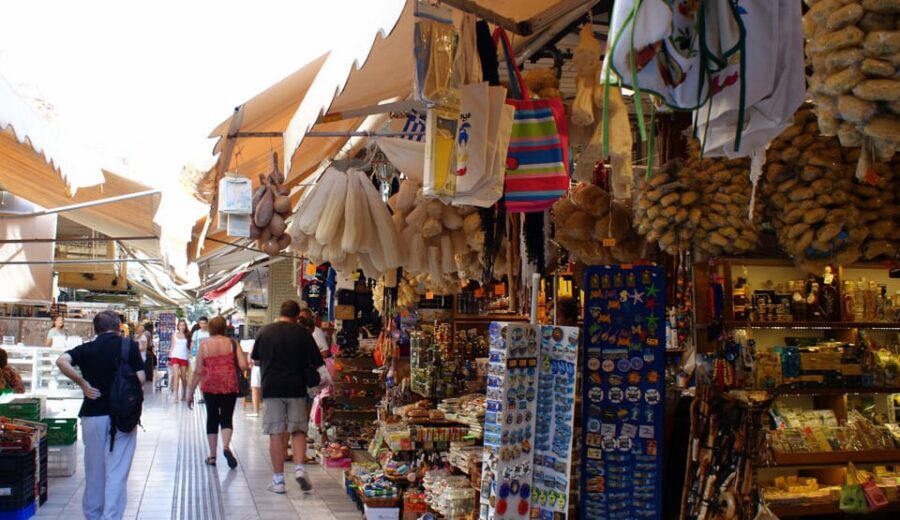
Food is the core of this experience, but it’s not just about sampling. The tour includes a traditional food market segment where your guide connects what’s on the counter with how Cretans live.
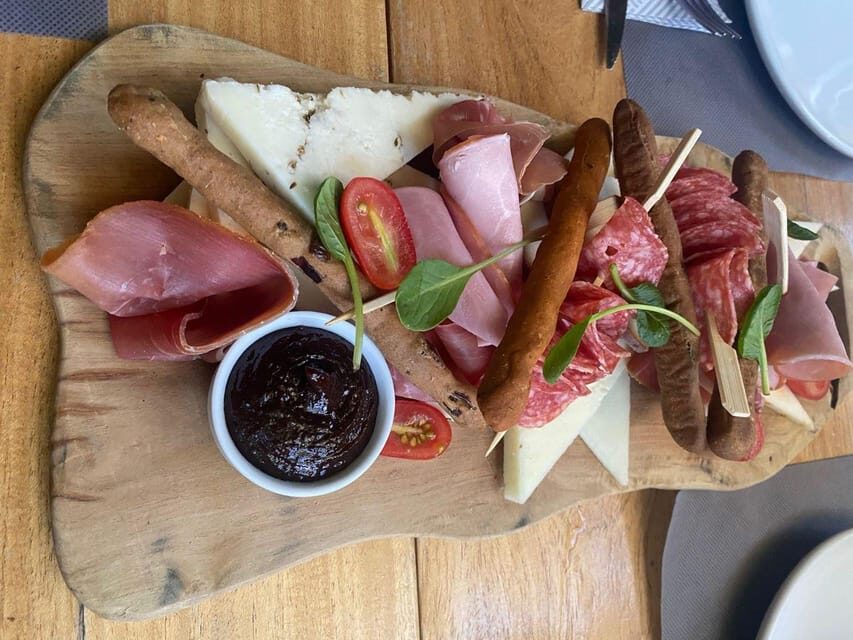
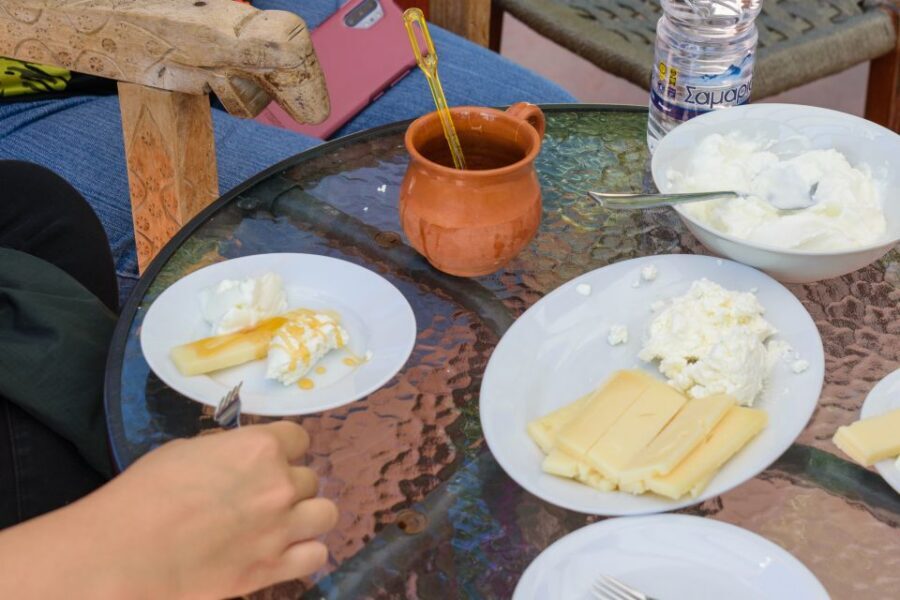
The tastings are built around classic local ingredients:
- Olive oil (with guidance on recognizing high-quality Cretan oil)
- Honey
- Herbs
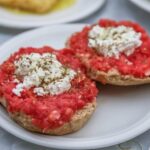
- plus Greek coffee and local pastries
The practical value here is that you learn what to look for. Instead of buying olive oil because the bottle looks nice, you’ll know what questions to ask and what factors matter—so you can shop smarter later.
And you’ll probably notice something else: the guide’s stories make the flavors less mysterious. Olive oil stops being a background ingredient and turns into part of daily rhythm—breakfast, cooking, table life. That’s the kind of context that makes a small tasting feel like actual travel, not just snacking.
Café time: Greek coffee, pastries, and local donut energy
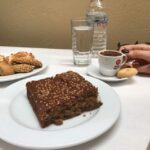
You’ll take a proper café break with Greek coffee and local pastries. The schedule includes a stop at a local café where you spend around 40 minutes—enough time to slow down, sip, and talk.
This is also where the tour gets very “Cretans do it like this.” The plan includes freshly made local donuts, served as part of the coffee stop. That combo is great if you want something sweet without it turning into a sugar overload. It’s a real break, not a quick bite while you walk past a shop window.
After that, you move through more local streets and the next food-and-drink stop comes at 1866 Street Coffee Bar. This part includes spirits tasting and shopping time, plus a food market visit. I like that mix because it gives you variety: coffee culture, then something stronger, then market energy again.
Olive oil, honey, herbs: what “local tasting” really means
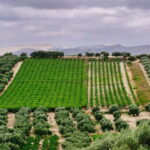
Olive oil tasting can be a little intimidating on tours if nobody explains what you’re supposed to notice. Here, the key point is that your guide teaches you how to recognize high-quality Cretan olive oil, and why it’s central to the Mediterranean lifestyle.
That “why it matters” piece is the difference between a tasting that’s fun and one that actually sticks. Once you understand that, you’ll start seeing olive oil everywhere in the city and on the tables you pass—shops, small bakeries, even how people talk about ingredients.
The honey and herb tastings work the same way. Even if you don’t become an expert by the end, you’ll leave with stronger instincts. You’ll know which flavors feel like they belong here, not just flavors that travel well.






Wine tasting and a light lunch that keeps you moving
Near the later part of the route, the plan includes wine tasting, and you finish with a light lunch with wine. This timing is smart. You’re not stuffing yourself at the start, and you’re not racing to get food at the very end either.
A light lunch with wine also means you can enjoy the meal without needing a long recovery nap. That matters on a walking tour, where the goal is to keep seeing the city and not only pause in restaurants.
And because the lunch is part of the guided flow, you don’t have to hunt for where to eat in the middle of the day. You can just follow the route and let the guide steer you to a local rhythm that fits the rest of the experience.
Souvlaki finale: the ritual-style ending
The tour ends with a big payoff: souvlaki from a spot loved by locals for generations. It’s described as the kind of ritual Cretans recognize, and that’s a strong choice for a last stop. After all the small tastings and walking, a proper souvlaki hits like closure.
This is the meal to come hungry for. If you’ve been grazing too much on the earlier snacks, you’ll feel it here. If you pace yourself (coffee, pastries, a few tastings, then lunch), the souvlaki becomes the satisfying final note of the day.
Walking pace, private group setup, and the practical feel
This is a 4-hour walking experience with frequent stops. Based on what people highlight, it tends to be more walking than pure “sit and snack.” That’s not a bad thing, but it helps to know the balance before you book.
Here’s how I’d plan for it:
- Bring comfortable shoes and expect real pavement time.
- Wear light layers. You’ll go from open viewpoints to quieter streets and a green pause.
- If you have questions about what you’re tasting, ask early. A good guide will use those moments to tailor explanations to your interests.
The format is private group, and it’s listed as wheelchair accessible. Private tends to mean the pace can be more flexible, especially for folks who want more time at a market stall or a less rushed café stop.
Transportation isn’t included, so you’ll be responsible for getting to the meeting point. That’s standard for city walking experiences, but plan for it so you don’t arrive stressed.
Price check: is $115 per person worth it?
At $115 per person for a 4-hour guided walk, the value comes from the mix, not just the food.
You’re paying for:
- a guided city route starting with Venetian walls
- a mid-walk escape to an urban forest
- a traditional food market portion
- multiple tastings: olive oil, honey, herbs, plus Greek coffee and local pastries
- additional stops that include spirits tasting and shopping time
- wine tasting
- and a light lunch with wine
When you add it up, this isn’t only a meal stop. It’s a structured way to experience Heraklion’s everyday culture—streets, history connections, and food literacy—inside one afternoon. If your goal is to understand the city beyond the postcard stuff, that’s where the cost starts to make sense.
If your dream is purely a long, sit-down food marathon with minimal walking, this might feel like too much movement for your taste. But if you want a day that feels like hanging out with a local guide while still sampling the best of Crete, it’s a strong fit.
Where to meet in Heraklion (and cruise-ship shortcut)
Your meeting point is Paas4Crete, Central Office on the main street, close to central Heraklion Parking and the IBIS Hotel area.
If you’re a cruise ship traveler, the plan is different: you take the shuttle bus at the gate to passenger terminal number 5, then walk along the coastline. You’ll meet in front of The Koules Fortress.
Either way, give yourself a little buffer time. The walking along the coastline can shift slightly depending on what dock you’re at and how crowded the walkway looks that day.
Should you book Heraklion Through Local Eyes?
I’d book this if you want a Heraklion afternoon that mixes real neighborhoods, food tastings with context, and a few scenic moments that don’t feel forced. It’s also a great first-day option because it gives you orientation fast: walls and viewpoints first, then the city’s everyday habits through markets and cafés.
I would hesitate if you hate walking, or if you prefer food-only stops with lots of sitting. This is a guided walk where meals are highlights, not the entire plan.
If you want one simple strategy: go with an appetite for learning. Ask questions about what you’re tasting, and you’ll get far more from the olive oil, honey, herbs, and coffee than you would from a basic snack tour.
FAQ
How long is the Heraklion walking experience?
It lasts 4 hours.
What does the tour cost?
The price is $115 per person.
What’s included in the price?
It includes local delicacies, local pastries and coffee, honey and olive oil tasting, and a light lunch with wine.
Is transportation included?
No. Transportation is not included.
What languages are the guides?
The tour is guided in English and Dutch.
Where do I meet the guide?
You meet at Paas4Crete, Central Office on the main street, close to central Heraklion Parking and the IBIS Hotel. If you arrive by cruise ship, you’ll take the shuttle bus to passenger terminal number 5, walk along the coastline, and meet in front of The Koules Fortress.