REVIEW · HERAKLION
Orthodox Crete: In the Footsteps of the Apostle Paul from 55 AD
Book on Viator →Operated by Crete Private & Luxury Tours by Snami Travel · Bookable on Viator
Paul’s trail in Crete is a living story. This private, 8-hour route strings together Orthodox sites and ancient landmarks, with a guide who explains how faith, geography, and history connect across the island. You get the comfort of a chauffeured ride and the added ease of ticket support, so you can focus on the places—not the logistics—and you’ll hear the day framed around the Gospel-era world.
I especially liked the private-guide conversations that turn stones and icons into meaning, and the way the itinerary mixes monastery stops with major prehistoric context. The cave-and-monastery rhythm also gives you more than one angle on Orthodox practice, not just a quick photo stop at each place.
One possible drawback: it’s an all-day drive with several timed stops, so if you want long unstructured wandering or minimal time in the car, you may find the pace a bit tight.
In This Review
- Key moments you’ll care about
- How this Paul-centered Orthodox route works (and why the order matters)
- Stop 1: Heraklion Prefecture and the opening act of faith
- Stop 2: Agios Myronas village and the cave with healing water
- Stop 3: Messara Plain, ancient valley views, and a local lens
- Stop 4: Moni Palianis and the Assumption monastery with sacred Myrtle
- Stop 5: Phaistos Palace, Bronze Age depth, and what to plan for
- Stop 6: Odigitria Monastery (Agiofarango) and fortified southern walls
- Stop 7: Matala Beach, ancient port caves, and a seafood wind-down
- Vehicle comfort and pacing for an 8-hour Orthodox day
- Value check: what’s included, what isn’t, and where the money goes
- Who this tour suits best (and who might prefer something else)
- Booking verdict: should you book this Apostle Paul Orthodox Crete day?
- FAQ
- How long is the tour?
- Is pickup and drop-off included?
- Is this tour private?
- What language is the tour offered in?
- Are admission tickets included?
- What does the vehicle include during the day?
- Are drinks and meals included?
- Can I bring a service animal?
Key moments you’ll care about
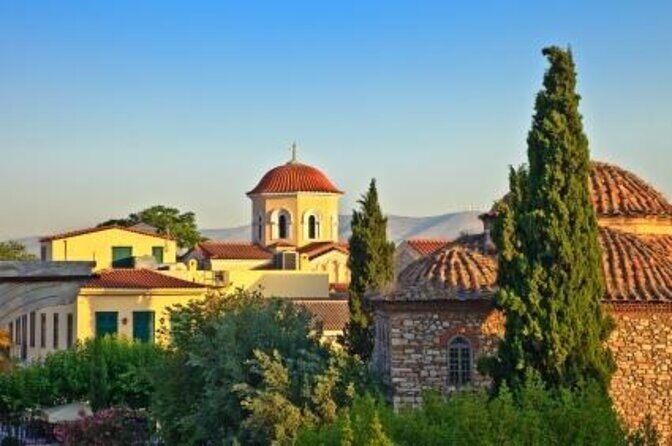
- Agios Myronas holy cave with healing water tied to the rock and the village above it
- Moni Palianis and its sacred Myrtle tree, linked to older Crete traditions
- Phaistos Palace for Bronze Age drama, with admission fees not included
- Odigitria Monastery (Agiofarango), a fortified southern-corner stop that feels defensive in the best way
- Matala Beach and Neolithic caves plus a long wind-down by the sea
How this Paul-centered Orthodox route works (and why the order matters)
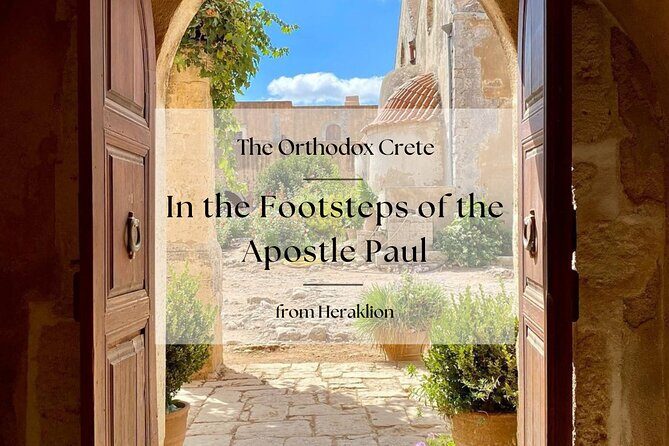
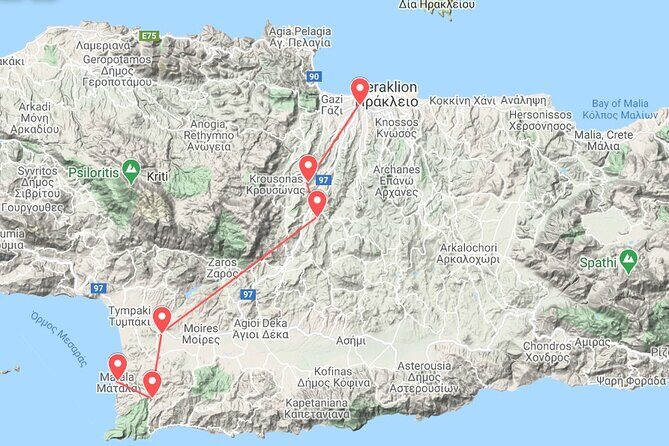
This tour is built as a guided day along a clear theme: Orthodox Creity viewed through the idea of the Apostle Paul’s footsteps from 55 AD. The route starts in the Heraklion area and then works outward to southern landscapes, ending at Matala Beach for a slow finish.
You’re not doing this on your own. You get a premium chauffeured vehicle, plus a private guide who can tailor the emphasis to your interests in Christian history. You’ll also have practical help like concierge support and restaurant recommendations, and the day includes bottled mineral water, Cretan fruits, snacks, Wi‑Fi, USB sockets, and hygiene amenities.
Timing is structured too. Expect roughly eight hours total, with stops ranging from about 35 to 45 minutes, and one longer two-hour beach stretch. That’s long enough to see the main sights and listen properly, but short enough that the day stays cohesive instead of turning into a traffic-heavy day of random arrivals.
You can also read our reviews of more tours and experiences in Heraklion.

Stop 1: Heraklion Prefecture and the opening act of faith
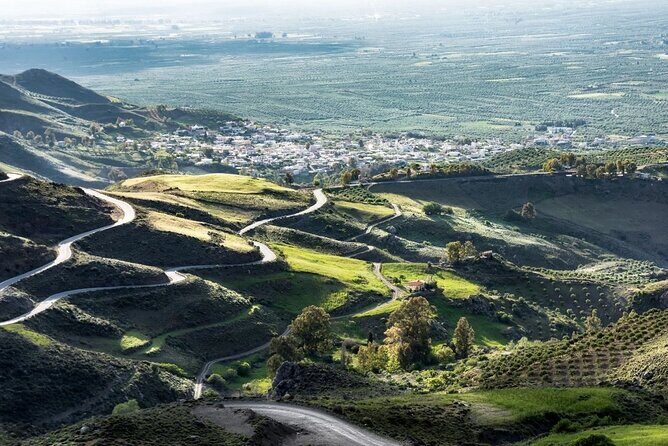
The day starts in the Heraklion Prefecture, where the guide sets the frame for everything you’ll see later. You get about 45 minutes here, and this is the part that helps you stop treating the monasteries as isolated attractions. Instead, you learn how Orthodox Christianity grew in dialogue with the island’s geography and earlier layers of culture.
If you care about early Christian context, this first stop matters because it changes how you interpret what comes next. When you understand the “why” behind the places, the rest of the day feels less like a checklist and more like a story with scenes.
The only practical thing to watch: since this is the start of the day, it’s also where you’ll likely get orientation about what to pay attention to later. If you’re prone to drifting during introductions, ask your guide a question right away so you stay locked in.
Stop 2: Agios Myronas village and the cave with healing water
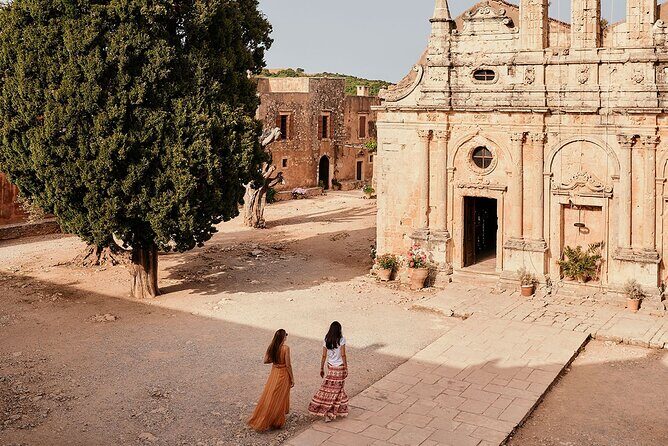
Next up is Agios Myronas. You climb up to around 400 meters (as described for this stop), and that vertical change matters. It’s not just a view point. It sets the tone: caves, sanctity, and local traditions tied to the land.
You’ll spend about 35 minutes here at the storied village and its ascetic holy cave. The standout detail is the healing water still gushing from within the rock. That’s the kind of specific, sensory element that makes religious history feel grounded, not abstract.
What I’d do here: slow down. Take time to look at the cave setting and listen to how the guide connects the tradition to Orthodox practice. If you treat this as a quick “seen it” stop, you’ll miss the best part: the way place and belief are linked on a human scale.
Stop 3: Messara Plain, ancient valley views, and a local lens

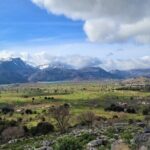
Then the day turns toward the Messara Plain, with about 45 minutes for this stretch. This is where the tour shifts from single-site spirituality to a wider sense of Crete as lived space.
The messaging is clear: you’re guided along the ancient Messara valley to see through the eyes of a local. That matters because plains can feel boring on a map, but on the ground they explain trade routes, settlement patterns, and how communities carried faith across generations.
This stop is also a good break from constant walking. You’re not trying to “win” the day by speed-scanning. You’re getting context—why these holy places exist where they do, and how the island’s interior shaped daily life.
Stop 4: Moni Palianis and the Assumption monastery with sacred Myrtle

At Moni Palianis, you visit Paliani, described as one of the oldest Cretan monasteries dedicated to the Assumption. You get about 35 minutes here, which is enough to see the core elements and also hear what makes the site unusual.
The big draw is the sacred Myrtle tree, presented as a relic of Minoan Crete dendrolatry (tree worship). That’s a striking bridge between prehistoric tradition and later Orthodox devotion. Even if you’re not religious, it’s the kind of cultural continuity that makes you realize Crete doesn’t erase older meanings—it layers them.
A practical note: monasteries often have quieter expectations and dress norms. Bring something respectful for yourself and your group, and follow your guide’s cues. This is one stop where good manners let you fully enjoy the atmosphere.
Stop 5: Phaistos Palace, Bronze Age depth, and what to plan for
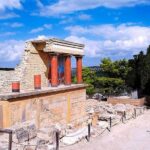
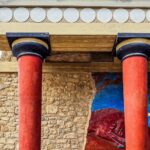
This is the itinerary’s main archaeology moment: the Palace of Faistos (Phaistos). You’ll spend about 35 minutes here, following roads that go deeper and giving you a sense of how prehistoric cities seem to show up around each corner.
This is also the only stop on the list where admission fees are explicitly not included. You get VIP skip-the-line access and assistance with purchasing admission tickets, though, so you’re not stranded trying to figure it out on arrival.
How to make this work: decide before you go what you want from Phaistos. If you want monumental layout and big-picture Bronze Age context, 35 minutes is fine. If you love reading every marker like it’s a novel, you may wish you had more time. The best move is to use your guide’s focus to pick the key areas first.
Stop 6: Odigitria Monastery (Agiofarango) and fortified southern walls
Next, you head to one of the island’s southern corners for Odigitria Monastery, also referenced as Agiofarango. You get about 45 minutes here, and the description highlights its fortified architecture. That word matters: you’re not just visiting a pretty church. You’re seeing a monastery that was built to hold its ground.
This stop feels different from the earlier ones because of the setting and the defensive tone of the architecture. The guide’s job here is to help you connect the look of the buildings to the realities of monastic life, safety, and isolation.
If you enjoy that “why was it built like this” feeling, you’ll likely rate this stop as a highlight. Ask your guide what the fortification implies about the people who lived there and what the landscape demanded from them.
Stop 7: Matala Beach, ancient port caves, and a seafood wind-down
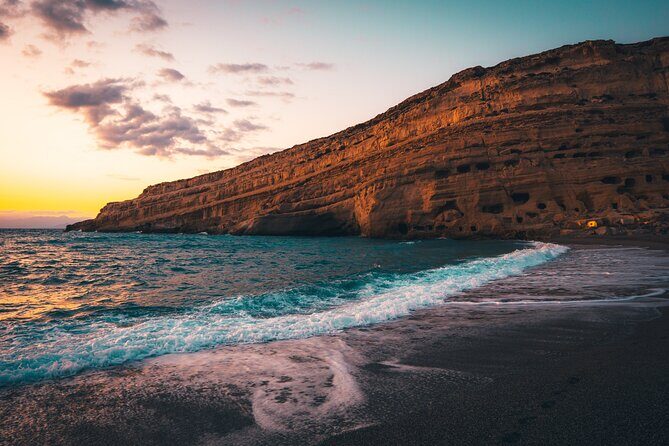
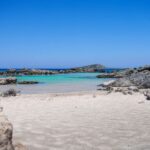
To end the day, you reach Matala Beach for about two hours. This is the decompression section: a prehistoric port area linked with Gortyna and iconic caves described as Neolithic Age.
The benefit of putting Matala last is simple. After temples, caves, and stone history, you get movement and air. You can stretch out, take photos, and let the day’s theme settle instead of racing to the next stop.
And yes, this is also where the food part of the day shows up naturally. Admission fees aren’t included for the tour’s sites, and drinks and meals are listed as not included, but you’re supported with restaurant recommendations and reservations. If you want seafood, Matala is the kind of place where it’s easy to find a good, local option without turning it into a separate planning project.
Vehicle comfort and pacing for an 8-hour Orthodox day
Your ride is part of the experience, in a practical way. You’ll be in a chauffeured premium vehicle with Wi‑Fi, USB sockets, bottled mineral water, fruits, and snacks. Those little comforts matter when you have several timed stops and one longer beach stretch.
Pacing is the real trade-off. A day with seven stops can’t be slow. You’re getting just enough time at each place to understand it, not so much time that the day feels endless. That’s helpful for most people, especially families or visitors who want structure.
Also, this is private. Only your group participates. That makes a difference for questions and tailoring, especially if you want your guide to spend more time on Orthodox practice, early Christian context, or the archaeological layer at Phaistos.
Value check: what’s included, what isn’t, and where the money goes
Since there’s no admission fee included on the list and drinks and meals are also not included, you should think of the price as paying for access, guidance, and convenience—not just tickets.
What you’re getting for your money is substantial:
- Private guide and the ability to tailor the day
- VIP skip-the-line access and help purchasing admission tickets
- Concierge support before and during the trip
- A chauffeured premium vehicle with comfort extras (water, snacks, Wi‑Fi, USB)
- Help with restaurant recommendations and reservations
If you’re the type who likes asking why a monastery looks the way it does, or how a Christian tradition can preserve older cultural symbols, a private guide is the best value piece of the day. It turns your time into learning, not just sightseeing.
If you’re the type who just wants photos and quick stops, you might feel the structure more than the meaning. In that case, keep your expectations realistic about pacing, and don’t expect long sit-down time at each location.
Who this tour suits best (and who might prefer something else)
This works best for people interested in the intersection of Orthodox Christianity and Crete’s older cultural layers. The itinerary explicitly connects monasteries, sacred places, and major archaeological context like Phaistos and Neolithic caves at Matala.
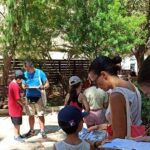
It also fits families when the guide is good at keeping the day moving with story and explanation. In one example of guide quality, I saw that young kids stayed engaged because the guide didn’t treat the day as lecturing. They asked questions, adapted the pace, and used the places as teaching tools.
Who might not love it: anyone who wants lots of free time to wander alone, or anyone who strongly dislikes driving between sites. It’s a day trip with a clear schedule, and that’s the deal.
Booking verdict: should you book this Apostle Paul Orthodox Crete day?
Yes, if you want a structured but thoughtful day that links Christianity, monastery life, caves, and archaeology into one coherent narrative. The private format makes the biggest difference here: you get a local guide who can explain what you’re seeing instead of handing you a brochure.
I’d book it if you’re planning your first trip to central/southern Crete and you want to cover key stops in one go. The skip-line assistance, ticket help, and concierge support reduce friction, which is exactly what you want on an eight-hour day.
I’d skip it (or look for a more relaxed alternative) if you’re hoping for long beach lounging, lots of unscheduled wandering, or a day where you can linger slowly at one place for an extra hour. This is a “see and understand” route, not a “take your time and drift” route.
FAQ
How long is the tour?
The tour runs about 8 hours.
Is pickup and drop-off included?
Yes. You get personal pick-up and drop-off from your hotel, villa, cruise, or another point on Crete island, and pickup time is flexible after confirmation.
Is this tour private?
Yes. It’s a private tour/activity with only your group.
What language is the tour offered in?
The tour is offered in English.
Are admission tickets included?
Admission fees are not included. You get assistance with purchasing admission tickets and VIP skip-the-line access.
What does the vehicle include during the day?
The vehicle includes mineral water, Cretan fruits and snacks, Wi‑Fi, USB sockets, and hygiene amenities.
Are drinks and meals included?
No. Drinks and meals are not included, though the provider assists with restaurant recommendations and reservations.
Can I bring a service animal?
Yes, service animals are allowed.