REVIEW · HERAKLION
Heraklion: Knossos Palace Guided Tour Half Day
Book on GetYourGuide →Operated by Mykonos Excursions · Bookable on GetYourGuide
Knossos clicks fast when someone explains the layout. This half-day tour in Heraklion turns scattered ruins into a working story of Minoan life and Minos-style legend—built for 1700–1400 BC and tied to myths that still stick. Two things I really like: the guide’s room-by-room way of making sense of the palace, and the way the tour connects what you see with the stories that made Knossos famous.
You also get an efficient setup. You meet near Hari’s Creperie in central Heraklion, ride out to the site by air-conditioned coach, and come back by late morning—ideal if your Crete day has other plans. The small drawback to watch for is timing: the guided time at the palace may feel closer to 1.5–2 hours depending on how the group moves, so don’t expect every minute to stretch perfectly to a full 3-hour on-site experience.
In This Review
- Quick hits: what makes this Knossos tour worth your time
- Meeting at Hari’s Creperie and the short drive to Knossos
- The layered world beneath Knossos: from Neolithic life to the palace era
- Entering the palace: 1300 rooms, corridors, and the “working” layout
- The storerooms story: oil, grains, fish, olives, and why storage mattered
- Knossos and the legend of Minos: myth as a way to remember the place
- How discovery and excavation changed what you see today
- Time on site: what you’ll realistically be able to do
- Languages and guide quality: where the tour really delivers
- Price and value: what $70 covers (and what to budget for)
- Who should book this Knossos half-day tour
- Should you book Knossos: my honest recommendation
- FAQ
- Where is the meeting point in Heraklion?
- What time does the tour start and end?
- How long is the tour?
- What’s included in the price?
- Are entrance fees included?
- What languages are the live guides available in?
Quick hits: what makes this Knossos tour worth your time
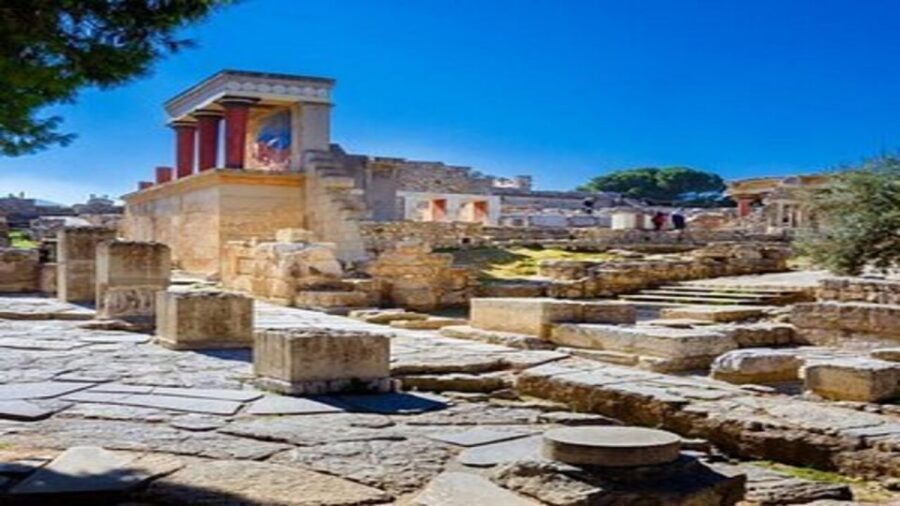
- A true palace scale lesson: the tour frames Knossos as the major, better-known Minoan palace site.
- Real numbers, not vague hype: you’ll hear about the palace’s 1300 rooms, corridors, theater, and storerooms.
- Architecture you can visualize: construction techniques and parts that reportedly reached up to 5 stories help you picture the original height.
- Food and storage mapped in plain terms: oil, grains, dried fish, beans, olives, plus the idea of hidden gold in storage jars.
- Legends with context: the tour links Knossos to the legendary king Minos and associated stories.
- Guides that use reconstructions: in Spanish-led groups, the explanation can include a book showing how areas may have looked.
Meeting at Hari’s Creperie and the short drive to Knossos
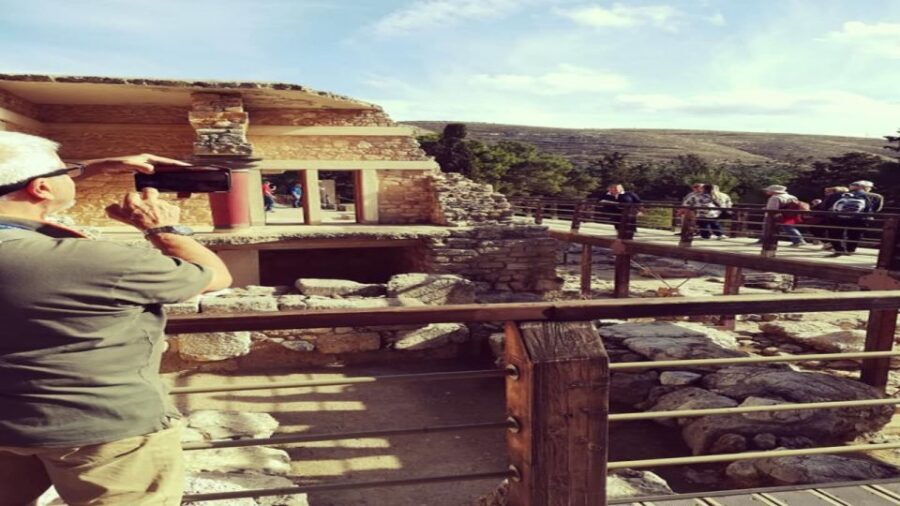
The start is easy to find. You meet across from the entrance of the Heraklion Archaeological Museum, in front of Hari’s Creperie. From there, you board an air-conditioned motorcoach and head about 5 km southeast off the city toward Knossos.
This part matters more than it sounds. A short, planned ride keeps the day from feeling rushed, and it also gets you to the site with a clear start time. Your guide is already set up to steer the visit once you arrive, which is the difference between wandering ruins and actually understanding them.
You can also read our reviews of more guided tours in Heraklion


The layered world beneath Knossos: from Neolithic life to the palace era
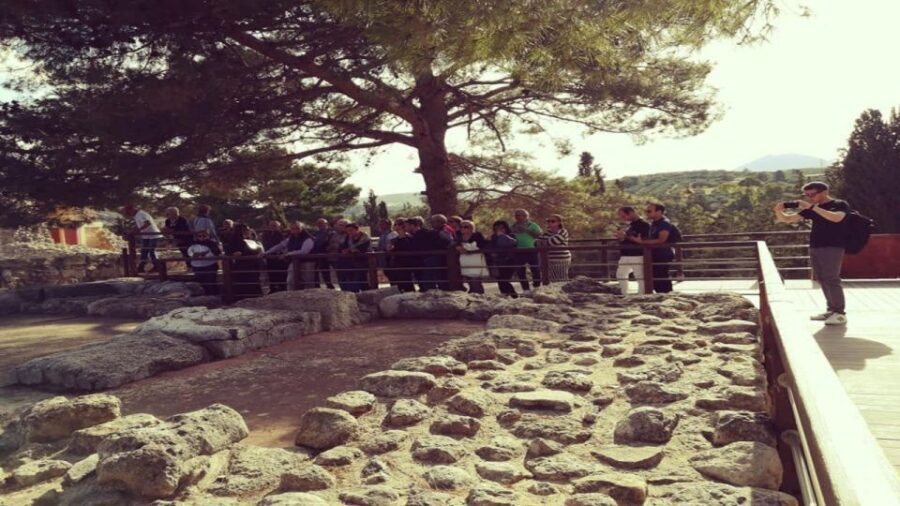
Knossos isn’t a single moment in time. You’ll learn that settlement in the area goes back to the Neolithic period, and that Neolithic life on Crete is dated around 7000 BC. That long timeline helps you see Knossos less like a lone attraction and more like a place people kept using—then upgraded—over thousands of years.
I like this approach because it changes how you look at the ground. When you know the site has older layers, the ruins feel less random. You start noticing why archaeologists care so much about building remains, not just dramatic walls or columns.
Entering the palace: 1300 rooms, corridors, and the “working” layout
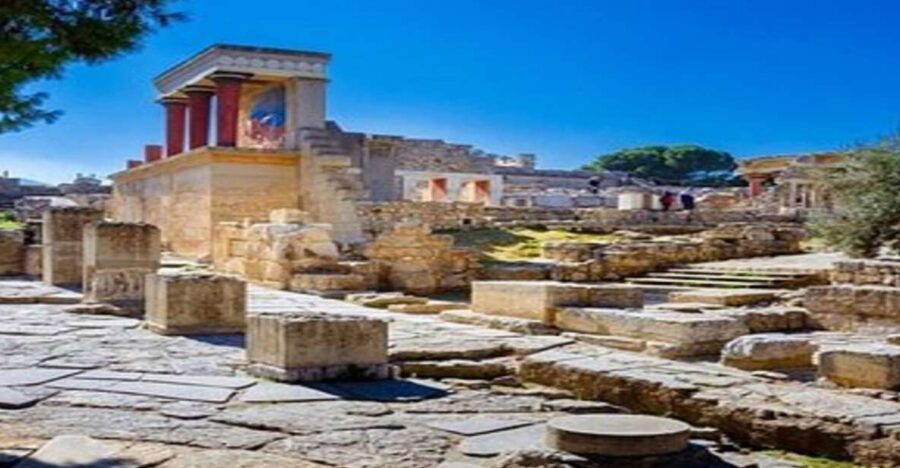
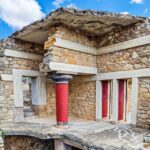
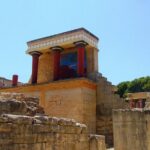
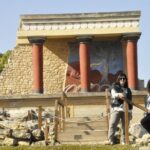
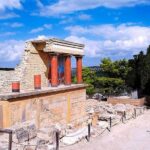
At Knossos, the guide’s job is to make a complex plan feel simple. The palace is described as having around 1300 rooms connected by corridors, which is a big reason it can feel confusing if you go without help. With a guide, you can follow the logic—what connected to what, and how different areas would have functioned.
You’ll also hear about advanced building techniques used in the palace’s construction. One standout detail: parts of the palace reportedly reached up to 5 stories high. Even if you can’t visualize the full height everywhere, knowing it existed changes how you interpret the scale you’re standing in.
Practical tip: wear comfortable shoes. The palace grounds are uneven and you’ll spend real time moving at a steady pace, trying to match descriptions to what’s actually in front of you.
The storerooms story: oil, grains, fish, olives, and why storage mattered
A palace isn’t just rooms and views—it’s systems. Knossos is presented as a place with extensive storerooms and large clay containers used for staple goods. You’ll hear what those containers held: oil, grains, dried fish, beans, and olives.
This detail is one of the most helpful parts of the tour, because it explains power in everyday terms. Food storage meant fewer surprises in lean seasons. And it suggests that Knossos wasn’t only ceremonial. It had the practical muscle to manage resources on a large scale.
You’ll also learn an intriguing angle: gold was often hidden beneath storage materials. That doesn’t mean you’ll dig up treasure during the tour, but it gives you a lens for how wealth could be tied to ordinary supplies—and how a palace could protect value while keeping the “work” running.
Knossos and the legend of Minos: myth as a way to remember the place
Knossos is tied to the legendary king Minos, and the tour weaves those thrilling palace legends into the visit. This matters because the ruins are incomplete. A lot of what you see is stone outlines and foundations, so the stories help bridge gaps—without pretending the myth is the same thing as archaeology.
If you enjoy the overlap between culture and storytelling, you’ll probably have fun here. The palace isn’t only about dating walls to 1700–1400 BC; it’s also about why people later couldn’t stop talking about Knossos. The legends give the site emotional meaning, while the guide gives you structure to tell myth from the physical plan.





How discovery and excavation changed what you see today
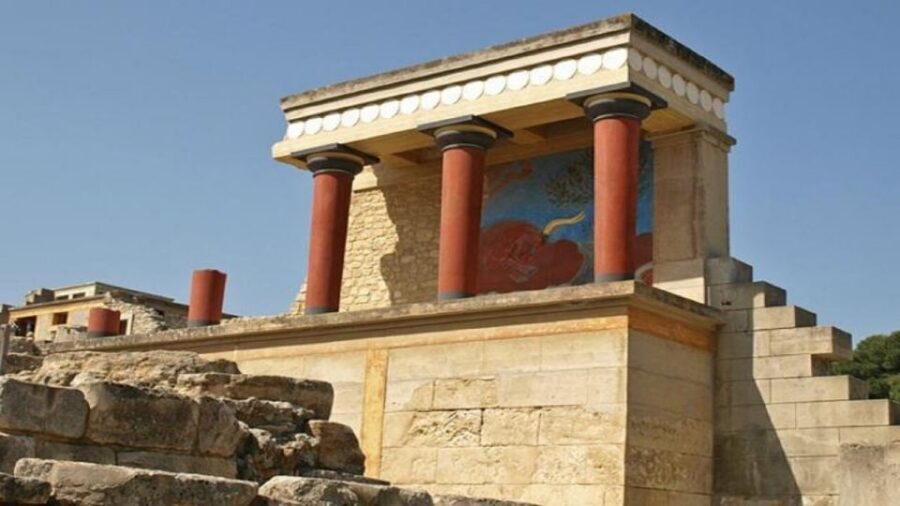
You also get the “how we know” side of Knossos, which I consider essential for a responsible visit. The site was discovered in 1878 by Minos Kalokairinos, and excavations began in 1900 under the English archaeologist Sir Arthur Evans. Those excavations continued for 35 years.
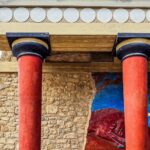
Why does that affect your experience? Because restoration choices, excavation methods, and interpretation decisions shape what’s visible now. When you know that the big work was happening across decades, you can better understand why certain reconstructions may feel more like guidance than perfect copies of the original.
In practice, this is where the guide’s materials can shine. In Spanish-led tours, I’ve seen explanations include a book with reconstructions, which helps you connect “what’s left” to “what it likely looked like.”
Time on site: what you’ll realistically be able to do
This tour runs for about 3 hours total, with the meeting at 08:30 and a return around 11:30. The coach ride is planned around 30 minutes each way, leaving a guided visit at the palace that’s commonly described as 2 hours.
Here’s the consideration: depending on how quickly your group moves and how your guide paces the conversation, the palace time can feel closer to 1.5 hours. If you’re the type who loves lingering on details, arrive with the mindset that you’ll be using the guide to focus your time—not trying to soak up every corner solo.
A good move is to note 2 or 3 things that matter to you most before you arrive. For me, that would be the layout (rooms and corridors), the storerooms and what they stored, and the legend of Minos. If those are your priorities, you’ll leave feeling you got a complete story.
Languages and guide quality: where the tour really delivers
This is one of those tours where the guide makes the difference. You get a live guide in English, Spanish, Italian, or French, and the tour format is built around explanation rather than quiet self-wandering.
The strongest feedback I’ve heard centers on guides who are prepared and clear. In Spanish, one guide named Sacarías has been praised for explaining details well and using a book to show reconstructions. That kind of support turns the ruins from confusing fragments into a readable plan.
If you have a choice of language, I’d pick the one you’ll understand best during the “why this mattered” parts—not just the “what is this wall” parts. That’s where Knossos gets most interesting.
Price and value: what $70 covers (and what to budget for)
The price is listed at about $70 per person for the guided half-day experience. You do get solid inclusions: an air-conditioned motorcoach, a professional guide, and VAT and legal taxes.
What’s not included is equally important: entrance fees to the archaeological site. So the true all-in cost can be a bit higher once you add the ticket. If you’re comparing options, always count that.
Is it good value? For me, it depends on what you want. If you love archaeology, you’ll benefit from the guide turning the 1300-room layout and 1700–1400 BC building phases into a coherent walk. If you only want quick photos, you might feel the time is short. But if you want meaning and context, this format is a fair trade for a half-day.
Who should book this Knossos half-day tour
This tour fits best if you want structure. You’ll likely enjoy it if you:
- want a guided introduction to Knossos as the main Minoan palace site
- like connecting ruins to legends (especially Minos)
- prefer a short, efficient morning plan in Heraklion
It’s less ideal if you need accessibility support, since it’s not suitable for people with mobility impairments. It also doesn’t allow unaccompanied minors.
Should you book Knossos: my honest recommendation
Book this tour if you want a guided, story-driven first visit to Knossos. The palace layout (1300 rooms, corridors), the storage system, and the link to Minos legends are exactly the kinds of details that can be hard to piece together alone—and the guide is clearly central to the experience.
Before you go, do two things: wear comfy shoes, and keep an open mind on timing at the palace. If your top goal is to understand what you’re seeing quickly and leave with a clear story, this half-day plan is a strong choice.
FAQ
Where is the meeting point in Heraklion?
You meet across from the entrance of the Heraklion Archaeological Museum, in front of Hari’s Creperie.
What time does the tour start and end?
The tour meets at 08:30 and you return to the starting point around 11:30.
How long is the tour?
The experience runs for about 3 hours total.
What’s included in the price?
It includes an air-conditioned motorcoach, a professional guide, and VAT and all legal taxes.
Are entrance fees included?
No. Entrance fees to the archaeological site are not included.
What languages are the live guides available in?
The live tour guide is available in English, Spanish, Italian, and French.