REVIEW · HERAKLION
Heraklion Area: CRETAquarium Admission Ticket
Book on GetYourGuide →Operated by CRETAquarium · Bookable on GetYourGuide
If you like fish and fast plans, this fits. CRETAquarium is clean, well organized, and packed with Mediterranean stars plus tropical side tanks. I especially liked the value for the ticket price and the way the exhibits feel grounded in real marine science. The one thing to watch is crowding in summer, when lines can stretch and your 1-hour visit may feel rushed.
This aquarium sits inside the THALASSOKOSMOS marine park tied to HCMR research facilities, so it’s not only about looking—it’s about learning and caring for sea life. I also like that you get a straightforward, self-guided route (no complicated tour choreography).
If you want a slow, linger-all-day aquarium, plan for a longer stop. Most people manage it in about 1 hour, and a few noted it can feel like you’re done quickly.
In This Review
- Key highlights to focus on
- CRETAquarium at THALASSOKOSMOS: why this aquarium feels different
- What you’ll see inside: Mediterranean habitats, jellyfish, and shark circles
- Mediterranean caves and crevices
- Open-ocean viewing and sharks
- Jellyfish and clownfish in shallow tanks
- Tropical glimpses, without losing the Mediterranean theme
- Your self-guided route: how long it takes and how to pace it
- Tickets and value: what $9 gets you (and what you might add)
- Optional audio guide
- Timing reality check
- Getting there from Heraklion, Malia, and Hersonissos in about 25 minutes
- When to go: summer crowds and the 11:00 AM to 4:00 PM rush
- Practical on-site tips: what to bring, what’s not allowed, and what to watch for
- Is it worth it for your group? Best matches and common nitpicks
- You’ll likely love it if…
- A possible drawback to consider
- The turtle question
- Should you book CRETAquarium admission tickets?
- FAQ
- How long should I plan to spend at CRETAquarium?
- What is included with the CRETAquarium ticket?
- Can I rent an audio guide, and how much is it?
- Where is CRETAquarium, and how do I get there?
- What are the rules inside the aquarium?
- What if I arrive in the wrong time slot?
Key highlights to focus on
- 60 habitats and a route built to keep your eyes moving from tank to tank
- Mediterranean-focused displays like caves/crevices with stingrays and scorpionfish
- Shark viewing in an open-ocean style tank (often with feeding activity)
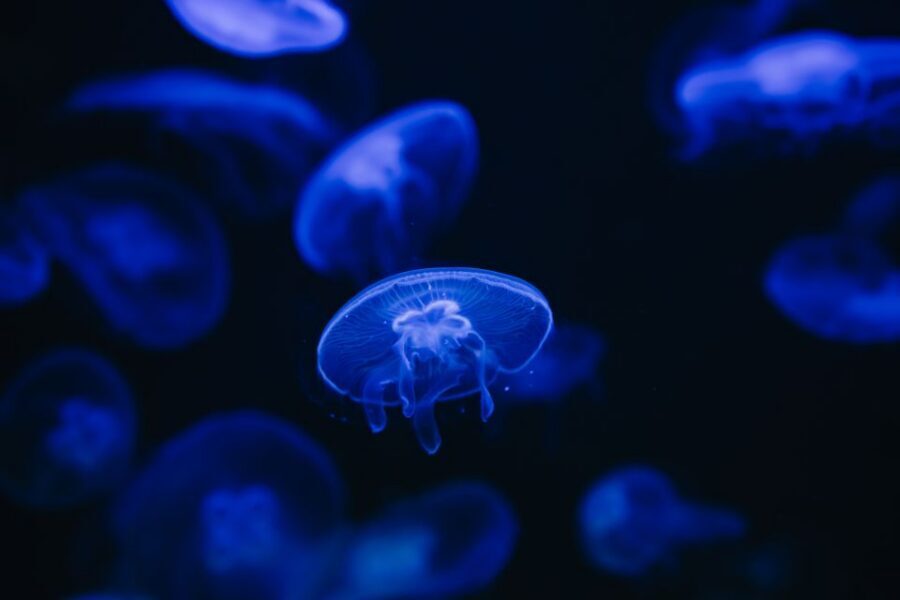
- Shallow, open-topped tanks for jellyfish and clownfish viewing at eye level
- THALASSOKOSMOS + HCMR connection, blending recreation with education and research
- Strong reviews for cleanliness and friendly staff, plus quick entry when you pre-book
CRETAquarium at THALASSOKOSMOS: why this aquarium feels different
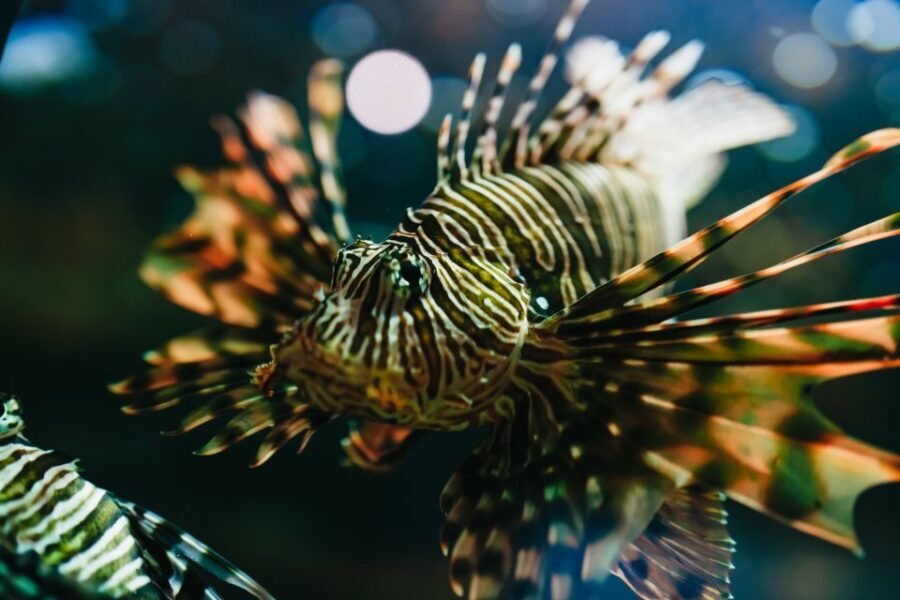
CRETAquarium isn’t trying to be a massive theme park. It’s built as part of THALASSOKOSMOS, the HCMR marine research, technology, and recreation complex in Heraklion. That matters because you’ll see science show up in the storytelling, not just marketing.
Here’s the practical payoff for you: the aquarium is designed around education and marine welfare. On-site programs run daily for different ages, and the aquarium emphasizes ethics and animal care. You also get a feel for research work like studying climate change impacts on marine organisms and tracking growth, reproduction, and behavior.
I like that it’s not pretending the ocean is a museum diorama. The aquarium also puts attention on threatened species care—sea turtles are specifically mentioned, with injured or sick animals transferred, treated, and then returned to their natural environment after recovery.
You can also read our reviews of more tours and experiences in Heraklion



What you’ll see inside: Mediterranean habitats, jellyfish, and shark circles
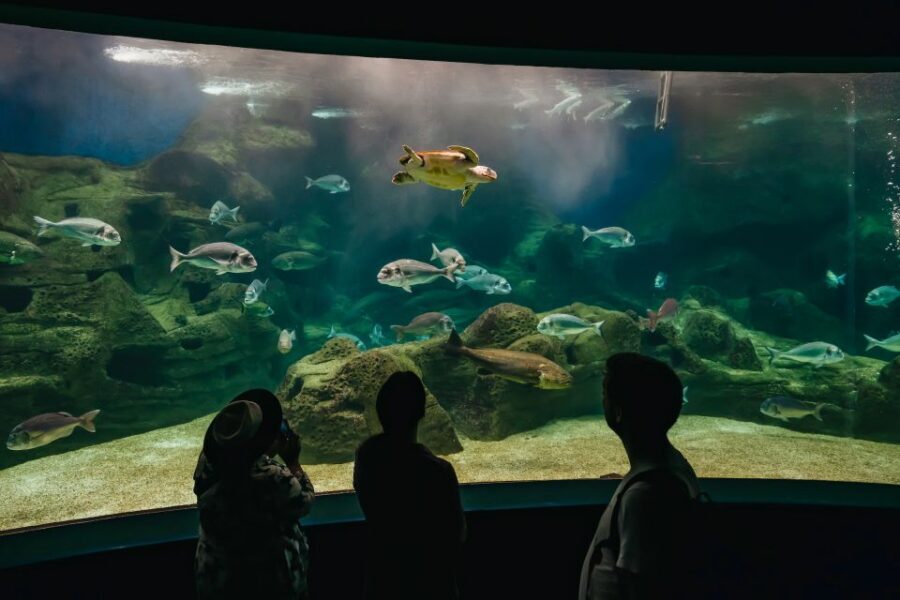
This admission ticket is built for a high hit-rate of sea life in a short window. You’re looking at over 1,200 marine organisms and more than 150 species across about 60 diverse habitats. You’ll also see the aquarium described as housing around 2,000 sea creatures, so expect plenty of motion and variety rather than a few lonely tanks.
Mediterranean caves and crevices
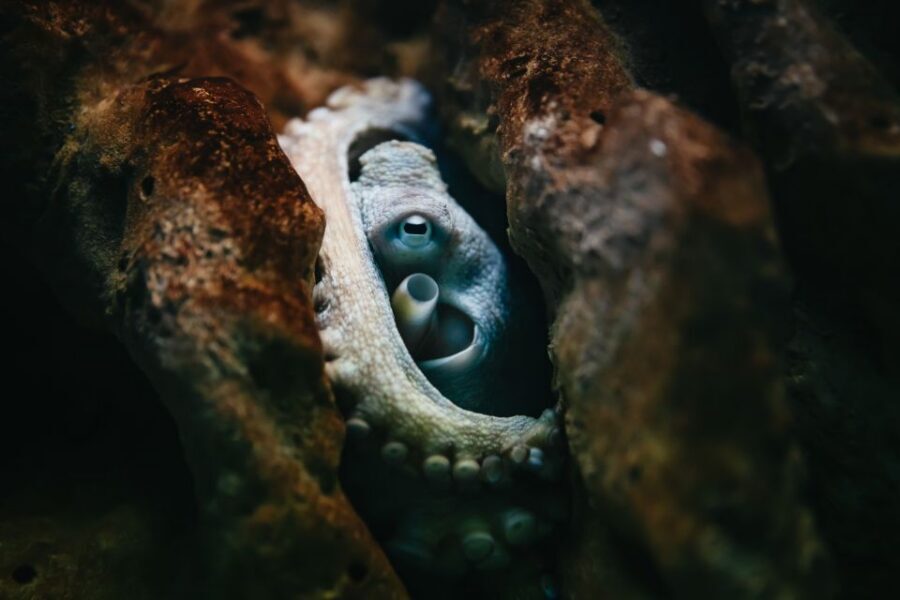
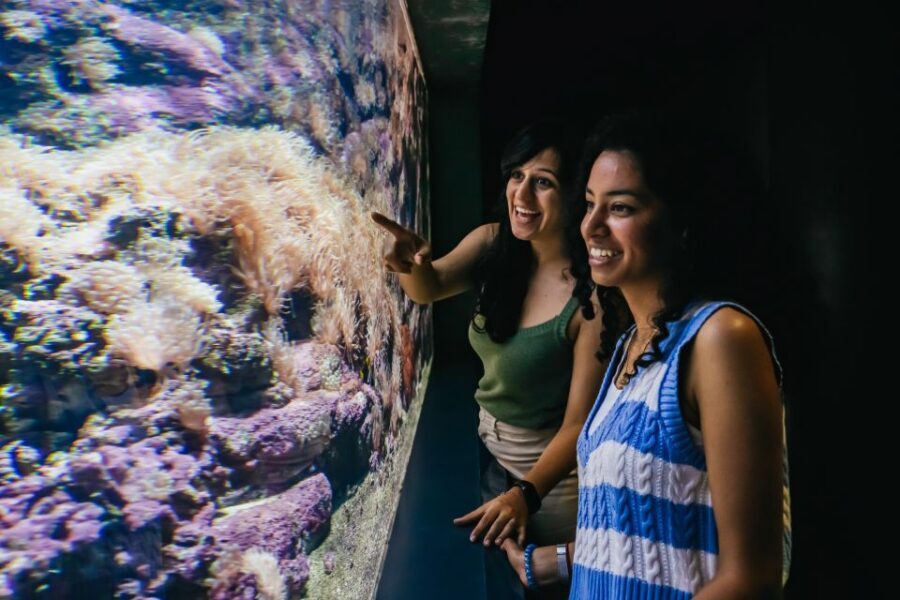
One of the most memorable zones is the Mediterranean “rough terrain” look—caves and crevices where animals like stingrays and scorpionfish are placed to feel more natural. This is the kind of exhibit where the glass framing and background help you understand why these creatures blend in. If you’re the type who stares at details, you’ll like this section because there’s often more to spot than you expect.
Open-ocean viewing and sharks
Then you shift into an open-ocean style tank where sharks circle. The experience is set up so you can watch from multiple angles, and the description specifically mentions shark feeding. If you want the wow factor that keeps kids from melting down, this part usually delivers.
Jellyfish and clownfish in shallow tanks
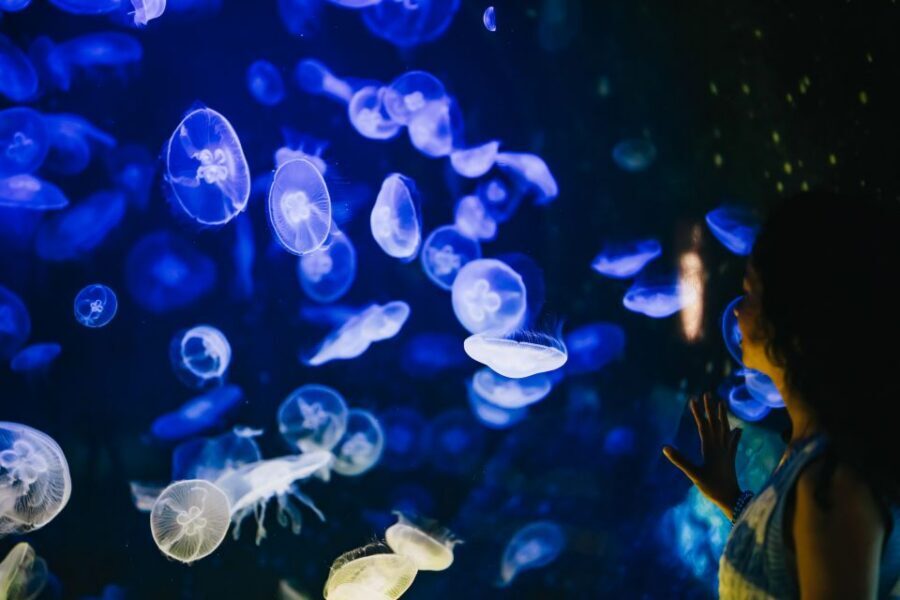
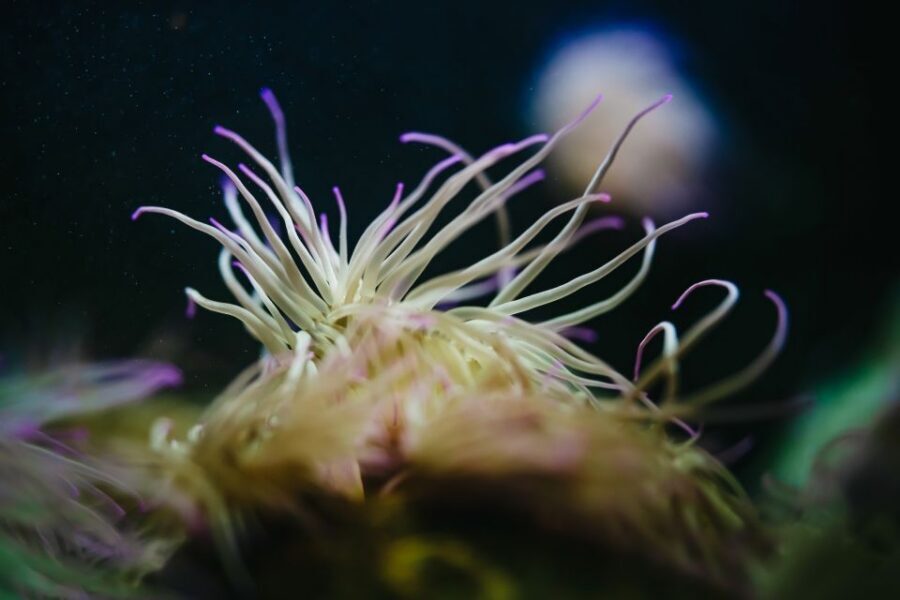
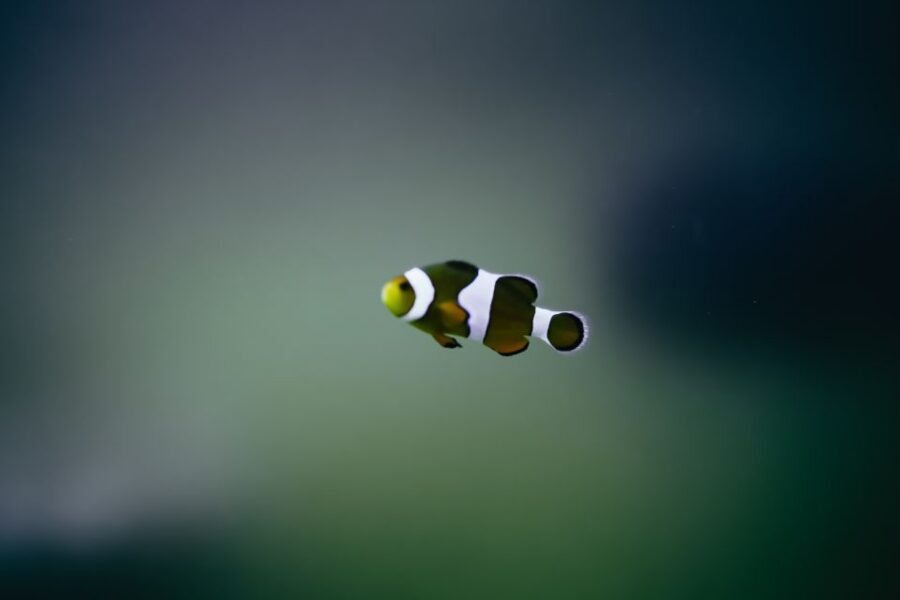
A big plus for your viewing comfort: there are shallow, open-topped tanks that let you see jellyfish and clownfish in a fresh perspective. These are the tanks where eye level feels closer, and you’re more likely to notice how jellyfish drift and how clownfish hold their positions near anemone-like surroundings.






Tropical glimpses, without losing the Mediterranean theme
Even though the core focus is Mediterranean sea life, you’ll also get glimpses of exotic tropicals—described as “tropicals.” That’s a smart balance for mixed-age groups: you keep the story consistent, but you sprinkle in color and surprise.
Your self-guided route: how long it takes and how to pace it
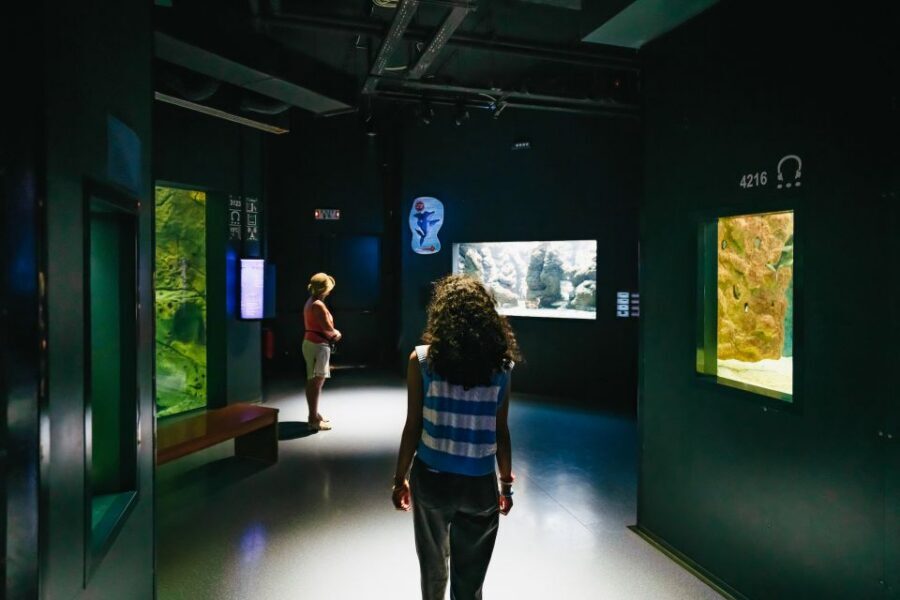
This is a self-guided visit with an admission ticket. A guided tour isn’t included, and there’s no requirement to follow a timed group. That’s good news when you’re traveling with flexible schedules or you want to spend more time where your attention lands.
Plan on about 1 hour to explore. That matches the “know before you go” guidance, and it also lines up with many short-stop reviews. A few people stretched it to around 90 minutes or even 2 hours, which usually means you slowed down for specific tanks, or you added extra time near interactive/educational areas.
Here’s how I’d pace it so you don’t miss the good stuff:
- Start with the big “signature” tanks first (sharks, jellyfish, clownfish).
- Then circle back through the Mediterranean habitat zones where spotting takes longer.
- If you rent the audio guide (optional), save it for when you’re already comfortable with the layout. That way you don’t spend your best moments hunting for exhibits while reading captions.
The route is described as signposted and easy to follow, and reviews back up that you get your bearings fast. Still, in summer, everything feels faster because crowds pull you along.
Tickets and value: what $9 gets you (and what you might add)

At about $9 per person for entry, CRETAquarium is priced like a smart, affordable outing. The value isn’t only the number of tanks. It’s the combination of variety (many habitats and species), a comfortable visit length (roughly 1 hour), and the added educational/research context.
A few practical value notes that matter for real travel planning:
- Pre-booking helps with entry speed. Reviews commonly mention reduced waiting and smooth access when tickets are arranged in advance.
- There’s a cafeteria on site. One review highlighted a good lunch option (they mentioned carbonara), which is helpful if you don’t want to fight parking and menus later.
- Parking is generally seen as easy. Multiple reviews mention plenty of spaces, which turns this into a low-stress stop if you’re driving.
Optional audio guide
An optional audio guide can be rented at reception for €3, with 9 languages. If you like understanding what you’re looking at, it’s worth considering. Reviews specifically mention liking the audio guide and finding it helpful.
Also note: a guided tour isn’t included, and there’s no mention that staff will walk you through a set commentary. So if you want a narrated experience, the audio option is your best bet.
Timing reality check
If you arrive at the wrong time slot, your ticket stays valid for the day, but you may not be able to skip the line. So pick a slot you can actually show up for. It’s a small detail that can affect your mood when you’re in summer crowds.
Getting there from Heraklion, Malia, and Hersonissos in about 25 minutes
CRETAquarium is in the Heraklion area, and the simplest approach is taxi or car. The travel time is described as about 25 minutes from both Heraklion and the Malia/Hersonissos areas.
If you’re driving, you’ll appreciate that the complex is reached via the national road and that there’s mention of lots of parking. That makes it easy to tie into your wider day—especially if you’re also planning beach time.
If you’re coming by bus, the data you have is lighter, but you can still expect public transport options to exist because it’s a major Heraklion-area attraction. Still, taxi tends to be the least headache option when your goal is a short, clean visit.
One small “where are we exactly?” note: outside areas may not look like a polished resort entrance. Reviews mention the area around the aquarium can feel run down, while the inside is a different story—clean, maintained, and focused.
When to go: summer crowds and the 11:00 AM to 4:00 PM rush
This is the one planning factor that can change your entire experience. CRETAquarium is described as getting very busy in summer between 11:00 AM and 4:00 PM, with possible long lines.
My advice is simple: go earlier if you can.
- If you want calmer tank time, aim for the morning.
- If you’re traveling with kids and your schedule forces midday, set expectations. Your “1 hour” might become a “1 hour plus crowd management.”
Also, if you dislike waiting in lines, pre-booking matters. Reviews repeatedly praise quick entry and easy flow when tickets are handled ahead of time.
Practical on-site tips: what to bring, what’s not allowed, and what to watch for
This is a comfort-first visit. Bring comfortable shoes—you’re walking through a lot of tanks and habitats, and slick footwear won’t help on a busy day.
Keep these rules in mind:
- No pets
- No smoking
- No alcohol or drugs
If you’re sensitive to surroundings, one review mentioned stray cats around the site and that it may not be ideal if you’re afraid of cats. That’s not something you can control, so it’s worth thinking about based on your own comfort level.
Finally, expect a fast, focused visit. Some people felt it was over quickly (even around 20 minutes), while others enjoyed closer to 90 minutes or more. That spread usually comes from how deeply you read signage, how much time you spend at the “must-see” tanks, and how crowded the day is.
Is it worth it for your group? Best matches and common nitpicks
CRETAquarium suits a lot of travel styles, especially if you want something real without using up your whole day.
You’ll likely love it if…
- You want an easy family-friendly stop that works in about 1 hour to 2 hours.
- You like Mediterranean sea life more than generic “random tropical fish” setups.
- You want an aquarium that feels clean and well cared for.
- You’re okay with a smaller-scale aquarium rather than a huge, marathon museum.
A possible drawback to consider
Some visitors felt the aquarium was smaller than expected or that the overall selection wasn’t as large as they hoped. Others described it as good value but not a life-changing, all-day attraction.
So here’s the honest fit: if you’re looking for a half-day aquarium fantasy, CRETAquarium may leave you wanting more. But if your goal is a solid, efficient, and educational marine stop, it’s hard to beat for the price.
The turtle question
One review wished for more turtles. If sea turtles are your top target species, you may still see information and care work connected to sea turtles, but don’t assume the main star is a big, constant turtle showcase. Go in with a broader mindset: sharks, jellyfish, stingrays, scorpionfish, and colorful clownfish are the repeated “showcase” themes.
Should you book CRETAquarium admission tickets?
Book it if you want an affordable, well-run aquarium day that doesn’t eat your schedule. At around $9, you’re buying a compact route packed with Mediterranean habitats, plus optional audio for context. Add in the clean facilities and easy entry when pre-booked, and it becomes a very low-risk choice.
Don’t book it if you need a long, all-day experience or you’re specifically hunting for a huge, “big-ticket” aquarium with extensive animal variety. Also, if you hate crowds, plan your arrival to avoid 11:00 AM to 4:00 PM in peak summer.
If you’re staying in Heraklion or nearby resorts, I’d treat this as a smart morning or early-afternoon reset: see the sea life, learn a bit about marine science, then move on with your day feeling refreshed instead of stuck in a half-day line.
FAQ
How long should I plan to spend at CRETAquarium?
You should plan about 1 hour to explore. Some people spend longer, depending on how closely they read and how busy it is.
What is included with the CRETAquarium ticket?
The ticket includes the entrance fee. A guided tour and an audio guide are not included.
Can I rent an audio guide, and how much is it?
Yes. You can rent an audio guide at reception for 3€, with choices in 9 languages.
Where is CRETAquarium, and how do I get there?
It’s in the Heraklion area on the Crete island of Greece. You can reach it by taxi or car via the national road, and it’s about 25 minutes from Heraklion and from Malia/Hersonissos.
What are the rules inside the aquarium?
Pets are not allowed. Smoking is not allowed, and alcohol and drugs are not allowed.
What if I arrive in the wrong time slot?
Your ticket is still valid for the day if you miss the exact time slot, but you may not be able to skip the line.