REVIEW · CRETE
Guided Walking Tour in Chania
Book on Viator →Operated by Free Tour Expert · Bookable on Viator
Chania rewards slow looking, not just quick selfies. This guided route strings together working craft streets and major faith landmarks, then finishes with the waterfront mood of the Old Venetian Harbor. I like that it stays tight and organized (about 2 hours) and that you get a live guide to connect the dots between neighborhoods, architecture, and everyday commerce.
My favorite part is the mix: artisan shops on one side, landmark buildings on the other. You’re not just passing by walls; you’re walking through places people actually use to shop, worship, and trade. One tradeoff to consider: with short stops and a lot to cover, you may want more storytelling than you get if you prefer purely visual sightseeing.
In This Review
- What stood out on the route
- Key things to know before you go
- Price and logistics that matter (and what they cost you in time)
- Meeting point: where the walk actually begins
- Skalidakis Cretan Knives: the craft street stop that makes Chania feel alive
- Skridlof (Street of Leather): a souvenir stop that doubles as a street lesson
- Holy Catholic Church of the Assumption: a calm pause from the shopping lanes
- Old Venetian Harbor: where the city picture snaps into focus
- Küçük Hasan Mosque: Ottoman-era architecture in the middle of the city
- Church of Agios Nikolaos and the mystery stops
- The guide factor: why people either love or skip guided walks
- Who this Chania walk suits best (and who might feel underfed)
- Should you book this guided walking tour in Chania?
- FAQ
- How long is the Guided Walking Tour in Chania?
- What is the price per person?
- What language is the tour offered in?
- Where does the tour start?
- What time does the tour start?
- How many stops are on the tour?
- Is a professional guide included?
- Do I need to buy a ticket separately?
- Are tips included in the price?
- Is it easy to get to the meeting point?
- Are service animals allowed?
What stood out on the route
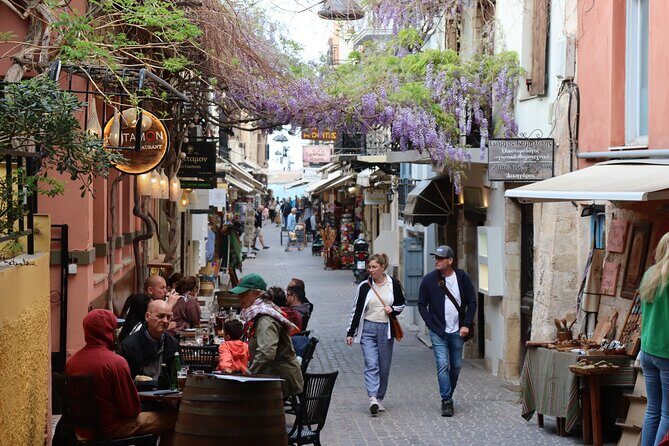
This tour works best if you enjoy structure and context. The pace is designed around multiple stops (each around 20 minutes), so you’re constantly shifting scenery: cutlery craft, leather goods, churches, and then the seafront. Just note that some guests felt the tour could have been replaced by a guidebook, so go into it expecting a basic guided overview rather than a deep, long-form lecture.
Key things to know before you go
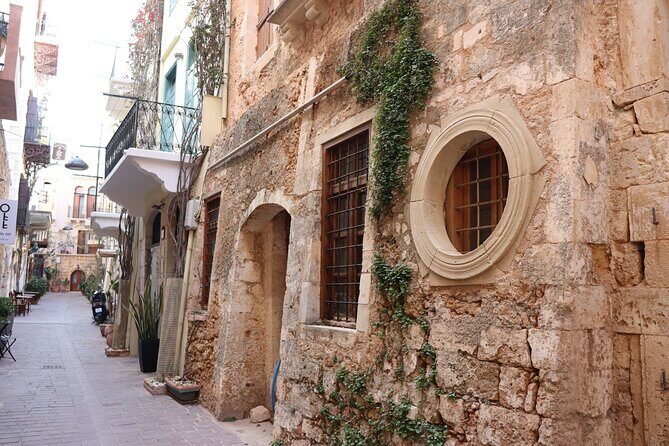
- Up to 15 people keeps it manageable and easier to hear your guide
- About 2 hours with short stops helps you see several sides of Chania
- English-speaking guide and a professional guide included in the ticket
- A 5:00 pm start lines up nicely with evening atmosphere in the harbor area
- Major stops plus surprise segments means you won’t feel stuck in a single theme
You can also read our reviews of more walking tours in Crete

Price and logistics that matter (and what they cost you in time)
For $32 per person for a roughly 2-hour guided walk, you’re paying mainly for two things: a professional guide and the convenience of a planned route. If you were doing this on your own, you’d spend time figuring out the best order of sights and which streets are worth the detour. This tour compresses that decision-making for you.
The schedule is also pretty clear: it starts at 5:00 pm and returns to the meeting point. That matters because Chania can feel easiest when you’re walking in the late-day light, especially around the harbor. The ticket is mobile, and you’re confirmed at booking. Service animals are allowed, and the tour is described as suitable for most travelers, which is a good sign if you want a simple, no-fuss city plan.
One practical caution: one guest report mentioned a last-minute change to tour timing, so it’s smart to double-check the start time the day-of. I’d rather you spend 10 minutes verifying than waste an evening wondering.
Meeting point: where the walk actually begins
The tour meets at Venizelos Graves Agorastaki 4, Chania 731 33, Greece. That’s close enough to public transportation that you should be able to plug it into your day without a complicated transfer plan. The tour ends back at the same spot, so you don’t have to worry about where to regroup or how to get home after the walk.
If you like to arrive early and orient yourself, plan on getting there about 10 minutes ahead. Chania’s old streets can be a little confusing even when you’re close, and this is the one part you want to keep calm.
Skalidakis Cretan Knives: the craft street stop that makes Chania feel alive
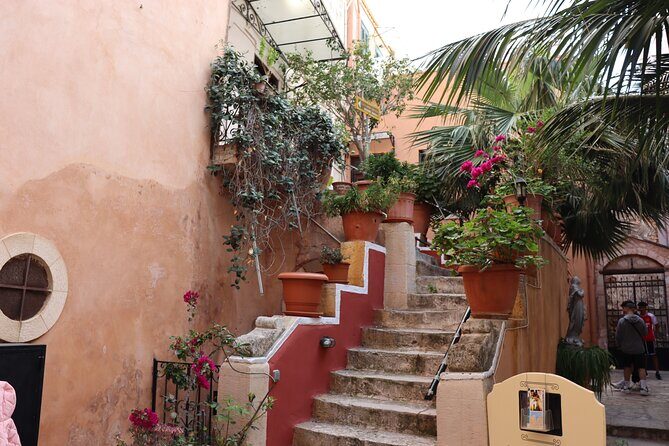
The first stop centers on Skalidakis Cretan Knives, in the knife-making area of Chania. Even if you never buy a blade, this type of shop district changes how you read a city. You start noticing details you’d normally miss: the way specialties cluster, how artisans present their work, and how modern visitors connect with local craft traditions.
What I like about this start is the energy. It’s early in the walk, so you’re fresh enough to pay attention. The time here is short (about 20 minutes), which means you’re not pressured into long shopping loops. If you’re a collector-type, you’ll likely appreciate the variety of styles and the plain fact that these businesses exist to serve demand now, not just to display history.
A drawback for some people: if you don’t care about knives as a category, you may feel the stop is mostly for shoppers. Still, you can enjoy it as an introduction to how Chania organizes trade by theme.
Skridlof (Street of Leather): a souvenir stop that doubles as a street lesson
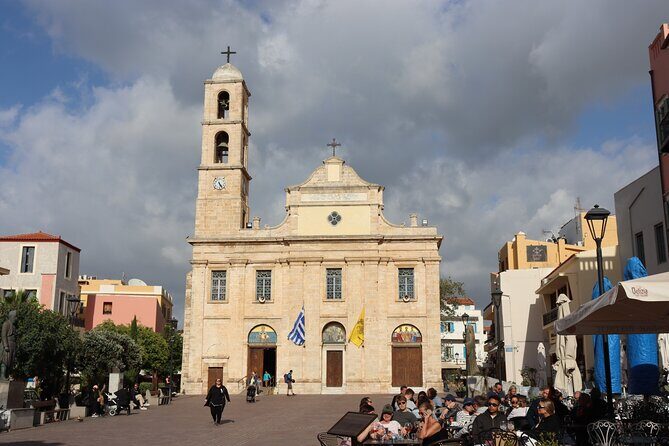
Next up is Skridlof Street, also called the Street of Leather. This stretch is built around leather goods—bags, shoes, belts, jackets—so your eyes get trained quickly. You notice signage, materials, and the range of price points.
I like that this stop shows you a second “working lane” in the city. It’s not a museum feel. It’s commerce. And because leather is something people actually carry every day, it’s easier to judge quality in the moment. Even if you skip buying, you’ll come away with a practical understanding of how locals market craftsmanship to visitors.
One consideration: like any craft street, it can feel sales-forward. If you hate pushy retail atmospheres, keep your stance light and browse at your own speed. The good news is the stop is timed and not dragged out.
You can also read our reviews of more guided tours in Crete


Holy Catholic Church of the Assumption: a calm pause from the shopping lanes
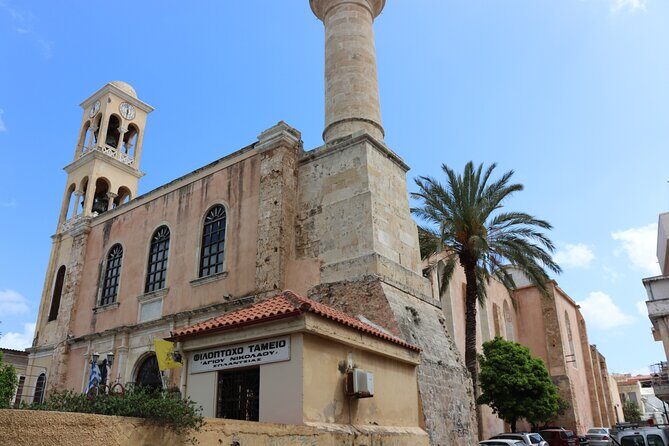
After the craft streets, the tour shifts gears with the Holy Catholic Church of the Assumption of the Blessed Virgin Mary. This part of the walk gives you a breather and a different kind of architectural focus. Think less about goods and more about space, structure, and how faith buildings sit among everyday city life.
The value here is balance. Your earlier stops were very hands-on—objects, materials, trade. Here, you get a quiet landmark that helps you understand Chania as a layered city, not a theme park.
If churches are not your thing, you might feel this is more of a visual stop than a story stop. But it’s also a nice way to reset your pace before the walk heads toward the waterfront.
Old Venetian Harbor: where the city picture snaps into focus
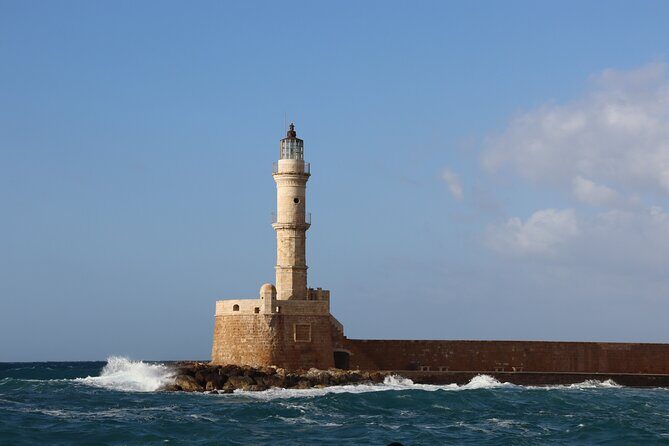
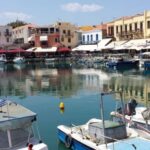
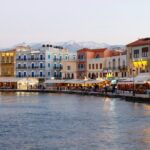
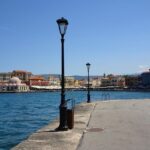
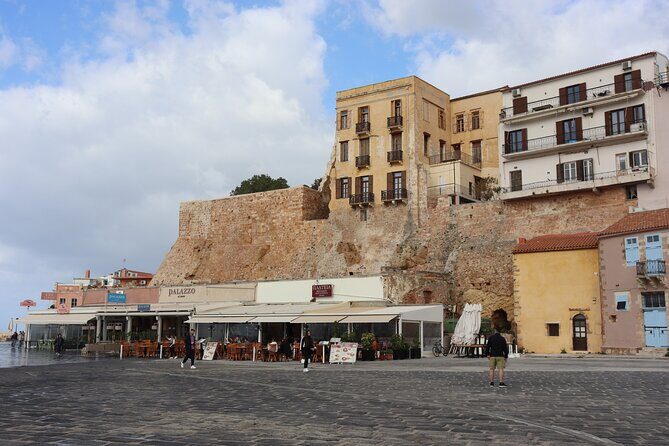
Then comes the Old Venetian Harbor. This is the part most people recognize, and for good reason. The harbor is where Chania’s maritime identity shows up in the street layout, the fort-like silhouettes, and the long-water perspective. You get the classic combination: cobblestones underfoot, cafes lining the edges, and constant movement around the water.
Even with a timed stop (about 20 minutes), you can do something smart here: use the time to look both ways. Turn your head from the water toward the buildings and back again. That simple back-and-forth helps you see how the harbor functioned as a crossroads—trading routes and seafaring life reflected in the architecture.
The harbor also makes the earlier stops feel meaningful. When you’ve just walked through craft streets and religious landmarks, the waterfront stops being just scenery. It becomes the “why” behind the city’s growth and the mix of cultural influences you can still spot today.
One small drawback: if you’re hoping for a long, sit-down harbor moment, this tour’s timing won’t fully satisfy you. It’s built for walking and orientation, not a long leisure cruise on land.
Küçük Hasan Mosque: Ottoman-era architecture in the middle of the city
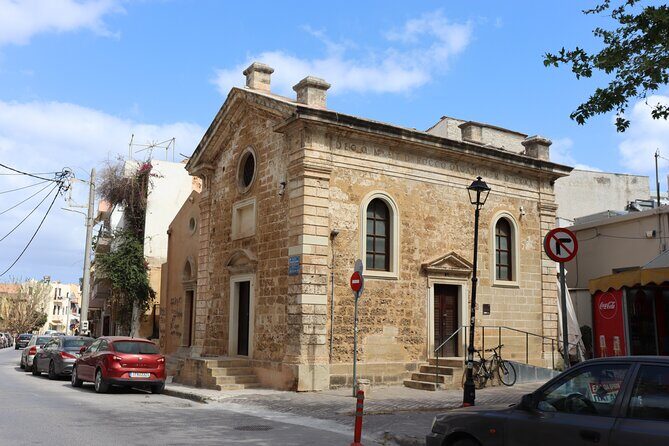
After the harbor, the route includes the Küçük Hasan Mosque. This is another quick stop, but it matters because it broadens your understanding of Chania’s cultural mix. You can see Ottoman-era influence in the design, and you also get a sense of how multiple traditions coexist in the same city blocks.
I like that the tour doesn’t treat faith sites as optional or exotic. It places them right in the route, so you notice them as part of the everyday landscape rather than distant “must-see” monuments.
A consideration here: depending on what’s happening in and around the mosque, your time may feel quieter and more reserved than the harbor moments. That’s normal. If you respect places of worship, you’ll probably appreciate this stop the most.
Church of Agios Nikolaos and the mystery stops
The final listed landmark is the Church of Agios Nikolaos. Like the other faith stop, it’s a short stop designed to give you a sense of the city’s religious architecture without turning the walk into an all-day church tour.
The tour also mentions a few more stops along the way, kept as a surprise. I appreciate this approach. A surprise stop can prevent the tour from feeling robotic. It also makes you look more carefully as you walk, because you don’t know exactly what the guide will bring you to next.
As a practical matter, it means your best strategy is to stay mentally flexible. Bring comfortable shoes, expect a steady rhythm, and let the guide’s route shape your evening plans.
The guide factor: why people either love or skip guided walks
At 3.6 rating based on 39 reviews, experiences are mixed. One criticism is that the tour can feel like information you could find in a short tourist book, and that some guests wished it moved with more energy. That’s a fair expectation check.
Here’s how I’d advise you to decide: if you enjoy a basic guided overview—names, context, what to notice, and a route you don’t have to build yourself—this kind of walk can be a good match. If you only want the city’s visuals and hate explanations, you may feel boxed in by stop times.
The tour’s best advantage is not that it’s longer or more dramatic than self-guided sightseeing. Its advantage is organization: you get a clean route that connects separate parts of Chania into one evening plan.
Who this Chania walk suits best (and who might feel underfed)
This guided walking tour fits you if:
- you want a simple, low-stress way to hit multiple major areas in a single outing
- you like understanding why streets and buildings look the way they do
- you enjoy artisan shopping streets but want them framed with context
- you prefer a small group (up to 15) over a big crowd shuffle
You might want to skip it if:
- you’re the type who only wants photo stops and minimal talking
- you dislike retail-oriented stops (knives and leather)
- you prefer a longer duration to linger at the harbor or inside buildings
Also, if timing changes would ruin your evening, keep it flexible and confirm the start time close to arrival.
Should you book this guided walking tour in Chania?
I’d book this if you want a curated evening walk that mixes craft streets, faith landmarks, and the Old Venetian Harbor without overthinking your route. The $32 price feels reasonable for the combination of a professional guide and a structured plan that returns you to where you started.
Skip it if you mainly want a self-guided highlight reel and you’re confident you can handle the city with a map and a bit of curiosity. In that case, you may decide a guide is extra cost for information you already know.
If you do book, treat it like a “guided orientation” walk. Ask the guide one or two questions during the stops. That’s where the value usually shows up: in the small bits of guidance you wouldn’t get from reading signage alone.
FAQ
How long is the Guided Walking Tour in Chania?
It runs for about 2 hours.
What is the price per person?
The tour costs $32.00 per person.
What language is the tour offered in?
It is offered in English.
Where does the tour start?
It starts at Venizelos Graves Agorastaki 4, Chania 731 33, Greece.
What time does the tour start?
The start time is 5:00 pm.
How many stops are on the tour?
You’ll have multiple stops, including Skalidakis Cretan Knives, Skridlof (Street of Leather), Holy Catholic Church of the Assumption, Old Venetian Harbor, Küçük Hasan Mosque, and Church of Agios Nikolaos, plus a few additional surprise stops.
Is a professional guide included?
Yes, the price includes a professional tour guide.
Do I need to buy a ticket separately?
You’ll receive a mobile ticket, and confirmation is provided at booking.
Are tips included in the price?
No. Gratuities are optional.
Is it easy to get to the meeting point?
The meeting area is described as near public transportation.
Are service animals allowed?
Yes, service animals are allowed.