REVIEW · CRETE
Hire a Licensed Tour Guide (Private Tour)
Book on Viator →Operated by Business Management Services L.P. · Bookable on Viator
Minoan myths click into place fast. A licensed guide takes you through Knossos Palace and the Archaeological Museum of Heraklion, where you can skip the guesswork and focus on the highlights across dozens of galleries. I like the small-group size (up to 12) because the pace feels human, and questions actually get answered.
My other favorite part is that you’re not stuck reading floorplans or hunting for the big moments alone. One thing to think about: entrance tickets aren’t included, so you’ll want to plan for adult admission for both Knossos and the museum before you go.
In This Review
- Key things that make this tour worth your time
- The value of hiring a licensed guide for Knossos + Heraklion
- Stop 1: Knossos Palace in 90 minutes (what to watch for)
- Stop 2: Heraklion Archaeological Museum for 2 hours (the 5,000-year story)
- How the tour pacing works (and why it matters)
- English guidance and family-friendly clarity
- Price and what $260.69 per person really covers
- Who should book this tour (and who might skip it)
- Tips to get the most from your Knossos and museum time
- Should you book this private guide tour?
Key things that make this tour worth your time
- Licensed, professional guidance to help you spot what matters at Knossos and in the museum
- Small-group feel with a max of 12 people, so the tour stays easy to follow
- Two major Minoan stops in one 4-hour walking-style outing
- Knossos highlights in about 90 minutes, including water-management systems and the throne associated with Minos
- Museum coverage across 5,000 years, from Neolithic to Roman-era material
- Runs in the morning window (Monday–Saturday, 9:00 AM–1:00 PM), which helps you keep the rest of your day free
The value of hiring a licensed guide for Knossos + Heraklion
Crete has a way of making the past feel close. At Knossos, the ruins can look like “just rocks” until someone gives you the map behind the mess. Here, the payoff is practical: a guide helps you get your bearings quickly and points you to the best bits instead of wandering for hours.
This tour is built for people who want context without turning the day into a homework assignment. The plan pairs the palace world (Knossos) with the artifacts world (Heraklion Archaeological Museum), so the stories you hear in one place connect to objects you’ll see in the other. It’s also a smart way to handle the museum’s scale: the Archaeological Museum of Heraklion is divided into many galleries (27), and going without help can make it feel like you’re scanning labels instead of understanding themes.
There’s also a clear small-group advantage. With a group limited to 12 people, you’re less likely to lose track of the guide in crowds, and the tour rhythm stays steady. One short, helpful note from the provided feedback: an English-speaking guide was described as clear and engaging, including with kids. That matters because “clear” is what turns a complicated site into something you can actually remember.
You can also read our reviews of more guided tours in Crete
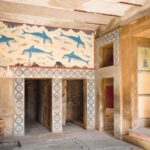
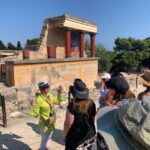
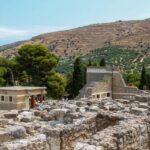
Stop 1: Knossos Palace in 90 minutes (what to watch for)
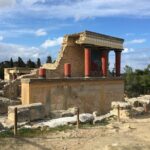
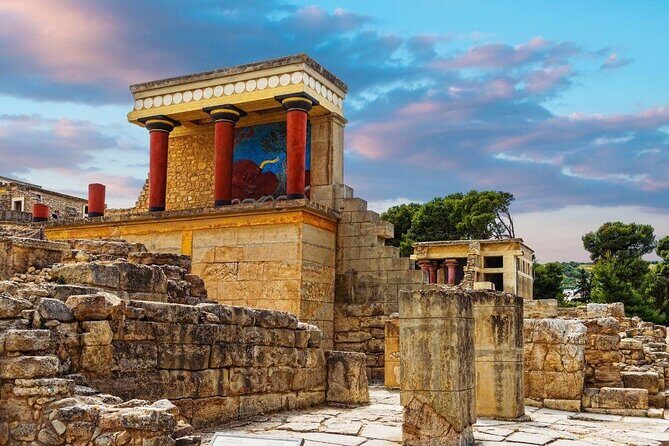
Knossos is the centerpiece. You walk through a complex of more than 1,500 interlocking rooms, and even in partial remains, the layout gives you that maze feeling. The guide’s job here is to make the space readable: where you’re standing, what the different areas likely meant, and how the site functioned for the Bronze Age power that ruled from it.
In about 1 hour 30 minutes, you’ll focus on the moments that help you understand Knossos, not everything everywhere. The specific highlights you’ll want to tune your attention to include:
- The throne associated with Minos: even if you know the myth only vaguely, seeing what’s presented here makes the legend feel less like a headline and more like a place.
- Sanctuaries: the guide helps you recognize why certain spaces mattered beyond everyday living.
- Royal domestic quarters: you’ll get a sense of how power looked from the inside, not just from outside walls.
- Luxurious storage and pantry areas for treasures: these bits help explain how a palace keeps value organized.
- Water-management systems: this is one of the most fascinating “real world” angles of Knossos, and it’s exactly the sort of detail that makes you go, so that’s how it worked.
What I like about the way this works is that Knossos can overwhelm you fast. In a place with many paths and partial walls, a guide keeps you from going in circles. You’re also not left staring at floor plans, trying to connect them to the ground in front of you.
Possible drawback: since admission isn’t included, you’ll need to account for time and logistics to get into Knossos. If you’re the type who hates last-minute ticket stress, plan ahead.
Stop 2: Heraklion Archaeological Museum for 2 hours (the 5,000-year story)
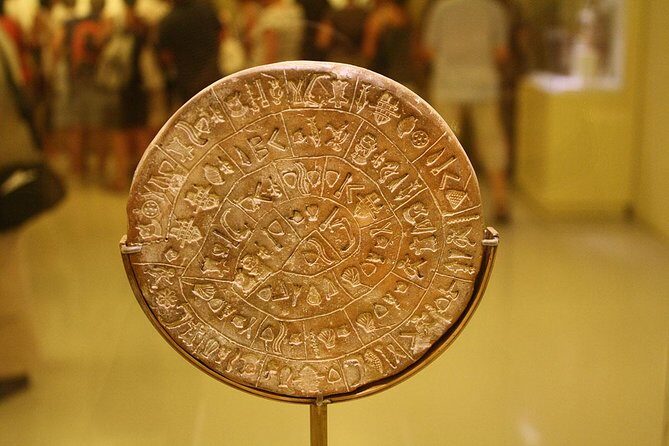
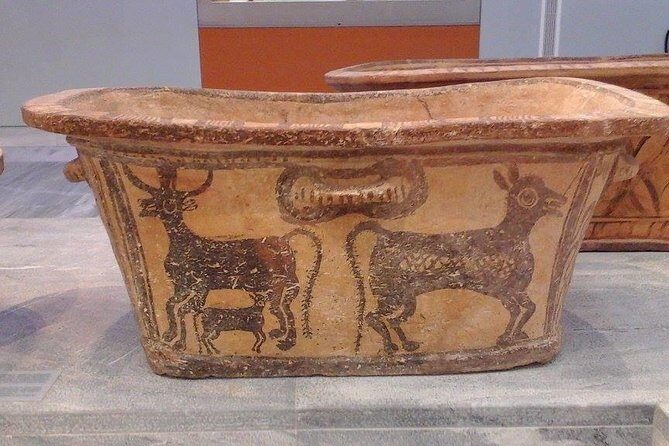
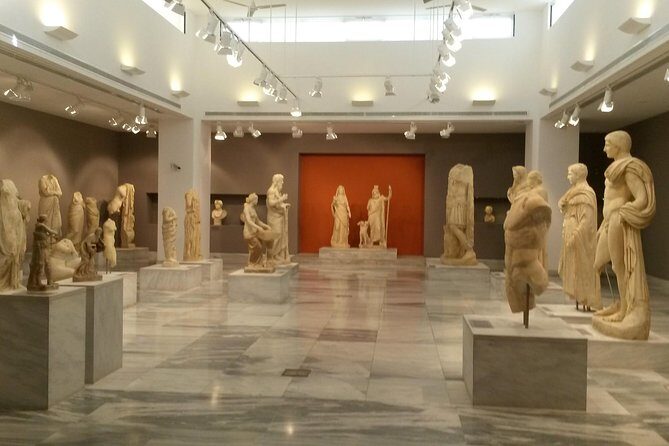
If Knossos is the setting, the museum is where the evidence lives. The Archaeological Museum of Heraklion is widely considered one of the most important museums in Europe for its field, and in this tour you get targeted coverage instead of aimless wandering.
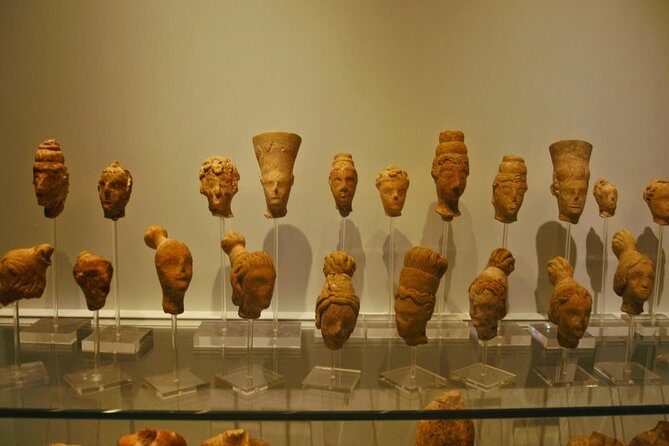
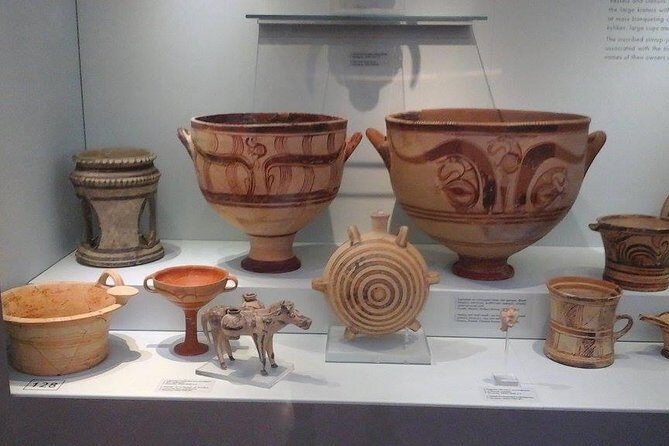
You’ll spend about 2 hours with a guide walking you through themes across 5,000 years, from Neolithic to Roman-era material. That time range is a big deal. A lot of museums can feel stuck in one chapter of the past, but this one gives you the longer arc of what changed—and what stayed important—as cultures shifted over time.
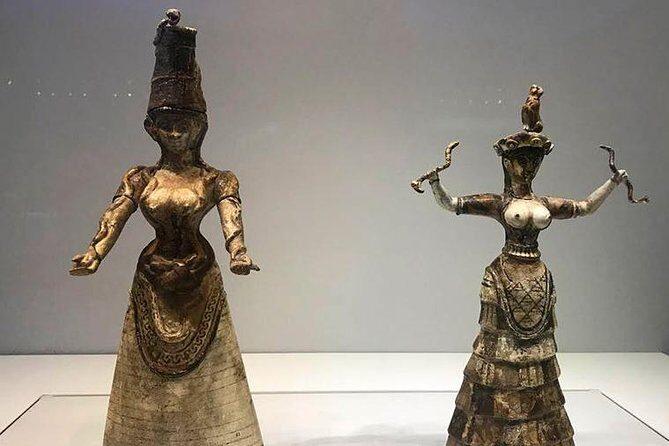
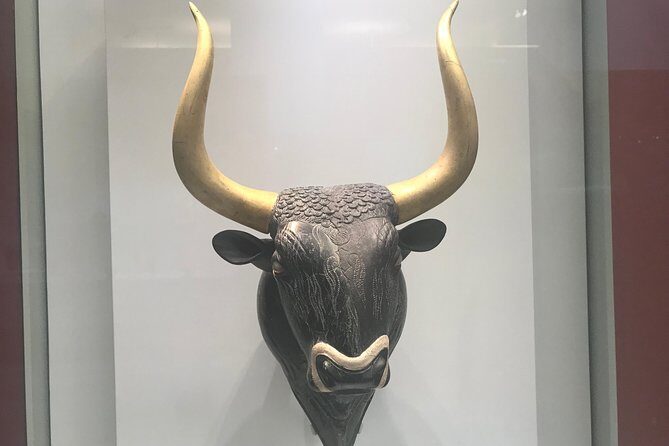
The best part of going with a guide in this space is not speed. It’s interpretation. With 27 galleries, you can absolutely see a lot without understanding much. With help, you’re more likely to connect artifacts to the world you just saw at Knossos. It’s like switching from reading a play to holding the props that inspired it.
If you’re a history fan, this stop is built for you. You’ll get help filtering what to notice: the objects that make the story legible, the connections between periods, and the context that turns labels into meaning.
One practical note for your own visit style: the museum can tempt you to read everything. Give the guide a chance first, then if you still have energy, go back for a closer look at the items that stood out during the tour. The time you save by not getting lost pays off here.
How the tour pacing works (and why it matters)
This is listed as an approx. 4-hour experience, and the structure reflects that. Ninety minutes at Knossos and two hours in the museum is an intentional balance. You get enough time to feel you experienced both places, without running into that classic problem: “We spent more time waiting for each other than actually seeing anything.”
Also, the tour is set within the morning operational hours (Monday–Saturday, 9:00 AM–1:00 PM). That’s good for two reasons. First, you’ll likely have more energy for walking and museum time. Second, you keep the rest of your day open for beach time, local food, or another short stop.
The small-group cap (up to 12) is also part of the pacing. In smaller groups, the guide can pause for questions, and you don’t have to constantly check that everyone is still together. If you’ve ever had a group tour where you’re constantly catching up, you’ll appreciate this setup.
English guidance and family-friendly clarity
One of the strongest notes from the provided feedback is about the guide’s communication: the tour was described as clear and engaging, including for children. That tells me two things you should expect.
First, the guide is likely to explain things in plain language, not just recite facts. Second, the guide seems comfortable keeping younger attention from wandering too far—useful if you’re traveling with kids, or if you simply don’t want a lecture.
Even if everyone in your group is adult-focused, that clarity is still valuable. Museums and ruins are dense. Clear guidance turns density into something you can keep in your head.
You can also read our reviews of more private tours in Crete





Price and what $260.69 per person really covers
At $260.69 per person, you’re paying for two things: access through expert guidance, and the work of connecting the big dots between Knossos and Heraklion.
Here’s what’s included: a professional guide. That matters because the tour isn’t “just a map.” It’s designed to help you find the best parts fast—saving time studying floorplans and avoiding the common mistake of treating Knossos and the museum as two separate checklists.
What’s not included: entrance tickets for adults to both the Heraklion Archaeological Museum and the Knossos Palace. So the real cost becomes your guide fee plus your ticket total. If you’re traveling with only one or two people, tickets can be a noticeable add-on. If you’re going as a small group, you’ll likely feel the ticket cost across the group, while the guide fee remains per person.
The good news is that this structure often feels like value if you care about understanding what you’re seeing. A guided visit is less about “seeing everything” and more about seeing the right things first.
Who should book this tour (and who might skip it)
This tour is a great fit if you:
- want a guided walkthrough rather than self-guided confusion
- care about Minoan culture and want it connected to objects in the museum
- prefer a smaller group pace (up to 12)
- like the idea of spending about 90 minutes at Knossos and then switching to artifacts for 2 hours
You might consider a different option if you:
- hate paying for guided experiences and prefer total freedom
- don’t want to plan around buying tickets separately
- have very limited time and need a shorter, single-site outing
Tips to get the most from your Knossos and museum time
I’d treat your day as two phases: orientation first, then appreciation.
- At Knossos, listen for how the guide reads spaces. When the guide explains sanctuaries, living quarters, storage, and water management, that’s what makes the ruins feel like a system, not just a pile of stone.
- At the museum, let the guide point you to what to notice before you go label-reading. Once you’ve heard the framing, the galleries stop feeling like random collections.
- Wear shoes that handle uneven walking. Even with a guide keeping you on the best routes, Knossos involves walking over rough historic ground.
- If you’re coming with kids, this kind of clear pacing tends to help. Go in expecting the guide to keep things understandable.
Should you book this private guide tour?
If you’re coming to Heraklion and you want to get real value out of both Knossos Palace and the Archaeological Museum of Heraklion, I think this is an easy yes. The two-site combo makes sense, the group size stays manageable, and the guiding approach is clearly geared toward keeping things understandable—even for families.
My only hesitation is the ticket add-on. But if you plan for adult entrances up front, that’s not a problem; it’s just part of the deal. Book this if you want a guided path through two of Crete’s biggest archaeology stops without wasting hours guessing what you’re looking at.