REVIEW · HERAKLION
Cretan Stories – A Journey Through History and Tradition
Book on Viator →Operated by Checkin Creta Travel · Bookable on Viator
History hits hardest when you’re on the road.
This day trip strings together the key moments of Cretan identity, from the Cretan Revolution at Arkadi Monastery to the pottery craft culture around Margarites. I also like the hands-on feel of the ceramic stop, where you can watch clay become useful objects in a working studio led by Mrs Helen. One possible drawback: the Ancient Eleftherna museum stop can feel underwhelming for some people, especially since you’ll pay entrance fees for the bigger sites.
The logistics are built for convenience. Pickup and drop-off cover a wide band along the north coast (including Panormo, Skaleta, Rethymno, and Georgioupoli area), and the pace gives you short, clear breaks with time to wander and grab lunch on your own in Margarites. If you’re traveling in a group, this also keeps the day from feeling frantic, with a maximum of 50 people.
In This Review
- Key Highlights You’ll Actually Notice
- A Full-Day Loop Through Rethymno’s Revolt Stories
- Arkadi Monastery: The Moment the Revolution Turns
- Ancient Eleftherna Museum: From 3000 BC to Later Life
- Margarites Village: Pottery Culture and Lunch at Your Own Pace
- Tsikalario Cretan Ceramics and Mrs Helen’s Live Demo
- Melidoni Cave: Revolution History Under Stone
- Price and Timing: Is This Day Worth $36.05?
- Pickup, Language, and Getting the Day Started
- Who This Tour Suits Best
- Should You Book Cretan Stories Through History and Tradition?
- FAQ
- How long is the Cretan Stories tour?
- What areas have pickup and drop-off?
- Where should I wait for pickup?
- Are entrance fees included?
- Is the tour offered in English?
- How many people are on the tour?
- What is the cancellation policy?
Key Highlights You’ll Actually Notice

- Arkadi Monastery history in real walking time, plus room to explore at your own pace
- Margarites village pottery culture, with an easy lunch option in local tavernas
- Live ceramics demonstration at Tsikalario Cretan Ceramics with Mrs Helen
- Melidoni Cave tied to the Turks occupation, with guided context and limited time underground
- Ancient Eleftherna’s long timeline (from early settlement to later religious life), but it’s the most hit-or-miss stop for some
- Hotel-area pickup across multiple towns, so you spend less time figuring out transport
A Full-Day Loop Through Rethymno’s Revolt Stories
This is one of those Crete days that doesn’t just show you places. It links them. You’ll start with a site that became a symbol during the Cretan Revolution, then you’ll move through older local life at Ancient Eleftherna, and finally you’ll end with crafts and cave history connected to the same larger struggle.
The day runs about 8 to 9 hours, which is long enough to feel like a true excursion, but short enough to still have energy afterward. Expect the rhythm to be a mix of bus narration and focused time at each stop: think history briefing on the ride, then a window to walk, look, and ask questions.
Practical tip: bring a little patience. The schedule includes multiple places with paid entrances, so you’ll want to be ready with comfortable shoes, sun protection, and a plan for lunch. Also, if your comfort depends on being in a specific language, know the tour is offered in English—on a mixed-language day, you may hear more than one language used.
You can also read our reviews of more historical tours in Heraklion



Arkadi Monastery: The Moment the Revolution Turns
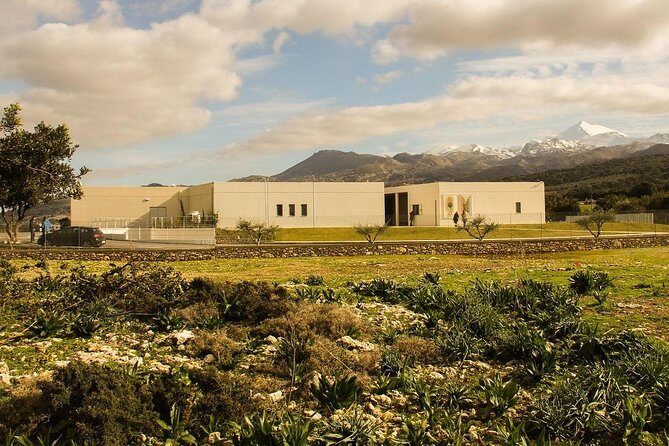
Arkadi Monastery is the heart of the day, and it’s not because it’s photogenic. It’s because it’s historically loud. Even before you walk the stone paths, the guide sets the scene on the bus, explaining why this monastery matters in the Cretan Revolution.
When you arrive, you get about one hour to explore. That’s a sweet spot: long enough to find your footing, move through the main areas, and sit with what you’re seeing. You can walk the small stone paths, look into the rooms, and spend time in the larger area connected to the infamous explosion.
One thing to know: the entrance fee for Arkadi isn’t included in your base price. Budget for it upfront so you don’t get surprised. Also, if you tend to rush through sites, this is the stop where slowing down pays off. Arkadi is the kind of place where your brain makes connections faster if you give it a few minutes of quiet wandering.
Ancient Eleftherna Museum: From 3000 BC to Later Life
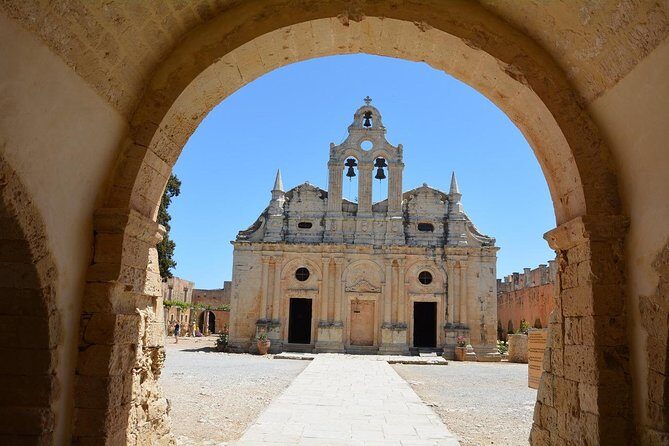
Next comes Archea Eleftherna, a place that stretches your mental map of Crete. You’re looking at a site that’s described as spanning a huge range—from 3000 BC up through 1300 AD. That means you’re not just seeing one era; you’re seeing the story of a community that changed over time.
Your time here is shorter, about 40 minutes, and the museum entrance fee is part of the paid-site total for the day (along with Arkadi and Melidoni). The stop is built around the idea of discovering the local and religious life of the ancient settlement.
Here’s the honest consideration: this is also the stop where some people feel the museum doesn’t match the level of expectations set by the bigger, more emotional places. If you love museums that hold your attention visually, you’ll probably enjoy it. If you prefer outdoor ruins or dramatic historical moments, you might find this one less gripping. Either way, use the short window efficiently: scan the key exhibits first, then decide what’s worth extra time.
Margarites Village: Pottery Culture and Lunch at Your Own Pace
Then you shift from history-in-stone to history-in-hands. Margarites is famous for pottery, and the village layout makes it easy to understand why. You’ll walk the traditional streets and soak up the crafts atmosphere without feeling like you’re stuck inside a showroom.
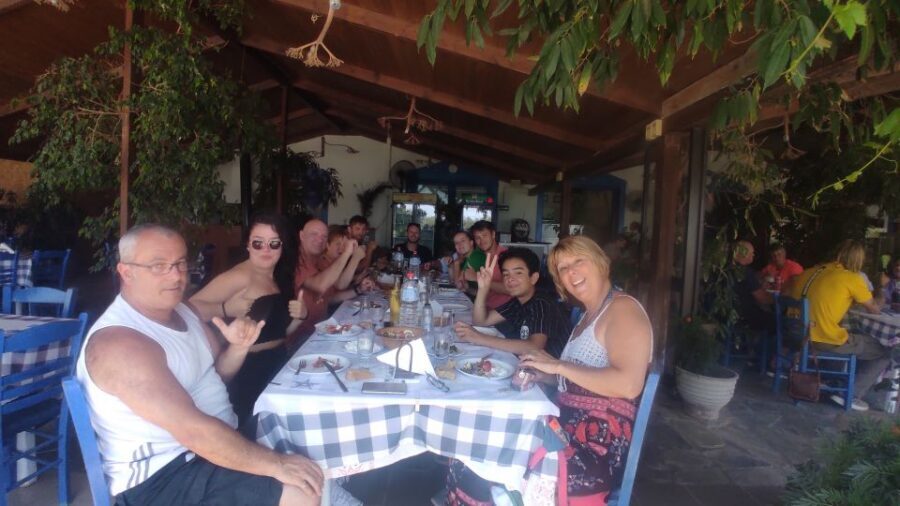
You get about two hours in Margarites, which is generous for this kind of day. The best part is the freedom built into the stop. If you want lunch, you can choose a local tavern and eat without rushing, and you’re not boxed into one set meal. This open lunch time is also where you can slow the day down just enough to avoid feeling museum-tired.
If you’re the type who likes to browse rather than shop, Margarites is still worth it. You’ll see how pottery fits the everyday rhythm of the village, and you’ll likely pick up a few ideas for what to look for later if you visit pottery elsewhere in Greece.
A practical note: bring a small amount of cash if you plan to buy ceramics. The tour includes a mobile ticket for the experience itself, but the crafts purchases at a studio or village shop are separate.
Tsikalario Cretan Ceramics and Mrs Helen’s Live Demo
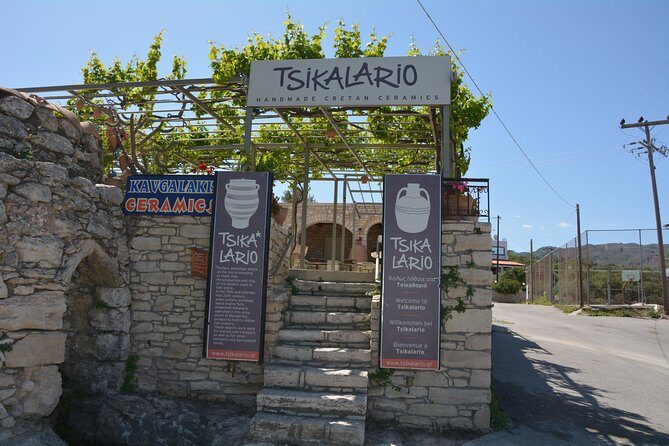
The crafts stop isn’t just about looking. It’s about watching the process. You’ll visit Tsikalario Cretan Ceramics, located near Margarites village, and you’ll get a working studio experience rather than a cold, behind-the-glass display.
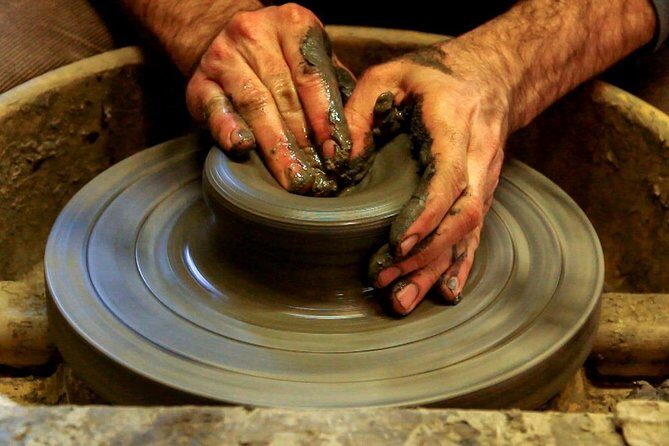
This is the point where the tour earns its reputation for being useful, not just scenic. The owner-artist, Mrs Helen, shows you live how clay becomes a finished object you can actually use. That’s a big difference between watching a quick sales pitch and seeing craft done at real speed, with real hands and real tools.
Your time here is about 40 minutes. That’s long enough to see the key steps, ask questions, and understand why certain designs and finishes exist. And it’s short enough that you still keep momentum for the cave stop after.
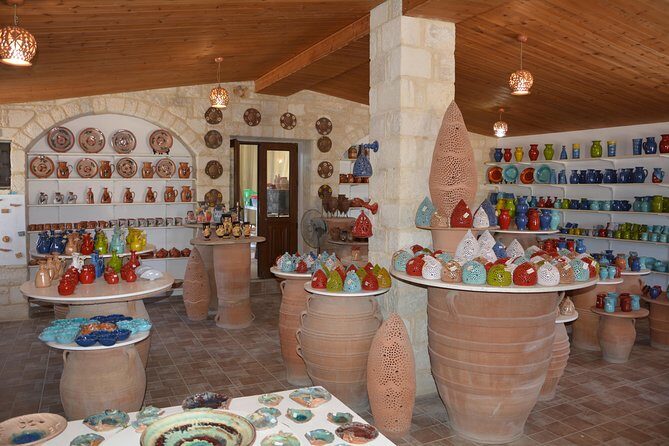
If you’re picky about buying quality souvenirs, this is also the best moment to do it. You’re not buying blind. You’ve seen the craft approach, and you can ask what pieces are made for use versus decoration.






Melidoni Cave: Revolution History Under Stone
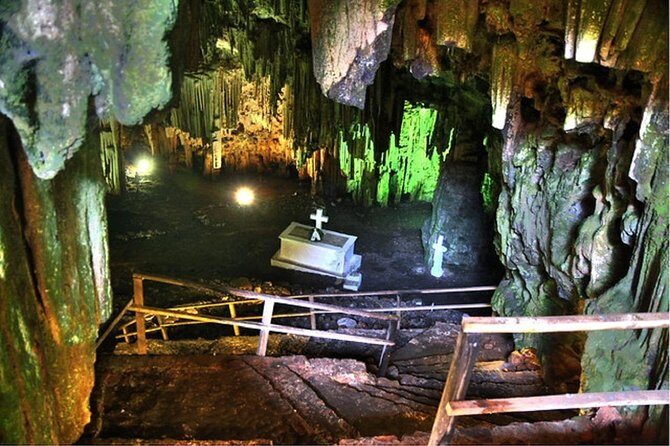
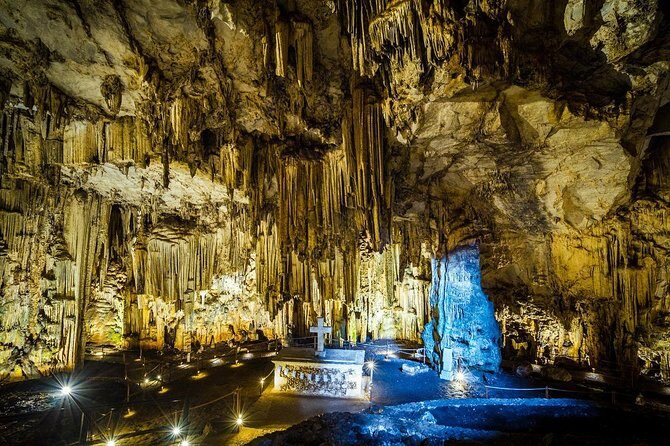
Next up is Melidoni Cave, another place tied to the Cretan Revolution during the Turks occupation. The guide sets the meaning before you go in, and you’ll have about 40 minutes to explore inside.
A cave stop is always a trade-off. It’s dramatic and cool, but you’re limited by time underground and by the practical realities of cave access routes. If you’re okay with that, Melidoni is a satisfying historical add-on that keeps the day from feeling purely like “ruins and museums.”
One caution to keep in mind: if you care deeply about cave formations staying as untouched as possible, be aware that cave access and improvements can change what you see. Some visitors have been bothered by how certain formations were altered for easier access, which is a fair way to think about whether tourism convenience should override preservation.
Pack for the cave comfort. Even if it’s warm outside, caves can feel cooler. Wear shoes you can trust on uneven surfaces, and keep your phone handy but not reckless—your time is limited, and you’ll want to spend it looking at the cave rather than trying to get the perfect angle.
Price and Timing: Is This Day Worth $36.05?
At $36.05 per person and a schedule that runs 8 to 9 hours, this tour aims for value through two things: transport and story. Pickup plus air-conditioned bus service means you aren’t spending your day negotiating rides between scattered historical and craft stops.
The main add-on cost is entrances. The operator lists €13 per person for the paid sites (Arkadi, the Eleftherna museum, and Melidoni). So your true cost is closer to that total once you’re on the ground. Still, for a full-day loop that includes a monastery, a long-timescale museum, a cave visit, and a live pottery demonstration, it’s not a bad deal—especially if you’d otherwise pay separate transport costs.
One more value signal: the tour is capped at 50 travelers. That usually keeps the day from turning into a herd, which matters at places like Arkadi where you want room to move and think.
Timing-wise, you’ll want to be ready for a busy day. The itinerary is structured, but you still need to manage energy. If you hate long days, don’t pick this as your only outing. If you like history plus one real craft moment, it fits well.
Also, note the tour uses a mobile ticket, which cuts down on paper hassle and makes the day feel smoother.
Pickup, Language, and Getting the Day Started
This is a pickup-forward tour. You’re asked to wait outside your hotel reception about 10 minutes before the appointment time. If you’re staying in one of the included pickup areas—Bali, Panormo, Skaleta, Adele, Platanias, Missiria, Rethymno town, Atsipopoulo, Kavros, and Georgioupoli—you’ll have a much easier start than if you’re trying to arrange your own bus.
Expect English to be available, and the bus guide provides narration en route (especially before the major stops like Arkadi). Still, language can be mixed depending on the day and the group, so if you’re relying on a single language for every detail, it’s worth planning with that reality in mind.
The day also includes drop-off back at the same general areas, so you’re not stuck figuring out your return. That’s a big convenience factor when you’re trying to see a lot without burning hours on logistics.
Who This Tour Suits Best
If your ideal Crete day includes history that has emotional weight and craft that feels hands-on, this one makes sense. Here’s what I think clicks:
- You’ll like it if you enjoy Cretan Revolution history and want the key sites in one day.
- You’ll like it if you’re curious about pottery as a living tradition, not just a souvenir.
- You’ll appreciate the schedule if you don’t want to plan transport between Rethymno-area spots.
This tour may be less ideal if you’re museum-focused and want a single museum that truly steals the show. The Eleftherna museum stop is shorter, and some people find it weaker than the other stops. It’s still a meaningful piece of the day, but you shouldn’t expect it to compete with Arkadi in emotional impact.
Should You Book Cretan Stories Through History and Tradition?
I’d book this tour if you want a straightforward, full-day history + crafts mix in the Rethymno region, with convenient pickup and at least one stop that’s genuinely interactive. Arkadi gives the big historical backbone. Margarites adds culture you can feel by walking through it. And the ceramics demonstration with Mrs Helen is the kind of add-on that turns a sightseeing day into something you remember for the right reasons.
I’d pause before booking if your priority is one standout museum experience, because the museum portion may feel like filler compared with the monastery and cave. Also, if you’re extra sensitive to how tourist access affects natural formations, go in with eyes open.
If that sounds like your style of travel, this is a solid value way to spend a day—no complicated planning, just a well-paced loop through Crete’s stories.
FAQ
How long is the Cretan Stories tour?
The tour runs about 8 to 9 hours.
What areas have pickup and drop-off?
Pickup and drop-off are offered in Bali, Panormo, Skaleta, Adele, Platanias, Missiria, Rethymno town, Atsipopoulo, Kavros, and Georgioupoli.
Where should I wait for pickup?
Wait outside your hotel reception about 10 minutes before the appointment time.
Are entrance fees included?
No. Entrance fees for Arkadi, the Eleftherna museum, and Melidoni are not included. The listed total is €13 per person.
Is the tour offered in English?
Yes, the tour is offered in English.
How many people are on the tour?
The maximum group size is 50 travelers.
What is the cancellation policy?
You can cancel for a full refund up to 24 hours in advance. If you cancel less than 24 hours before the start time, the amount paid is not refunded.