REVIEW · CRETE
Heraklion: Scuba Diving Experience for Beginners _Beach
Book on GetYourGuide →Operated by AQUADIVE · Bookable on GetYourGuide
First breaths underwater, right off a Cretan beach. This beginner scuba training in Agia Pelagia turns nerves into confidence fast, thanks to a certified instructor who stays with you and guides your first basic underwater skills. My only real watch-out is that the experience runs a bit longer than the time in the water, and the optional photo set can add up.
You’re based at Mononaftis, a beach where you can get into the water and start feeling comfortable without the stress of a long boat ride. I also like that the format is structured: a short digital theory session, then a supervised underwater session where you learn simple commands and focus on enjoying the sea.
One more thing to know up front: this is not for everyone. It’s aimed at people who meet the health rules, and children need to be at least 8 years old.
In This Review
- Key points to know before you book
- Mononaftis Beach in Agia Pelagia: why this spot works for first-timers
- The “from fear to control” training flow you actually need
- What happens before you go in: gear, medical check, and safety basics
- The underwater 45 minutes: shallow, supervised, and built around simple commands
- Sunlight, fish, and rock formations: what you should watch for
- Photos and videos: budget for memories, or skip them on purpose
- Price and value: how $81 adds up (and what costs extra)
- Pickup, meeting times, and the real rhythm of the day
- Who should book this experience, and who should skip it
- Should you book Aquadive’s beginner scuba try in Agia Pelagia?
- FAQ
- Where is the meeting point if I don’t use pickup?
- How long is the experience, and how much time is spent underwater?
- What’s included in the price?
- Are photos and videos included?
- What languages do the guides/instructors speak?
- Who is this experience not suitable for?
- What should I bring, and is there anything I can’t bring?
- Can I cancel for a full refund?
Key points to know before you book
- Mononaftis shore access in Agia Pelagia: You start right from the beach, in calm, beginner-friendly conditions.
- 30-minute digital theory lesson: Short and focused, before you go in the water.
- Small groups capped at 10: Easier attention and more check-ins from the instructor.
- 45 minutes underwater with basic commands: You learn what to do, not just what to feel.
- Instructor support that helps first-timers: Many first-time divers (and nervous non-swimmers) get one-on-one attention.
- Photos/videos are extra: Worth budgeting for if you want the underwater pictures your guide takes.
Mononaftis Beach in Agia Pelagia: why this spot works for first-timers
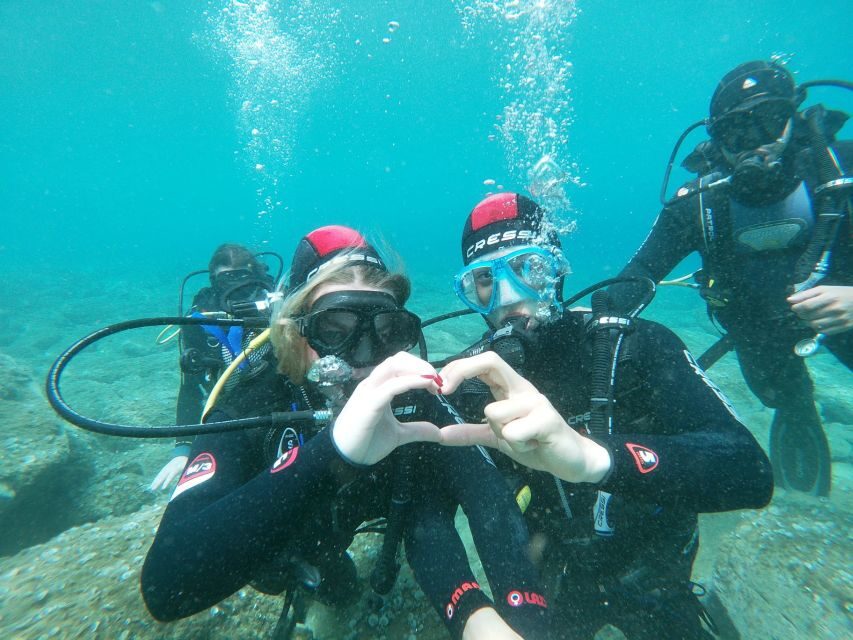
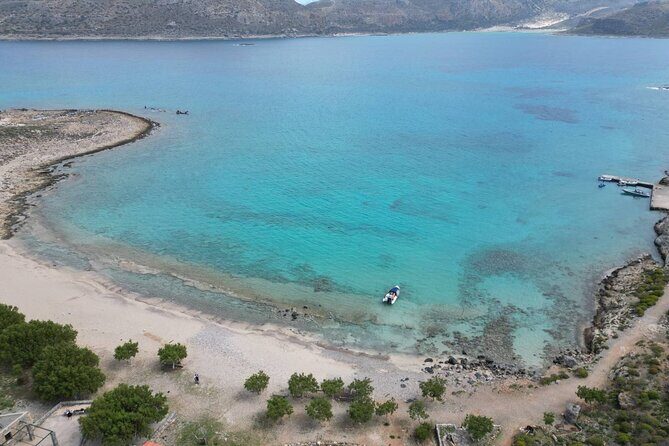
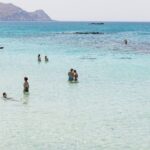
I love how this experience uses the beach like a classroom. Mononaftis is in Agia Pelagia, and you’re not dealing with complicated logistics or a big open-water jump from the shore. You get into the water, keep things shallow, and the whole day stays manageable even if you’re anxious at the start.
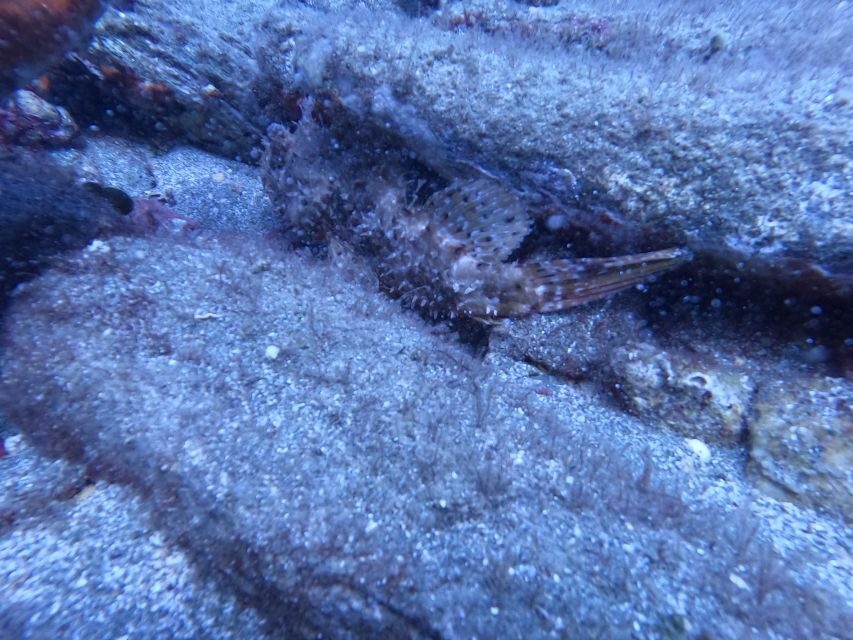
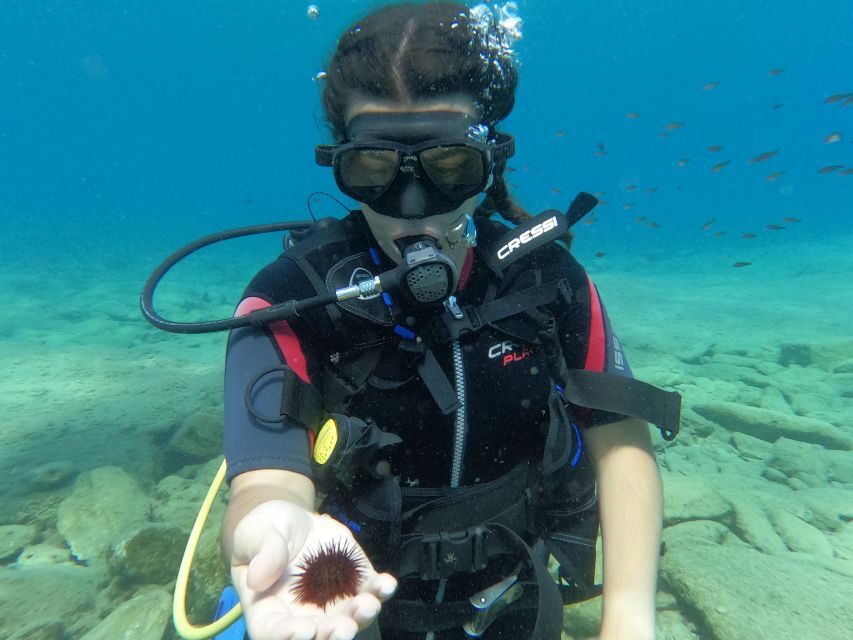
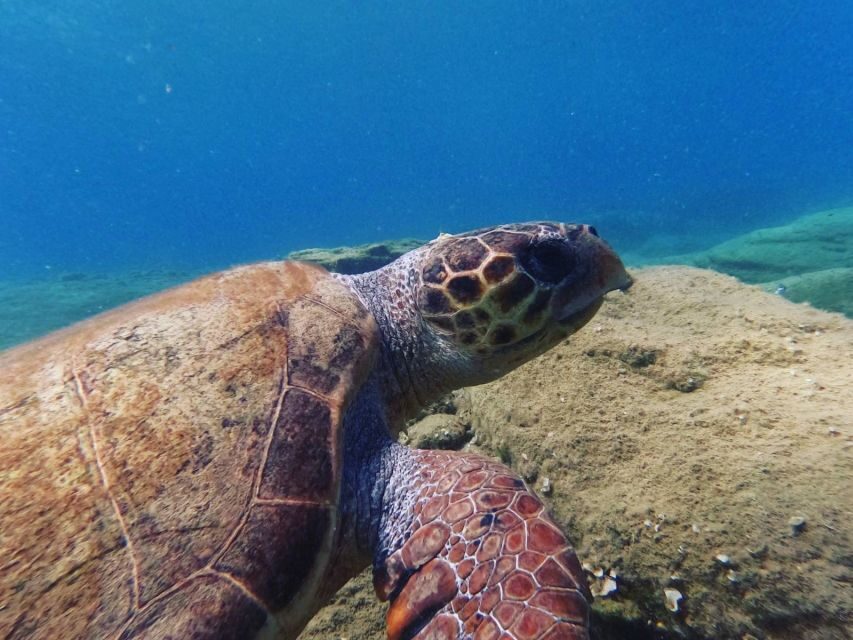
The other reason the location is a win is visibility and light. People talk about clear, warm water and the way sunlight filters down through the surface, lighting up the seabed. You’ll also have a good chance to spot local marine life close to where you’re swimming, especially fish and things like sea urchins. One person even mentioned interesting rock formations just off the beach, which adds texture to what you’re looking at.
Just keep expectations grounded. Marine life isn’t guaranteed every minute, and one review noted that animals were less active due to nearby fishing activity. That doesn’t make the experience worse. It just means your best view will come from being relaxed, following your instructor, and staying curious rather than hunting for a specific animal.
You can also read our reviews of more scuba diving tours in Crete
The “from fear to control” training flow you actually need
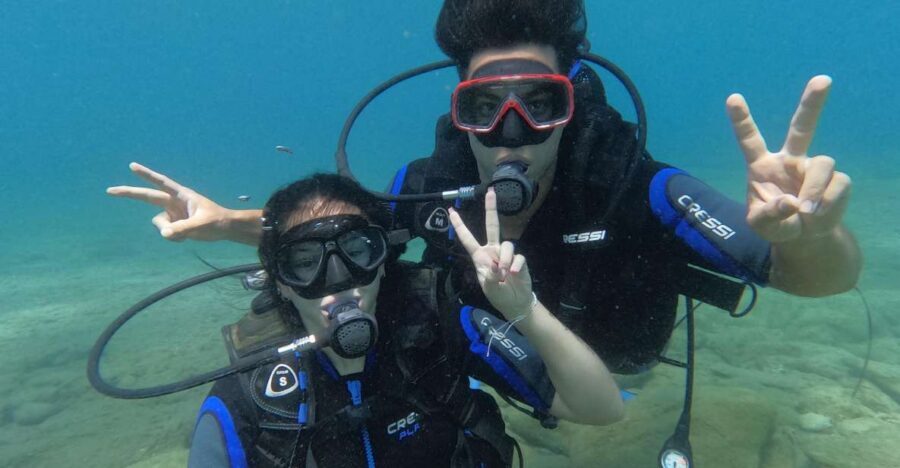
The whole structure is built for people starting from zero. You begin with a 30-minute digital theory lesson (offered in the language you choose), then you practice the basics so your body knows what to do before you’re underwater. That’s the difference between panicking and functioning.
Then comes the part that matters most: you don’t just get instructions and sent off. You’re accompanied by a certified instructor for the underwater session. In the reviews, people specifically mention how attentive the guides are for first-timers, including one guide named George who stayed very close for nervous participants. Another review praised how the guides focused only on the essentials, rather than overloading you with technical details.
Also, group size helps. The activity runs in two or three groups per day, with a cap of 10 participants. In practice, that usually means you’re not lost in the crowd. You get repeat check-ins, and you’re more likely to get your questions answered before you freeze.
One more scheduling note that shapes your day: the experience lasts 3–6 hours, even though your underwater time is 45 minutes. The gaps are for theory, fitting gear, getting organized by group, and then returning and settling into the rest of your day. Plan your timing like it’s a half-day activity, not a quick morning splash.
What happens before you go in: gear, medical check, and safety basics
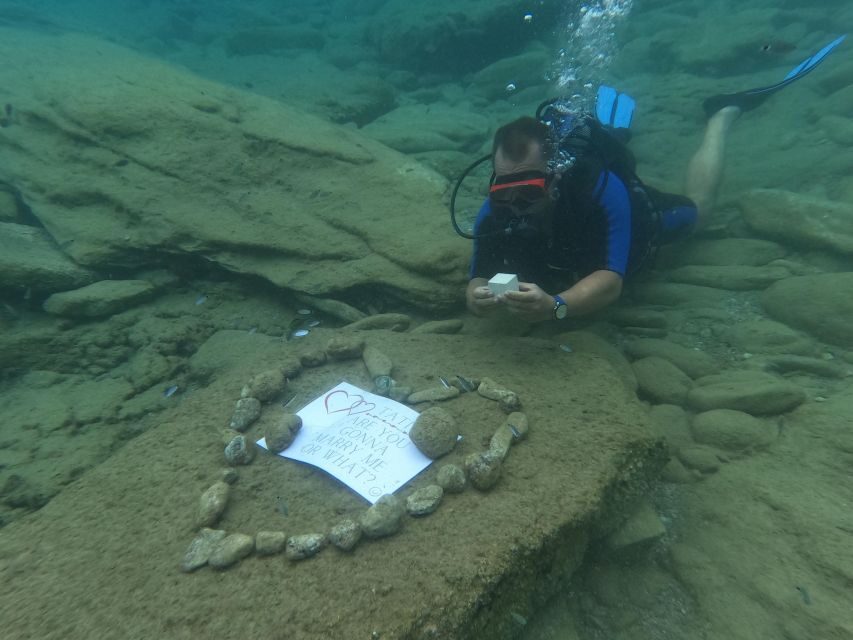
Everything you need is included: full scuba equipment, water, diving insurance, and the instructor-led training. You also receive a digital experience diploma at the end.
Before you step into the water, you’ll complete a medical questionnaire. If you have respiratory issues, heart problems, epilepsy, high blood pressure, diabetes, recent surgeries, or if you’re pregnant, this activity isn’t suitable. The age limit is also clear: no children under 8, and there are upper-age and medical-condition boundaries listed for safety.
You’ll also want to follow the simple rules: no alcohol and no drugs. It sounds obvious, but it matters for your safety and for how the instructors manage the group.
Gear-wise, multiple reviews mention that suits and equipment were in good shape, and that the staff took care in preparing people. If you wear contact lenses and forget them, you’re not stuck without support. One review described how a guide was very caring and didn’t leave a nervous participant alone in the water.
One practical heads-up: one reviewer said you’re not allowed to take your own camera for security reasons. If you’re hoping for personal underwater photos, assume you’ll rely on the photos/videos offered by the team (sold separately). Bring a towel and flip-flops, not a fancy camera rig.
The underwater 45 minutes: shallow, supervised, and built around simple commands
Your underwater time is 45 minutes, and it’s designed for comfort. Reviews describe a setup where you go from the beach and stay very close to the surface. One person noted the surface was only about 6 feet away, with a swim into the water of roughly 10–20 meters. Another mentioned shallow depths around 5 meters.
That shallow profile is the reason this is a strong first attempt. You can focus on breathing and buoyancy without feeling like you’re far from safety. And the instructor role is active, not passive. People report that the guide follows you in the water, checks your comfort regularly, and steps in quickly if something feels off.
What you’ll likely do underwater:
- Practice basic underwater commands so you know how to communicate and respond
- Look around at fish and nearby sea life on and around the seabed
- Move slowly and enjoy the lighting effects from the sun rays above
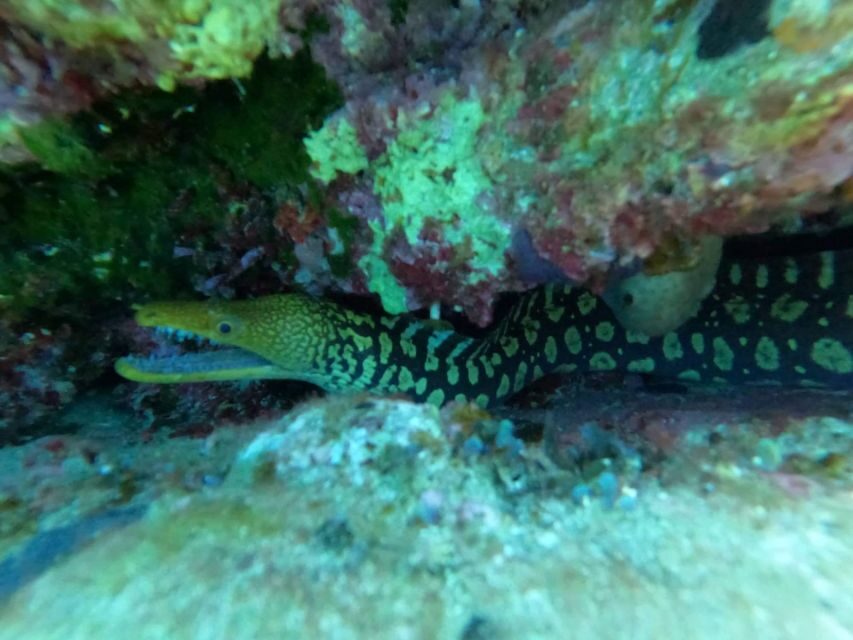
Marine activity can vary. One person mentioned seeing less life than expected because of fishing nearby, but others reported fish, sea urchins, and a lively view through clear water. So your “win condition” is less about a specific animal and more about feeling confident enough to explore your patch of sea.
Sunlight, fish, and rock formations: what you should watch for
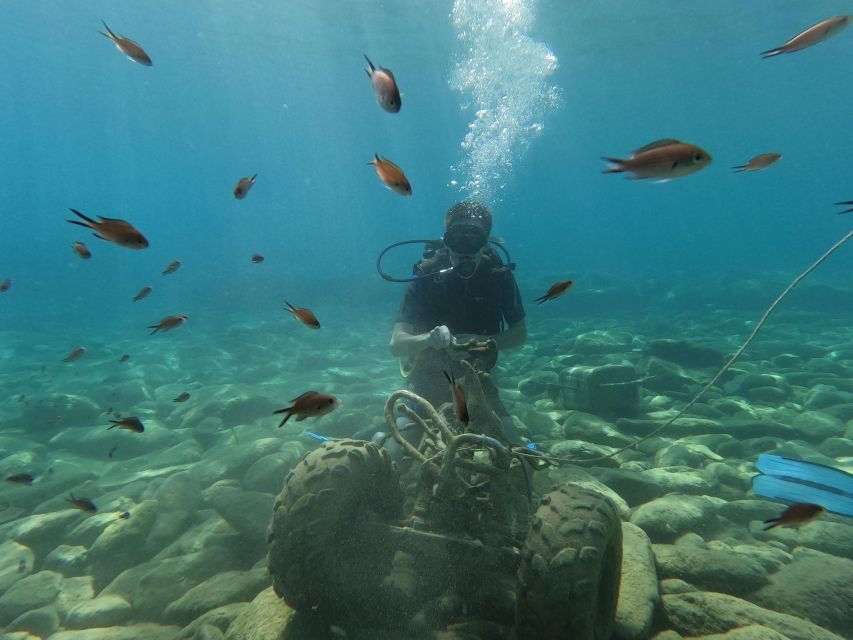
I think the best part of this underwater session is what you notice when you stop thinking and start looking. In clear water, the seabed becomes a visual map: sun rays create contrast, and the rocks add structure to the view. A review specifically mentioned rock formations near the shore, which makes the environment more interesting than a plain sand slope.
For marine life, focus on small moments:
- Fish that hang near the seabed
- Small creatures like sea urchins on rocks or in the sand
- The way shadows move as you change your body position
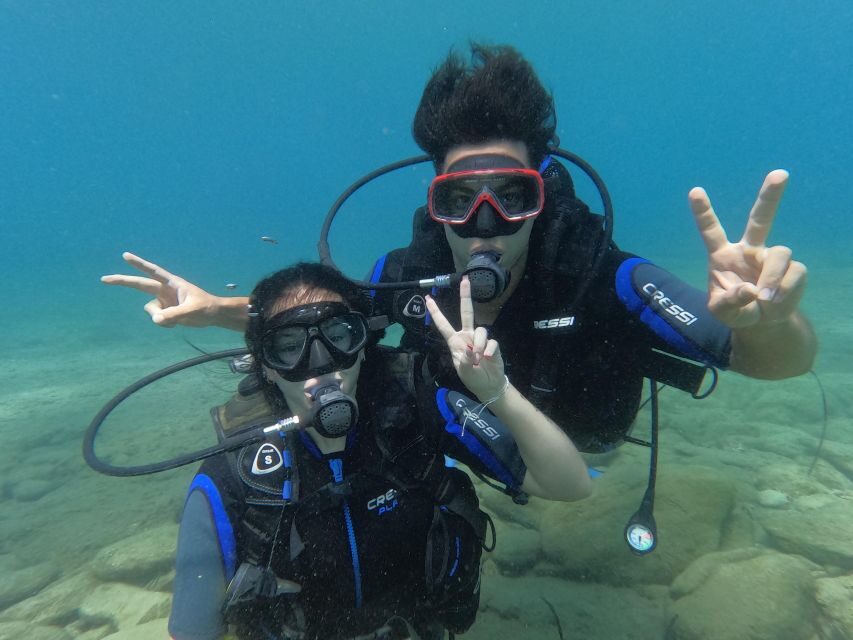
If you want photos, remember this is not a DIY experience. The guides take underwater images and you can purchase them after. People described the photo set as an added surprise that helped them remember the day, but also warned it’s extra cost (details below).





Photos and videos: budget for memories, or skip them on purpose
Photos and videos are not included in the price. Reviews show a pretty consistent pattern: the team offers underwater photo sets you can buy, and the cost depends on how you pay.
What to know:
- One review said photos were about €15 per person when paid in cash, and €20 per person by card.
- Another review said photo/video pricing can land around €30–40 depending on what you buy or how many people are in your group.
- There were mentions of getting a set of photos by email, and some people also referenced included videos beyond the photo set.
If you don’t plan to purchase, you can still have a great day. You’ll just want to accept that you’re likely taking home memories in your head, not on your camera roll.
If you do want photos, bring cash if that’s an option for you, and decide in advance whether it’s “worth it” for your group. One review also mentioned the need to be prepared since the extra time on the beach meant they missed lunch. If you’re buying photos, it’s smart to plan for the decision when your equipment is packed away, not at the last second.
Price and value: how $81 adds up (and what costs extra)
At $81 per person, this is one of those “you’re paying for the team” experiences. The price covers:
- Certified instructor supervision
- 30-minute digital theory lesson
- Full scuba equipment
- 45 minutes underwater
- Water
- Digital experience diploma
- Diving insurance
- Pickup and drop-off from selected areas (optional)
From a value standpoint, the inclusion of insurance and equipment matters. For your first try, equipment alone can be a headache to source, and insurance is peace of mind you don’t need to scramble for.
The “extra” category is mainly photos/videos and food. Food is not included. If your pickup back to your hotel is later than you expect, you’ll want snacks. The tour asks you to bring snacks, which tells you they know the beach time can run long.
One practical drawback that comes up in reviews: return timing. Even when the underwater activity is over by late morning, some people reported waiting until around 2 pm for hotel drop-off. That’s not a reason to skip it, but it is a reason to show up with a beach plan. Bring a towel, grab a chair, and treat it like a half-day by the water rather than a rushed appointment.
Pickup, meeting times, and the real rhythm of the day
If you choose the option without transfer, you meet directly at the base at 09:15am or 11:30am. The exact time for your group can be communicated the day before by email, and it’s worth checking spam too.
If you choose pickup, the schedule shifts. Pickup begins around 08:30am, and drop-off is around 14:30pm. Transfers are offered from multiple areas, including Agia Pelagia, Chersonisos, Stalida, Kokkini Hani, Stalida area, and Heraklion, plus places like Ammoudara–Gazi and Malia. The transfer vehicle is a white minibus with Aquadive diving stickers, so you can spot it.
In the real world, your day will feel like:
1) Arrive and get sorted
2) Theory + gear fit
3) Underwater session
4) Back to shore, then back to your hotel
Because of that structure, I recommend you don’t stack another big plan right after. People who didn’t come prepared for the waiting time noticed they missed lunch. Bring snacks, and keep your schedule flexible.
Who should book this experience, and who should skip it
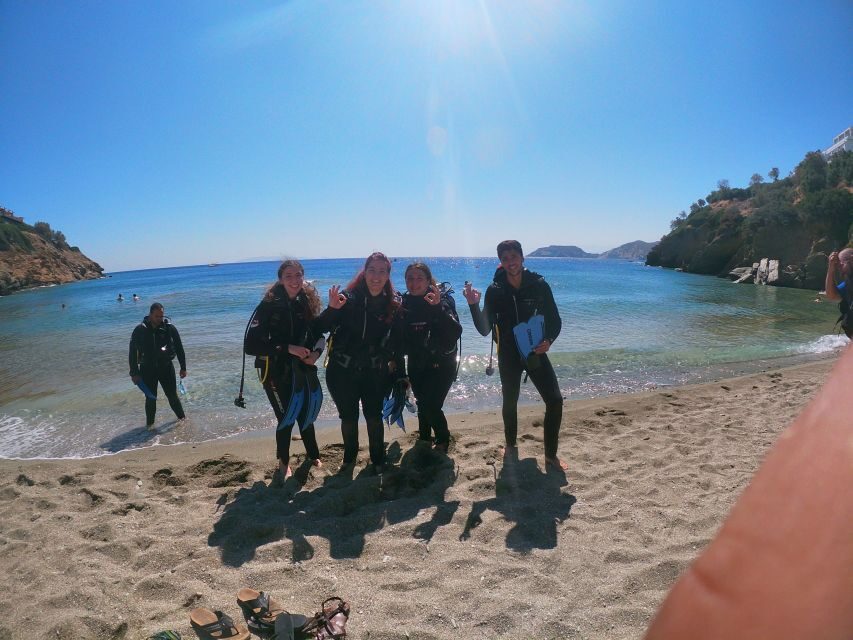
This is meant for true beginners who want to try scuba with training wheels. Reviews include nervous first-timers, non-swimmers, and families traveling together, and the common thread is attention. If you’re the type who learns best with clear steps and a human keeping you on track, you’ll likely feel comfortable.
It’s also suitable for kids at the minimum age: children must be 8 or older. One family review said the kids did great and had a fantastic time.
Skip this if you fall into the listed medical or condition categories:
- Pregnancy
- Heart problems
- Respiratory issues
- Epilepsy
- Diabetes
- People over 65
- People with pre-existing medical conditions
- High blood pressure
- Recent surgeries
Also, plan timing around flights. The guidance says there should be at least 12 hours between flying and the scuba experience, and it’s not recommended to book the same day you fly. That’s a comfort and safety rule you should follow.
If you’re unsure about your health status, the medical questionnaire is your cue to be honest and careful.
Should you book Aquadive’s beginner scuba try in Agia Pelagia?
I’d book it if you want an organized first underwater experience with small groups, full gear, and serious instructor attention. The Mononaftis shore setup is ideal for learning basic commands without feeling far from safety, and the day feels like a relaxed half-day on a real Crete beach.
I’d skip or rethink it if you’re hoping for your own camera-ready experience, or if you don’t want extra costs later. Photos/videos are optional but not cheap, and some people end up waiting on the beach longer than they expected.
If you’re nervous, this is still a good choice. Reviews repeatedly point to guides staying close to first-timers, with patience and calm instruction. Just go in prepared: bring snacks, bring your towel, complete the medical questionnaire honestly, and plan your day with a little buffer.
FAQ
Where is the meeting point if I don’t use pickup?
If you choose the option without transfer, you meet directly at the base at 09:15am or 11:30am. Your exact group timing is shared by email the day before.
How long is the experience, and how much time is spent underwater?
The total experience runs 3–6 hours. It includes a 45-minute underwater session, plus a 30-minute digital theory lesson before you go in.
What’s included in the price?
You get a certified instructor, a 30-minute digital theory lesson, full diving equipment, the 45-minute underwater session, water, a digital experience diploma, diving insurance, and pickup/drop-off from selected areas if you choose transfer.
Are photos and videos included?
No. Photos and videos are not included in the package. You can purchase them separately from the team.
What languages do the guides/instructors speak?
A live tour guide is available in English, German, French, Greek, Russian, and Spanish.
Who is this experience not suitable for?
It’s not suitable for children under 8, pregnant women, and people with heart problems, respiratory issues, epilepsy, diabetes, high blood pressure, or recent surgeries. It also lists restrictions for people over 65 and people with pre-existing medical conditions.
What should I bring, and is there anything I can’t bring?
Bring swimwear, a towel, snacks, and flip-flops. Alcohol and drugs are not allowed.
Can I cancel for a full refund?
Yes. You can cancel up to 24 hours in advance for a full refund.