REVIEW · CRETE
Experience Scuba Diving in Heraklion Crete
Book on Viator →Operated by Horizon Diving · Bookable on Viator
Scuba training that starts calm, then surprises you. This Heraklion-area experience pairs small groups (max 8) with a structured first-timer setup, so you’re not just thrown into water—you’re coached step by step. I like that the mini theory lesson in EN/FR/DE keeps you oriented fast, before you ever put on gear.
My favorite part is how patient the instructors are with the practical stuff: equipment use, breathing, and pressure equalization. The main consideration is medical screening—there’s a medical questionnaire and if you have breathing or related issues, you may not be cleared to participate.
In This Review
- Key highlights you’ll notice right away
- Getting to the Horizon base in Gournes (with hotel pickup)
- The paperwork and safety checks before you go in
- The mini theory lesson in EN, FR, and DE
- Shallow-water training: breathing, buoyancy, and equalizing
- Mononafitis Beach underwater time: fish schools and surprises
- Instructors, equipment, and what makes it feel truly safe
- Duration and what the day really feels like
- Price of $119.47: what you’re really paying for
- Who should book this Heraklion-area session
- Should you book Horizon’s first-timer underwater session?
- FAQ
- How long is the experience near Heraklion?
- What time does it start?
- Is pickup included?
- Do I need to know how to swim?
- What languages are the lesson and briefing offered in?
- What’s the minimum age?
- How deep will I go?
- What paperwork do I complete before going in the water?
- Are there medical restrictions?
- Can I cancel for a full refund?
- What if the weather is bad?
Key highlights you’ll notice right away
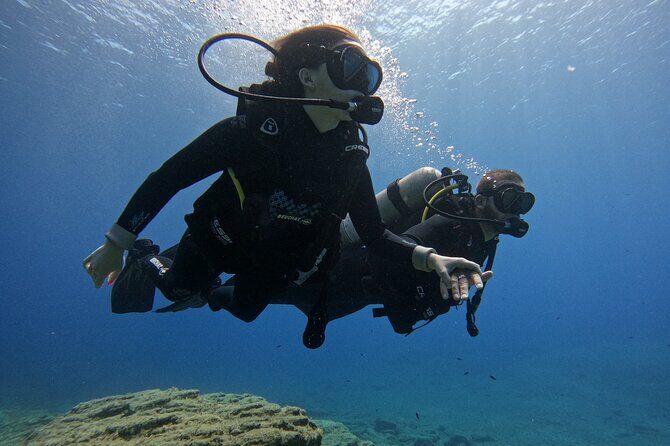
- Max 8 people means more time with your instructor and fewer people to manage at once
- EN/FR/DE mini lesson helps first-timers learn the key concepts in their language
- Shallow-water practice first so buoyancy and ear equalization feel normal before going deeper
- Mononafitis Beach area is used for the beginner-friendly intro session
- Safety-first skill building includes what to do if something goes wrong underwater
- GoPro-style recording and photos are available so you can focus on the moment
Getting to the Horizon base in Gournes (with hotel pickup)
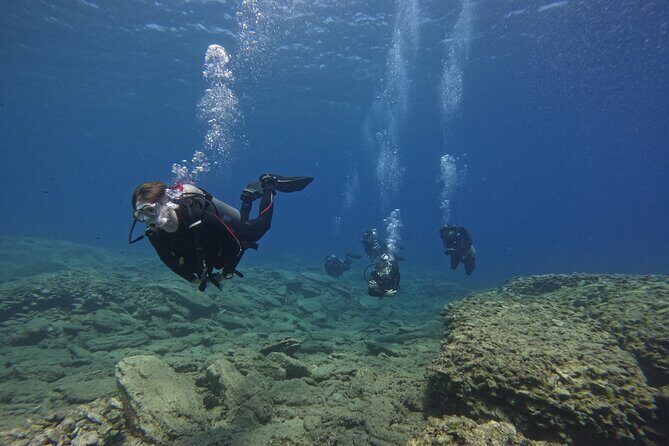
The day starts at 9:00 am, and you’ll either head to the meeting point in Gournes (Δομήνικου Θεοτοκόπουλου 15) or get picked up. If you’re staying nearby, look for a vehicle with a Horizon sign outside your hotel or property. It’s the kind of pickup that saves you the hassle of figuring out the water spot on your own.
Once you arrive, the vibe is practical and friendly. You’re not handed a vague “good luck” and sent off. The group is small—up to 8—so the instructors can slow down for nervous first-timers and still keep the schedule moving.
One more detail I appreciate: this is set up for real beginners. The experience is built around confidence, not athleticism, which matters because the big fear for many first-timers is not the ocean—it’s doing the breathing and ear-pressure part correctly while you’re wearing gear.
You can also read our reviews of more scuba diving tours in Crete
The paperwork and safety checks before you go in
Before you even touch the water, you’ll complete a participant statement that includes a liability release and a medical questionnaire. That questionnaire’s purpose is to see whether you should be examined by a doctor before taking part in recreational scuba. If you’ve got any breathing-related medical concerns, expect the screening to be taken seriously.
This matters because the experience is designed as a fun introduction, not a gamble. You’ll also hear the safety approach clearly: you’ll be taught what to do in case of equipment trouble, and you’ll practice core skills in shallow water first.
Another supported point: there’s a minimum age of 8 years old. And—big for families—you do not need to know how to swim. Depth and pace are adapted to each person’s confidence and to the standards of the session.
In other words, you’re trading spontaneity for structure. For most people, that’s exactly what makes first time feel safe.
The mini theory lesson in EN, FR, and DE
You get a short theoretical briefing (the operator lists EN, FR, and GER), focused on what you actually need underwater. I like that it’s not a long classroom lecture. Instead, it’s targeted: how the scuba equipment works, the basics of breathing underwater, and how equalization works for ear pressure.
A practical bonus is that you’ll go into the water with hand-signal style communication and basic response plans already explained. One of the best-feeling parts of the day is when you realize the instructor is not just waiting for you to “figure it out.” They set expectations early, then you practice them in real conditions.
If you’re coming from a place of nerves—like worrying about sharks or unknown marine life—this briefing is also where misconceptions get answered. The team has shared that there has never been any sharks in the area, which sounds like a small detail until you realize how much fear it can remove before you’re underwater.
Shallow-water training: breathing, buoyancy, and equalizing
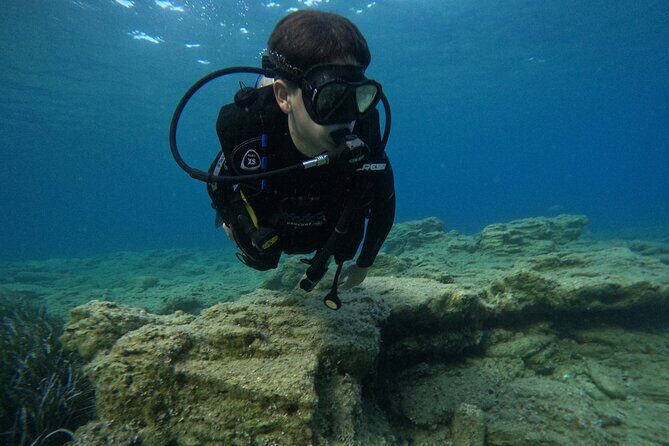
The experience follows a simple rhythm: kit up → short training → shallow-water skill practice → then you go deeper based on comfort. Before you progress, you’ll work on key techniques together with your instructors.
What you’ll practice tends to include:
- how to use the scuba gear correctly
- breathing techniques while submerged
- equalization (the ear-pressure method)
- basic controlled skills before any deeper water
In one example, an intro setup is used in a lagoon-like area that can be up to around 7 meters—perfect for first practice because the water depth stays manageable. In other cases, first-timers may reach around 10 meters, but only after the instructor confirms your comfort.
A big strength here is pacing. The instructor adjusts the tempo to your level. If ear equalization is tricky, you’re not punished or rushed. Support is hands-on, and the instructor team can take extra time with you before you move farther out.
For me, that’s the difference between a “fun outing” and a real start toward scuba confidence. You come out understanding the basics, not just surviving the session.
Mononafitis Beach underwater time: fish schools and surprises
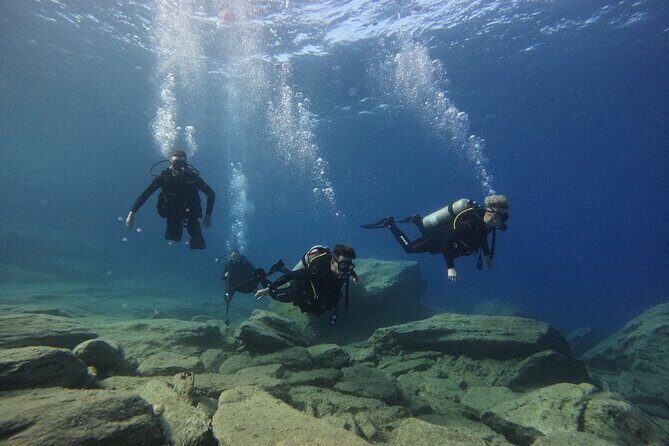
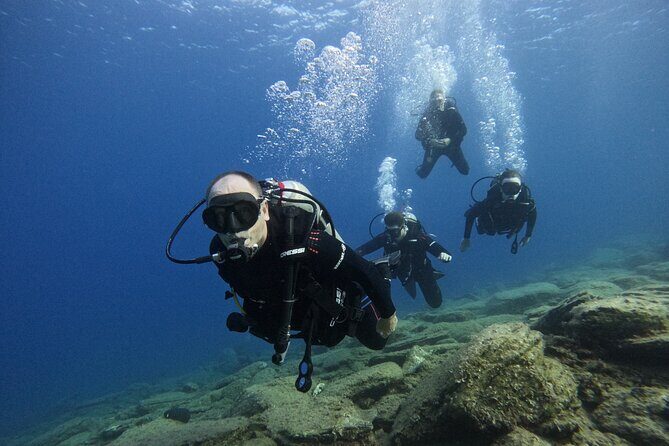
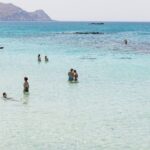
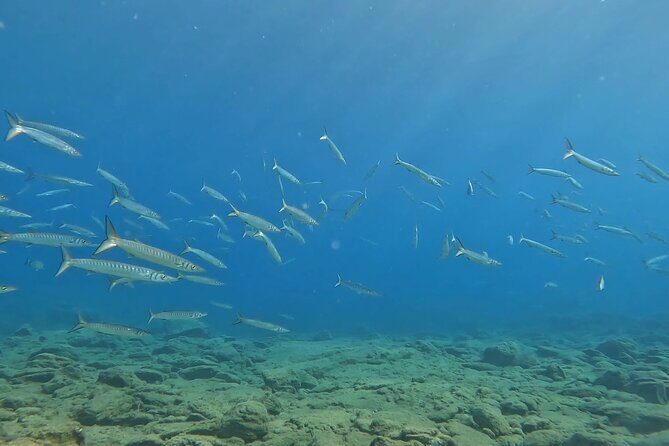
The water time centers on the area near Mononafitis Beach, and it’s built around seeing marine life without overwhelming first-timers. Even during the early phases, you can expect a lot of movement in the water—especially fish schools.
From the experience details and examples, the kind of wildlife you might spot includes:
- schools of fish
- smaller standout creatures such as sea urchins
- and sometimes a larger curiosity like an octopus
Visibility is described as bright and clear in the examples, which really helps first-timers. When you can see well, you spend less energy guessing where everything is, including your own buoyancy and positioning.
One more note: you’ll spend time underwater at a depth that matches your readiness. That’s why the earlier shallow-water practice matters. The goal isn’t to hit a number—it’s to keep your breathing steady while your body learns the gear.
If you’re the kind of person who worries you’ll be too nervous to enjoy the ocean, you’ll probably be relieved. The coaching style is meant to replace panic with control.





Instructors, equipment, and what makes it feel truly safe
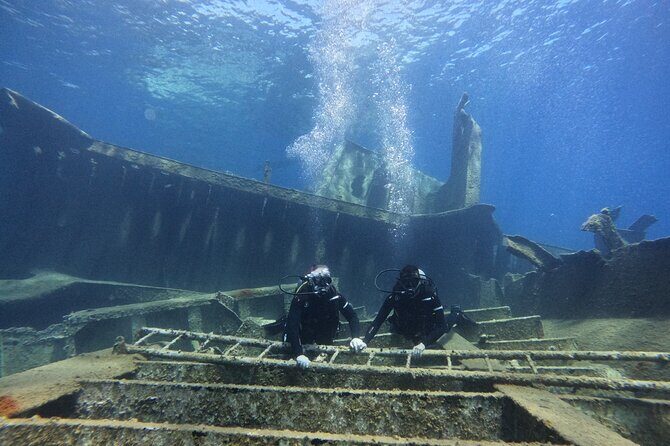
The instructor team is repeatedly described as patient and reassuring. Names you might hear include Yiannis (spelled various ways), plus instructors like Chris and Sarah in some sessions. One important theme: you get support “every step of the way,” especially with kit-up and the first water entry.
Safety isn’t just a talk—it’s active coaching. You’ll learn what to do in case of equipment issues. You’ll also be guided during the initial learning phase so you’re not struggling with buoyancy and equipment handling at the same time.
In one example, the buoyancy control vest (often used like a target for buoyancy control) was handled with extra instructor support during early training. That’s exactly what you want for first time: reduce complexity until you’re comfortable.
Another practical value: the team explains how to become scuba certified if you want to continue after this intro. That’s useful because a first experience can feel magical—but you’ll likely want to know what the next steps are, what training would look like, and how to keep improving.
And yes, they also provide a human touch: instructors listen well, correct gently, and keep the session pace matched to your confidence.
Duration and what the day really feels like
The operator lists about 5 hours total (approx.), and the experience itself lasts about 4.5 hours. It’s a half-day commitment, which is a sweet spot. Long enough to learn and see real underwater life, but not so long that you lose your whole day to logistics.
Your day includes:
- pickup (if you booked it) and meeting at the base
- paperwork and a short instruction block
- kit-up and shallow-water practice
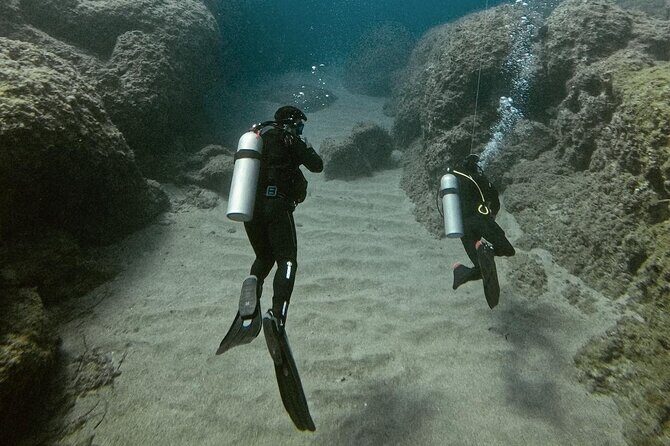
- underwater time appropriate to skill level
- returning to the meeting point
In the examples, some teams also provide water and snacks, which sounds simple, but it helps a lot when you’re doing a physical activity before lunch. Also, if you like the memories, there’s an option to purchase photos and video after the session.
You might see GoPro-style recording during segments, plus photos taken underwater. The advantage is you don’t have to choose between attention and documentation—you can focus on equalization, breathing, and enjoying what’s around you.
Price of $119.47: what you’re really paying for
At $119.47 per person for roughly 4.5–5 hours, the value comes from what’s included: instruction, equipment, and hands-on coaching for first time, plus pickup if you need it.
This isn’t just a “rent gear and good luck” plan. You’re paying for:
- a structured first-timer lesson
- equipment fitting and support
- shallow-water practice guided by instructors
- supervised underwater time in a beginner-friendly setup
Small groups also matter for value. With a maximum of 8, the instruction time isn’t diluted. That’s the kind of detail that affects whether the experience feels comfortable or chaotic.
If you’re trying to compare costs, don’t only look at the ticket price. Ask yourself whether you’re getting real coaching, a safe pace, and enough support to fix issues like ear equalization during the early learning phase. That’s where the money goes in a good intro session.
If you want extra memories, you’ll likely have the option to buy photos and video after. That’s common for these experiences, and it can be a nice splurge if it turns into a highlight of your trip.
Who should book this Heraklion-area session
This is a strong match if you:
- want a first-time scuba experience with structured instruction
- get anxious and want an instructor who adjusts pace to your comfort
- don’t swim well or don’t have much confidence yet (swimming is not required)
- have kids aged 8+ who are ready for a supervised intro
- want to see real marine life like fish schools, plus the chance of standout creatures
It’s also good if you’re traveling from the Heraklion area and want a half-day activity that feels hands-on rather than like a bus tour.
The biggest “skip it” situation is a health mismatch. The medical questionnaire is there for a reason. If you have breathing problems or related concerns, you may not be cleared. Don’t try to push through if the medical screening flags you—this experience is safer when you meet the requirements.
Should you book Horizon’s first-timer underwater session?
If you want the calm, guided first step into scuba, I’d recommend booking. The combo that makes it work is small-group attention plus a lesson that teaches the skills you actually need—breathing, buoyancy basics, and equalization—before you go deeper.
Book it if:
- you’re curious but nervous
- you want a beginner-friendly site near Mononafitis Beach
- you like the idea of getting real feedback from instructors such as Yiannis (and others on the team)
Think twice if:
- you know you have medical conditions that could make recreational scuba unsafe
- you’re looking for something self-led with no coaching
One last practical tip: if you’re worried about sea life you’ve heard rumors about, remember the team addresses fears directly—so you can focus on learning and enjoying what’s right in front of you.
FAQ
How long is the experience near Heraklion?
The experience lasts about 4.5 hours, with the full activity listed at roughly 5 hours including the rest of the schedule.
What time does it start?
It starts at 9:00 am.
Is pickup included?
Pickup is offered. You should look for a car or mini bus with the Horizon sign outside your hotel or property.
Do I need to know how to swim?
No. Knowledge of swimming is not necessary, and the depth is adapted to your confidence level.
What languages are the lesson and briefing offered in?
The mini theoretical lesson is offered in EN, FR, and GER.
What’s the minimum age?
The minimum age is 8 years old.
How deep will I go?
Depth is adapted to your level of confidence and the diving standards. In examples, the intro area is described as up to around 7 meters, and some participants reached around 10 meters.
What paperwork do I complete before going in the water?
You fill out a participant statement that includes a liability release form and a medical questionnaire.
Are there medical restrictions?
Yes. The medical questionnaire is used to find out if you should be examined by a doctor before participating. If you have issues with breathing or other medical conditions, you cannot participate.
Can I cancel for a full refund?
Yes, with free cancellation up to 24 hours before the experience’s start time for a full refund.
What if the weather is bad?
The experience requires good weather. If it’s canceled due to poor weather, you’ll be offered a different date or a full refund.