REVIEW · CHANIA
From Chania: The Ultimate Food Tour Of Chania Villages
Book on GetYourGuide →Operated by GS tours · Bookable on GetYourGuide
Taste your way into Chania’s countryside. This 6-hour tour turns East Chania villages into a hands-on food lesson, starting at an olive oil mill and moving into cheese tasting with honey and rusk.
The route covers several stops in one day, so timing is tight and not every moment is a big buffet; plan for small samples at places like the bakery.
In This Review
- Key highlights worth penciling in
- A 6-hour food route beyond Chania’s main streets
- Starting at an olive mill: where extra virgin starts
- Tsikoudia/raki distillery stops: traditional pots meet modern know-how
- Apokoronas villages and the White Mountains foothills drive
- Embrosneros: bakery bites, then the cheese factory lesson
- Bakery stop: start light, notice the texture
- Cheese factory: Graviera, Anthotiros, and Mizithra
- Fres lunch at a Cretan kafeneio: where the day lands
- Guides, pacing, and the small things that can make or break it
- Price and value: is $135 worth it
- Tips to get the most from the day
- Who this tour suits best (and who should rethink)
- Should you book this Chania villages food tour?
- FAQ
- How long is the tour?
- What does the tour cost?
- Is hotel pickup and drop-off included?
- What language is the guide?
- What’s included in the tastings and meals?
- Does the tour include olive oil and raki tastings?
- Where does the tour go?
- What isn’t included in the price?
- What is the cancellation policy?
Key highlights worth penciling in
- Extra-virgin olive oil production explained from harvesting to what you taste
- Tsikoudia/raki making, with both traditional and more professional-style distilling shown
- Village-to-village driving through Apokoronas, with White Mountains foothills scenery along the way
- Cheese factory education in Embrosneros, including Graviera, Anthotiros, and Mizithra
- Kafeneio lunch culture in Fres, where Cretans eat day to day
- Hotel pickup and drop-off in Chania region, plus tastings, transport, and water included
A 6-hour food route beyond Chania’s main streets
If you’re tired of stuffing yourself on restaurants without learning why the food tastes the way it does, this tour has a better rhythm. You’re not just eating. You’re seeing the systems behind the flavors: how olive oil gets made, how tsikoudia (often called raki) gets distilled, and how cheese becomes something you can recognize by taste.
The day runs long enough to feel like a full experience, but not so long that you’re exhausted by the time you’re back in Chania. You’ll use an air-conditioned minibus/minivan for the travel legs, and you’ll get a steady flow of tastings rather than one meal and a bunch of waiting.
One more practical note: this is a countryside-style format. That means you’ll hear a lot of spoken explanation, sometimes from different people at different stops. When English is spoken with heavy accents, it can be harder to catch details without leaning on your English-speaking escort to translate key points.
You can also read our reviews of more food & drink experiences in Chania
Starting at an olive mill: where extra virgin starts
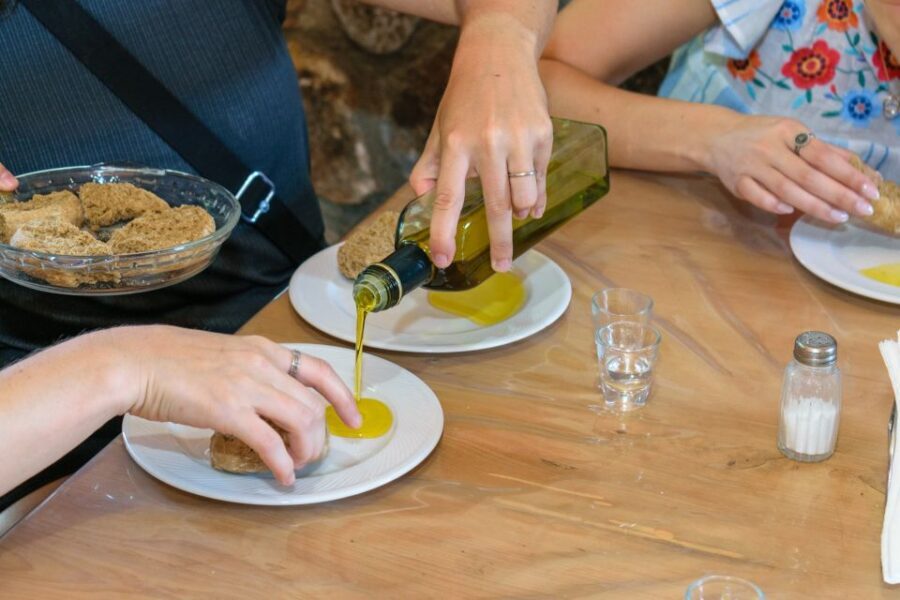
The tour kicks off at a local olive mill. This is the moment where the whole trip makes sense. You’ll get the production story behind extra virgin olive oil, including how olives are harvested and how the oil moves from processing into flavor.
What I like about this stop for your trip is the cause-and-effect lesson. Instead of treating olive oil as something you just drizzle, you start noticing how it changes taste depending on the production steps. You learn to think like a producer: olives come from a specific growing rhythm, then processing turns that raw material into the oil you’ll smell and taste.
You should expect a real production focus, not a quick photo-op. Even if you’re not a food nerd, the process is easy to follow when someone walks you through it slowly. And once you taste later, you’ll have something to compare it to.
If you’re the type who buys olive oil as a souvenir, this is also where your shopping instincts get sharper. You’ll be in a better position to choose what to bring home because you’ll have heard what extra virgin should look, smell, and taste like.
Tsikoudia/raki distillery stops: traditional pots meet modern know-how
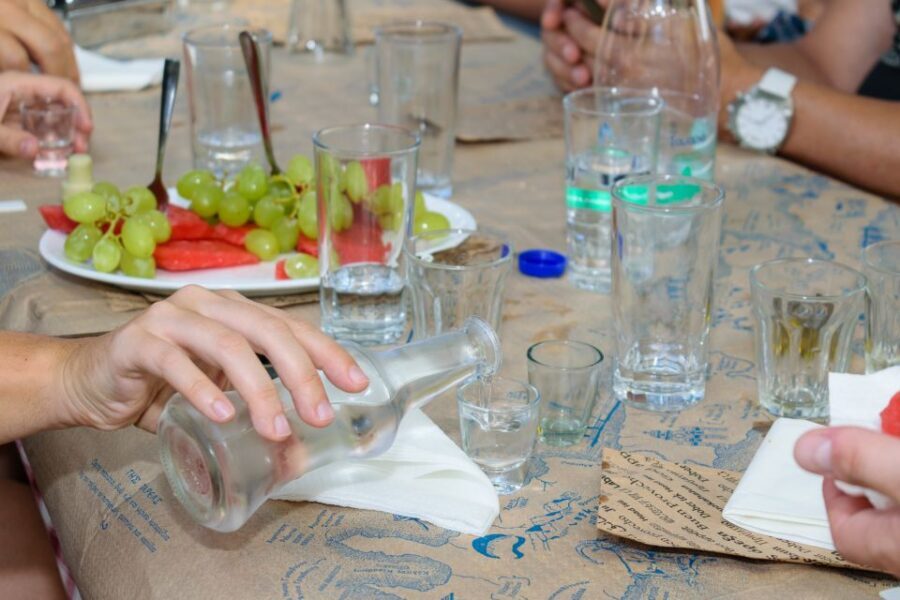
After the olive oil, you head to a distillery environment focused on tsikoudia, the Cretan spirit. The tour is built to show you both sides of the craft: the time-honored conventional distillery approach and a more professional, modern one.
That pairing matters. When you only see one method, you don’t learn what changes from one system to another. Here, you get the full picture of how the same idea (turning base ingredients into a spirit) can be handled with different equipment, consistency levels, and production styles.
You’ll also end with a tasting session. This is where your senses should do the work. Taste once, then take your time. Smell is a big part of it, and you’ll likely notice how the flavors sit differently in your mouth than you expected.
If you’re planning to drink, keep it slow. The tour is active, with multiple village drives and walking at stops. You don’t want to ruin the later cheese and lunch moments by going too hard too early.
Apokoronas villages and the White Mountains foothills drive
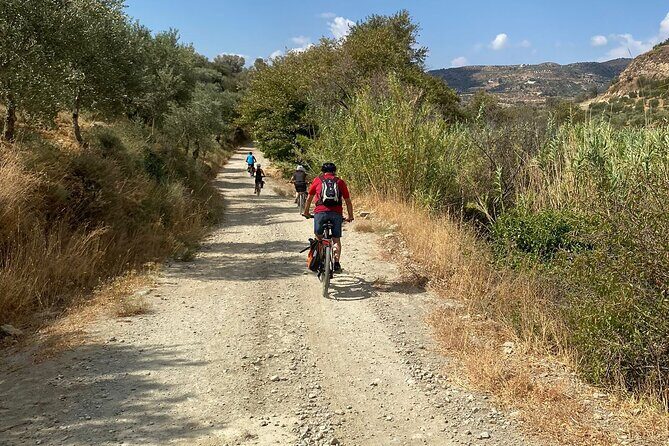
Between tastings, you’ll travel a route through villages in Apokoronas province. This is one of the best parts of the day because the food doesn’t feel “manufactured.” It’s attached to daily life and small-scale businesses.
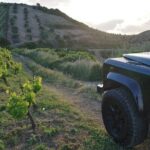
You’ll go toward the White Mountains foothills, and the drive helps break the day into chapters. It’s also a nice change of pace from staying strictly inside the Chania city zone. Even if you’ve been in Crete before, this kind of mainland village route gives you a different sense of how people live and produce food.
What to know: the stops are timed, so you won’t have hours to wander. The upside is that you keep moving from production place to production place. The downside is that you’re choosing to trade wandering freedom for structure.
And if the weather turns, you may still be okay. Some stops are production-based (mills, distilling setups, cheese making), so there’s less risk that rain kills the day compared with an outdoor-only plan.
Embrosneros: bakery bites, then the cheese factory lesson
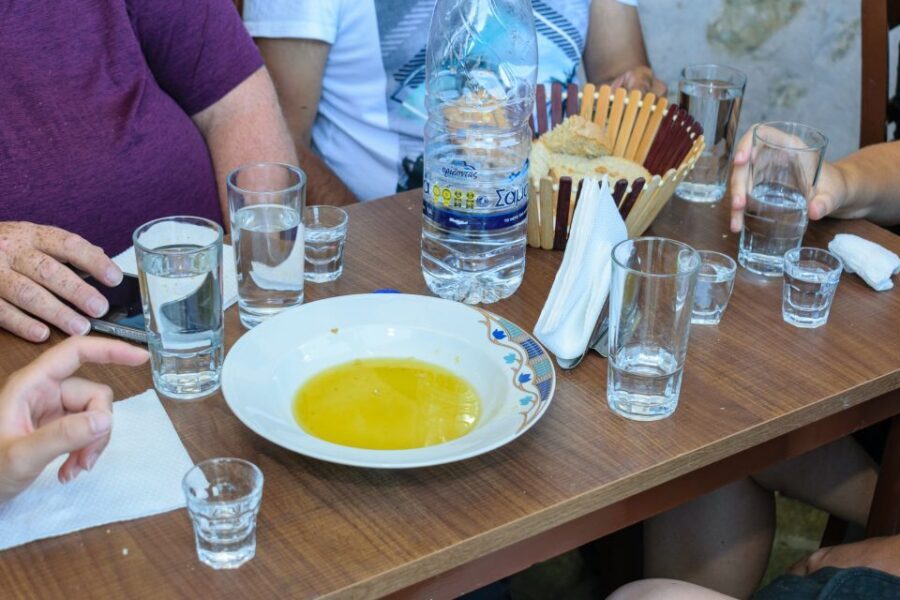
The tour takes you to Embrosneros in the White Mountains foothills area. This is where the day shifts into the dairy world, and it’s one of the most educational parts because you’ll see cheese production and taste multiple types side-by-side.
You can also read our reviews of more tours and experiences in Chania

Bakery stop: start light, notice the texture
First up is a bakery tasting: bread, cookies, and biscuits. This stop is short, which is part of the trade-off of a full 6-hour itinerary.
I’d go into this expecting small samples rather than a long snack crawl. One drawback that has shown up on prior departures is that the bakery portion can feel limited, with only a small amount available to taste. If you’re the type who loves baked goods, you might still enjoy it, but it likely won’t satisfy your sweet cravings on its own.
So if you want extra insurance, consider eating a light breakfast before pickup.
Cheese factory: Graviera, Anthotiros, and Mizithra
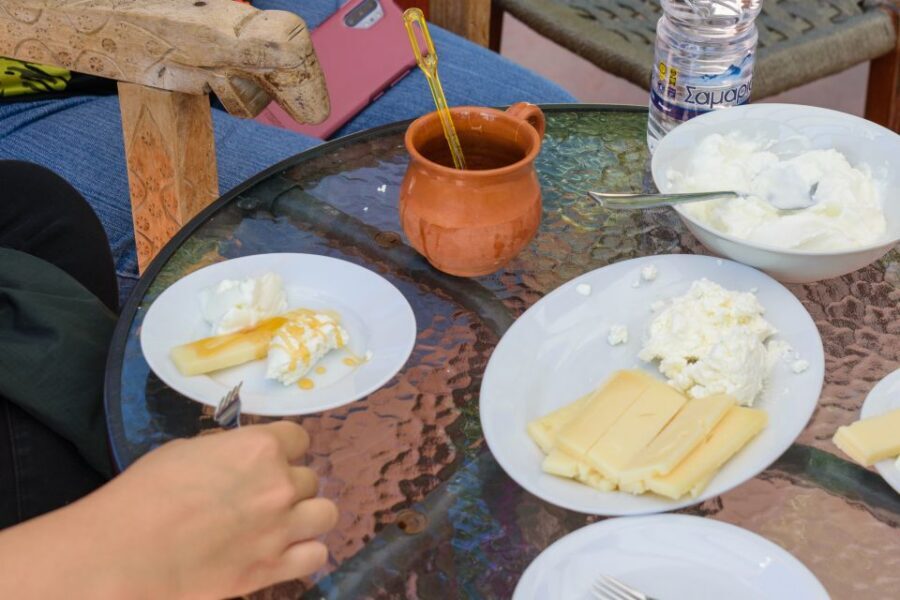
Next comes the cheese factory visit. This is where you get the most “try this, remember that” moment. You’ll learn about Graviera, Anthotiros, and Mizithra right in front of you.
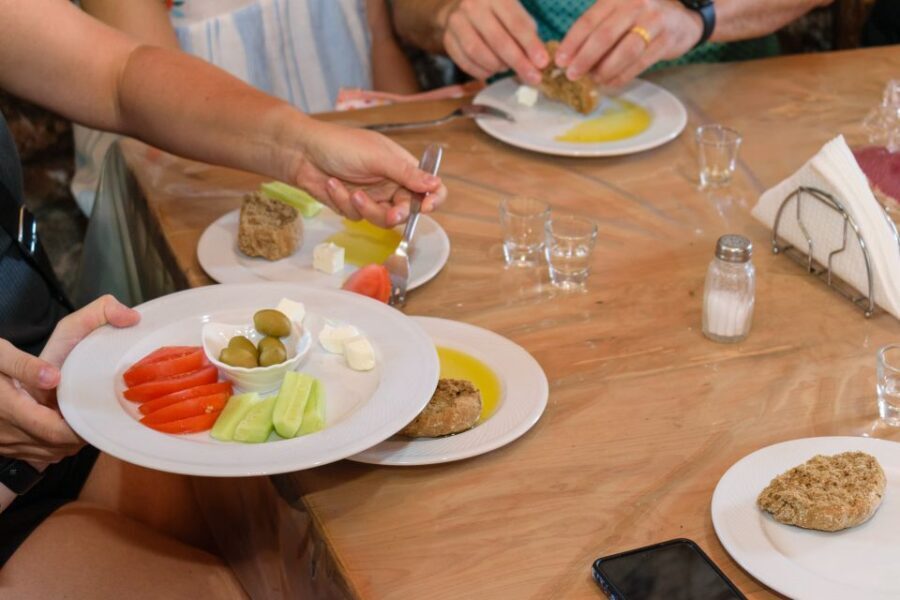
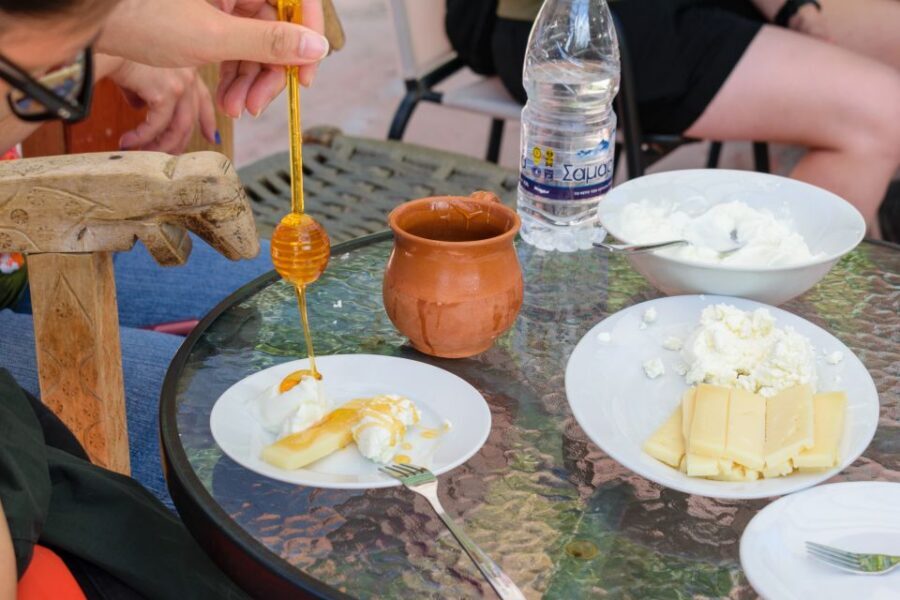
Then you taste them paired with local honey and rusk, which is dry bread. This pairing is smart because it helps you separate flavors:
- Cheese brings saltiness and texture.
- Honey adds aroma and sweetness.
- Rusk adds crunch and helps the cheese feel more balanced.
Even if you don’t remember every production detail, you’ll likely remember how the cheeses behave when paired. That’s the real takeaway for your palate and for shopping later.
A practical caution: English explanations can vary by stop, and some producers may use accented English. The escort’s English tends to tie it together, so if there’s a moment you miss a detail, don’t panic. The tasting is the backup system.
Fres lunch at a Cretan kafeneio: where the day lands
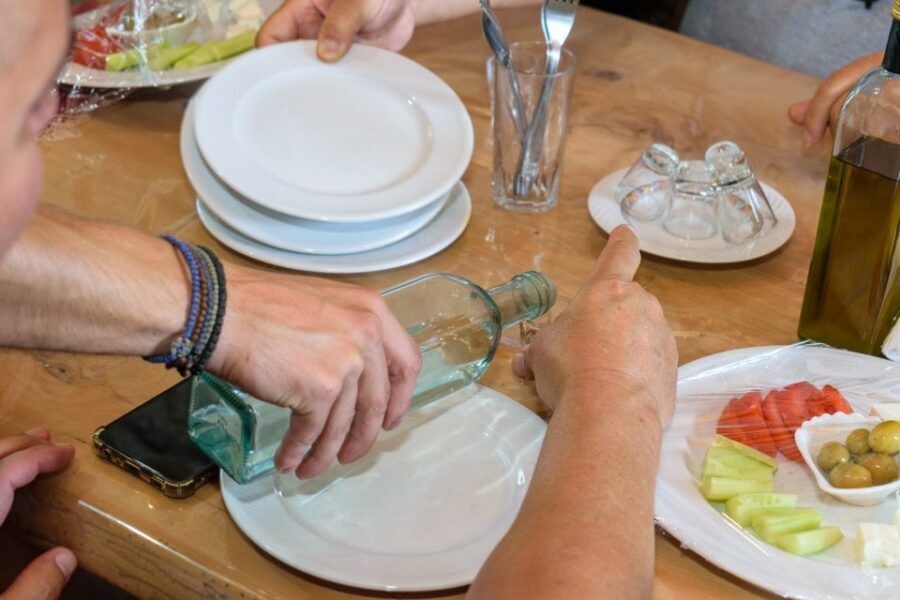
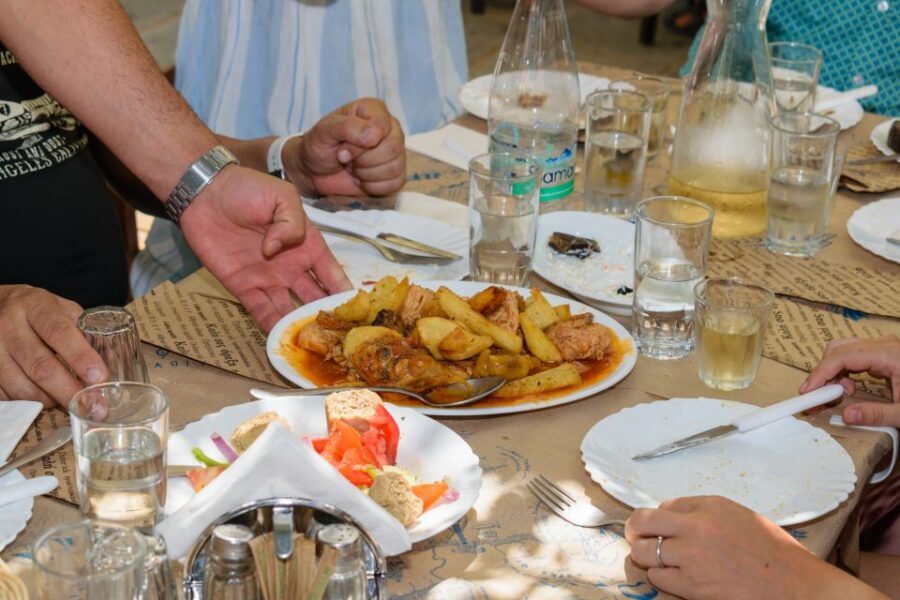
The final stop centers on a local coffee shop, a kafeneio, in the village of Fres. This is more than coffee. It’s where locals relax and eat, and it’s a good signal that the tour isn’t only chasing “attraction-level” food.
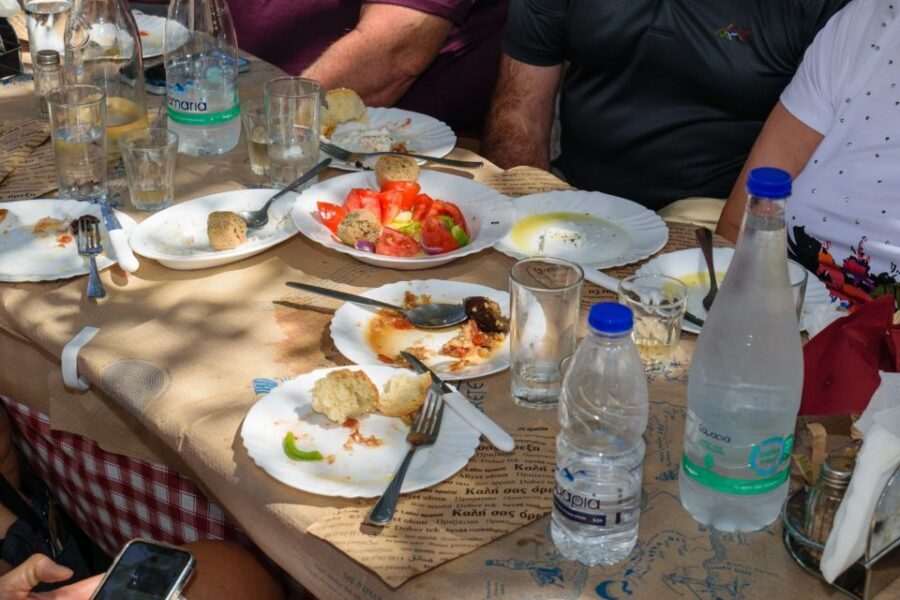
You’ll have the traditional Cretan lunch here. The menu specifics aren’t listed, but the format is clear: it’s a real lunch meant to show you Cretan cuisine and gastronomy, not just a token plate.
Why this matters: earlier stops teach production. Lunch teaches how people actually eat with those ingredients. The day moves from craft to routine, which is what makes the experience feel grounded rather than staged.
Also, since you’ll already have tasted olive oil, cheese, and honey earlier, lunch works like a reward. You’re not starting from scratch. You have a working knowledge of flavors, and your brain can connect the dots.
Guides, pacing, and the small things that can make or break it
The tour runs with an English-speaking local driver/escort. Past departures have credited guides by name—Maria, Andres, and Yannis—so you can expect a real person guiding the day, not just a playlist and a map.
I like this style because it keeps the timing smooth. You’ll go from olive oil to distillery to bakery and cheese factory to lunch without losing time waiting for people to catch up.
Still, pacing is part of the deal. Because the day is built around production stops and tastings, there’s less “free time.” If your travel style is all about lingering in one place, this might feel structured.
If your style is more about learning through doing and eating, this works well. You’ll come away knowing what those products are, where they come from, and how they fit into Cretan life.
One more small warning: if you’ve done another Chania-based food tour before, there can be theme overlap. The general categories—olive oil, cheese, spirit—are the core of a lot of these experiences. The best move is to ask yourself what you most want this time: more production focus, or more village wandering.
Price and value: is $135 worth it
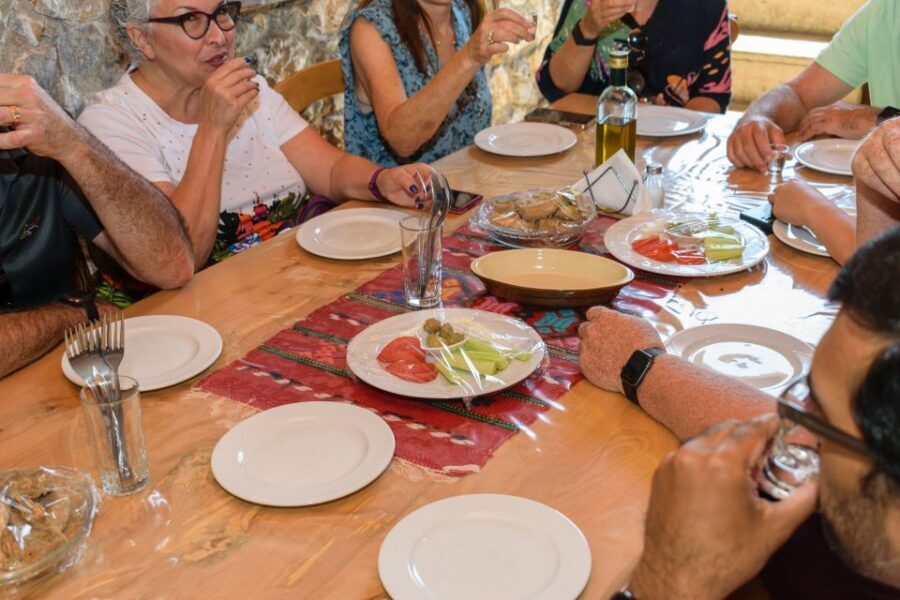
At $135 per person for 6 hours, this isn’t a “grab-and-go” food tasting. But it also isn’t just paying for lunch.
Here’s what your money covers based on what’s included:
- Hotel pickup and drop-off in the Chania region
- Air-conditioned transport by minibus/minivan
- Bottled water per person
- English-speaking local driver/escort
- All tours and tastings
- Olive mill visit, distillery visit with tasting, bakery tasting, cheese factory visit with tastings, and a traditional lunch
- All taxes, fees, and handling charges
So the value isn’t only the food. You’re paying for access: entry to production sites (olive mill, distillery, cheese factory) and the tasting program that connects the food to its origins. That kind of access usually costs time and organization. Here, someone does the scheduling for you.
What to factor in: additional food and drinks aren’t included. If you’re hungry or you want extra bottled drinks beyond the water provided, bring a little extra budget.
Also, the smallest upside you’ll get by being prepared: if you arrive ready to taste (not overly full), you’ll enjoy every stop more. That’s how you turn “included tastings” into a satisfying day rather than a rushed sampling.
Tips to get the most from the day
A few smart moves will make your experience smoother.
Wear shoes you can walk in comfortably. Cheese factory and production stops can involve uneven surfaces or short walks between areas.
Bring a light layer. Even in Crete, production buildings and distillery areas can feel cooler than you expect.
Go easy on heavy drinking early. The tastings build across the day, and your goal is to enjoy the full sequence, including lunch.
If you get stuck with language at a stop, don’t fight it. Ask your escort for clarification on the key points. Your tasting notes will fill the gaps.
Finally, plan your day so you’re not rushing afterward. This is a full 6-hour experience with multiple flavor moments, and you’ll likely want a relaxed evening once you’re back.
Who this tour suits best (and who should rethink)
This tour fits you if you want Cretan food with context. You’re curious about how olive oil, honey, cheese, and tsikoudia are made and you like structured days with planned tastings.
It’s also a good pick for groups traveling together—especially friends who want a shared food education without spending time picking restaurants and then wondering if the food is the real thing.
You might reconsider if you hate structure. There’s not much “wander time.” You’re moving stop to stop. And if you’re expecting huge tastings at every stop, the bakery portion in particular can feel small.
Should you book this Chania villages food tour?
I’d book it if your priority is learning how Crete’s staple products are actually produced, then tasting them in a logical order. The olive mill start is a strong foundation. The distillery adds a second craft layer. And the Embrosneros cheese factory plus lunch in Fres gives you the full arc: production to palate to everyday eating.
If you’re the kind of traveler who values authenticity and wants more than just eating for eating’s sake, this tour delivers. Just set expectations for the format: it’s tastings and explanations, not a long free stroll through the countryside.
One final sanity check: since pickup is within the Chania region, confirm your hotel location is covered. If you’re staying outside that area, you’d need to contact the provider for pickup options.
If that matches your plan, you’ll come away with a stronger sense of Cretan flavor—and you’ll be able to buy olive oil, cheese, or honey at home with more confidence than when you arrived.
FAQ
How long is the tour?
It lasts 6 hours.
What does the tour cost?
The price is $135 per person.
Is hotel pickup and drop-off included?
Yes. Pickup and drop-off are included for locations within the Chania region. You’ll wait outside the meeting point 10 minutes before pickup time, and the driver waits no longer than 5 minutes after the scheduled pickup time.
What language is the guide?
The tour includes an English-speaking local driver/escort.
What’s included in the tastings and meals?
All tours and tastings are included, along with a traditional Cretan lunch. Bottled water per person is also included.
Does the tour include olive oil and raki tastings?
Yes. The tour includes an olive mill visit focused on olive oil production and a distillery visit for tsikoudia (raki) with a tasting session.
Where does the tour go?
It explores East Chania and drives through villages in Apokoronas province, with stops including Embrosneros and Fres.
What isn’t included in the price?
Additional food and drinks are not included.
What is the cancellation policy?
Free cancellation is available up to 24 hours in advance for a full refund.