REVIEW · CRETE
Crete: Road-trip to Lasithi Plateau & Olive Mill Farm
Book on GetYourGuide →Operated by Cretan Odyssey · Bookable on GetYourGuide
Mountains, oil, and a monastery in one long day. This guided road trip across Crete’s Lasithi region mixes real village life with hands-on Cretan traditions, plus the kind of scenery that makes you pause even when the schedule is tight. I like that you get a proper guide and a driver who knows these mountain roads, not just a bus ride and a map.
Two stand-out parts for me are the Lasinthos Eco Park stop (workshops and a small animal farm, admission free) and the olive mill farm visit where you can watch how olive oil and related products are made, with a lunch option if you want it. The one drawback to plan around: the day runs long, and the most active components (like any cave/hike time on your departure) can involve steep walking and extra costs.
The trip is built for comfort where it counts: air-conditioned transport and time at each stop that’s enough to actually look around. Still, you’ll want to pack smart because some parts are not stroller-friendly and you will be on your feet.
In This Review
- Key highlights worth your attention
- What this Lasithi Plateau road trip is really for
- Your morning start: pickup areas, timing, and bus comfort
- Vidiani Monastery: a quiet reset at the base of Louloudaki Mountain
- Lasinthos Eco Park: free workshops, small animals, and real countryside texture
- Krasi village and the ancient plane tree that anchors the whole place
- Olive Mill Farm: olive oil, soap, honey, and lunch if you want it
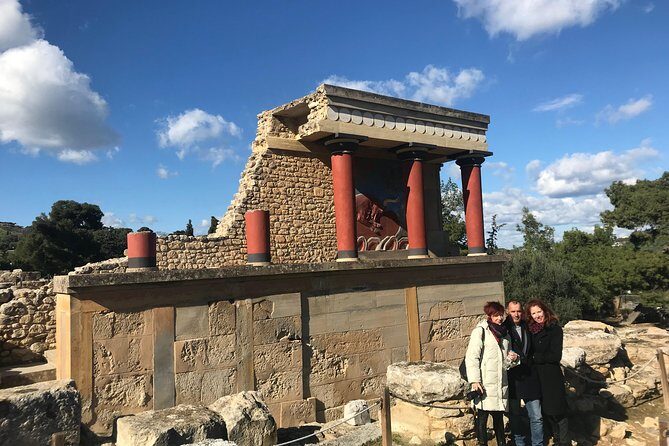
- If your departure includes Knossos Palace: how it fits the “people lived here” theme
- Cave of Zeus / Diktean Cave: the hike factor you must plan for
- Price and what you actually get for about $39.52
- How to get the most out of the day (without losing the shoe battle)
- Who should book this day trip, and who should consider another option
- Should you book Cretan Odyssey’s Lasithi Plateau & Olive Mill Farm day trip?
- FAQ
- How long is the Lasithi Plateau & Olive Mill Farm day trip?
- Where does pickup happen?
- What’s included in the tour price?
- Is lunch included at the olive mill farm?
- How long is the stop at Vidiani Monastery?
- How long do you spend at Lasinthos Eco Park?
- How long is the stop in Krasi village?
- Is the Olive Mill Farm stop long?
- What languages are the guides available in?
- What should I bring for the day?
Key highlights worth your attention
- Lasinthos Eco Park is free and structured: pottery and candle-making style workshops plus a small animal farm
- Vidiani Monastery sets the tone with a short but meaningful stop at the base of Louloudaki Mountain
- Krasi’s ancient plane tree (over 2,400 years old) and freshwater springs make the village pause feel special
- Olive Mill Farm is practical: you see olive oil, soap, and honey production, with lunch available for extra cost
- Guides like Soula and Tania raise the whole day with humor and clear history while you ride
- Your driver matters on this route: tight turns and narrow streets come with real mountain-road skill
What this Lasithi Plateau road trip is really for
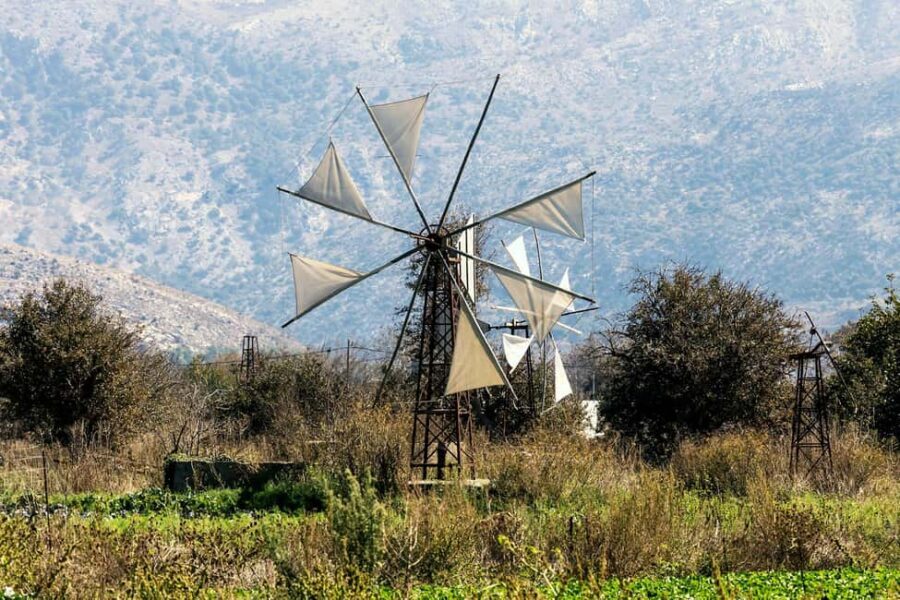
This is the kind of Crete day trip that feels like you’re bouncing between three different worlds: quiet religious life, working countryside, and the kind of small-scale craft that doesn’t fit in a souvenir shop. The Lasithi Plateau area gives you long mountain views and cooler air than you might expect, then the day fills in with villages and food culture.
The value is in the pacing and the explanations. A lot of day tours turn into a bus queue. This one is built around multiple stops with real time at each place. And the guide’s job isn’t just to name locations. The best days are when they connect what you’re seeing to how people lived, worked, and prayed in different eras.
If your departure includes the Knossos option, you also get that second layer of context: how everyday life and power centers shaped Crete thousands of years ago. Just check which version you booked, because not every departure program is identical.
You can also read our reviews of more tours and experiences in Crete

Your morning start: pickup areas, timing, and bus comfort
Expect a morning hotel pickup, with timing that shifts based on where you’re staying. Pickup is available from specific areas including Sisi, Malia, Stalis, Hersonissos, Anissaras, Agkisaras, Gouves, Gournes, Kokkini Hani, Karteros, Amoudara, Agia Pelagia, and centrally located points in Heraklion town.
Two practical points I’d bet on:
- You should plan for a long travel day overall. Duration is listed as 7.5 to 10.5 hours, depending on the start time and your route back.
- If you get motion sickness, the winding mountain roads can be rough. An experienced driver helps, but I still suggest bringing your usual remedy and keeping your seat choice in mind.
The bus is air-conditioned and the transport is handled by a professional driver. Multiple guides (and drivers like Nikos) get praised for steering large vehicles through narrow streets and tight corners with confidence. That matters here, because Crete’s interior roads aren’t the smooth highway kind.
Vidiani Monastery: a quiet reset at the base of Louloudaki Mountain
The first major stop is Vidiani Monastery, a small Eastern Orthodox monastery dedicated to the Virgin Mary. It sits at the base of Louloudaki Mountain, and the visit is short but focused: about 25 minutes.
Here’s what makes it worth your time:
- The monastery architecture and setting give you an immediate sense of how faith and landscape connect in Crete.
- You’re not rushed through. Even with a group, that 25-minute window gives you time to step inside, look around, and take a calm photo without turning it into a speed-run.
One tip from real on-the-ground experience: plan for clothing that covers appropriately. Some monastery stops require you to cover legs to the knee. If you show up in shorts, you may be offered something to cover up, but it’s better to avoid the scramble. A light scarf or pants is an easy win.
Lasinthos Eco Park: free workshops, small animals, and real countryside texture
After a short drive, you arrive at Lasinthos Eco Park for about 1 hour. Admission is free, which already makes this stop feel like the tour is paying you back.
The park focuses on traditional crafts and Cretan agricultural life. You can see workshop-style activities such as pottery and candle-making, and there’s a small animal farm that adds a gentle, family-friendly pace.
This is the stop I recommend you approach with low expectations for a big museum experience. It’s more like a working-style cultural space where you learn by watching and talking. If you like handmade processes, you’ll appreciate how much detail goes into simple everyday items.
If you’re traveling with kids, this is also a great “breather” stop between longer roads and steeper walks.
Krasi village and the ancient plane tree that anchors the whole place
Next up: Krasi, known for its freshwater springs and a massive ancient plane tree estimated to be over 2,400 years old. The stop here lasts 30 minutes.
The tree matters because it gives the village scale. You’re looking at something that survived centuries of changing rulers, wars, and weather. That kind of time depth is exactly what day tours can do well when they include a real landmark, not just a scenic photo point.
Krasi itself is worth wandering. Expect stone-paved streets, small churches, and local tavernas. Even if you only have half an hour, you can still:
- walk a loop at a calm pace,
- grab a quick drink if you want,
- and soak up the village rhythm before you head to the next activity.
If you’re the type who likes to buy small gifts, this kind of village stop is often where you’ll find things that feel made here, not imported to be convenient.
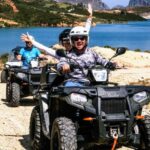
Olive Mill Farm: olive oil, soap, honey, and lunch if you want it
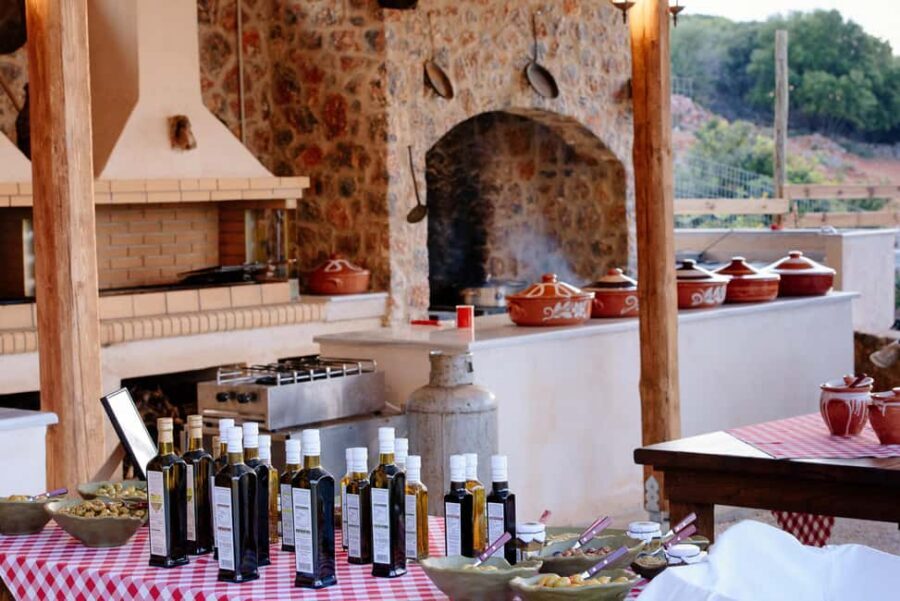
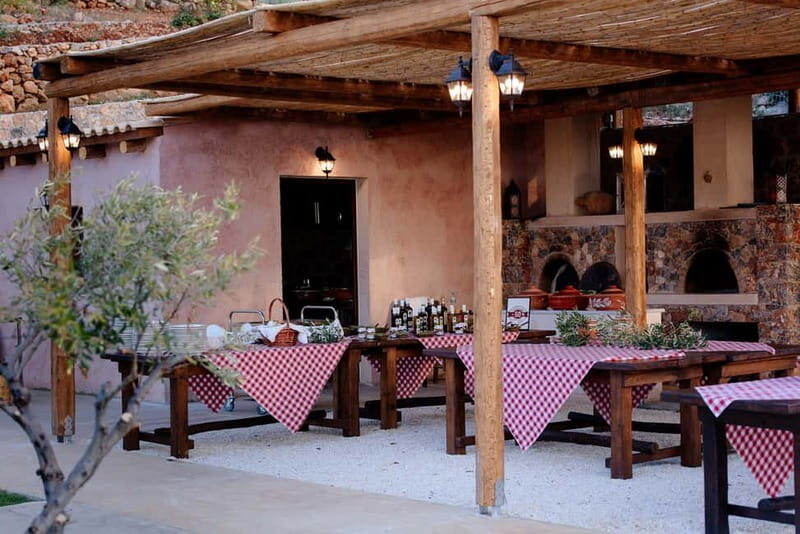
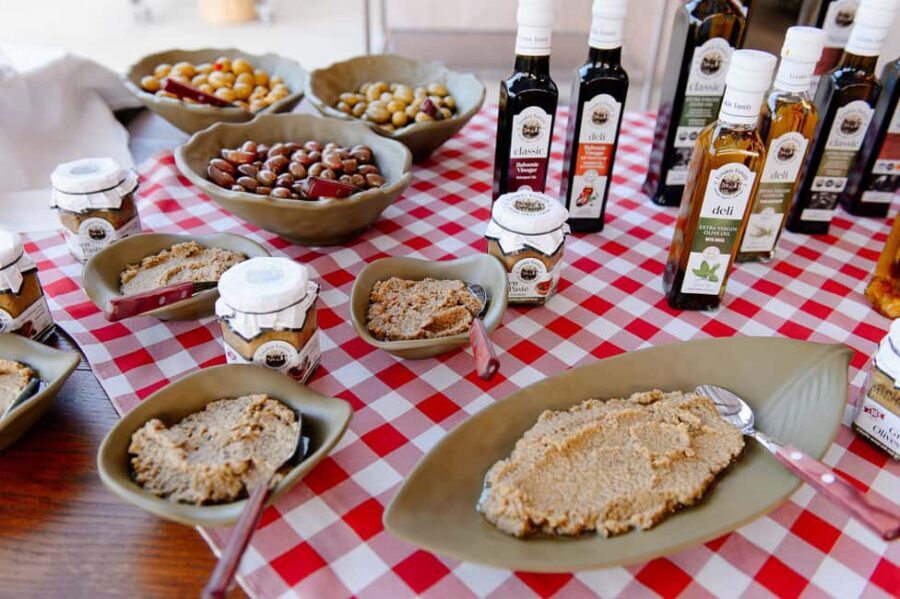
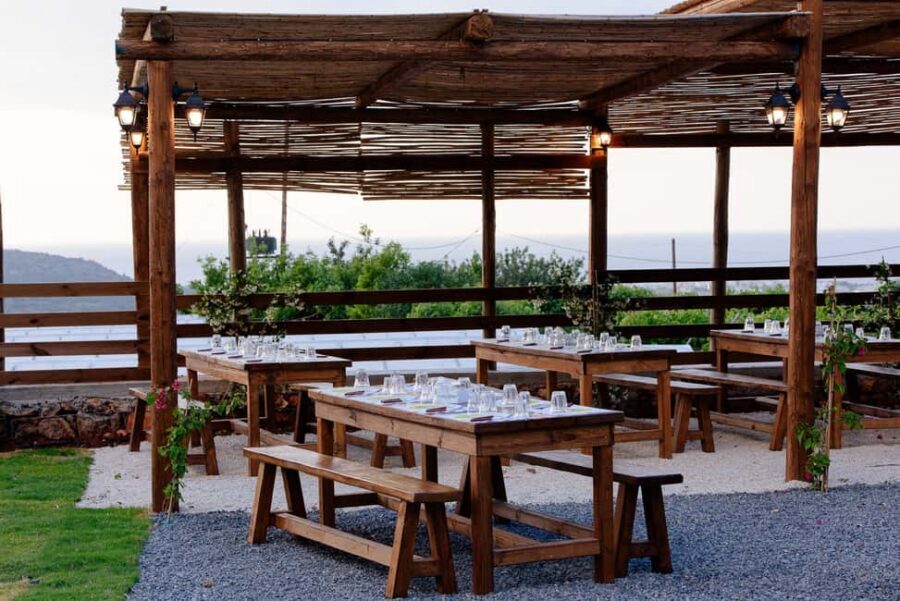
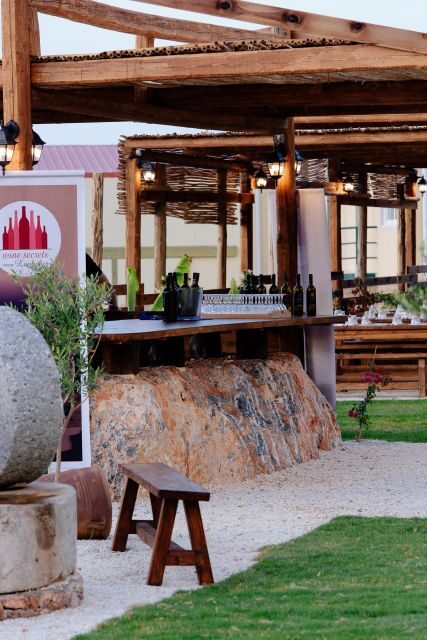
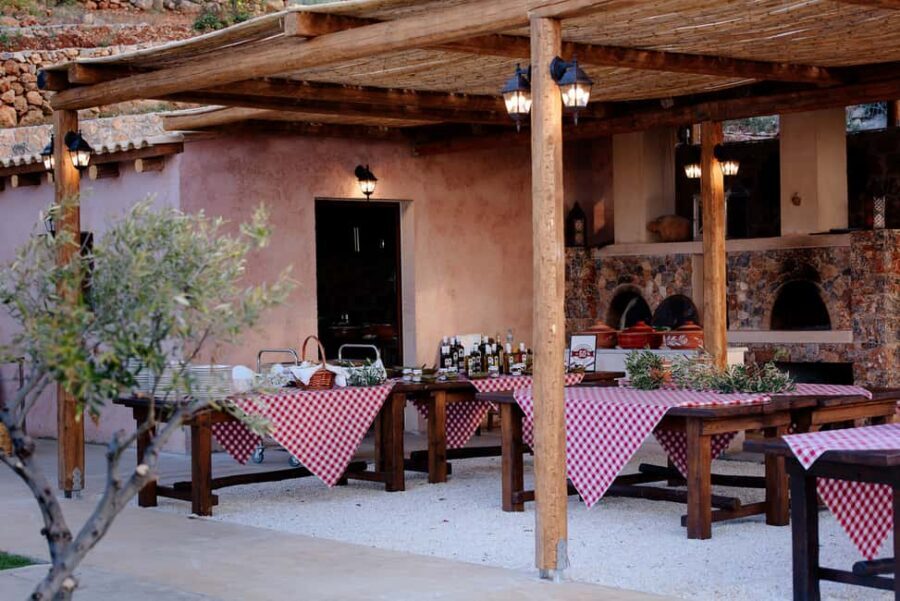
The olive mill stop is one of the most practical parts of the day. You get about 2 hours at an Olive Mill Farm set with mountain and sea views in the background.
What you’ll learn and see:
- traditional olive oil production methods,
- related production like soap and honey,
- and how ingredients move from processing to finished goods.
This isn’t only about olive oil tasting. It’s about the broader food-and-care system around olive trees in Crete. You’ll also get time to sit and slow down a bit, which is a big deal on a day this long.
Lunch is optional and not included in the base price. If you want the meal, it’s available for extra cost at the farm (made from fresh local ingredients). If you prefer to control your budget, you can also plan to snack and save your full meal stop for later.
Tip: if you’re the type who likes to buy edible souvenirs, this stop is where it’s easiest to justify the purchase.
If your departure includes Knossos Palace: how it fits the “people lived here” theme
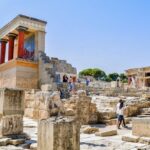
One detail that can change your day: some versions of the program include Knossos Palace, while other versions skip it. The tour concept still leans into the same idea—how people lived thousands of years ago—just with different stops.
If your option includes Knossos, you’re getting a chance to connect the myth/history layer (often described in terms of 4,000 years ago) with what you see today in villages and craft spaces. A guided visit can turn “I’ve heard of this” into “I see why this mattered.”
If you don’t have it on your booked program, don’t panic. Many departures still deliver a full day without it.
Cave of Zeus / Diktean Cave: the hike factor you must plan for
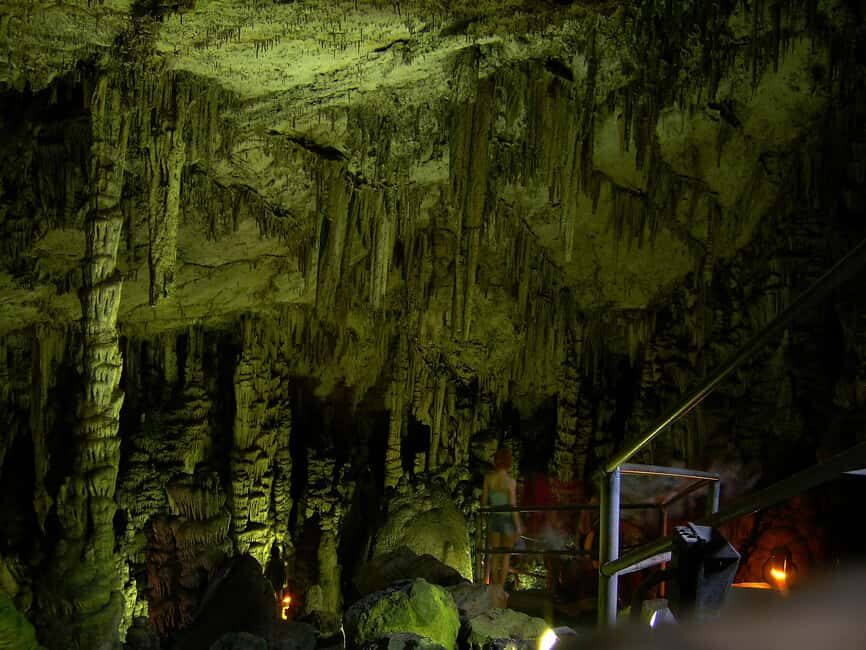
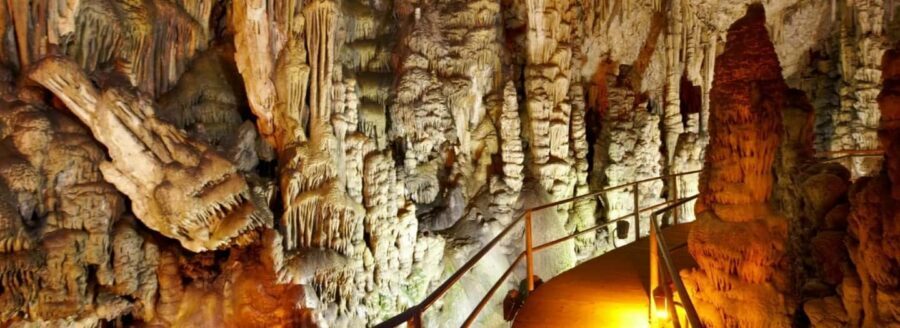
Some schedules on this route add a cave stop commonly associated with the legend of Zeus (often called Zeus Cave or Diktean Cave). If your day includes it, plan for effort.
What to expect if you’re going:
- a steep uphill walk to reach the cave area,
- and lots of steps inside once you’re there. One account mentions around 406 steps inside, with slippery steps requiring care.
You can also find practical guidance about getting there:
- Donkey rides are mentioned as available partway up for about 10€.
- If you have mobility limitations, heavy caution is warranted. One account notes it’s not something you can push a wheelchair up for, and steep walking can be a deal-breaker.
Also bring water. One guide-led experience highlights that the cave hike is tough for people without water and good shoes.
My simple advice: if you’re even slightly unsure, wear shoes with grip and bring water. This isn’t the kind of stop you should treat like a quick photo.
Price and what you actually get for about $39.52
The listed price is $39.52 per person, and I think the real question is value-per-day, not value-per-hour.
Here’s what’s included:
- pickup and drop-off,
- air-conditioned transportation,
- professional driver,
- tour guide,
- and liability insurance coverage.
What’s not included:
- lunch at the olive mill farm (extra cost if you choose it).
The biggest reason this price can feel like a bargain is how many different settings you cover in one long day, without you having to navigate roads or coordinate transfers. Add in the fact that the most praised element is the guiding. People mention guides who were funny and informative, like Soula and Tania, with clear explanations during the bus rides and at the stops.
The one value hit to be aware of: parts of the day can involve extra payments. Some accounts mention paying for the cave and lunch/other sites depending on the exact program. So I recommend budgeting a little extra for entrances and meals, and bringing some cash just in case.
How to get the most out of the day (without losing the shoe battle)
A day tour like this works best when you travel like it’s active, even if you’re not planning to hike all day.
Bring:
- comfortable shoes (grip matters for steps),
- sunglasses and sunscreen,
- a sun hat,
- comfortable clothes.
And don’t forget the “small stuff” that changes your comfort:
- A small water bottle, especially if your itinerary includes a cave climb.
- A light snack if you tend to get hungry fast. One account mentions starting early and not getting lunch until around mid-afternoon, so timing can catch you if you only eat when you’re told to eat.
If you’re sensitive to heat or want to recover between stops, the air-conditioned bus helps. But you’ll still be outdoors enough that sun protection is non-negotiable.
Also, if you see an option to ride donkeys during steep parts, treat it like a choice, not a shortcut. It can make the difference between doing the cave and sitting the cave out. Just be thoughtful about what your comfort level is.
Who should book this day trip, and who should consider another option
This tour is a strong fit if you want:
- a guided day that balances religion, villages, crafts, and food production,
- a driver who handles mountain roads well (and you don’t want to stress about navigation),
- and the kind of “learn while you ride” format where the guide tells you why places matter.
It can also work well for families, with the cave hike being the biggest divider. One family account mentions that a steep walk suited some kids less, while a donkey ride option helped the group manage. If your children are comfortable with walking and steps, you’ll likely be fine.
Where you should slow down:
- If you have mobility limits, steep climbs and steps may be difficult, especially with cave-related stops.
- If you have asthma or breathing concerns, extra hills and stair-heavy sections might be too much on a long day. Don’t force it.
Should you book Cretan Odyssey’s Lasithi Plateau & Olive Mill Farm day trip?
I’d book it if you’re chasing variety and guided context more than you’re chasing a single big attraction. The overall package works because you get multiple authentic stops with time to actually look, plus a guide who can make the stories click. When guides like Soula or Tania lead the day, it turns into a smoother, more interesting experience than a simple checklist tour.
Skip it or choose a different option if:
- you know you can’t handle steep walks and lots of steps,
- you’d rather travel at your own pace without added entrances and optional extras,
- or you hate long days that start early.
One last practical note: the tour offers free cancellation up to 24 hours in advance and a reserve now, pay later option. That gives you breathing room to book and plan, especially if your Crete weather or sightseeing schedule could shift.
If you want a Cretan day that feels like people live here, not like you’re just passing through, this one is worth your time.
FAQ
How long is the Lasithi Plateau & Olive Mill Farm day trip?
The duration is listed as 7.5 to 10.5 hours, depending on the starting time.
Where does pickup happen?
Pickup is available from specific points in areas including Sisi, Malia, Stalis, Hersonissos, Anissaras, Agkisaras, Gouves, Gournes, Kokkini Hani, Karteros, Amoudara, Agia Pelagia, and central meeting points in Heraklion town.
What’s included in the tour price?
Pickup and drop-off, transportation in an air-conditioned bus, a professional driver, a tour guide, and liability insurance coverage are included.
Is lunch included at the olive mill farm?
No. Lunch at the Olive Mill Farm is available for an extra cost.
How long is the stop at Vidiani Monastery?
The visit is about 25 minutes.
How long do you spend at Lasinthos Eco Park?
Lasinthos Eco Park visit time is about 1 hour, and admission is free.
How long is the stop in Krasi village?
The stop in Krasi is about 30 minutes.
Is the Olive Mill Farm stop long?
Yes. The Olive Mill Farm visit is listed as 2 hours.
What languages are the guides available in?
The tour guide is available in English, French, and German.
What should I bring for the day?
Bring comfortable shoes, sunglasses, a sun hat, sunscreen, and comfortable clothes. If your day includes steep walking, extra water can also be smart.