REVIEW · HERAKLION
Crete: Knossos Archaeological Site Ticket
Book on Viator →Operated by KeyTickets · Bookable on Viator
Knossos feels like history with hallways. This ticket gets you into Crete’s biggest Minoan palace site and pairs it with an English self-guided audio option, so you can learn the labyrinth story at your own speed. I like that the ruins are huge and signposted, and I like that the experience is flexible (1 to 3 hours depending on how fast you move).
The biggest thing to weigh is the audio/app setup. It runs through your phone, and some visitors find it hard to follow or navigate between stations, especially if your signal is weak or the app feels confusing.
In This Review
- Key things to know before you go
- Entering the Palace of Knossos: Where the Labyrinth Begins
- Ticket Value: What You’re Really Paying For at $33.12
- Price Meets Reality: When Self-Guided Works (and When It Doesn’t)
- Getting From Heraklion to Knossos Without Stress
- Arrival Setup: Entry/Exit, Coffee, and Gift-Shop Time
- Stop 1: The Palace of Knossos at Walking Speed
- Minoan Signs vs Audio: Use Both, Not Just One
- The Phone-Based Audio Guide: Your Best Tips
- How Long to Spend: Beat the Heat, Beat the Rush
- Best Route Strategy: Don’t Try to See Every Corridor
- Who This Ticket Suits Best
- When to Consider a Real Guide Instead
- Should You Book This Knossos Ticket?
- FAQ
- Is the admission ticket to Knossos included?
- What languages are available?
- How long should I plan for?
- What audio tours are included?
- Do I get hotel pickup or drop-off?
- Who is this ticket for?
- Is this ticket refundable or changeable?
Key things to know before you go
- Entry ticket included so you’re not hunting for the right add-on at the gate
- English self-guided audio options (Heraklion city audio is included; Knossos audio depends on your selected option)
- A big site with lots of layout to understand, so plan for at least 1.5 hours
- Tech matters: the audio is phone-based, and navigation can be tricky without clear map views
- Knossos is close to Heraklion and reachable by taxi, car, or bus
Entering the Palace of Knossos: Where the Labyrinth Begins
Knossos is the headline act of Minoan Crete. This is where the legend of the labyrinth connects to a real archaeological site, and where you’ll see the scale of a palace that helped define the island’s Bronze Age power center.
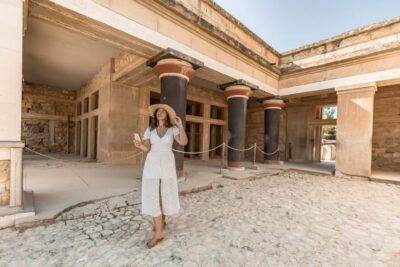
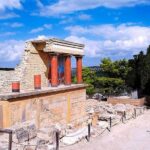
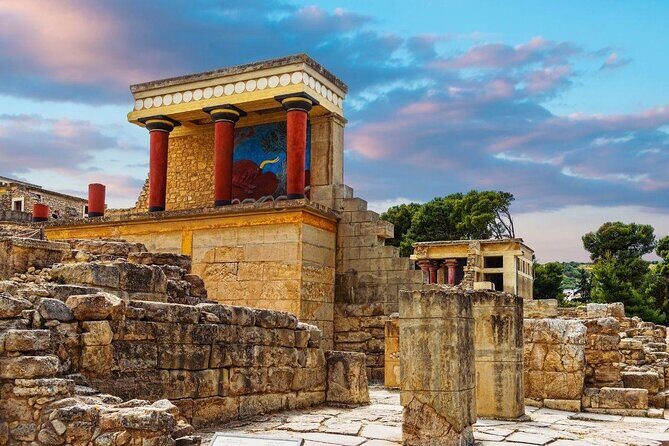
What makes the place click fast is how much is still visible. The palace is described as the largest Bronze Age site on Crete and probably the ceremonial and political center of Minoan culture. As you walk, you’ll keep running into the layers: what was excavated, what was partially restored, and what’s still being interpreted.
Another strong hook: the site is tied to Arthur Evans, the English archaeologist who excavated Knossos in the early 20th century. That British excavation footprint shows up in how parts of the palace are presented and explained with signage.
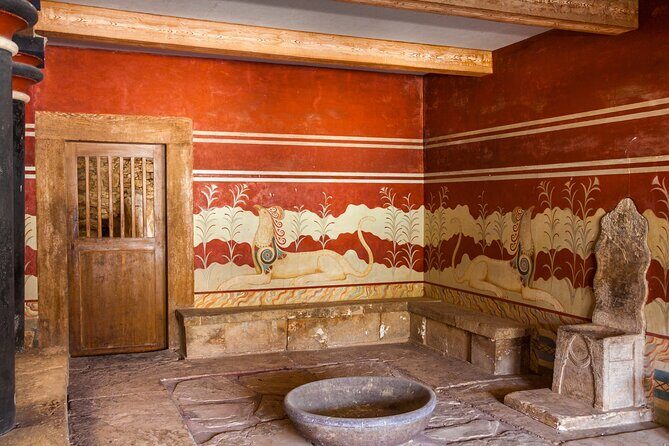
And yes, you’ll get the fun detail about the throne of King Minos still being intact. It’s one of those moments where the myth and the material world overlap in the same frame.
You can also read our reviews of more tours and experiences in Heraklion



Ticket Value: What You’re Really Paying For at $33.12
At $33.12 per person, the value here is mostly about what’s included. You’re getting a regular entry ticket plus self-guided audio options that can do real work for you—especially if you don’t want to hire a live guide.
From a practical standpoint, the timing flexibility is a big deal. The experience is listed at 1 to 3 hours, and that matches how people actually experience Knossos: you’ll either skim, or you’ll slow down to read signs and follow key areas.
Here’s the inclusion breakdown that matters for your planning:
- A regular entry ticket is included.
- You also get a Heraklion city self-guided audio tour with all options.
- The Knossos archaeological site audio is included only if you selected that option.
If you’re the kind of traveler who likes to understand what you’re looking at, this ticket can feel like a smart buy. If you want a guided storyline with a person steering you around confusing sections, the audio may feel like a backup plan rather than a replacement.
Price Meets Reality: When Self-Guided Works (and When It Doesn’t)
Self-guided tickets shine when you’re comfortable with “learning while walking.” Knossos is big, and the palace layout isn’t obvious at first glance. With audio, you’re not stuck staring at stones and hoping your imagination fills in the gaps.
But there’s a theme to be aware of: the audio can be hard to follow. Some people find it difficult without clear maps or top views, and some say the app navigation was confusing with many stations.
So I’d use this ticket best in these scenarios:
- You’re okay moving at your own pace and reading signage.
- You have a charged phone and you’re not relying on perfect app performance.
- You’re willing to pause and re-orient if you get off-track.
And I’d be more cautious if:
- You hate tech-based guides.
- You strongly prefer a real guide to explain what matters and where to look.
- You expect the audio to instantly make the site easy to navigate with no effort.
Getting From Heraklion to Knossos Without Stress
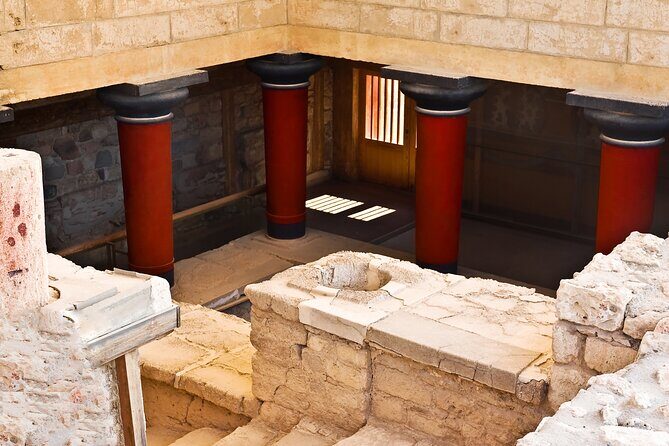
Knossos is the nearest major palace site to Heraklion, and that makes the logistics simpler than many day trips. You can reach it by taxi, car, or bus.
The trade-off is time. The bus can take quite a while, so I’d treat it as an option if you’re not trying to squeeze in a tight schedule. If you’re trying to maximize your daylight hours—and especially if you’re aiming to avoid the hottest part of the day—taxi or car can be a calmer choice.
A useful planning tip: expect at least about an hour and a half to explore properly on your own. If you’re reading a lot of signs or traveling with family, plan more.
Also, build in time for arrivals and regrouping. Knossos is large enough that you’ll feel like you’re on a mini-excursion, not just a quick stop.
Arrival Setup: Entry/Exit, Coffee, and Gift-Shop Time
The site is set up in a way that’s easy to understand at the start: entry and exit are described as well organized. That matters because Knossos is overwhelming enough without adding chaos right at the gates.
Once you’re through, take a moment to scan the signage and decide your route. A good first move is to identify which parts of the palace area you want to prioritize—especially if you’re trying to hit the most famous features without racing.
There’s also a coffee and gift shop on site. It’s not just for souvenirs. It’s a real break point if the sun is beating down and you need a recharge before you continue.






Stop 1: The Palace of Knossos at Walking Speed
At the heart of this experience is the Palace of Knossos, the largest palace area on Crete associated with Minoan power. You’re walking through ruins and rebuilt sections connected to the last and largest palace phase—often dated to around the turn of the second millennium B.C., with descriptions of the overall palace era reaching about 3,700 years back.
A few big things you’ll notice as you go:
- Scale: it’s extensive, and the site layout spreads out more than you might expect.
- Restoration and interpretation: you’ll see partially restored elements alongside excavated areas.
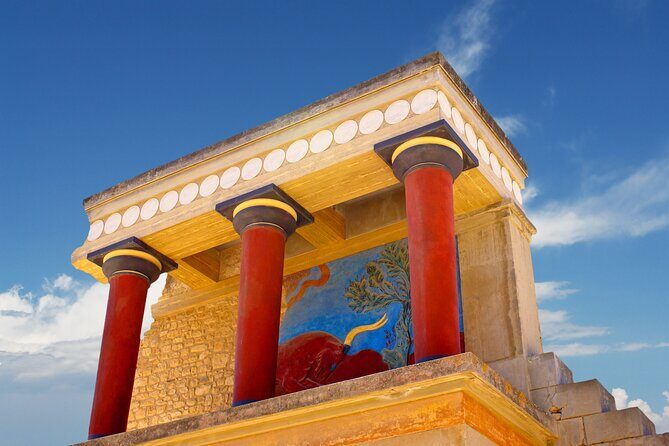
- Complex function: the palace is described as having impressive murals, and it’s even framed as including a health system. Whether you think of that as early plumbing or something more specific, the point is that the site was not thrown together—it had systems.
You’ll likely spend time around the areas tied to:
- the mythic “labyrinth” concept connected to the site’s story,
- the throne of King Minos (described as still intact),
- and the overall palace layout, including areas that were excavated early in the 20th century.
One more practical detail: the palace complex includes a lot of small spaces and corridors. This is where taking a slow step pays off. If you speed through, you’ll miss how the palace works as an organized, functioning space rather than just a pile of ruins.
Minoan Signs vs Audio: Use Both, Not Just One
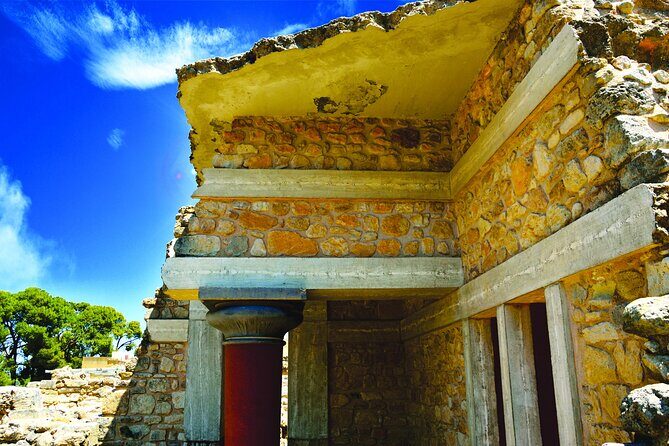
Knossos is supported by information boards set across the site. Those signs can help you fill in gaps, especially because so much is still “interpreted.” That’s not a bad thing. It just means you’ll get a blend of what’s known and what’s carefully suggested.
The audio is built to support that same learning. It’s self-guided and meant to layer in explanations while you walk.
The problem is that the audio experience depends on how well the stations line up with your position, and some visitors say it’s confusing to find the correct station at the right time. There can also be limited usefulness if the app lacks clear visual navigation.
So here’s how to set yourself up:
- Use the boards as your anchor.
- Use the audio as your bonus layer.
- If your audio seems off, don’t fight it—switch back to reading and simply keep moving.
And if the audio doesn’t start right away, have a fallback plan: check whether the audio is delivered through scanning a QR code and using a free download on your phone (that’s how it’s described). If your app isn’t working, you might be able to try a basic/free version offered through a QR scan approach. Some people also mention that it can be cheaper to rent audio on site.
The Phone-Based Audio Guide: Your Best Tips
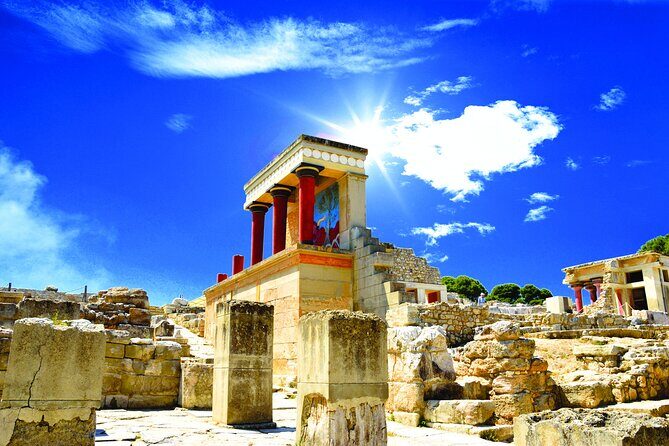
The audio guide is run on your phone. That’s convenient, but it comes with real-world constraints: you may need reception or some kind of longer-range plan.
Here’s what I recommend you do before you step into the palace grounds:
- Make sure your phone is charged enough for 1 to 3 hours of continuous use.
- Don’t count on having unlimited connectivity.
- Be ready to pause, check your station, and get your bearings again.
Also, audio navigation seems to work through many points (one description notes over 20 stations). That’s great when it runs smoothly. It’s frustrating when you can’t tell where you are visually relative to the station numbers.
If you like a structured experience, bring patience. If you prefer visuals, you might find the audio better after you’ve walked a bit and can connect commentary to what you’ve already seen.
How Long to Spend: Beat the Heat, Beat the Rush
The site can take anywhere from about 1 to 3 hours. That wide range is normal for Knossos because your pace changes everything:
- If you read signs and use audio actively, you’ll lean toward the longer end.
- If you just want highlights, you might be closer to the shorter end.
Timing also affects comfort. Crete heat can be intense, and one practical takeaway is that the afternoon can be better for the body, even if it has less crowd energy than mornings. If you go late enough, you may feel less rushed and more able to concentrate.
My rule: pick a time that keeps you comfortable enough to actually read. Knossos rewards attention. If you’re baking, you’ll just sprint from one wall to another.
Best Route Strategy: Don’t Try to See Every Corridor
Knossos is big enough that attempting to see everything can turn into running on empty. Instead, treat it like a choose-your-own story.
A smart approach is to pick:
- the key famous area(s) tied to the throne and major palace sections,
- and then 1–2 other areas where the signage or audio feels most relevant to you.
If you get lost directionally, the best move is to slow down and re-orient using the boards rather than trying to force the audio to catch up. The site’s signage layout is there for a reason.
And remember: the “labyrinth” metaphor isn’t just myth. It’s also a warning that similar-looking corridors can make you forget where you’ve been.
Who This Ticket Suits Best
This ticket is a good fit if you want an independent visit with interpretive support:
- history and archaeology lovers who enjoy reading as they walk,
- travelers who don’t want to book a full guided tour,
- anyone planning a self-paced stop from Heraklion.
It also helps if you’re traveling at a relaxed pace. The experience is set up for walking tours, not quick in-and-out sightseeing.
One important detail: this ticket is for travelers over 25 years. Reduced-price tickets are not available online, so make sure the pricing category fits you.
If you’re under that threshold, you’ll need a different option.
When to Consider a Real Guide Instead
If you’ve dreamed about Knossos as a narrative—who lived here, how the palace functioned, what’s certain versus what’s reconstructed—then audio might not fully scratch that itch.
Since some visitors find the audio hard to follow and the app navigation confusing, it’s worth thinking about a live guide if:
- you want someone to point out what’s important in real time,
- you need a clearer “top view” wayfinding strategy,
- you don’t want to manage phone audio, QR scanning, and station matching while walking.
That said, you can still have a great time with this ticket as long as you treat it as a flexible entry ticket plus learning support—not as an ironclad guided tour.
Should You Book This Knossos Ticket?
Book this ticket if you want straightforward value: entry plus English self-guided audio, and a visit you can stretch from about 1 to 3 hours. It’s especially worth it if you enjoy archaeology at your own pace and you’re good with reading signage.
Skip or rethink it if your idea of a great visit depends on an easy-to-navigate audio app with perfect station guidance, or if you strongly prefer a human guide to steer you through the complex palace layout.
If you do book, set yourself up for success: charge your phone, plan for time, and use signs as your backbone. Knossos is big. With the right rhythm, the labyrinth story makes sense.
FAQ
Is the admission ticket to Knossos included?
Yes. The package includes the regular entry ticket to the Knossos archaeological site.
What languages are available?
The experience is offered in English.
How long should I plan for?
It’s listed as approximately 1 to 3 hours.
What audio tours are included?
You get a Heraklion city self-guided audio tour (all options). You also get a Knossos archaeological site self-guided audio tour only if that option is selected.
Do I get hotel pickup or drop-off?
No. Hotel pickup/drop-off service is not included.
Who is this ticket for?
This ticket is for travelers over 25 years old. Reduced-price tickets are not available online.
Is this ticket refundable or changeable?
No. It’s non-refundable and cannot be changed for any reason.
If you tell me your travel month and whether you’re going in the morning or afternoon, I can suggest a practical time strategy for fitting Knossos smoothly into your Heraklion day.