REVIEW · CHANIA
Chania Battle of Crete Private Tour: WW2 Military History
Book on GetYourGuide →Operated by Proper Cretan Guide · Bookable on GetYourGuide
WW2 bunkers still breathe in Crete. This private Chania tour follows the Battle of Crete with a certified historian, rare documents, and stops most people never reach—especially the abandoned German fortifications. You’ll walk from Maleme airfield to Souda Bay and see what the battle left behind on this island, not just what textbooks say.
I love the way this day connects the ground-level story to the bigger war picture, with Apostolis (licensed historian tour guide/driver) using archive photos and documents to explain how events unfolded. I also like the balance of attention: you get hard military details and then real time to pay respect at German and Commonwealth cemeteries.
The only catch is that it’s a 7-hour, rain-or-shine outdoors-and-in-history kind of day. You’ll want sturdy shoes and you should be ready for uneven terrain around cemeteries and bunker sites.
In This Review
- Quick hits before you go
- Why this Battle of Crete tour feels different
- Maleme Airport: the first domino of the campaign
- Hill 107 and the German War Cemetery: where respect meets strategy
- Tavronitis Bridge, Galatas, and Prison Valley: the battle spreads
- Abandoned German bunkers and lockouts: the hard-to-find parts
- Private war museum and WWII shelter: rare finds in context
- Souda Bay Allied Cemetery: Commonwealth sacrifices with real bay views
- Timing, comfort, and what to bring for a 7-hour day
- Price and value: is $182 per person fair for what you get?
- Who should book—and who might want another option
- Should you book the Chania Battle of Crete Private Tour?
- FAQ
- How long is the Chania Battle of Crete private tour?
- Is this tour private?
- Who guides this tour?
- Where does hotel pickup happen?
- What stops are included for WWII history?
- Do you visit war cemeteries?
- Is food included?
- What should I bring?
- Can this be booked as a cruise shore excursion?
- Does the tour run in bad weather?
Quick hits before you go
- Maleme airfield to Hill 107: you trace the campaign from the Axis drop zone into the fierce fighting around the heights
- Two war cemeteries: German War Cemetery plus a Commonwealth Allied Cemetery at Souda Bay
- Abandoned German lockouts and a daring bunker: specific fortifications that are not on typical tourist routes
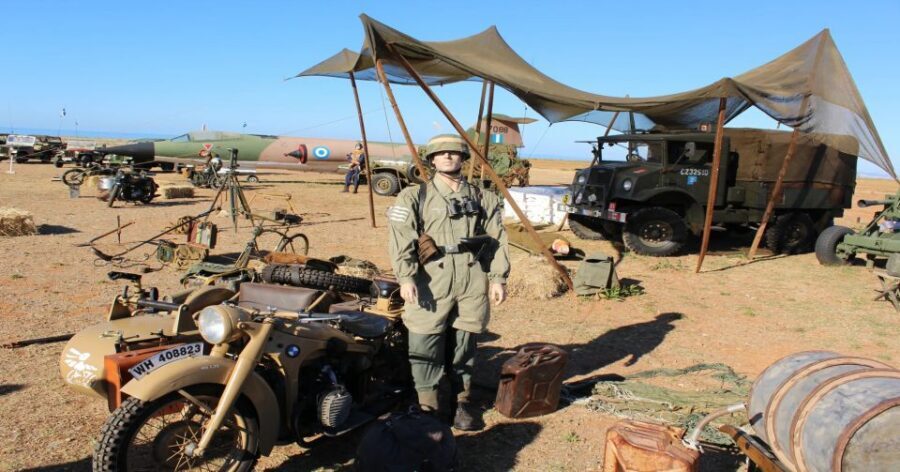
- Private WWII museum / war shelter: you see memorabilia and rare finds in a setting built for this kind of history
- Battlefield archaeology stops: you examine remnants tied to the Battle of Crete and daily wartime routines
- Apostolis adjusts the pace: the day can flex to protect key stops, including limited-hours museum time
Why this Battle of Crete tour feels different
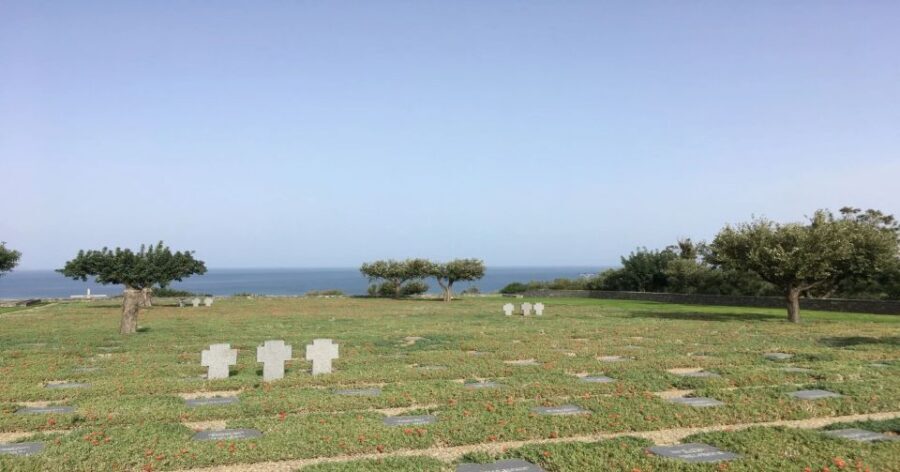
Most history tours in Crete hit the highlights and call it a day. This one is built around WW2 “on the ground” storytelling, guided by a professional historian/archaeologist specializing in Contemporary History (certified by the Greek Ministry of Tourism) working with Apostolis, a licensed guide focused on the Battle of Crete.
What makes it practical for you is that the day isn’t just dates and names. You’re guided from site to site and then prompted to connect the dots: terrain, movement, and why specific locations mattered. You also get rare archive photos and references gathered through careful research, not random anecdotes.
And yes, it’s intense history. But it’s handled with care. You’re not rushing past memorials. You’re also not pretending this was clean or heroic. The focus on casualties and respect at cemeteries makes the military story feel human.
You can also read our reviews of more private tours in Chania
Maleme Airport: the first domino of the campaign
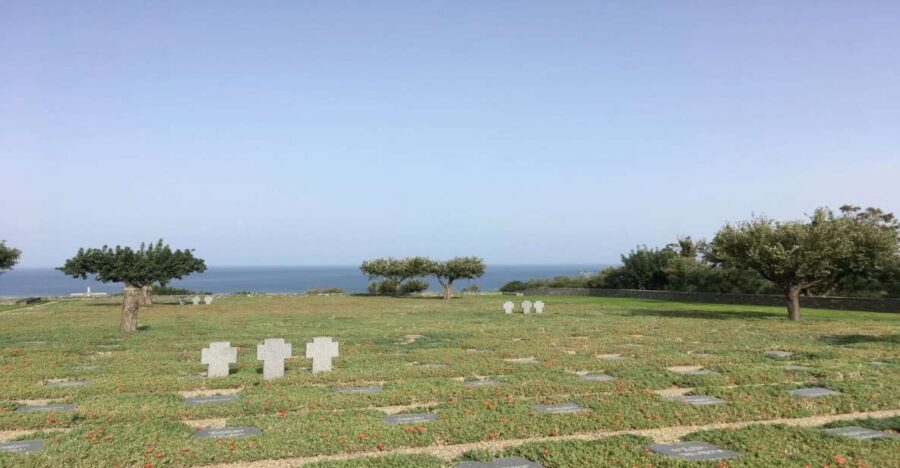
The tour starts at the Airport of Maleme, a site described as vital for the Axis forces during World War Two. This is the kind of place where the landscape may look calm today, but the purpose is clear once you’re standing there: this was one of the key landing and operational points.
From Maleme, you’ll move through nearby battle-related ground with stops that help you get your bearings fast—especially if it’s your first time studying the Battle of Crete. One useful detail is that you can expect a RAF memorial on the western edge of Maleme airfield to be included, which helps anchor the story for you from the Allied side, not only the German account.
You’ll also learn how these early actions fed into the next phase of the campaign. In the larger context, Apostolis frames Crete’s fall inside the wider WWII sequence and the strategic pressures facing both sides. It’s the kind of context that makes the day click instead of feeling like a list of unrelated stops.
Hill 107 and the German War Cemetery: where respect meets strategy
After Maleme comes Hill 107—and this is where you feel the weight of the battle. Hill 107 is tied to the fighting that played out during the first days when the campaign was at its most unstable.
You’ll visit the German War Cemetery on Hill 107, which is set up for remembrance and quiet reflection. The goal here isn’t a quick photo. The tour is designed for you to pause and pay respect to the casualties, with the sheer scale of loss treated as part of the story.
What you gain by pairing the cemetery with Hill 107 is understanding that strategy isn’t abstract. Terrain mattered because people died on it. The cemetery makes that real, and the hill makes the military logic understandable.
From a practical standpoint, these are the moments where good shoes matter. Even if the route is short between stops, cemeteries and hill sites usually mean uneven ground and more standing than you expect.
Tavronitis Bridge, Galatas, and Prison Valley: the battle spreads
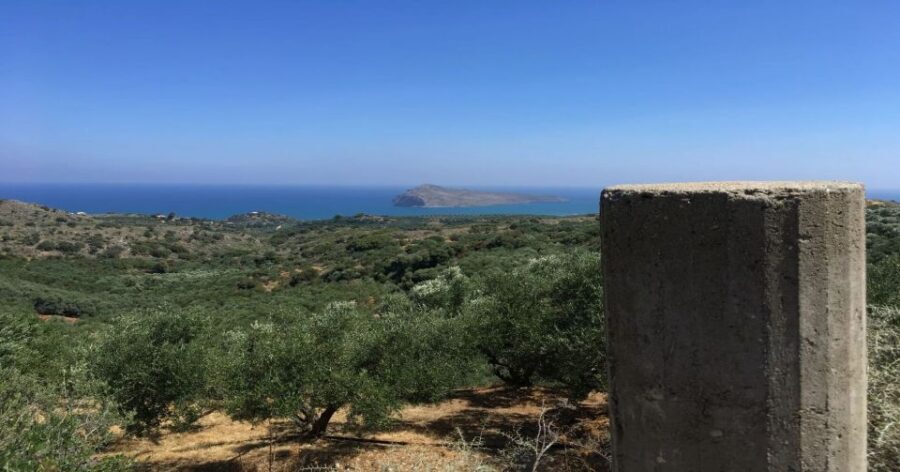
Once you’re in the thick of the story, the tour shifts from “big locations” to the places where the battle moved through villages and choke points.
You can expect to visit Tavronitis Bridge, described as showing signs connected to the fighting. You’ll also spend time around Galatas, a key village area in the timeline of events on Crete.
Then comes the prison area and Prison Valley. These stops are valuable because they show you that battles aren’t only about fire and maneuver. There’s an afterlife to fighting: capture, confinement, and the consequences for civilians and soldiers once control changes hands.
Apostolis uses maps, reference images, and on-site explanation to connect these places to the timeline. One review detail that matters for you as a reader: the guide is able to connect the land story to naval and wider campaign context, so the day doesn’t stay trapped in local geography.
If you like history you can see, these are the stops that make you feel like you’re reading the battle through the cracks in the terrain.
Abandoned German bunkers and lockouts: the hard-to-find parts
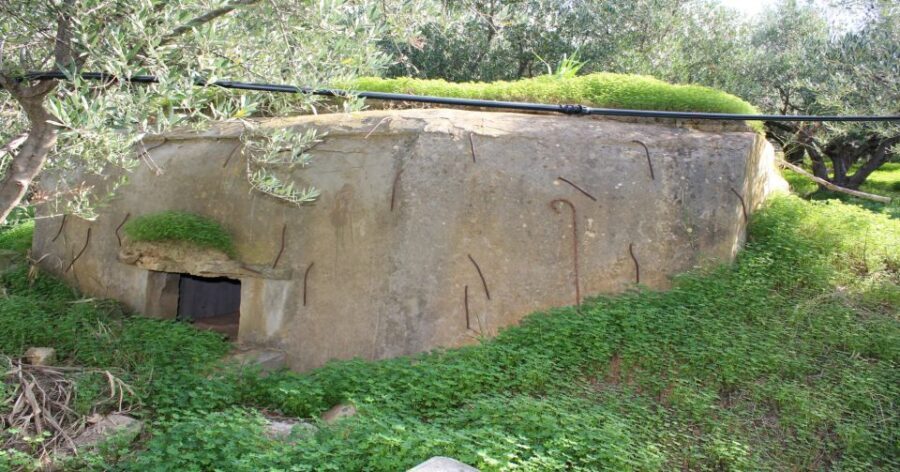
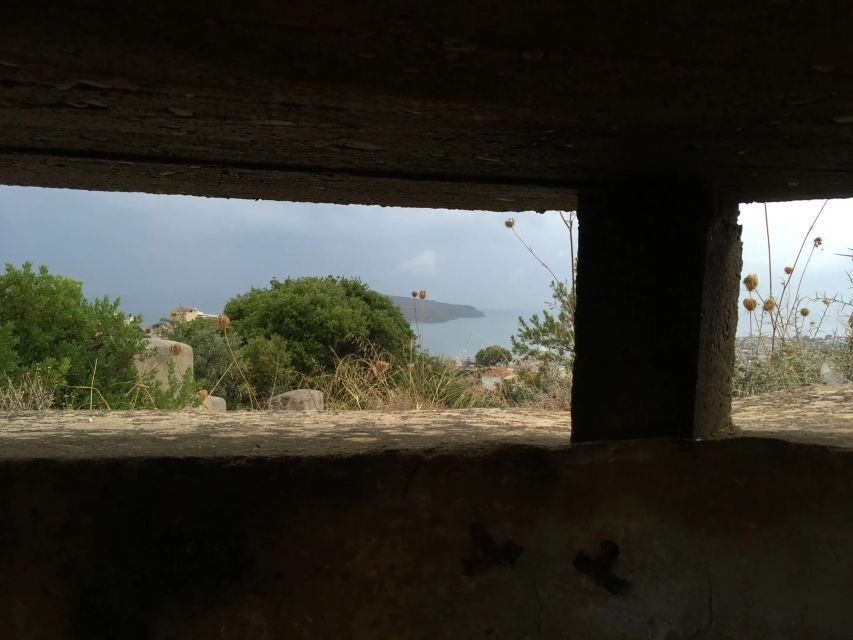
One of the strongest selling points here is direct access to abandoned German bunkers and lockouts. The tour highlights one of the most daring German bunkers that many people don’t even know exists. You’ll also visit two different abandoned German lockouts in an undisclosed location.
This is where you should bring the right mindset. You’re not touring a polished exhibit. You’re exploring wartime infrastructure that was built for protection, communication, and survival—then abandoned.
You’ll likely be shown how these places fit into daily war routines: what equipment mattered, how ammunition was used, and how both Axis and Allied forces approached survival and combat from their respective positions. The tour also frames differences in regime and daily life tied to occupation and fighting.
Practical note: since bunker interiors and approaches can be rugged or dusty, wear comfortable clothes and shoes with grip. You’ll be glad you did when you’re stepping carefully around concrete, uneven ground, and low or tight areas.
You can also read our reviews of more historical tours in Chania
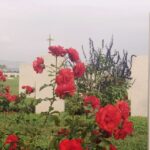
Private war museum and WWII shelter: rare finds in context
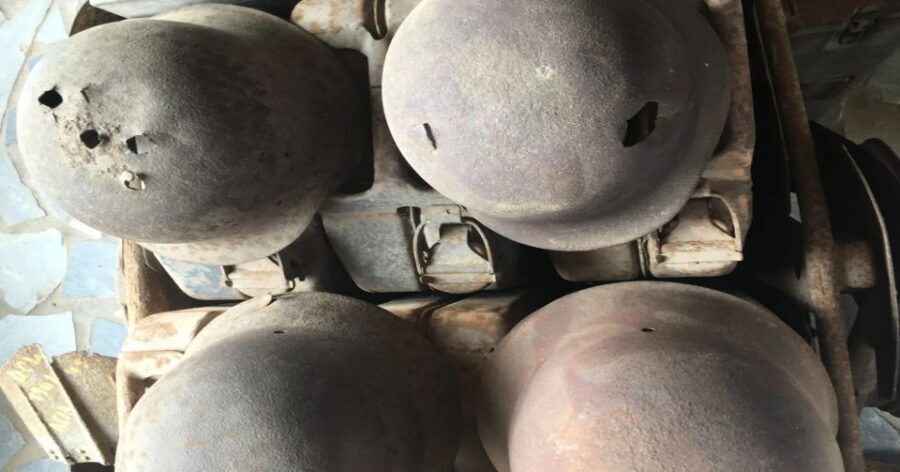
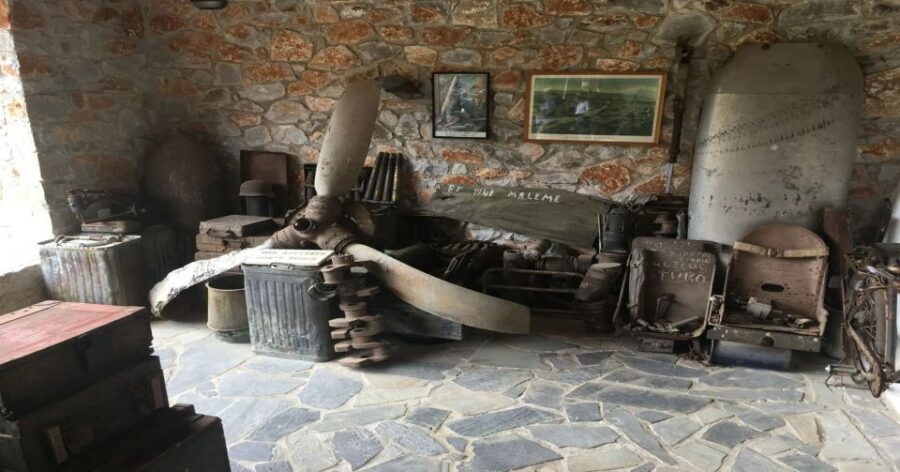
Between outdoor sites, you get a structured break inside a private museum / WW2 war shelter. This is one of the places where the tour earns its price because it turns “what you saw outside” into something you can actually interpret.
You can expect to see WWII memorabilia and rare war finds, plus explanation that connects those artifacts back to what happened at specific locations you visited. Apostolis brings in reference materials and archive photos used to interpret what you’re seeing and why it matters.
A smart detail from how the day can operate: if timing gets tight, Apostolis may prioritize the German bunker and the museum stop early, especially when limited opening hours could affect you missing the collection. That kind of built-in priority helps protect the value of the day.
This is also the portion that works especially well if you’re a visual learner. Outside, the battle can feel like “where things happened.” Inside, you get the “why those things were built and used” piece.
Souda Bay Allied Cemetery: Commonwealth sacrifices with real bay views
The emotional center of the tour arrives at the Commonwealth Allied Cemetery at Souda Bay. Here you pay respect to the British Commonwealth nations involved in the Battle of Crete, including Great Britain, Australia, and New Zealand.
The tour includes a short contextual explanation of the cemetery’s place in history in Souda Bay, and you also get spectacular views over the bay while learning the meaning behind memorial lines like Lest We Forget.
This pairing is important. A cemetery visit alone can feel like a still moment. But when it’s connected to the earlier stops—Maleme’s opening phase, Hill 107’s fighting, the prison and valley areas—it becomes part of a larger story of who was on the island, what was at stake, and what the battle cost.
From a practical perspective, this is also a good moment to pause, lower your pace, and reset your brain before the ride back.
Timing, comfort, and what to bring for a 7-hour day
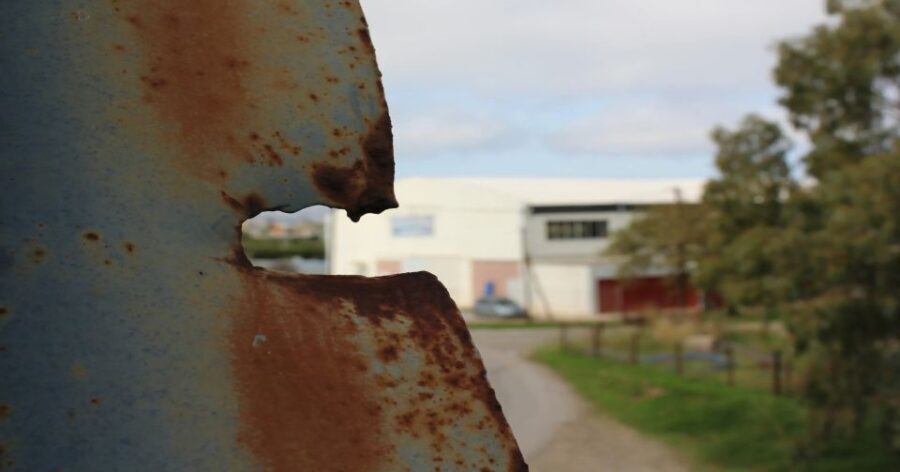
This is a 7-hour private tour. Because it’s private, you don’t get the stress of managing a mixed pace with strangers. Instead, the day can feel measured: stops, standing time, explanations, and then another site.
Comfort-wise, the vehicle is described as air conditioned, which matters on Crete even outside peak summer. You also get hotel pickup and drop-off from Chania central areas, with you asked to wait in the lobby about 15 minutes before pickup.
What to bring is simple and useful:
- Comfortable shoes
- Comfortable clothes
And plan on the weather cooperating about as much as any Mediterranean day does. The tour runs rain or shine, so bring a light layer if you get cool evenings or a sudden shower.
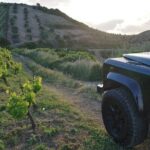
Food and drinks aren’t included, but there is a small coffee/lunch break at a riverside setting with overgrown vegetation. That’s a pleasant reset during a day that can otherwise feel like nonstop history.
Price and value: is $182 per person fair for what you get?
At $182 per person for a 7-hour private day, this tour isn’t a budget choice. But it also isn’t priced like a quick checklist ride. The value comes from the combination of:
- A professional historian (certified by the Greek Ministry of Tourism) alongside a licensed historian tour guide/driver specializing in the Battle of Crete
- Hotel pickup and drop-off from central Chania
- Access to abandoned German bunkers/lockouts and battlefield archaeology-style inspections
- Visits to two war cemeteries
- A stop at a private WWII museum/collection with rare finds
- The use of rare archive photos and documents during the explanations
If you care about WWII history beyond the surface level, this pricing makes sense because your time is being spent in locations tied to the battle, plus interpretation that’s clearly aimed at helping you understand what you’re seeing.
If your goal is only a casual stroll for photos, you might find the day heavy. But for history lovers, the structure is exactly where the money goes.
Who should book—and who might want another option
This tour fits you best if:
- You’re serious about the Battle of Crete / WWII military history
- You like guided interpretation at the actual sites, not only in a museum room
- You want both sides of the story, with cemetery visits for German and Commonwealth casualties
- You appreciate small-group attention from someone like Apostolis who can adapt timing when needed
You might want a different tour if:
- You prefer very short days with minimal walking
- You’re mainly after beaches, nightlife, or casual sightseeing with light context
- You’d struggle with rain-or-shine outdoor stops around memorials and bunker terrain
Should you book the Chania Battle of Crete Private Tour?
I’d say book it if you want a day that treats WWII history like something you can read on the ground. The Maleme start, Hill 107 cemetery, Prison Valley, Souda Bay Allied Cemetery, and the private museum stop aren’t random. They build a connected story.
The biggest reason I’d recommend it is the mix of access and interpretation: uncommon bunker/lockout sites plus a private collection, guided by a historian and a specialist guide. That combination is what makes the day feel more than a standard tour route.
If you’re on the fence, ask yourself one question: do you want to understand why these locations mattered, or do you just want photos? If you want understanding, this is a strong match.
FAQ
How long is the Chania Battle of Crete private tour?
It lasts 7 hours.
Is this tour private?
Yes, it’s a private group experience.
Who guides this tour?
You’ll be guided by a professional historian specializing in Contemporary History (certified by the Greek Ministry of Tourism) and a licensed historian tour guide/driver specializing in the Battle of Crete. Apostolis is the named guide in the provided information.
Where does hotel pickup happen?
Pickup and drop-off are included from all Chania central areas. You’re asked to wait in the hotel lobby about 15 minutes before the scheduled pickup time.
What stops are included for WWII history?
The day includes key Battle of Crete sites such as the Airport of Maleme, Hill 107, German War Cemetery, battlefield areas tied to the battle, abandoned German bunkers/lockouts, and visits to a private WWII museum/collection.
Do you visit war cemeteries?
Yes. The tour includes paying respect at two cemeteries: the German War Cemetery and the British Commonwealth Allied Cemetery at Souda Bay.
Is food included?
No. Food and drinks are not included. There is a small coffee/lunch break included during the day.
What should I bring?
Bring comfortable shoes and comfortable clothes.
Can this be booked as a cruise shore excursion?
Yes. It can also run as a shore excursion covering the Chania and Souda Cruise Port.
Does the tour run in bad weather?
Yes. The tour takes place rain or shine.