REVIEW · CRETE
Battle of Crete Full Day Private Tour in Chania
Book on Viator →Operated by Proper Cretan Guide · Bookable on Viator
There’s a WWII battlefield near Chania that feels close. This private day tour connects the Battle of Crete (Operation Mercury) to real sites—Maleme, Tavronitis Bridge, hidden bunkers, tunnels, and the Souda Bay War Cemetery.
What makes it especially interesting is the way you move from place to place with a historian-style explanation, using research and rare archival material to explain what happened and why it mattered.
I really like two things here. First, the tour focuses on the story of the battle through historical archives and rare photos rather than just dropping names at each stop. Second, it’s set up as a private tour, so timing and pacing can be adjusted to your group instead of herding you along with strangers.
One thing to consider: the day is long (about 6 to 8 hours), and not every stop has food on-site. If you get hungry quickly, plan on bringing snacks or budgeting for lunch outside the tour rhythm.
In This Review
- Key points I’d bookmark before you go
- How a private Battle of Crete tour makes WWII feel real
- Stop 1: Maleme Airport—the main objective in plain sight
- Stop 2: Tavronitis Bridge—an intact landmark with lessons
- Stop 3: Hill 107 German War Cemetery—respect before details
- Stop 4: An abandoned German bunker—views you can’t fake
- Stop 5: War Shelter of Platanias—tunnels, forced labour, and rare finds
- Stop 6 and 7: Chania town battle sites + the ANZAC angle
- Stop 8: Souda Bay War Cemetery—pay respects and connect strategy to place
- Price and what you really get for $189.73 per person
- Comfort, timing, and logistics that actually matter on this route
- Who should book this Battle of Crete private tour
- Should you book this Battle of Crete full-day private tour?
- FAQ
- How long is the Battle of Crete Full Day Private Tour in Chania?
- What time does the tour start?
- Is hotel pickup and drop-off included?
- Is this tour private?
- What’s included in the price?
- Are there any extra tickets or costs at the sites?
- What’s not included during the tour?
Key points I’d bookmark before you go
- Professional historian tour guide: you’ll get explanations tied to what you’re seeing, not generic narration
- Private, group-only experience: just your party, with flexibility on timing and flow
- Maleme Airport + Hill 107: the main objective and the German War Cemetery area get their own dedicated time
- Tavronitis Bridge: an intact bridge treated as a meaningful “on-the-ground” landmark
- War Shelter of Platanias: WWII-era tunnel system with forced-labour context and rare finds you can actually look for
- Souda Bay War Cemetery: included admission and a strong place for paying respects to fallen ANZAC forces
How a private Battle of Crete tour makes WWII feel real
Chania is a beautiful base, but for history fans, it can also feel like the past is everywhere. This tour turns that into something you can follow. You’re not just sightseeing; you’re getting a guided walk-through of the Battle of Crete across key locations tied to the fighting.
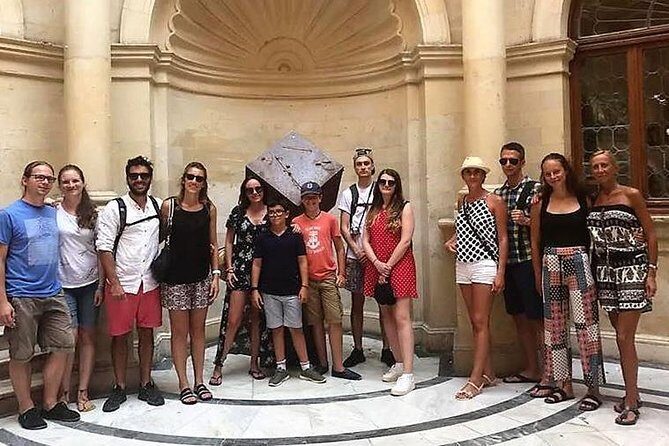
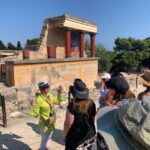
The “private historian” element is the big value lever. At each stop, you’re shown the significance of what you see—like positions, landmarks, and evidence you can still recognize today. My guide Apostolis (Proper Cretan Guide) was engaging and flexible, which matters because it keeps the day from turning into a rushed checklist.
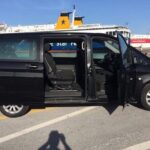
And because you’re in an air-conditioned vehicle with WiFi onboard, you can handle the long drive between sites without it feeling like a slog. It’s a nice match for people who want history with structure, but also want the day to be comfortable.
You can also read our reviews of more private tours in Crete
Stop 1: Maleme Airport—the main objective in plain sight
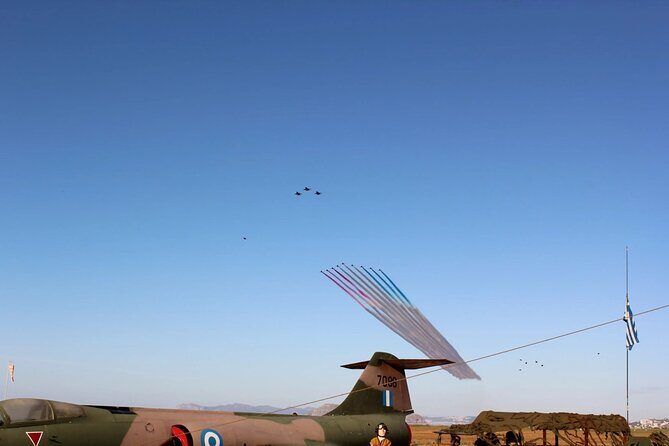
You start at Maleme, visiting the airport area that was the main objective of the Battle of Crete. This is a strong opening because it gives you a foundation. If you want to understand the rest of the day, you need a mental map first—and Maleme is where that begins.
What I like here is that it’s not only about names. The guide talks about the geology of the battlefield and how it affected positions—specifically the German team Comet and the defensive positions of the allies. That kind of explanation helps you look at the ground features with purpose, not just as scenery.
Practical note: this stop is listed as free admission ticket. You still spend about an hour here, so you’ll have enough time to take in the view and let the story settle before you move on.
Stop 2: Tavronitis Bridge—an intact landmark with lessons
Next you head to Tavronitis Bridge, over the river of Tavronitis. This is a short stop—about 30 minutes—but it’s a good one because it’s specific. An intact bridge becomes a real reference point for what happened in the early days.
The guide’s focus here is on the significance of the bridge for the battle, plus the first days of the fighting and tragic mistakes made by the allies. Even if you know a little WWII already, this kind of “here’s why this place mattered” framing makes the day click.
It’s also a practical win: admission is included, so you’re not constantly asking how much tickets cost while you’re in the flow. Bring a camera, but also take a minute to look without it—bridges and water crossings are easy to photograph, but easier to understand when you slow down for a short moment.
Stop 3: Hill 107 German War Cemetery—respect before details
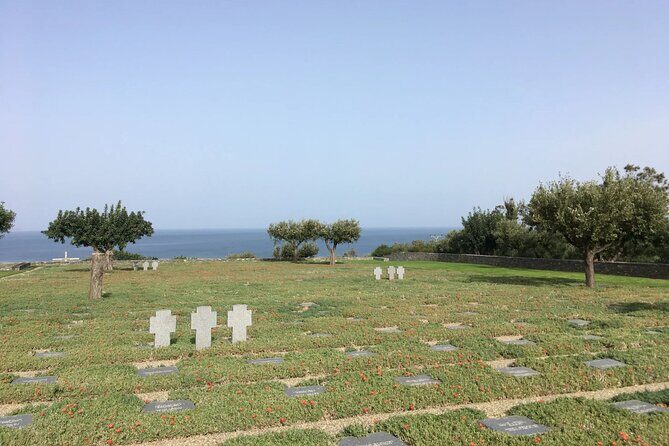
Back at Maleme again, the tour adds a more reflective moment at the German War Cemetery in Hill 107. You get about an hour, with free time to visit the information room of the museum.
This stop matters because the battle involved people on multiple sides, and the memorial setting keeps the day grounded. You’ll have time to pay respect and then shift into learning mode through the information room.
Admission is listed as free for this part, but there’s a catch to keep in mind: the War Museum entrance fee is €5 per person (not included). That means you can choose whether to pay to go deeper, based on how much time and curiosity you have that day.
Stop 4: An abandoned German bunker—views you can’t fake
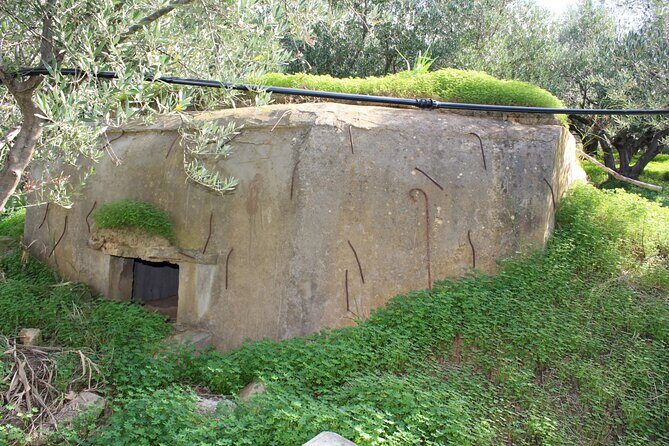
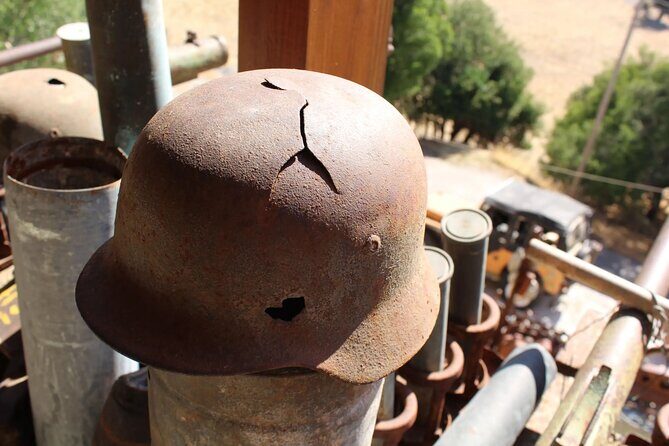
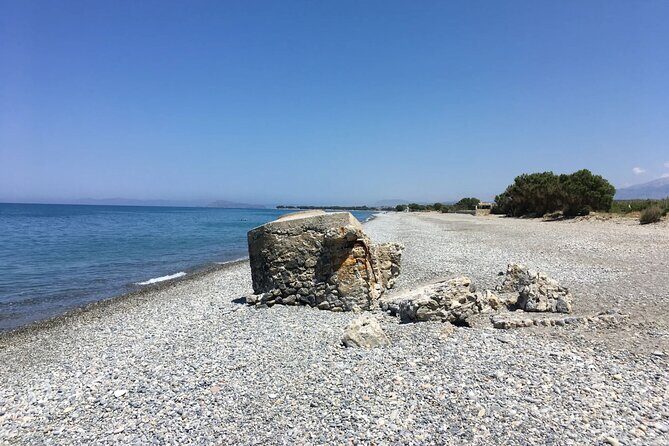
After the cemetery, you visit an abandoned German bunker at an undisclosed location. It’s only about 30 minutes, but it can be one of the most memorable stops because the setting feels immediate.
The listing calls out “impeccable and astonishing views.” In practice, that usually means you can look out over the terrain and connect what you learned earlier about positions and objectives to real sightlines.
No admission fees are listed for this stop (free). So you’re mostly paying with time—meaning you should come ready to stand, look, and listen for a short stretch without rushing.
Tip for comfort: wear shoes that handle uneven ground. Bunkers and shelters tend to mean stairs, slopes, or areas that don’t feel built for easy walking.
You can also read our reviews of more tours and experiences in Crete


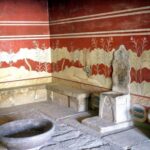
Stop 5: War Shelter of Platanias—tunnels, forced labour, and rare finds
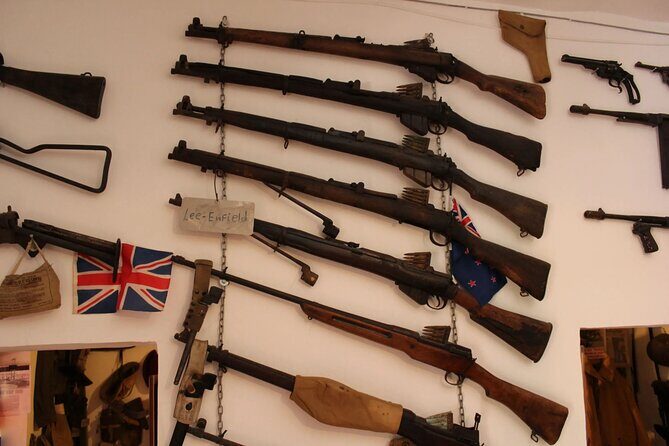
Then you move to War Shelter of Platanias, a unique WWII-era series of tunnels. This part is about 30 minutes, and it’s not just “cool bunker photos.” The guide explains the forced labour the Germans forced local people to endure after the occupation of the island.
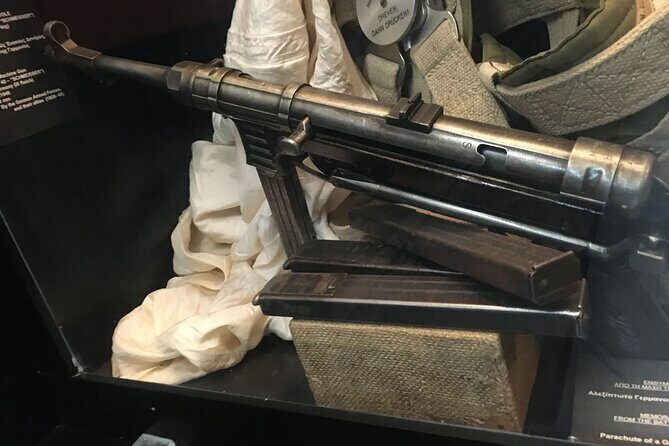
The tour also mentions rare historical finds connected to the battle era. Even without getting too specific about what you’ll see, the overall value is clear: you’re getting the human part of occupation-era history, not only the fighting.
Admission is listed as not included, so you may need to pay on your own when you reach the shelter. Since the fee amount isn’t provided here, plan to budget a bit extra just in case.
Because this stop involves tunnels, you might want to avoid going in if you feel uncomfortable in enclosed spaces or tight areas. The tour time is short, but it’s still a tunnel visit.
Stop 6 and 7: Chania town battle sites + the ANZAC angle
Next you shift into the Chania Town area, where you’ll visit a battlefield of great historical significance tied to the ANZAC forces during Operation Mercury. This is about an hour with free admission.
This stop balances the day. Earlier you saw the German-side memorial setting and battlefield objective framing; here you get a place linked to the ANZAC toll during fierce fighting. It’s another reason the tour feels more complete than a single-sided route.
After that, you get a half-hour drive to another strategic point for coffee/sightseeing in the Chania Sector (Team Mars), overlooking the Souda Bay area. This part is about an hour, and it’s marked as free time for coffee and views.
I like this because it breaks the intensity. You get a chance to sit, drink something warm or cold, and look across Souda Bay with the battle context in your head. If you enjoy photography, it’s also a good moment to capture the “now” after all the “then” you’ve been hearing.
Stop 8: Souda Bay War Cemetery—pay respects and connect strategy to place
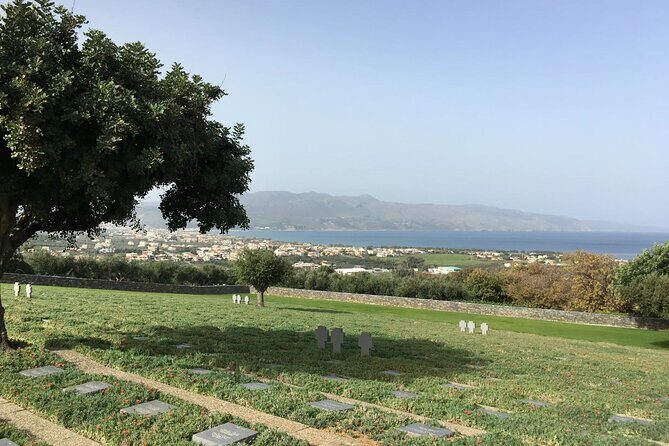
The day ends at Souda Bay War Cemetery, where admission is included and you’ll spend about 30 minutes. This is a respectful close, focused on the allies—including the ANZAC soldiers who lost their lives during the battle and the later occupation.
What makes this stop valuable is that it’s not only about remembering. The guide also points out the strategic significance of the Souda Bay area, which ties back to what you saw earlier from higher viewpoints and bridge/terrain references.
If you want a clean memory of the day, this is it: you’ve covered the objective area at Maleme, the bridge landmark, burial and evidence sites, and occupation-era tunnels. Then you finish with a cemetery that brings it into focus.
The time is short, so if you’re the kind of traveler who likes a long reflective walk, do a quick check of the surroundings as soon as you arrive. Then come back to the key memorials for a more focused moment.
Price and what you really get for $189.73 per person
At $189.73 per person for a private full day (about 6 to 8 hours), this tour isn’t trying to be a budget group ride. You’re paying for four things that add up:
- A historian-style guide who works through archival material and research books
- Private transportation with pickup/drop-off from Chania central areas
- On-the-ground stops across multiple sites that would be tricky to organize yourself
- Tickets being included for some core parts, like Tavronitis Bridge and Souda Bay War Cemetery
What helps the value is the mix of included and free sites. Several stops are free admission (Maleme airport, Hill 107 cemetery area, the bunker area), so you’re not constantly paying entry fees at every turn. The War Museum is an extra €5 per person if you want it, and the War Shelter of Platanias is listed as not included, so you should expect a small extra cost depending on your choices.
Also, it’s booked about 44 days in advance on average. That’s a quiet hint that the schedule can fill up—especially in peak seasons—so if the date matters, it’s worth booking sooner rather than later.
Comfort, timing, and logistics that actually matter on this route
This is a full-day drive across multiple areas around Chania and Souda Bay. That’s why air-conditioning and onboard WiFi are more than perks. Heat and long travel are what usually break history days for people. Here, the plan is designed so you can stay comfortable between stops.
Start time is 8:30 am, which is smart. You’ll get several hours of daylight and fewer crowd distractions before your later, more reflective segments. The itinerary also gives you free time built in—especially at Hill 107—so you’re not stuck only listening.
One more practical note: lunch/snacks aren’t included. There’s a coffee break/sightseeing stop in the Chania Sector, but you should expect to manage meals separately. If you’re picky about food timing, plan snacks so you don’t end up buying something in a rush.
Who should book this Battle of Crete private tour
This is a great fit if you:
- want WWII history that’s grounded in specific places you can see and walk around
- enjoy guided explanations built around archives, rare photos, and research books
- prefer a private schedule, so you can set the pace and ask questions
- care about both sides of the story, including German memorial sites and ANZAC-linked locations
It might be less ideal if you:
- dislike long days (6–8 hours) and prefer short, easy outings
- strongly want every stop to be fully accessible and fully “comfortable” (tunnels can be a factor)
- want lunch fully handled for you (it’s not included)
Should you book this Battle of Crete full-day private tour?
If you’re the type of traveler who wants history to feel factual and grounded, I think this is a smart booking. The route makes sense: you start at Maleme for the main objective, then add a bridge landmark, memorial and evidence sites, tunnels tied to forced labour, and finish with Souda Bay cemetery for respectful closure.
I’d book it if you want a guide who can explain why these places matter, and if you appreciate that it’s not just “see a monument.” Also, the private setup with Apostolis-style engagement (and the flexibility that comes with it) helps a lot on a day with multiple stops and changing moods.
One last practical check: bring comfortable walking shoes and plan for meals outside the tour. If you do that, you’ll get a full, meaningful day of Operation Mercury history without feeling rushed.
FAQ
How long is the Battle of Crete Full Day Private Tour in Chania?
The tour is scheduled for about 6 to 8 hours.
What time does the tour start?
The start time is 8:30 am.
Is hotel pickup and drop-off included?
Yes. There is free hotel pickup and drop-off from all Chania central areas.
Is this tour private?
Yes. It’s a private tour/activity, so only your group participates.
What’s included in the price?
It includes a professional historian tour guide/driver, an air-conditioned vehicle, WiFi on board, all fees and taxes, private transportation, and free hotel pickup and drop-off from central Chania areas.
Are there any extra tickets or costs at the sites?
Yes. The War Museum entrance fee is €5 per person (not included). The War Shelter of Platanias has admission listed as not included.
What’s not included during the tour?
Lunch and snacks are not included (optional), and some site admissions noted above may require extra payment.