REVIEW · CHANIA
Pottery – Honey & Olive Oil experience
Book on Viator →Operated by CRETE LUXURIOUS TOURS & TRANSFERS · Bookable on Viator
Four stops, one day of hands-on Crete. This tour chains together olive oil, honey tasting, a real pottery session in Margarites, and a big historic stop at Arkadi Monastery, all with private transportation and an English-speaking driver. My favorite part is how the day mixes food craft with actual making (clay in your hands), not just watching behind glass. One heads-up: the honey and olive oil parts can feel short, and the day’s narration depends on how chatty your driver is, so come ready to ask questions.
You’ll be picked up in Heraklion city or Rethymno city and moved between sites in an air-conditioned vehicle with bottled water. The timing is built around about four major stops (each roughly an hour), so you get variety without feeling like you’re driving nonstop. The main drawback to consider is that there’s no separate tour guide included, so if you want deep storytelling at every stop, you may need to rely on the driver and the on-site staff.
In This Review
- Key Things to Know Before You Go
- Price and Logistics: Private Pickup from Heraklion or Rethymno
- How the Day Flows: Olive Oil, Honey, Ceramics, Then Arkadi
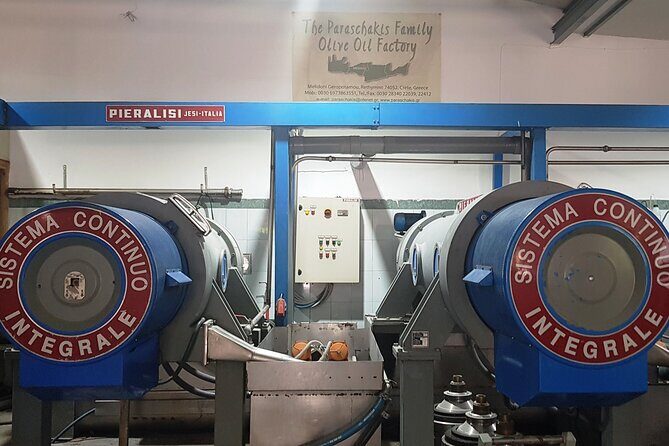
- Paraschakis Olive Oil in Melidoni: Three Mills and Modern Production
- Apithano Honey Museum: Lab Time Plus Tasting You Can Actually Use
- Tsikalario Cretan Ceramics in Margarites: Make Your Own Piece
- Arkadi Monastery: Venetian Church and the 1866 Independence Story
- What’s Included (and What You’ll Need to Add Yourself)
- Comfort, Timing, and How to Get the Most from Each Hour
- Who This Tour Is For (and Who Should Consider Something Else)
- Should You Book This Honey, Olive Oil, and Pottery Day?
- FAQ
- Is this tour private for my group only?
- How long does the Honey & Olive Oil pottery experience take?
- Where does pickup happen?
- Are tickets included for the main stops?
- Is lunch included in the price?
- Do I need to speak Greek?
- Is bottled water provided?
- Is the time flexible for pickup?
- What if weather is bad?
- Are there any accessibility or participation limits?
Key Things to Know Before You Go
- Margarites ceramics workshop in Tsikalario-style pottery country: you’ll try making ceramics in one of the better-known centers on Crete.
- Apithano Honey Museum includes both lab-style viewing and a tasting, so you’re not leaving with only facts.
- Paraschakis Olive Oil in Melidoni is set up around modern production and multiple mills you can tour for free.
- Arkadi Monastery adds real historical weight, including the 1866 events tied to Crete’s independence story.
- This is private (your group only), with pickup limited to Heraklion and Rethymno city.
Price and Logistics: Private Pickup from Heraklion or Rethymno
This is priced per group at $722.47 for up to 7 people, and that matters for value. If you fill the car (7 travelers), it works out to about $103 per person. If you’re just a couple, it’s more like $361 per person—still workable if you value privacy, but it’s no longer “cheap.”
Duration is typically 5 to 7 hours, depending on timing and whether you add a lunch stop. The tour runs daily in a window that starts at 9:00 AM and finishes by 3:30 PM (based on the service hours). Pickup time is flexible, so plan for a morning window rather than a precise minute.
You’ll get private transportation, air-conditioning, and bottled water. There’s also a mobile ticket, which is convenient if you don’t want to mess with printing.
One logistics point that’s easy to miss: pickup and drop-off are only from Heraklion city and Rethymno city. If you’re staying outside those areas, you’ll need another way to get to the city pickup point.
You can also read our reviews of more tours and experiences in Chania.
How the Day Flows: Olive Oil, Honey, Ceramics, Then Arkadi
The schedule is built as four one-hour-ish experiences, moving from production to tasting to making, then finishing with a landmark monastery. That order is smart. You start with foods you can “see made,” then shift to honey (where smell and flavor matter), then end with a hands-on ceramics session while your mind is still in craft mode. After that, you switch gears to history and architecture at Arkadi.
The whole thing is done with English-speaking driver support, and admission tickets are included at each paid stop. What’s not included is a dedicated guide, so you should think of the driver as your coordinator and translator—not a museum lecturer.
If you want the day to feel more personal, you’ll get the best results by asking questions as you go: what you’re seeing, how it’s produced, and what to taste (for honey) or look for (for olive oil). It’s simple, but it turns a short stop into a satisfying one.
Paraschakis Olive Oil in Melidoni: Three Mills and Modern Production
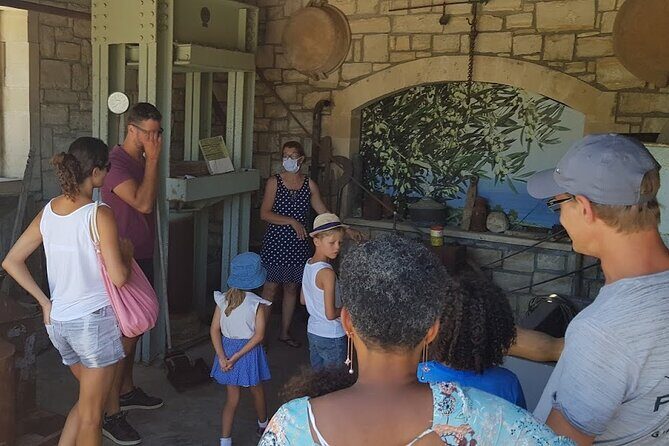
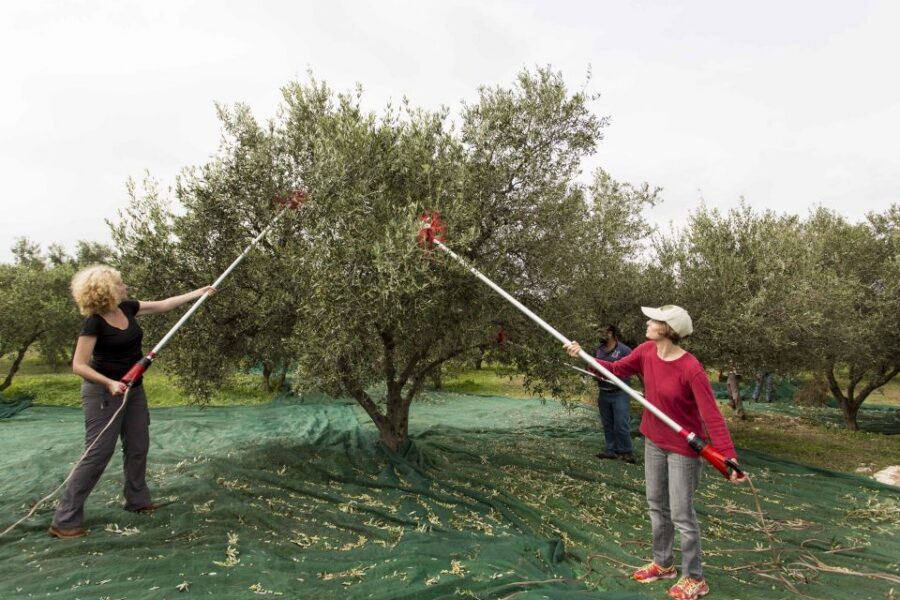
Your first main stop is the Paraschakis Olive Oil facility in Melidoni (Crete). This isn’t presented as a tiny family press-in-a-back-room place. The emphasis is on the olive oil factory having state-of-the-art facilities and high standards for quality.
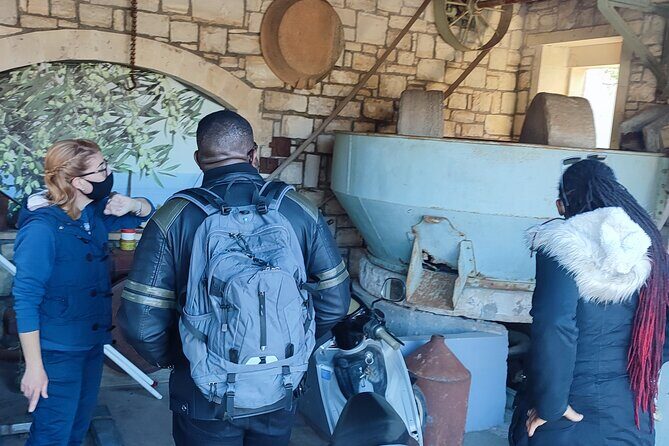
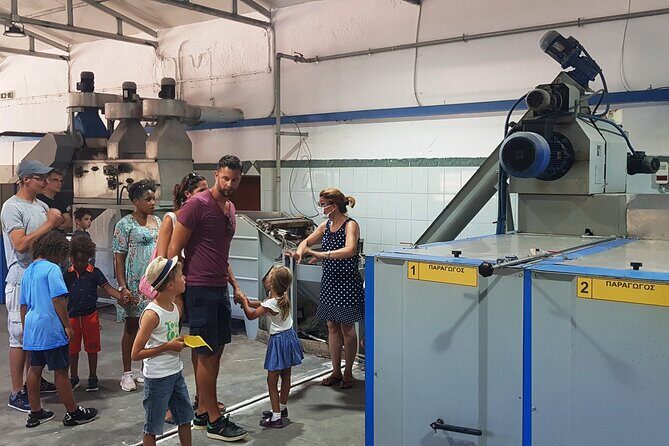
The most useful detail here: you get the chance to tour three different mills for free. That’s a lot of value in one stop because it helps you understand that “olive oil production” isn’t one step—it’s a chain of processes, and different mills/areas can show different parts of the workflow.
What to expect from the experience:
- You’ll move through the factory areas that show how operations are set up.
- The tone can be practical and production-focused rather than story-heavy.
- Even if the tour is quick, the payoff is that you’re seeing a real working operation with modern tech and strict specs.
A fair consideration: one past participant described this portion as being done quickly and with limited enthusiasm from the person leading the tour. That doesn’t mean it’s always like that, but it does suggest you should keep your expectations aligned: this is more “production walkthrough” than “long guided history lecture.”
Tip: ask what they consider a quality benchmark—how they think about selection, processing, or the final character of the oil. You’ll get more out of the hour that way.
Apithano Honey Museum: Lab Time Plus Tasting You Can Actually Use
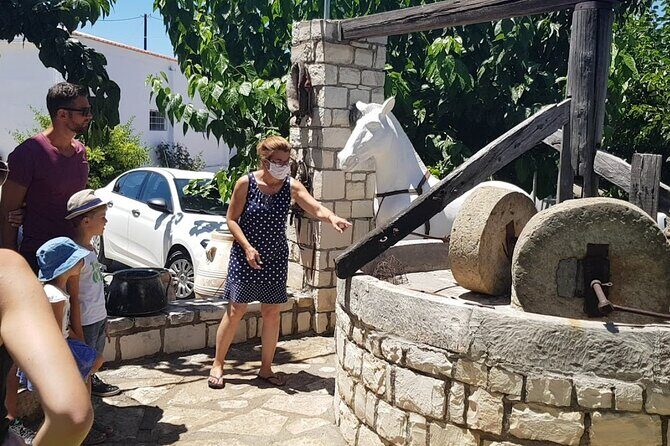
Next up is the Apithano Honey Museum for tours and tasting. This stop leans into two things: the history/production of honey in Crete and the role bees play in making different flavors possible.
The museum experience includes visiting their lab and learning about the world of Apithano and bees. What makes this one feel worthwhile is that honey production isn’t presented only as a product. It’s framed as the result of selected areas of Crete with rare biodiversity and endemic vegetation—basically, the place matters to the taste.
You can expect:
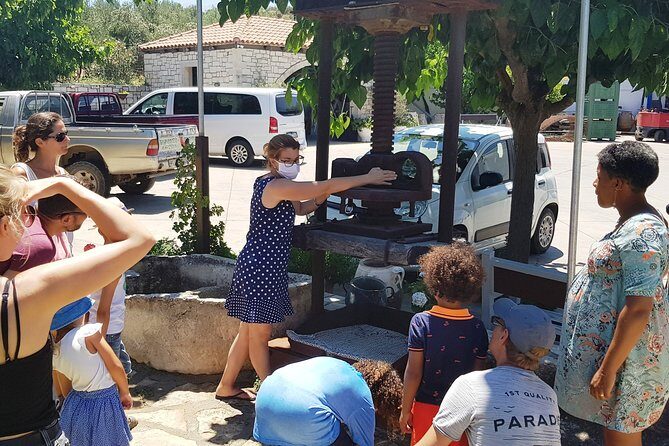
- A structured tour that explains how honey is collected from selected areas.
- A tasting component after the tour, which is where a lot of people get their “aha” moment.
From the provided feedback, the honey segment is often described as brief but well done, with the tasting appreciated right after. That timing is smart: your senses are still fresh from the explanation, so it’s easier to connect cause and flavor.
Practical note: bring your curiosity. If you want specifics (what makes Crete honey taste different, how they think about sourcing), ask. If your driver isn’t chatty, the on-site staff can still usually fill in the details.
Tsikalario Cretan Ceramics in Margarites: Make Your Own Piece

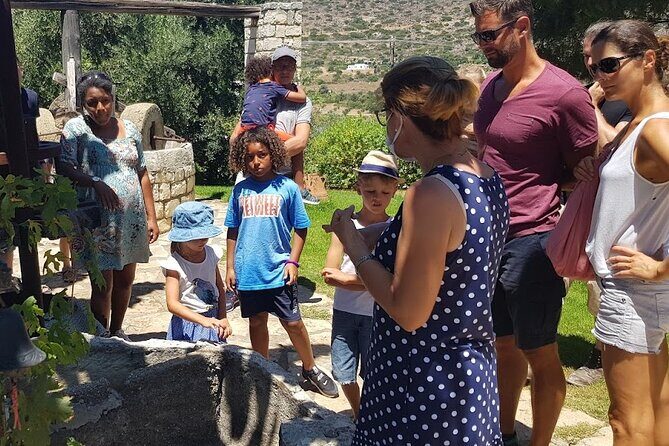
Then comes the stop many people remember: ceramics in Margarites, at Tsikalario-style workshops in pottery village Margarites. Margarites is described as Crete’s most important and well-known pottery center, and the reason is pretty straightforward—there are plenty of clay deposits nearby.
What’s included is the key part: you can learn to make your own ceramic in a workshop session. The session is free of charge as part of the experience. This is not just a demo where you watch someone else work; it’s a chance to participate.
Why I think this is the best-value stop in the day:
- Your hands learn faster than your ears.
- Even if you’re not an “art person,” it turns the day from sightseeing into a real memory you created.
- You’re in an area shaped by pottery culture, not an imported craft show.
Also, Margarites is described as being surrounded by two parallel gorges with flora, aromatic plants, trees, herbs, and flowers. That means you often get a nicer atmosphere around the village than you’d expect from a straightforward workshop stop—more smelling, walking, and looking, not just sitting.
Consideration: ceramics workshops can be a little messy in a good way. Wear something you don’t mind getting dust/clay on. If you plan to buy anything, keep in mind you may want space for purchases.
One helpful detail from past feedback: the person running the day went out of his way to help find an extra suitcase when someone bought a lot. That tells you the day can involve shopping, so plan room for it.


Arkadi Monastery: Venetian Church and the 1866 Independence Story
The final cultural stop is the Monastery of Arkadi. This is not just a pretty building. The church here is described as one of the finest Venetian churches in Crete, and the monastery’s tragedy in 1866 is tied to Crete’s heroic struggle for independence—so it’s a national symbol.
If you like history that feels grounded, Arkadi is a solid wrap-up. After food and making, your brain is ready for meaning and scale. You’ll likely spend around an hour here, which is enough time to orient yourself, see the church and key parts of the site, and understand why it matters.
What to expect:
- Time focused on the monastery grounds and the church.
- A history lesson centered on 1866 and independence.
- Enough structure to end the day with a sense of place beyond products.
Practical tip: keep your expectations aligned. This is one stop at about an hour, not a half-day deep tour. If you want maximum detail, ask questions on-site while you’re there.
What’s Included (and What You’ll Need to Add Yourself)
Here’s the straightforward value math:
Included:
- Private transportation (air-conditioned)
- Bottled water
- English-speaking driver
- Admission tickets for the olive oil factory, honey museum, and ceramics workshop
- Mobile ticket
Not included:
- Lunch
- Coffee and/or tea
- A dedicated tour guide
So you’ll want to plan for food on your own. If you tend to get hungry, I’d build in at least one break for lunch or a late snack. One past participant added a lunch stop and extended the journey a bit, which is totally normal with a private day.
Also, since there’s no tour guide included beyond the English-speaking driver, keep an eye on your expectations:
- The driver helps you run the day and likely translates/coordinates.
- On-site staff usually handle the main explanations.
- If you want more detail, ask more questions proactively.
Comfort, Timing, and How to Get the Most from Each Hour
This is a “five to seven hours” experience, so pacing is everything. Each stop is designed around about one hour—long enough to see and do, short enough to keep momentum.
To maximize your enjoyment:
- Start with the assumption that each stop is structured. If you want more story, ask a question early.
- At honey and olive oil, lean into smell and taste. Even a quick tasting and explanation session can teach you more than browsing a shop.
- At ceramics, focus on the experience, not just the final result. If you’re buying extra pieces, budget time and money accordingly.
What I recommend you bring:
- A light layer for indoor factory/museum spaces (some can be cool).
- Comfortable shoes for walking around Margarites and the monastery grounds.
- Something simple to pack a small purchase (bags can be easier than juggling in your hands).
Who This Tour Is For (and Who Should Consider Something Else)
This tour fits best if you want a mix of:
- Food production (olive oil and honey)
- A hands-on craft (ceramics)
- One strong historic site to close out the day (Arkadi Monastery)
You’ll probably love it if:
- You’re traveling as a small group and want privacy.
- You like learning by seeing real processes and then doing something yourself.
- You care about Crete beyond beaches—through its food culture and historic symbols.
You might want a different option if:
- You expect deep, uninterrupted storytelling at every stop. Because there’s no dedicated tour guide included, the day’s “talking” can vary depending on the people leading each segment and how talkative your driver is.
- You want a slower pace with long meal breaks.
Should You Book This Honey, Olive Oil, and Pottery Day?
I’d book it if you’re the kind of traveler who likes a day that feels practical and creative: you taste, you learn, you make something, and you end with a place that carries real meaning.
It’s also a good value when shared across a group, since the big cost is the private vehicle and the included tickets are doing real work for you. If you’re a couple, it can still be worth it, but only if you’re genuinely excited about the ceramics and don’t mind spending a bit of time in shorter tasting/production walkthroughs.
If your priority is maximum history or maximum narration, then either be ready to ask questions often or consider pairing this with a more guided history-focused option during the rest of your trip.
FAQ
Is this tour private for my group only?
Yes. It’s a private tour/activity, and only your group participates.
How long does the Honey & Olive Oil pottery experience take?
It’s listed as about 5 to 7 hours.
Where does pickup happen?
Pickup and drop-off are offered only from Heraklion city and Rethymno city.
Are tickets included for the main stops?
Yes. Admission tickets are included for Paraschakis Olive Oil, the Apithano Honey Museum, and the Tsikalario cretan ceramics stop.
Is lunch included in the price?
No. Lunch is not included.
Do I need to speak Greek?
No. The experience includes an English speaking driver.
Is bottled water provided?
Yes. Bottled water is included.
Is the time flexible for pickup?
Pickup time is flexible, but it’s within the service hours listed for the operating period.
What if weather is bad?
This experience requires good weather. If it’s canceled due to poor weather, you’ll be offered a different date or a full refund.
Are there any accessibility or participation limits?
It notes that most travelers can participate and that service animals are allowed.