REVIEW · HERAKLION
Food Tour in Heraklion – Discover Cretan Flavors
Book on GetYourGuide →Operated by Porto Planet · Bookable on GetYourGuide
Food in Heraklion has a map. This 4-hour walk ties Cretan flavors to the city’s streets, markets, and monuments, so you’re eating with context, not just checking boxes.
Two things I like a lot: the small-group feel keeps the pace human and the food stops focused, and you get a real mix of tastings (bougatsa with Greek coffee, honey and sweets, plus raki and meze) without wasting time figuring out where to go. I also appreciate that you move through recognizable Heraklion sights while a local explains what makes the food and traditions fit this place.
One watch-out: the walk can feel pretty brisk for 4 hours, and in crowded lanes and harbors, street noise can make it harder to hear every detail. Bring comfortable shoes and plan to stay on your feet.
In This Review
- Key highlights at a glance
- Getting oriented fast at the Archaeological Museum square
- Plateia Eleftherias and the Old Town route you can picture later
- Venetian harbor and Koules Fortress: history you can taste
- Bougatsa, coffee, honey, and sweets: the tour’s flavor foundation
- Churches that shape the city: Agios Markos, Agios Titos, and Agios Minas
- Central Market: where the food story becomes real
- Rocca a Mare Fortress break: a pause with a view
- The family workshop and stivania boots: craft, not costume
- A local restaurant stop: meze that ties the day together
- Pastry History Museum finish: sweets with context
- Price and value: what $106 buys in real terms
- Who this tour is best for (and who should consider another option)
- Should you book the Food Tour in Heraklion?
- FAQ
- How long is the Food Tour in Heraklion?
- What does the tour cost per person?
- Where does the tour start?
- Where does the tour finish?
- Is the tour hosted in English?
- What food and drink is included?
- What else is included besides tastings?
- Do I pay upfront when I book?
- Is there free cancellation?
- What should I bring?
Key highlights at a glance
- Start by the Heraklion Archaeological Museum area to get oriented fast
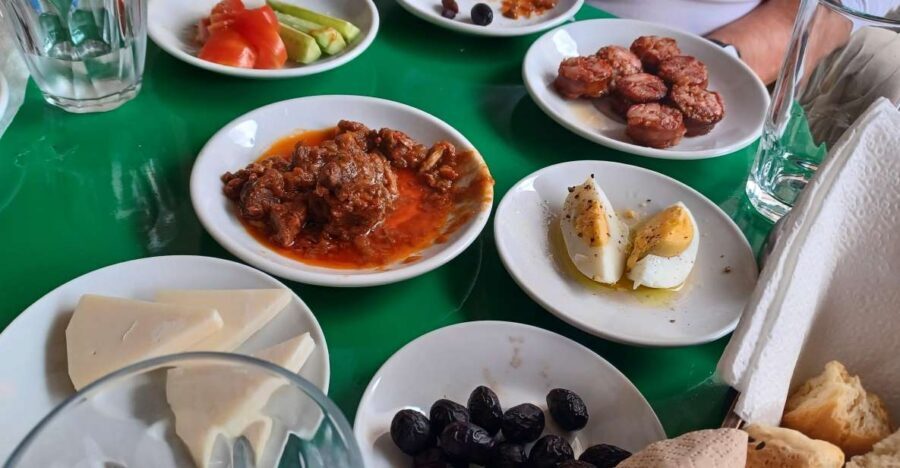
- Bougatsa + strong Greek coffee early, so you’re fueled before the walking ramps up
- Central Market and Old Venetian Harbor give you both ingredients and atmosphere
- Stivania leather boot workshop adds craft and shepherd-life context
- Final Cretan meze and a guided visit at the Pastry History Museum to close on a sweet note
Getting oriented fast at the Archaeological Museum square
The tour starts at the statue in the square by the Heraklion Archaeological Museum, which is a great anchor point. You’ll begin with a welcome from your English-speaking host and a quick sense of where you are in the city.
From there, the walk turns practical right away. You’re shown the kinds of streets and corners that make Heraklion feel like a working city, not a postcard set. That matters because food in Crete is tied to everyday life, and this route is built around that idea.
Your best prep here is simple: wear shoes that handle uneven sidewalks, because you’ll be photo-stopping and walking continuously. The tour is designed for people who want to learn by moving and tasting, not by sitting in one place.
You can also read our reviews of more food & drink experiences in Heraklion

Plateia Eleftherias and the Old Town route you can picture later
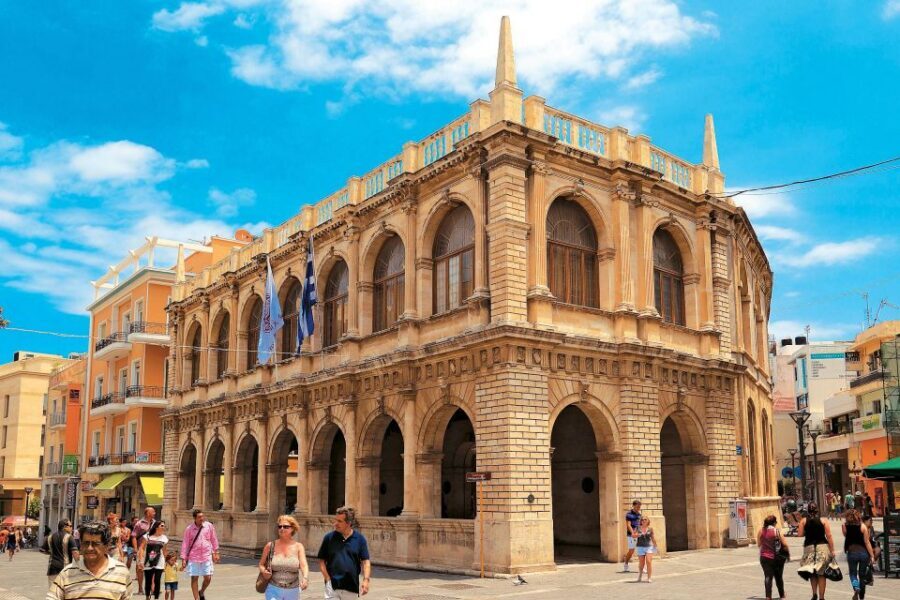
One of my favorite parts of a food tour is what happens before the first bite: you start to build a mental map. You pass through Plateia Eleftherias, then keep going with guided stops and short walks through key streets.
You’ll also hit photo moments along Dedalou and other points that help you connect the food stops with the city’s layout. It’s not just sightseeing. It’s the kind of orientation that makes it easier to return later on your own and find a second meal without relying on luck.
Along the way, you’ll see religious and civic landmarks that help explain the rhythm of the city. One minute you’re stepping out of a tight lane; the next you’re looking at a bigger monument-scale view. That change of pace keeps the tour from feeling repetitive.
Venetian harbor and Koules Fortress: history you can taste
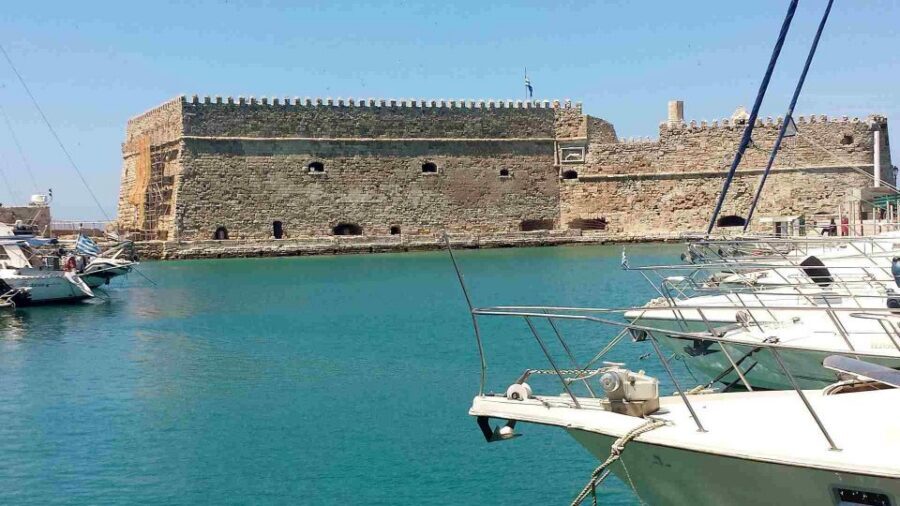
As the route moves toward the Old Venetian side, you’ll admire Koules Fortress (Castello del Molo) by the harbor. Even if you don’t go deep into architecture, the setting helps you understand why trade, travel, and mixing flavors mattered here.
The harbor area is where Heraklion’s layers show up in real time: old stone, port energy, and modern streets all within walking distance. That’s useful context for the food, because Cretan flavors weren’t formed in isolation.
You’ll also pause for photos at the Morosini Lions Fountain, a classic visual landmark. Stops like this are short, but they help you remember the walk later. If you like routes you can replay in your head, this one gives you strong anchors.
Bougatsa, coffee, honey, and sweets: the tour’s flavor foundation
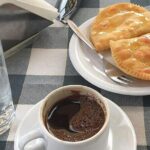
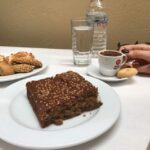
The best food tours start with a strong base, and this one does. You begin with bougatsa paired with strong Greek coffee, which is a smart setup before you spend the next hours walking and sampling.
After that, the tastings branch into sweetness and local ingredients: premium Cretan honey and traditional sweets are part of the plan. You’re not just eating random desserts. The sequence is basically telling you what this region does well, then showing how those flavors show up again and again.
If you’re the type who hates waiting in line or guessing at menus, you’ll appreciate this. You get small portions spread across the tour, so you taste broadly without committing to one heavy meal too early.
And yes, raki fits into the overall tasting style on this tour. It’s the kind of finish that makes the experience feel properly Cretan, not generic Greek.
Churches that shape the city: Agios Markos, Agios Titos, and Agios Minas
Food culture doesn’t live in a vacuum, and this tour uses major religious landmarks to explain how community life flows in Heraklion.
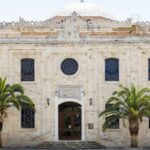
You’ll visit and get guided time at the Basilica of Agios Markos (with a walk-through and photo stop moments). Then you move on to Agios Titos Church, again with guided details and time to look closely at the setting.
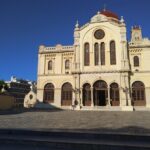
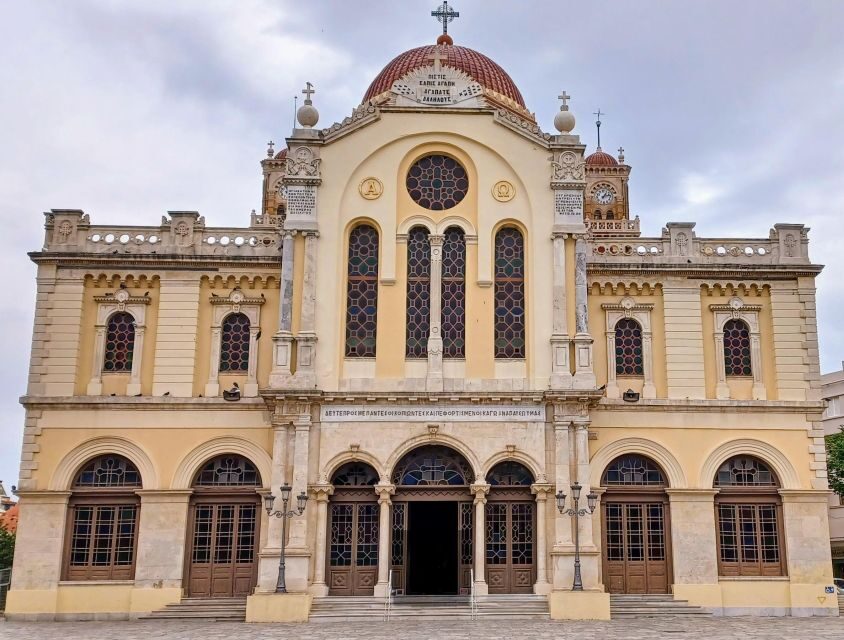
Later, the route brings you to Agios Minas Cathedral. This is where the walk’s geography becomes especially helpful: your tastings connect to the places people gather, celebrate, and build community around.
A practical note: when you’re in churches, follow whatever guidelines are in place at the moment. Even if the tour is planned, rules on clothing and entry can change based on service schedules.
You can also read our reviews of more tours and experiences in Heraklion

Central Market: where the food story becomes real
At Central Market in Heraklion, you get a sensory dose of the city’s ingredient life. This is one of the stops that makes the tour feel like more than a chain of tastings.
You’ll walk through aromas, colors, and everyday products, and your host can point out what matters and why. The value here is that you’re learning how locals think about shopping: what looks good, what’s in season, and what goes together in Cretan cooking.
This is also a place where the pace can feel lively. Plan to slow down for photos and to watch your steps. The market is not meant for rushing, but the tour itself stays moving to keep you on track for the full food-and-landmark mix.
If you have a hard time hearing, this is the kind of stop where background noise can interfere. One review flagged that the guide may not use a microphone in some areas, and market-level sound can make details tougher to catch. That’s not a deal-breaker, just be ready.
Rocca a Mare Fortress break: a pause with a view
The tour includes a break time at Rocca a Mare Fortress. You’ll have moments for photos and sightseeing while the group resets before the final stretches.
This stop matters because it creates contrast. You’re stepping away from the densest old-town lanes and getting a more open sense of the area. A little breathing room also makes it easier to enjoy the next round of tastings without feeling like you’re rushing through everything.
Even if you don’t become a fortress expert, it’s a useful reminder that Heraklion’s location and history shaped movement and food trade. When you look at it from a higher or more scenic point, the city starts to make more sense in physical terms.
The family workshop and stivania boots: craft, not costume
One of the most memorable parts of this tour is the visit to a family-run workshop focused on stivania, the traditional leather boots worn by Cretan shepherds.
This isn’t a generic souvenir stop. You learn about the handmade process and the cultural importance of the boots. The best workshops teach you what work looks like when it’s done the traditional way, and this one adds that depth to a day that’s otherwise focused on food.
If you love seeing how everyday objects connect to identity, you’ll enjoy this section. It gives you a story you can carry back to the table: shepherd life, practical leatherwork, and how gear connects to landscape and seasons.
A local restaurant stop: meze that ties the day together
In the later part of the walk, you’ll reach a local restaurant for another break and food tasting. This is where the experience starts to feel like a meal, not just samples.
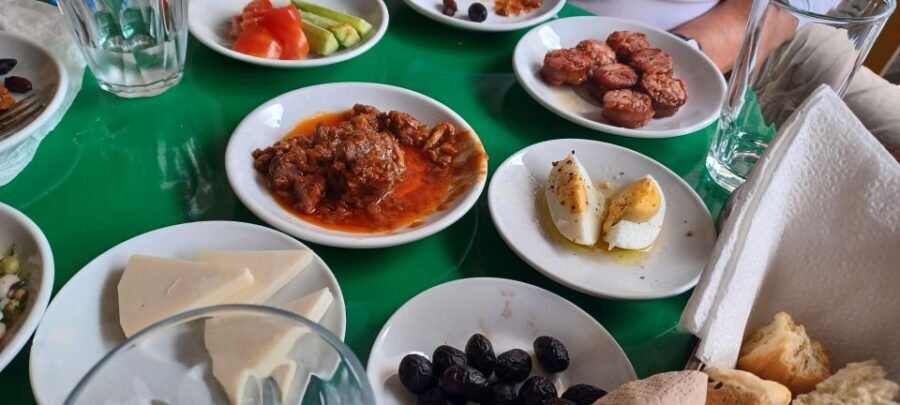
The tastings include classic Cretan meze, served in the style that encourages sharing and lingering. You’ll also get that relaxed taverna atmosphere that makes the whole day feel more human-sized.
This is a good moment to slow down and ask your host questions you’ve been saving: what you should order on your own later, how honey and sweets fit into Cretan dessert habits, and what to try if you return to the market area.
Pastry History Museum finish: sweets with context
The tour wraps up at the Pastry History Museum, including a guided visit and photo stop along the way. Finishing here makes sense because the day already built up your sweet tooth, from bougatsa to honey and traditional sweets.
Even if museums are not your first passion, a pastry-focused finish is a smart way to connect what you tasted with why it exists in the first place. You’re leaving with more understanding than just the names of dishes.
It’s also a practical end point. After four hours of walking, you’ll appreciate a place that’s easy to orient from, rather than a random street corner. It sets you up to continue on your own for dinner, dessert, or a final coffee nearby.
Price and value: what $106 buys in real terms
At $106 per person for a 4-hour walking tour, the value depends on what you hate doing on vacation. If you don’t want to research menus, map out tastings, and coordinate transport between scattered spots, this price starts to look fair fast.
You’re getting multiple food and drink tastings, guided city walking, and visits to local markets and a traditional workshop. Those aren’t just add-ons—they change the experience from eating around town to learning how the city eats.
The food portion is also meaningfully spread out. Starting with bougatsa and coffee, then adding honey and sweets, then finishing with meze, helps you sample more variety than a single fixed dinner would.
The only real cost is your time on your feet. The tour is designed to be active, not slow. If you prefer a lighter walking day, you may want to plan a quieter afternoon afterward.
Who this tour is best for (and who should consider another option)
This tour fits you if:
- You want tastings plus real city context, not just a meal hop
- You like learning through walking, landmarks, markets, and craft visits
- You enjoy Cretan sweets and want guidance on what to try
It may be less ideal if:
- You strongly dislike walking for around four hours
- You need very clear audio at all times in noisy public spaces
One more small tip: pack the day so you’re ready to taste. Eat lightly beforehand if you can, but don’t arrive starving. The tour includes several rounds of food and drinks, and you’ll enjoy it more with a comfortable stomach.
Should you book the Food Tour in Heraklion?
Book it if you want a structured way to experience Heraklion’s food culture while also seeing key landmarks like Agios Minas Cathedral, the Venetian harbor area, and the market. The combination of tastings and a stivania workshop is a standout mix: you leave knowing both what to eat and why it matters.
Skip it (or choose another option) if you’d rather spend your time slowly, with fewer stops and a less active schedule. The pace and walking are part of the design.
If your goal is to understand the city through taste, this tour is a strong way to do it in one morning or afternoon.
FAQ
How long is the Food Tour in Heraklion?
The tour lasts 4 hours.
What does the tour cost per person?
It costs $106 per person.
Where does the tour start?
The meeting point is at the statue in the square outside the Heraklion Archaeological Museum area.
Where does the tour finish?
It finishes at the Pastry History Museum.
Is the tour hosted in English?
Yes. The host or greeter speaks English.
What food and drink is included?
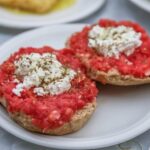
The tour includes multiple food and drink tastings, including traditional dishes and sweets, coffee, and raki, plus Cretan meze at the end.
What else is included besides tastings?
You’ll have an English-speaking local host walking tour, plus visits to local markets and a traditional workshop.
Do I pay upfront when I book?
You can reserve now and pay later, so you keep flexibility by booking without paying today.
Is there free cancellation?
Yes. You can cancel up to 24 hours in advance for a full refund.
What should I bring?
Wear comfortable shoes since the tour involves walking.