REVIEW · CHANIA
Gastronomy tour and wine tasting in traditional villages
Book on Viator →Bookable on Viator
Food, wine, and village life in one day. This Chania tour strings together old-school flavors and scenic stops, from Armeni coffee to a Lake Kournas meal with local wines.
What I like most is how the tastings feel tied to place, not just a shopping stop. I love the hot-sand Greek coffee experience in Armeni and the olive oil walkthrough with Antonis in Georgioupolis. I also like that you get lunch and dinner at family restaurants in beautiful settings, with both vegetarian and vegan choices.
One drawback to plan for: it’s an eating-and-drinking day. Portions can be generous, and the ride can feel snug depending on the vehicle setup.
In This Review
- Key highlights you’ll actually notice
- A practical way to see more than Chania’s center
- Price and value: what $216.25 gets you
- Timing and pacing: what the day feels like
- Armeni coffeehouse: hot-sand Greek coffee and the slower mood
- Fres village: sheep-milk ice cream, carob, graviera, and raki
- Apokoronas: a 500-year-old church plus garden herbs and fruit trees
- A river village interlude: time to breathe and look around
- Georgioupolis olive oil mill with Antonis: learning the process, then tasting it
- Lake Kournas lunch: Cretan dishes, sea-lake-mountain views, and four wines
- Second family meal: a totally different plate of Cretan comfort
- Alcohol, raki, and your plan for an 18+ tasting day
- Group size and car comfort: what to expect in the ride
- Who this tour suits best (and who should be careful)
- Should you book this gastronomy and wine tour in Chania?
- FAQ
- How long is the tour?
- Is pickup and drop-off included?
- What food options are available for dietary needs?
- Are alcoholic beverages included, and is there an age limit?
- How many people are in the group?
- What will I taste during the day?
- Are admission tickets included?
Key highlights you’ll actually notice
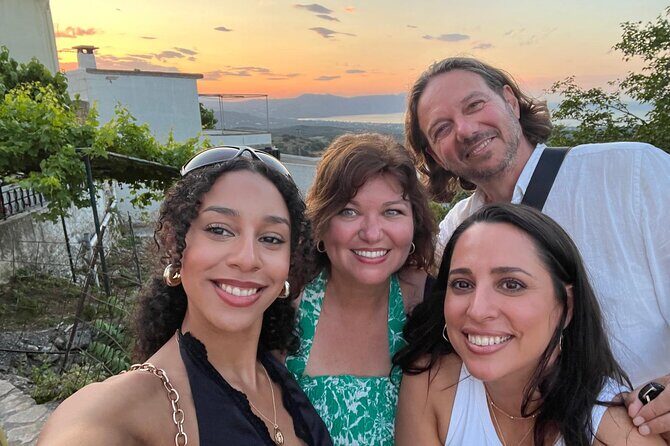
- Hot-sand Greek coffee in Armeni, served in a traditional coffeehouse setting with trees and streams
- Sheep-milk ice cream and carob flavors at Fres, plus a chance to taste raki
- A 500-year-old church and a garden of herbs and fruit trees in Apokoronas
- A guided olive oil mill visit with Antonis in Georgioupolis, with tasting and shop time
- Two big family meals at Lake Kournas plus wine tasting, with Cretan dishes served back-to-back
A practical way to see more than Chania’s center
Chania is great, but if you stay mostly in town, you miss what makes Crete feel daily and lived-in. This tour is built around traditional villages and food stops, with an air-conditioned vehicle doing the driving so you can focus on eating, looking, and asking questions.
The group stays small (capped at 12 people), which helps the day feel personal. You’re also not stuck figuring out routes between stops, and pickup plus drop-off means you can start relaxed instead of juggling maps and parking.
You can also read our reviews of more food & drink experiences in Chania
Price and value: what $216.25 gets you

At $216.25 per person for about 5 to 6 hours, this is not a “just snacks” kind of outing. You’re paying for a full half-day with guided village stops, admissions covered, and real meals.
The value math works out because you get:
- Lunch and dinner (both at family restaurants)
- Alcoholic beverages included (with a strict 18+ rule)
- Guided olive oil mill and guided old church visit
- Tastings like virgin olive oil, olives, sheep-milk ice cream, and Greek coffee
- A structured plan, so you’re not paying for “drive time” and hoping you like the food
If you’re the type who wants your vacation to include flavors you can’t recreate at home, the cost starts to feel fair. If you’re someone who gets full fast, the day may feel like a lot—more on that below.
Timing and pacing: what the day feels like
The tour is designed so the “extra” time is basically travel between villages. The planned stops are short enough that you’re not trapped in one place, but long enough to actually experience each stop.
Typical stop lengths look like:
- 30 minutes for Armeni and Fres
- 45 minutes for the church/garden segment and the olive oil mill
- 1 hour 15 minutes for each meal block
Because meals take real time, you’re not speed-running. You’re settling in, tasting, and eating like people do locally. The trade-off: you’ll want to show up hungry and ready to slow down.
Armeni coffeehouse: hot-sand Greek coffee and the slower mood

Armeni is where the day starts with a ritual that’s simple but not fast. You’ll visit a traditional coffeehouse set among trees, streams, and a calm outdoor feel. This matters, because coffee tastes better when you’re not rushing it.
You’ll have the chance to enjoy Greek coffee made the traditional way—slow-cooked in hot sand. That slow heat is the key detail. It’s not just a gimmick flavor; it changes the texture and how the coffee settles, so you notice the difference right away.
This stop is also a good “warm-up” before the big food stretches later. You get a taste, a pause, and a chance to watch how the coffeehouse works before the day turns into a full gastronomy run.
Fres village: sheep-milk ice cream, carob, graviera, and raki
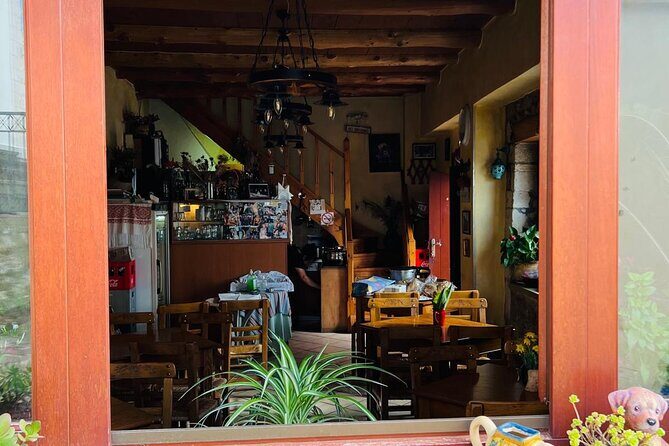
If you love trying foods you can’t easily find elsewhere, Fres is the sweet spot. The ice cream here is made from sheep milk, and that base flavor is deeper and creamier than most dairy ice creams you’ll know from home.
You’ll also get a chance to taste carob—often used locally, but not common everywhere else. The tour highlights carob because it’s one of those Crete-only flavors that makes you think, Oh, that’s what this plant tastes like.
Then comes the savory side. You’ll try the Cretan cheese graviera, the one used for the classic dish saganaki. And if you’re feeling brave (or just curious), the cheese shop owner offers raki, described as strong—so take it with intention.
The good part about this stop is balance. You’re not stuck doing only sweet. You get dairy sweetness, plant-based flavor, cheese culture, and a strong local spirit in one compact visit.
You can also read our reviews of more wine tours in Chania

Apokoronas: a 500-year-old church plus garden herbs and fruit trees
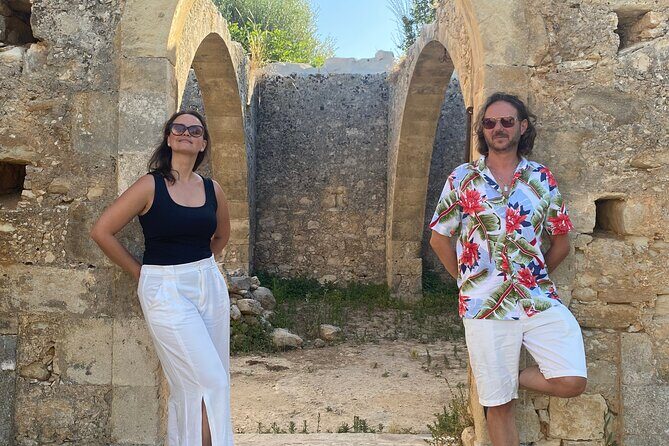
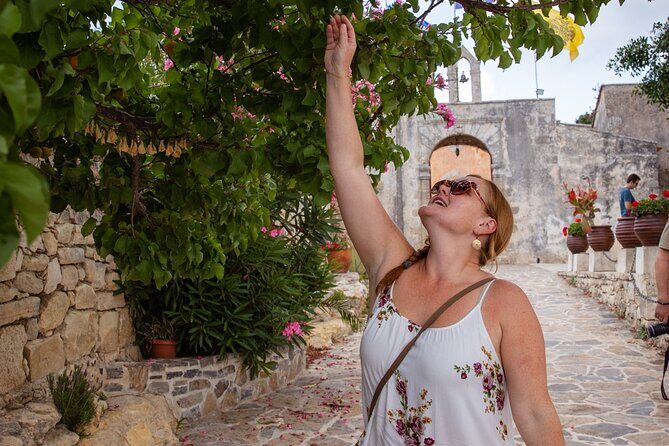
After coffee and dessert, the day shifts to something slower and more visual. You’ll visit an old church with at least 500 years behind it, with both a beautiful interior and exterior. If you like places that feel “real” rather than staged, this part is a strong break from eating.
One of my favorite described details here is the garden. It’s not just a pretty yard. It includes flowers and herbs, plus fruit and tree varieties like apricot, fig, banana, carob, walnut, quince, and more. That means you’re not only seeing history—you’re seeing how everyday Cretan growing traditions still show up around sacred buildings.
Plan for this to be a relaxed wander: look at the church, then take your time with the garden paths and the herb trees. It’s also a nice chance to reset your pace before the olive oil session and the heavier meals.
A river village interlude: time to breathe and look around
There’s also a stop at a beautiful village with a river passing through. No big museum-style pitch is needed here—this is more about walking a little, stretching your legs, and soaking in a quieter street-level view.
This short interlude is useful. After hours of tasting, it helps your brain reset so you’ll appreciate the next food stops more. If you like photos, this is where you’ll naturally find good angles without trying too hard.
Georgioupolis olive oil mill with Antonis: learning the process, then tasting it
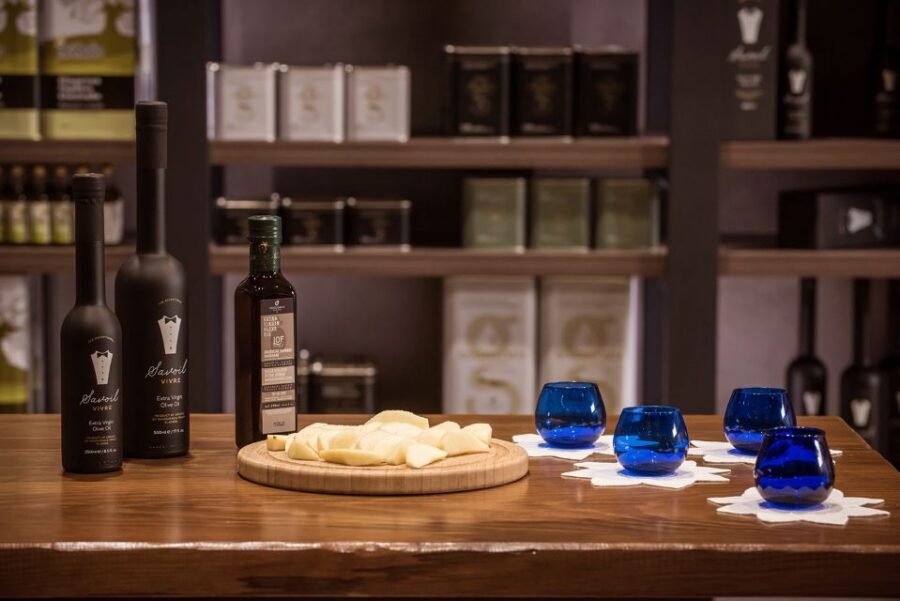
Georgioupolis is where the day gets practical in the best way. You’ll visit a modern olive oil mill, and Antonis (the producer and friend leading the visit) guides you through how olive oil is made.
This is not theory-only. You’ll have the chance to:
- Ask questions during the process explanation
- Taste virgin olive oil
- Taste olives
- Browse the exhibition and shop for traditional products
The shop part is also helpful. If you’re thinking about bringing something home, you’ll see items like oil, olives, and even handmade cooking pots. It’s the kind of souvenir that actually gets used, since the food products are the point.
One thing to keep in mind: your olive oil expectations will change after you taste. It’s easier to judge quality when you’ve just seen how it’s made and then tasted it right away.
Lake Kournas lunch: Cretan dishes, sea-lake-mountain views, and four wines
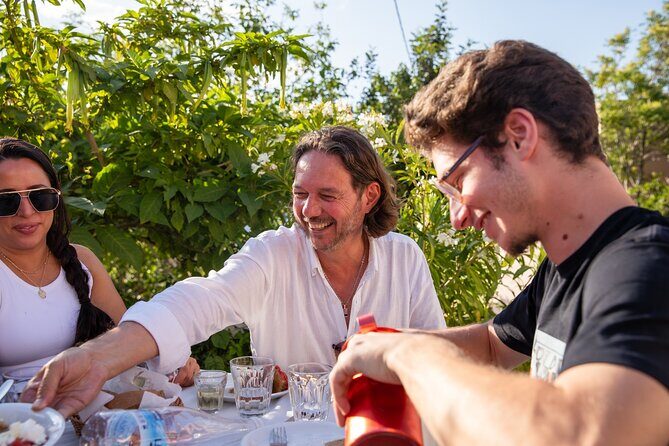
This is a centerpiece moment. Lunch happens at the stunning Lake Kournas area, where you can see the sea, the lake, and the mountains in the same view. It’s one of those spots where you feel like the setting is part of the meal.
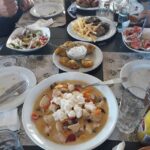
You’ll taste a range of traditional Cretan dishes, including:
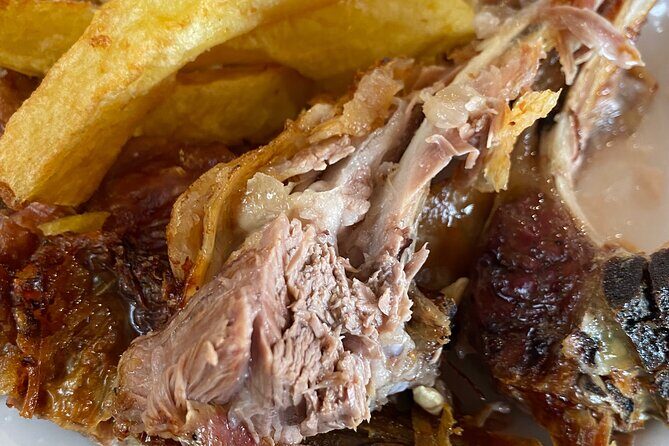
- tsigariasto arni (lamb cooked with oil and wine)
- anitchristo arni (lamb slow cooked in fire)
- ntolmadakia (grape leaves stuffed with rice)
- kolokithoanthous (zucchini flowers stuffed with rice)
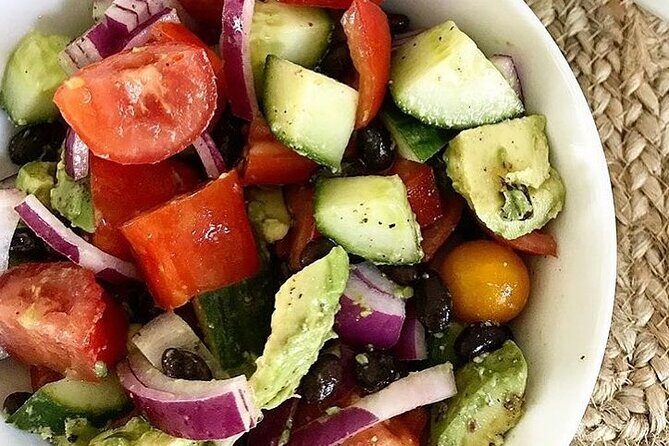
- imam baildi (eggplant with garlic, onion, fresh tomato sauce, cream cheese, and olive oil)
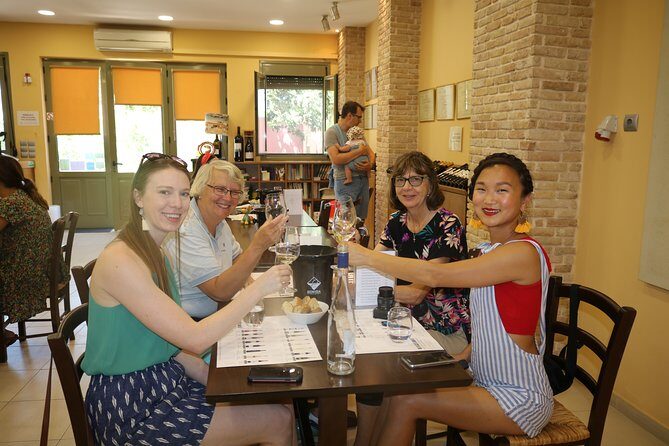
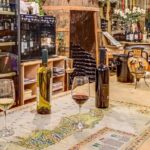
On top of the food, you get wine tasting—four local wines. That’s a great way to learn what “local” tastes like without turning it into a night-long wine seminar. You can pace your sampling and still enjoy the meal in front of you.
If you like lamb, note that the day’s menu includes multiple lamb dishes, so you should feel covered here. If you’re not a lamb person, you still get plenty of veggie-forward stuffed dishes plus eggplant.
Second family meal: a totally different plate of Cretan comfort
After the first lakeside meal, the day keeps going with a second dining stop featuring different dishes. The emphasis here shifts toward other meat preparations and savory flavors, including:
- Chicken cooked with grape juice
- Pork meat with tomato sauce and peppers
- Smoked pork with oregano and sage
- Mushrooms marinated with beer
The tour also includes mention of antikristo as an example of the meat options you’ll find at the family restaurant. So even if your first meal already satisfied your appetite, dinner is where Crete’s meat culture gets another chance.
This is a day where timing matters. Since you’ll have already eaten once at the lake, you’ll want to set expectations before you sit down again. If you know you eat slowly or want smaller portions, tell your guide early so you don’t spend dinner fighting your own fullness.
Alcohol, raki, and your plan for an 18+ tasting day
Alcoholic beverages are included, with an age restriction of 18+. There’s also raki offered earlier in the day, and it’s described as quite strong.
My practical take: treat the drinks as part of the culinary story, not as a test of bravery. Sip what you like, and don’t feel pressured to match everyone else’s pace. You’re going to keep driving between stops, so pacing helps you enjoy the rest of the day rather than feeling wiped out early.
Group size and car comfort: what to expect in the ride
The tour stays small, but vehicle comfort can vary. Some people find the ride snug, especially if you’re tall or if you’re traveling with extra bulk. It’s air-conditioned, but being “in motion together” for hours can still feel tight in a smaller sedan.
If comfort is a big deal for you, I’d plan to sit back, relax, and keep your posture comfortable. Also, bring patience—this tour is intentionally packed with stops, so you’re trading personal space for access to places you’d never reach easily on your own without a car.
Who this tour suits best (and who should be careful)
This is a strong fit if you want:
- Real traditional food, not just a tourist buffet
- A guided day that covers villages, coffee culture, and olive oil production
- Lunch plus dinner, with wine included
- A small-group feel where you can ask questions and interact
It’s less ideal if:
- You dislike big meals or hate the pressure to keep tasting
- You’re sensitive to strong spirits like raki
- You get uncomfortable in compact seating for a long stretch
If you fit the appetite profile, you’ll have a blast. The tour itself even practically tells you: bring extra appetite. I’d take that seriously.
Should you book this gastronomy and wine tour in Chania?
If you’re trying to choose between “one big meal” and “a full day of food stops,” this one leans clearly toward the second option. You’re getting two meal breaks, multiple tastings, olive oil instruction with Antonis, and a church-and-garden visit that gives your day a breather.
Book it if you love food with a sense of place—coffee made slowly in hot sand, sheep-milk ice cream, and olive oil you can connect to the production process. I’d also book it if you’re not renting a car, since pickup plus drop-off makes the whole plan feel effortless.
Skip or be cautious if your stomach runs on a tight schedule. This day can be a lot, especially with alcohol and generous portions. But if you’re ready for a serious Cretan culinary day, you’ll likely finish thinking about the coffee, the olive oil, and those lakeside plates long after the drive home.
FAQ
How long is the tour?
The experience runs about 5 to 6 hours.
Is pickup and drop-off included?
Yes. Pickup and drop-off are offered from your designated spot.
What food options are available for dietary needs?
Vegetarian, vegan, and gluten-free options are available for lunch and snacks, and you’ll still get to enjoy the family-restaurant style meals.
Are alcoholic beverages included, and is there an age limit?
Alcoholic beverages are included, and the age restriction is 18 years old and above.
How many people are in the group?
The tour has a maximum group size of 12 people.
What will I taste during the day?
You can expect Greek coffee made traditionally in hot sand, sheep-milk ice cream, carob flavors, tasting of graviera (used for saganaki), raki, virgin olive oil and olives, and four local wines. You’ll also have two meals with multiple Cretan dishes.
Are admission tickets included?
Yes. All fees and taxes are included, and admissions for the stops are listed as free in the itinerary.