REVIEW · CHANIA
Chania: Archaeological Museum Entry Ticket and Audio Guide
Book on GetYourGuide →Operated by Clio Muse Tours · Bookable on GetYourGuide
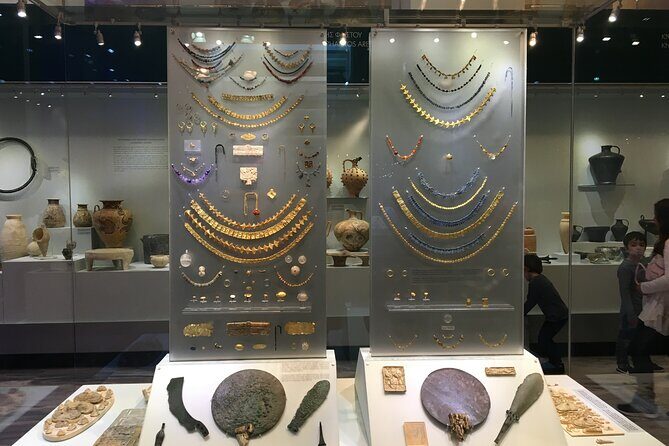
Artifacts talk when you press play. This Chania museum add-on is a handy combo of an e-ticket plus a smartphone audioguide, so you can start fast and move at your own pace. I like that the audio is available offline (no roaming stress) and that it calls out standout works like the Necklaces from Kydonia and the mosaics from the House of Dionysus. One thing to consider: the English narration can feel heavily American-accented, and that may irritate you if you’re picky about pronunciation, especially with place names like Chania.
You’ll walk through the Archaeological Museum of Chania room by room, with the tour guiding you to specific objects and stories as you go. It’s a good setup if you want context without waiting for a group.
Because it’s self-guided, the experience depends on your phone being ready. Bring headphones, make sure you’ve downloaded the content ahead of time, and plan for about 100–150 MB of storage.
In This Review
- Key points to know before you go
- Entering the Archaeological Museum of Chania with an e-ticket and audio plan
- What the audio tour actually brings to the exhibits
- A realistic room-by-room flow (so you don’t waste your time)
- Start at the entrance and get your bearings fast
- Follow the audio’s object callouts
- Take a short mental break if the galleries blend together
- Use the tour again after you leave
- Price and value: why the package can be worth it
- Logistics that make or break the day: phone, headphones, and offline access
- The objects that turn this into a story, not just a gallery walk
- Necklaces from Kydonia
- House of Dionysus mosaics
- House of Poseidon and Amymone mosaic
- Master Impression clay sealing
- Larnax from Chania
- Discs for the weighing of souls
- Extra on-site perks: coffee, views, and the gift shop
- Who this self-guided audio tour is best for
- Should you book? My practical recommendation
- FAQ
- FAQ
- Do I need a meeting point for this Chania museum audio tour?
- How do I get my entry ticket?
- Can I download the audio tour before I arrive?
- Will it work offline?
- Is there a live guide included?
- What language is the audio guide?
- What phones are compatible?
Key points to know before you go

- Start right at the entrance: the audio tour is designed to begin at Skra 15, Chania 731 33, with no meeting point
- Offline maps and narration: text, audio, and maps work without roaming charges
- English audio with object-focused storytelling: you’ll be pointed toward major pieces like the House of Poseidon and Amymone mosaic
- Repeatable tour: the audio can be used before and after your visit, not just during
- No live guide: you’re relying on the app, so headphones and a charged phone matter
- Works on many phones, not all: Android (5.0+) and iOS are supported; Windows phones and older Apple models are not
Entering the Archaeological Museum of Chania with an e-ticket and audio plan

The big win here is how low-friction it feels. You get an email with instructions, you download the app and the audio tour before you go, and then you show up ready to start at the museum entrance. There’s no meeting point to hunt for, no waiting around for a guide, and no guessing which order to see things in.
The entrance address is Skra 15, Chania 731 33, and the tour is designed to start and end there. In other words, you can treat this like a casual day plan: arrive, start the tour when you’re standing at the doorway, then pace yourself through the galleries.
I also like that the audio tour isn’t limited to one-time use. You can replay it at any time, including after your visit. That means if you rush through the museum or you lose focus in one room, you can circle back later with the audio as your memory jog.
One more practical note: this package is adult entry to the Archaeological Museum of Chania plus the self-guided audio tour. The provider is Clio Muse Tours, and the tour language is English.
You can also read our reviews of more tours and experiences in Chania



What the audio tour actually brings to the exhibits

A museum visit can be either quiet and confusing or lively and clear, depending on what you know going in. This audio tour is built around that second option. It’s not just general background; it targets specific objects and ties them to short, original stories and historical facts.
The highlights include several pieces that are easy to spot if you know what to look for:
- Necklaces from Kydonia (a major name the audio calls out)
- Mosaics from the House of Dionysus
- Mosaic from the house of Poseidon and Amymone
- The Master Impression clay sealing
- Larnax from Chania
- Discs for the weighing of souls
That last set of discs is the kind of detail that makes a gallery feel less like “just cases” and more like a narrative. Even if you’ve never heard of them before, the audio framing helps you understand why an object mattered, not only what it looks like.
You’ll also hear uncommon stories and anecdotes. The tour content is described as the result of in-depth research distilled into brief original stories. Translation: you get focused explanations you can actually absorb while standing in front of a display, instead of reading long blocks of text at full speed.
And there’s an extra bonus direction here: the tour content is said to provide insights into Iberian history and beyond. Even if the museum isn’t what you expected, the audio aims to connect the dots in a way that feels fresh rather than repeating the same museum lecture.
A realistic room-by-room flow (so you don’t waste your time)

You won’t get a written “stop 1, stop 2” itinerary, since it’s self-guided. But the experience is designed to work in a simple loop: start at the entrance, follow the audio cues as you move, then return when you’re done.
Here’s a practical way to do it without overthinking the layout:
Start at the entrance and get your bearings fast
When you begin at the museum entrance, use the first minutes to get oriented. Put in headphones, start the audio, and let the narration tell you what kind of objects you’re about to see. This helps you read labels more confidently as you walk deeper into the museum.
Follow the audio’s object callouts
As you move between galleries, listen for the audio to name objects you can find in the rooms. When the audio highlights something like the Necklaces from Kydonia or a specific mosaic panel, slow down. Spend an extra minute looking closely at the patterns, materials, and workmanship before you move on.
This is also where I think the audio guide earns its keep. A museum can feel repetitive if you’re just scanning. With the audio pacing you through the key pieces, the visit feels more like a guided conversation than a checklist.
You can also read our reviews of more guided tours in Chania






Take a short mental break if the galleries blend together
Museums sometimes blur together when you’re trying to absorb everything at once. If you notice yourself zoning out, pause the audio for a minute and look at one object label carefully. Then restart the audio and listen for the story hook. It quickly resets attention.
Use the tour again after you leave
Because the audio is repeatable and available offline, you can re-listen later. That’s useful if you want to remember what you saw without returning to the museum.
Price and value: why the package can be worth it
The listed price is $28 per person for the museum entry ticket plus the smartphone audio tour. That’s not a “cheap add-on” price, so you should decide what you’re really paying for.
Here’s the value logic:
- You’re paying for convenience: pre-booked entry and a no-meeting-point start.
- You’re paying for a guided experience without a live guide: the audio does the interpretive work.
- You’re paying for offline content: audio plus maps and text that work without roaming.
If you prefer a self-paced museum visit and you like learning from short stories rather than big lectures, $28 can feel fair. Several guests highlight that the audio keeps you following the museum in a clear way and makes specific pieces more understandable—especially the complex objects like mosaics and themed displays.
On the flip side, one caution is price sensitivity. There’s also the option of basic museum admission bought on-site, and I’ve seen references to around 6 euros for entry alone. If you’re only looking for access and you don’t care about audio context, you might question whether this package price is justified.
A good compromise approach: if you’re the type who loves details and enjoys hearing stories while you look, buy the package. If you’re the type who just wants to see the highlights quickly and read labels briefly, check the on-site admission option first and decide whether you truly need audio.
Also note: this activity is not refundable. So only book it when you know you’ll be able to fit it into your Chania plan.
Logistics that make or break the day: phone, headphones, and offline access
This experience lives on your smartphone. That’s great when everything works smoothly, and frustrating when it doesn’t.
Bring:
- Headphones (you don’t get them)
- A charged phone (you’ll be using it throughout)
Download needs:
- The app content requires storage space, listed around 100–150 MB.
- You’ll receive an email after booking with access and download instructions. Check your spam folder too.
Device compatibility matters. The audio tour supports:
- Android version 5.0 and later
- iOS devices (but not older models such as iPhone 5/5C, iPod Touch 5th gen, or older iPads)
It is not compatible with Windows phones. If your phone is older or unusual, verify compatibility before you make the trip.
One more small but important detail: the tour is book per device, not per participant. So if you’re traveling with someone and you plan to share one phone, that won’t match the “per device” model. Plan on one device per person using the audio tour.
The audio content is offline, including maps and text. That’s a smart feature in Crete, where roaming costs can surprise you. It also gives you more control, because you won’t lose narration if your signal is weak.
The objects that turn this into a story, not just a gallery walk
If you want your museum day to feel purposeful, aim for the objects the audio is designed around. Here are the standouts and why they matter for your visit:
Necklaces from Kydonia
Kydonia is a key name in the region’s story, and necklaces are a perfect entry point. Jewelry lets you connect art and everyday life: materials, craftsmanship, and the cultural meaning behind adornment. In this tour, the audio helps you move past “pretty objects” into understanding why these items were valuable.
House of Dionysus mosaics
Mosaics can look impressive but still feel abstract if you don’t know what you’re looking at. With the House of Dionysus focus, the audio framing can help you notice themes and how myth or identity shows up in floor art. Take your time here. Spend a bit longer than you think you need.
House of Poseidon and Amymone mosaic
This is another mosaic highlight, and the combined name matters. It’s a cue that the scene is linked to myth and storytelling. When you see the panel, listen for the narration’s explanation so the visual doesn’t blur into a general “pattern.”
Master Impression clay sealing
A clay sealing is small compared to mosaics, but it can feel big in meaning. Seals often relate to control, authorization, or securing goods and messages. The audio’s role is to connect what you’re looking at to how people lived and organized their world. If you tend to skip small artifacts, don’t. This is one of those items that can surprise you when you understand its function.
Larnax from Chania
A larnax is a container, often linked to funerary or storage contexts depending on the object type. The audio guide’s attention to the Larnax from Chania is one of the ways this tour avoids being only about decorative art. You get a more complete museum picture, not just surface beauty.
Discs for the weighing of souls
This is the most “story-forward” title on the list. Even if you’re not a mythology expert, the audio framing helps you connect the object to the idea it represents. Stand in front of it and listen carefully; these kinds of items are best understood when the narration adds the missing context.
Extra on-site perks: coffee, views, and the gift shop
One of the nice surprises is that you can plan a break without leaving the museum grounds. There’s an elevated coffee shop area where you can get coffee and enjoy views. If your feet are tired, this is a smart reset point.
There’s also a gift shop, and the offering is described as good quality. Even if you’re not a souvenir person, it can be worth a quick look before you head out, especially if you want a simple way to remember the objects you saw.
Who this self-guided audio tour is best for
This is a good fit if you:
- Want a self-guided museum visit with structure
- Prefer learning via audio while standing in front of objects
- Like repeatable content so you can re-listen after you leave
- Are traveling with no desire to manage a live-group pace
It’s also especially useful if you don’t want to risk missing key pieces while wandering. The audio guide is designed to keep you moving with purpose.
It’s less ideal if you:
- Want a live guide style of conversation and Q&A (there isn’t one)
- Hate phone-based experiences or you don’t want to bother with downloads
- Are very sensitive to accent/pronunciation differences in English narration
Also consider that the museum visit may be modified and special restrictions can be imposed by the site. The safe move is to follow on-site guidelines without fighting the flow.
And if you’re wondering about reviews: this package is rated 4.7 out of 5 based on 11 bookings, which matches the overall theme here: people like the museum experience and the audio’s ability to make the visit feel coherent.
Should you book? My practical recommendation
Book this combo if you want a smooth day at the Archaeological Museum of Chania where the audio does the teaching while you do the looking. The offline feature, the object-focused storytelling, and the no-meeting-point start are all strong reasons to choose this over a random museum wander.
Skip it or reconsider if you only want bare-bones admission and you’re comfortable reading labels on your own. In that case, the $28 package price might feel steep compared with basic entry.
My “yes, book it” rule of thumb:
- If you’re likely to spend real time with mosaics, small artifacts, and story-driven explanations, the audio tour adds real value.
- If you’re rushing or you’re not into audio, you’ll probably get less out of the package than you pay for.
FAQ
FAQ
Do I need a meeting point for this Chania museum audio tour?
No. There is no meeting point. The self-guided audio tour is designed to start at the Entrance of the Museum at Skra 15, Chania 731 33, and it also ends there.
How do I get my entry ticket?
After booking, you receive an email with instructions. You’ll use an e-ticket for the Archaeological Museum of Chania.
Can I download the audio tour before I arrive?
Yes. You should download the app and the audio tour to your smartphone prior to your visit so you can use it smoothly on-site.
Will it work offline?
Yes. The audio tour includes offline content (text, audio narration, and maps) to help you avoid roaming charges.
Is there a live guide included?
No. This experience is self-guided with a smartphone audio tour. There is no live guide.
What language is the audio guide?
The audio guide included is in English.
What phones are compatible?
The audio tour requires an Android smartphone (version 5.0 and later) or iOS. It is not compatible with Windows phones and it is not compatible with older iPhone models (like iPhone 5/5C), older iPod Touch models, or older iPads (like iPad 4th generation and older, and iPad Mini 1st generation).