REVIEW · CRETE
WWII – The Battle of Crete Day Tour
Book on Viator →Operated by GS TOURS CHANIA LTD · Bookable on Viator
Crete’s WWII sites hit different when you walk them. This Battle of Crete day trip runs on a tight 6-hour loop that takes you to key places like Maleme, Tavronitis Bridge, and two major war cemeteries, with English commentary that puts the story into plain human terms. I especially like the small-group size (max 15) that makes questions actually welcome, and the included hotel-region pickup plus entrance fees that lets you focus on the history instead of logistics. One thing to consider: in a day this packed, it can be hard to feel the full, three-day battle flow unless you arrive with a rough sense of the timeline.
Start at 9:00 am from Chania Region, then spend the day moving between real sites with a local driver/escort in an air-conditioned minivan. You’ll get snacks and bottled water, and the tour ends back at your meeting point—simple, no long self-driving homework. If you like battlefield walks, this hits hard; if you want a slow-motion, minute-by-minute account, you may wish the day had an extra hour or two.
In This Review
- Key Points That Make This Tour Worth Your Time
- Why the Battle of Crete Tour From Chania Works So Well
- Morning Logistics: 9:00 Start, Air-Conditioned Minivan, and a Tight 6 Hours
- Stop 1: Maleme (50 Minutes) and Getting Your Bearings Fast
- Stop 2: Tavronitis Bridge (40 Minutes) for the Story in Motion
- Stop 3: German Military Cemetery (30 Minutes) and the Real Weight of Loss
- Stop 4: Souda Bay War Cemetery (30 Minutes) for Commonwealth Stories
- The Private Collector Museum: WWII Memorabilia That Makes It Tangible
- Guide Style Matters: You Might Meet Yannis, Babis, Giannis, or Ioannis
- Price and Value: What You’re Really Paying For at $114.89
- Who This Tour Fits Best (And Who Might Want Extra Time)
- Should You Book the WWII Battle of Crete Day Tour?
- FAQ
- What time does the WWII – Battle of Crete day tour start?
- How long is the tour?
- What are the main stops during the day?
- Are entrance fees included?
- Do you get pickup and drop-off in the Chania area?
- Does the tour operate in English?
- How large is the group?
- What if the weather is bad?
- What’s provided during the tour?
Key Points That Make This Tour Worth Your Time
- Real WW2 sites in a short loop: Maleme, Tavronitis Bridge, German Military Cemetery, and Souda Bay War Cemetery
- Small group format (15 max): easier questions, easier photos, less rushing than big buses
- Hotel-region pickup and drop-off: fewer transfers and less waiting around
- English-speaking local guide/escort: storytelling that links the places together
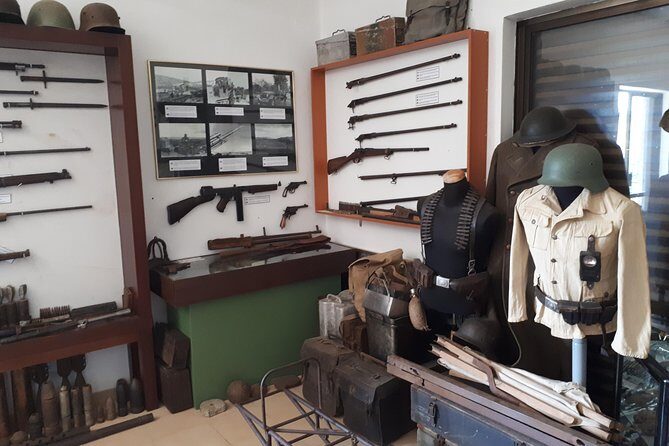
- A standout private collector visit: WWII memorabilia and, in some cases, handling period items like Lee-Enfield rifles and Tommy guns
- Emotionally grounded cemetery stops: a respectful tone shift after the more visual battlefield areas
Why the Battle of Crete Tour From Chania Works So Well
This isn’t one of those “see a few plaques and move on” tours. The format is built around moving you through the invasion geography—place to place—so you’re not stuck trying to picture everything from a book while sitting in a chair. The guide time matters here: you get facts and stories you’d miss if you were just reading on your phone and walking at your own pace.
I also like that the day isn’t only about one side’s experience. The cemetery visits alone do a lot of the emotional balancing: you see both German graves and a British Commonwealth war cemetery at Souda Bay. That shift helps you understand the scale of loss without turning the day into a lecture contest.
And because the group stays small, you can ask the awkward questions—about strategy, about resistance, about how locals endured the invasion—without needing to shout over the bus.
You can also read our reviews of more tours and experiences in Crete.
Morning Logistics: 9:00 Start, Air-Conditioned Minivan, and a Tight 6 Hours
The tour starts at 9:00 am, and the total time is about 6 hours. That “about” matters, because you’re traveling in Crete traffic and between scattered sites around Chania. You’ll ride in an air-conditioned minibus/minivan, which is a big deal in summer when the sun has opinions.
You’ll also want to know what you’re not dealing with:
- Entrance fees are included
- Snacks and bottled water come along with you
- Pickup and drop-off are included from specific places in the Chania Region
- You receive a mobile ticket
If you prefer a day that feels organized (not rushed chaos), this tour fits. Just don’t expect a slow, contemplative pace—this is a “see the key places and connect the dots” day.
Stop 1: Maleme (50 Minutes) and Getting Your Bearings Fast
You begin at Maleme, with about 50 minutes on site. This first stop sets the tone for the day. It’s long enough to slow down, look at the area, and hear the background you need before the rest of the itinerary makes sense.
Here’s how I’d use that time if you’re the kind of person who likes to learn instead of just look:
- Ask your guide how the battle’s phases relate to the route you’ll follow later.
- Take photos, but also watch the terrain features the guide points out. Later, when you’re at the cemeteries, you’ll better understand why the story connects those places.
Maleme is also a good place to ask a baseline question if you’re not a hardcore WW2 buff: something like what forces were involved and what made this area so contested. In several guides’ styles described in the feedback, the best “aha” moments start at the first major stop.
Stop 2: Tavronitis Bridge (40 Minutes) for the Story in Motion
Next up is Tavronitis Bridge, with 40 minutes there and the entrance ticket included. Bridges and crossings are rarely just scenery in a battle story. Even when you’re not tracing every troop movement, a crossing point helps you understand the practical problem both sides had: how to get people and equipment where they needed to go.
This stop is a good one for questions, because it’s where you can connect the dots between “battlegrounds you’ve read about” and “places where movement becomes possible—or impossible.” If the guide mentions local terrain or how forces tried to use routes, this is the moment to slow down and follow the explanation.
One small consideration: with only 40 minutes, you’ll want to focus on what your guide highlights rather than trying to absorb everything at once. Treat it like a guided orientation point.
Stop 3: German Military Cemetery (30 Minutes) and the Real Weight of Loss
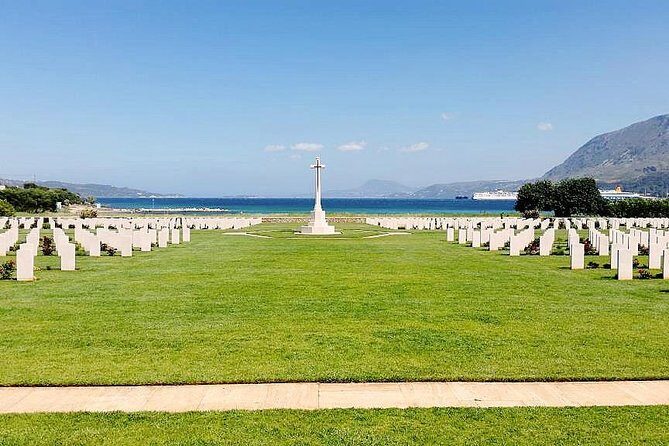
Then the mood shifts with a visit to the German Military Cemetery. You get about 30 minutes here, with the entrance fee included.
Cemeteries can feel uncomfortable in the best way: they stop the day from becoming pure theory. In the feedback, several people praised how the guides delivered information with empathy, and this cemetery stop is where that emotional tone lands. You’re not just seeing history; you’re meeting it face to face.
If you want to get the most out of 30 minutes, do two things:
- Read a few memorials carefully, not everything. Your brain needs a smaller target.
- Ask your guide how this cemetery fits into the larger narrative you’ve heard earlier that morning.
After Maleme and Tavronitis Bridge, this stop acts like a reset button, bringing scale and consequence back into focus.

Stop 4: Souda Bay War Cemetery (30 Minutes) for Commonwealth Stories
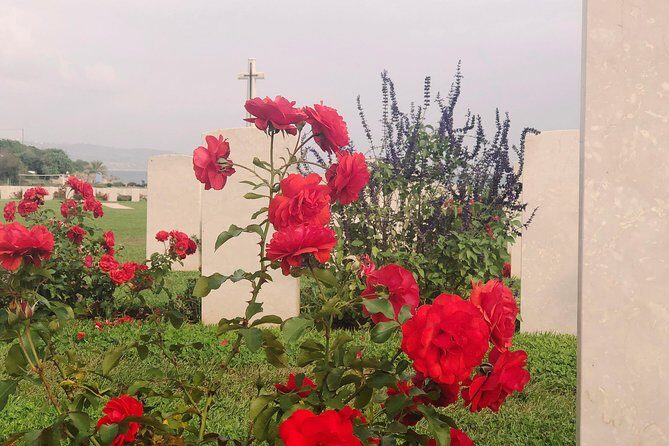
The day finishes with Souda Bay War Cemetery for the British Commonwealth graves, again with about 30 minutes on site.
This is a strong pairing with the German cemetery stop. Together, they help you see the battle from multiple angles without forcing you into a single hero-villain frame. Several pieces of feedback also point out that visitors appreciated having time at each site to appreciate what they were standing on—especially at the cemeteries, where rushing would feel wrong.
Souda Bay is also where some guides reportedly go the extra mile. One review described a guided arrangement for a flypast by Greek Air Force fighters at the end of the day. That’s not something you should plan around, but it’s a hint that these guides sometimes work to make the moment feel special.
The Private Collector Museum: WWII Memorabilia That Makes It Tangible
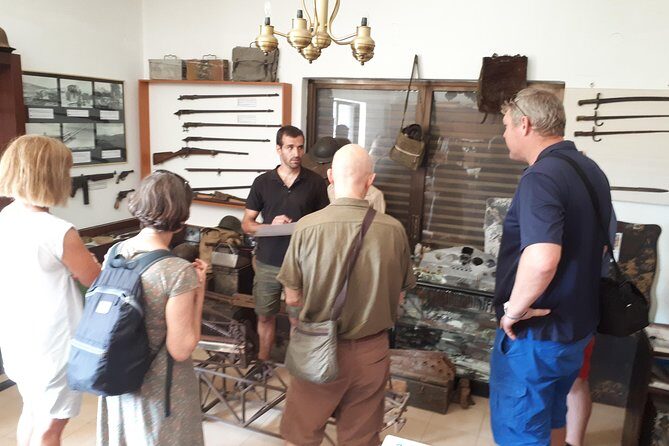
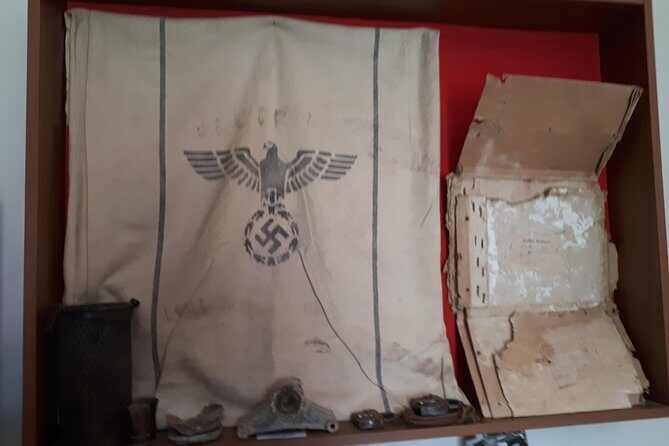
A standout part of this tour experience is the visit to a private collector’s museum or collector’s home. This shows up again and again in feedback, and it’s one of the main reasons the tour feels different from a standard “drive-by battle history” day.
What you can expect (based on what people reported):
- WWII memorabilia and artifacts from the conflict areas
- In some cases, visitors were even handed period firearms such as Lee-Enfield rifles with bayonets attached and Tommy guns
A couple of notes if you’re considering this:
- This is the place where the history becomes physical. It can feel thrilling, but it’s still about war, so keep the tone respectful.
- If you’re uncomfortable around weapons—even historical ones—tell your guide your preference. This kind of visit is usually flexible in how it’s presented.
Even if you’re not a militaria person, the museum visit often helps you understand why the battle mattered to people on the ground. It’s not just facts—it’s context.
Guide Style Matters: You Might Meet Yannis, Babis, Giannis, or Ioannis
One of the most praised parts of the experience is the guide. Names mentioned in feedback include Yannis, Babis, Giannis, and Ioannis. People consistently mention the same theme: the guide brings the story to life with clear explanations and a steady mix of facts and empathy.
What I’d look for in the way the tour is led:
- Explanations that link each stop to the next
- Room for questions (the small group size helps a lot)
- A balanced view that doesn’t forget Crete’s civilian experience
There’s also a practical angle: some guides helped visitors connect family stories. One review mentioned a father who had been taken prisoner on Crete, and the guide helped piece together movements and story. That’s the power of a good local guide: they can connect your interest to specific places, not just general history.
Price and Value: What You’re Really Paying For at $114.89
At about $114.89 per person for roughly 6 hours, the price starts to make sense once you add up what’s included:
- Transportation in an air-conditioned minibus/minivan
- Pickup and drop-off in the Chania Region
- All entrance fees
- Snacks and bottled water
- An English-speaking local driver/escort
- A small-group max of 15
If you tried to DIY this with taxis or a rental car, you’d quickly spend time and money on driving, parking, and entrance tickets. Plus you’d spend mental energy building the correct order of sites so the story flows. This tour handles that for you—so your brain stays on the history instead of maps.
So the value question is really this: do you want a guided route and structured storytelling? If yes, this is strong value. If you’d rather wander independently, you might feel it’s more guided than you want. But for most first-timers to this topic, the set route is exactly the point.
Who This Tour Fits Best (And Who Might Want Extra Time)
This day trip is a great fit if:
- You’re curious about WWII and want context without reading dense material all day
- You like small groups and direct access to the guide
- You want the German and Commonwealth cemetery pairing in one outing
- You enjoy battlefield walking where the places help the story stick
It may be less ideal if:
- You’re the type who needs an ultra-clear, minute-by-minute battle timeline. One visitor specifically mentioned difficulty grasping the full flow of a three-day battle because the tour time is limited and some viewpoints are from higher ground with maps.
- You want long time at each location. You get enough to learn and take photos, not enough to become a specialist.
A useful tip from feedback: it helps to arrive with at least a rough idea of the battle from reading a book or looking at a basic outline. Then the guide’s storytelling turns from “facts” into “a coherent picture.”
Should You Book the WWII Battle of Crete Day Tour?
Book it if you want a guided, small-group day that takes you to the key sites around Chania and helps the Battle of Crete make sense through real places, cemetery visits, and a memorable collector stop. The included pickup, entrance fees, snacks, and water remove the annoying parts of planning, and the guide-driven storytelling is clearly the centerpiece of the experience.
Skip it (or plan for extra background time) if you’re chasing a super detailed battle timeline and you feel restless when a day is packed. In that case, read up first, bring your questions, and use your guide to fill the gaps.
In short: for most people, this is a “do it once, then decide what to read next” kind of tour. And if you’re even halfway serious about WWII history, it’s the sort of day you’ll remember because the locations do real work for you.
FAQ
What time does the WWII – Battle of Crete day tour start?
The tour starts at 9:00 am.
How long is the tour?
The duration is about 6 hours.
What are the main stops during the day?
The scheduled stops are Maleme, Tavronitis Bridge, the German Military Cemetery, and Souda Bay War Cemetery.
Are entrance fees included?
Yes. Entrance fees are included.
Do you get pickup and drop-off in the Chania area?
Yes. Pickup and drop-off are included from specific places in the Chania Region, and the tour ends back at the meeting point.
Does the tour operate in English?
Yes. The tour is offered in English.
How large is the group?
The maximum group size is 15 travelers.
What if the weather is bad?
The tour requires good weather. If it’s canceled due to poor weather, you’ll be offered a different date or a full refund.
What’s provided during the tour?
You’ll receive snacks and bottled water per person, plus transport in an air-conditioned minibus/minivan.