REVIEW · CRETE
Knossos Palace Tour with Transfer & Skip-the-Line Entry Ticket
Book on Viator →Operated by Experience Travel Crete Tours and Activities · Bookable on Viator
Knossos can feel like a dream you can walk through. This small-group tour turns Greek myth into something you can point at on the ground, with a licensed English guide and a time-slot entry ticket so you do less waiting and more seeing. I especially liked the myth-to-ruins storytelling and the fact it’s a small group up to 16, which keeps questions from getting lost.
Second, I like how practical this feels once you’re there. You get a 90-minute guided walk through the Palace of Knossos, plus admission is included, so you’re not juggling tickets and guesswork. And you ride there and back using the public bus, which is a real-feeling way to connect Heraklion to the site.
One drawback to plan around: this is strict about the 10:00 AM start and the tour can’t be delayed. If you’re the type who likes to sleep in or run on Greece-time, this one will feel firm, not flexible.
In This Review
- Key things to know before you go
- Why Knossos feels like myth and history in the same breath
- 10:00 AM meet-up and the public bus transfer that keeps it real
- Skip-the-line entry with time-slot rules (and why they matter)
- The 90-minute guided walk through the Palace of Knossos
- What you’ll want to notice at Knossos (beyond the headlines)
- Add-on value: pair your tour with the museum and a pause for coffee
- Price and value: what $120.48 buys you (and when it might not)
- Who this Knossos Palace tour suits best
- Quick checklist to avoid stress at Knossos
- Should you book this Knossos Palace tour?
- FAQ
- How long is the Knossos Palace tour?
- What is the price per person?
- What’s included in the tour?
- Where do I meet the group?
- What time does the tour start?
- Is this a small-group tour?
- Does the ticket really help you avoid waiting in line?
- What time slot rules should I follow?
- What if the weather is poor?
- Can I cancel and get a refund?
Key things to know before you go
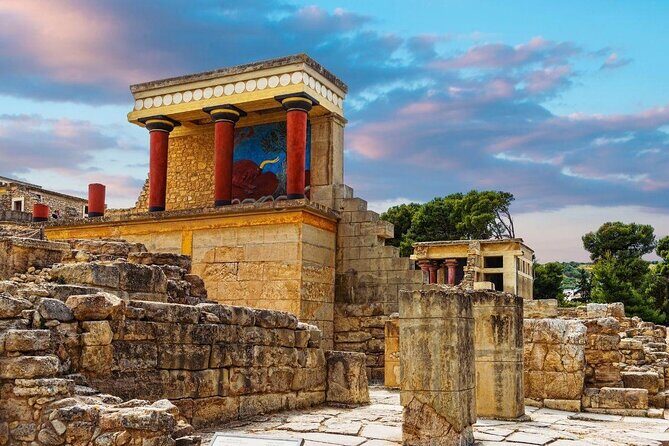
- Myth-first approach at Knossos: you’ll hear about King Minos and the Minotaur as you move through the palace areas.
- Licensed English guide for 90 minutes: up to 16 people, so explanations stay focused and you can ask questions.
- Skip-the-line, time-slot entry: you enter during your chosen e-ticket time window and should arrive 15 minutes early.
- Public bus transfer from Heraklion: you get a simple, local ride in both directions rather than a private shuttle.
- Meet at Capsis Astoria Hotel (10:00 AM sharp): check in starts 10 minutes before, and the start time is non-negotiable.
- You get bottled water: a small comfort that matters in the heat or when you’re walking more than expected.
Why Knossos feels like myth and history in the same breath
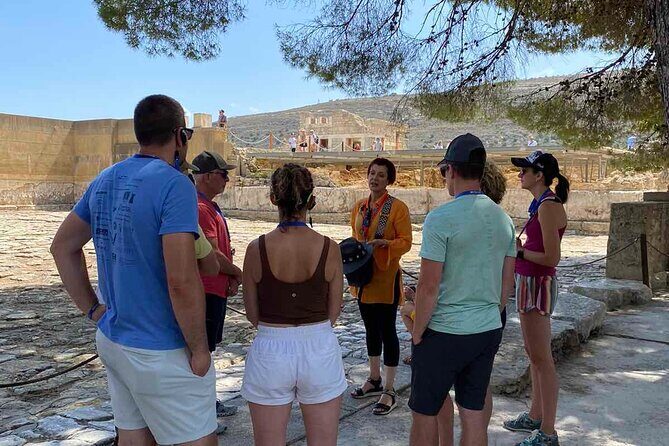
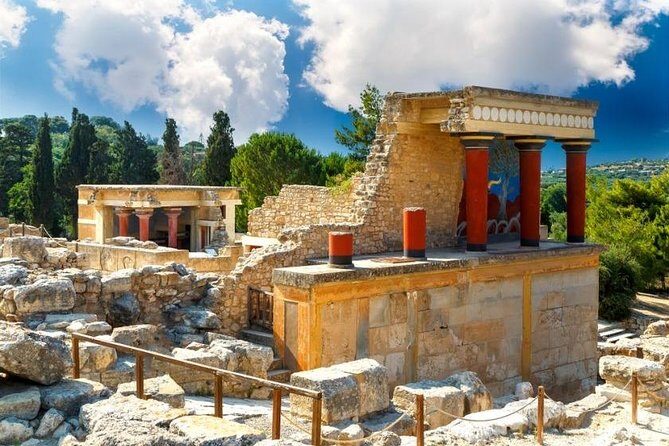
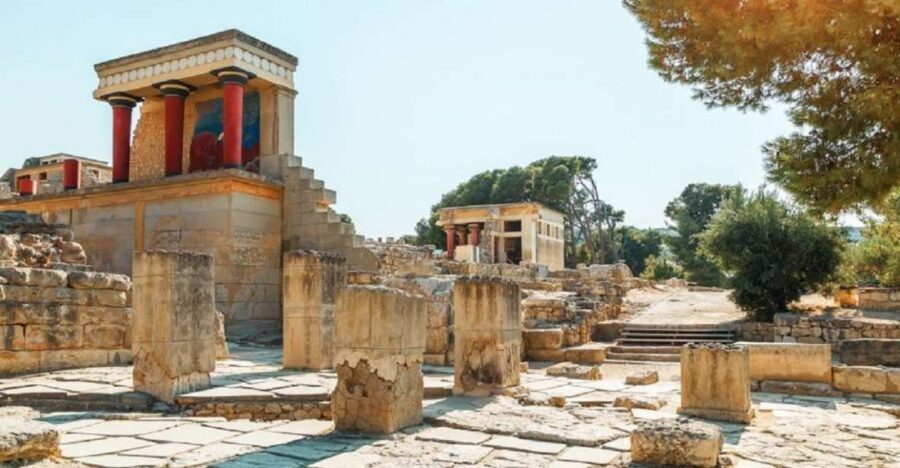
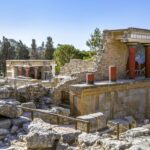
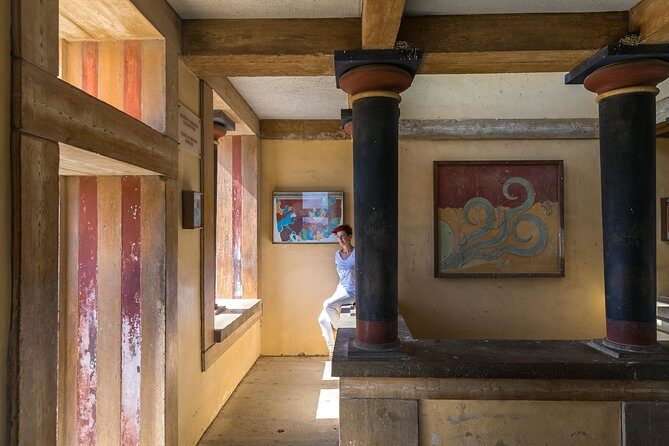
Knossos is one of those places where stories and stones refuse to separate. The Palace of Knossos is tied to King Minos and the Labyrinth of the Minotaur, but it’s also where you can trace what the Minoans built and how they lived around 2,000 BCE. With a guide leading you through, the myths stop being abstract and start acting like a map.
What makes this tour especially good for first-timers is the balance. You’re not just hearing legends as entertainment, and you’re not stuck in dates with no narrative. The best tours here connect myth and evidence in a way that helps you understand why people kept retelling these stories for centuries.
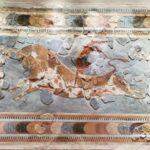
And it’s not only about the big name. You’ll hear about Minoan achievements as you look at key features on site, including the oldest throne in Europe, which is one of those details you’ll remember long after the rest blurs together.
You can also read our reviews of more tours and experiences in Crete


10:00 AM meet-up and the public bus transfer that keeps it real
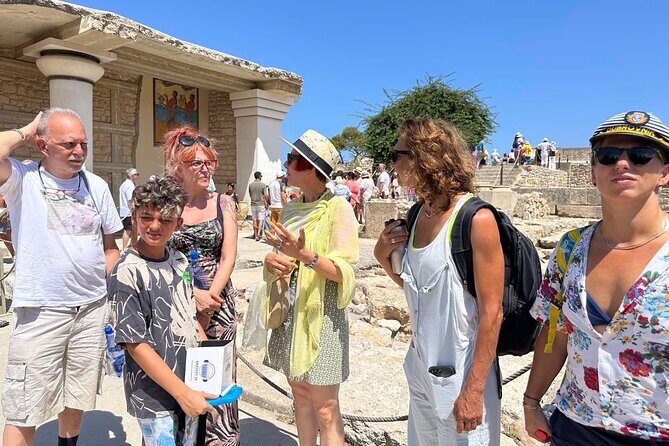
You meet in front of the Capsis Astoria Hotel in Heraklion, right next to the bus stop for Knossos, at 10:00 AM. Look for a sign with the WeGuide logo, and plan to be there early enough to locate your guide and settle in. Check-in begins 10 minutes prior to the start time, which is a good hint that the group will leave right away once everyone is accounted for.
The transfer is done with the public bus rather than a private vehicle. That sounds basic, but it’s a plus for value and vibe: you see normal local rhythms instead of sealing yourself into a coach. It also means you’re not mentally bracing for a long, complicated logistics chain before you even get to the ruins.
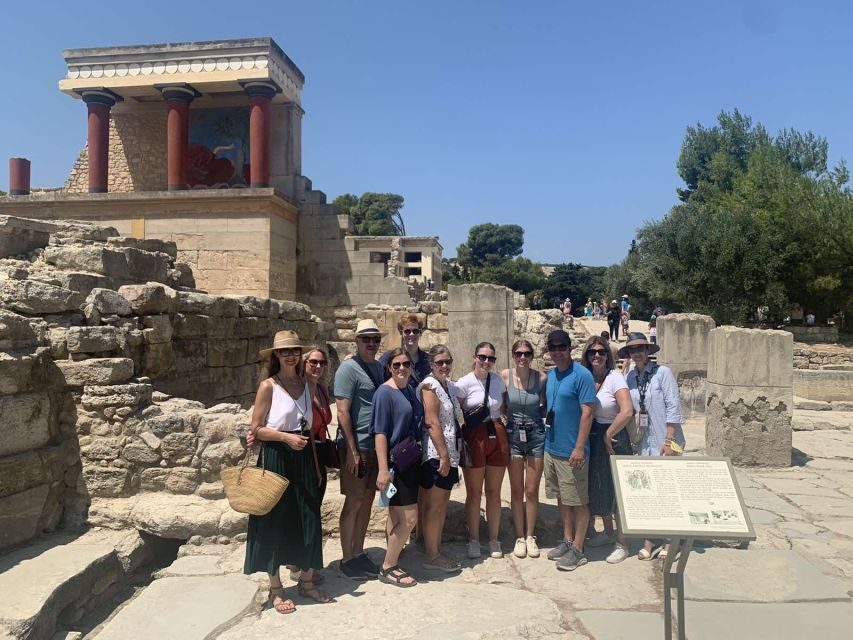
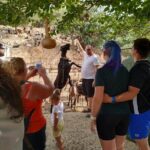
Once you’re with the group, the size stays manageable. This is capped at 16 travelers, so you don’t feel like you’re herded down a hallway. It’s the kind of group size where your guide can actually respond to questions without rushing.
Practical note: the tour is shared, and it starts when it says it starts. If you’re late, you won’t be able to “catch up later” with the rest of the group.
Skip-the-line entry with time-slot rules (and why they matter)
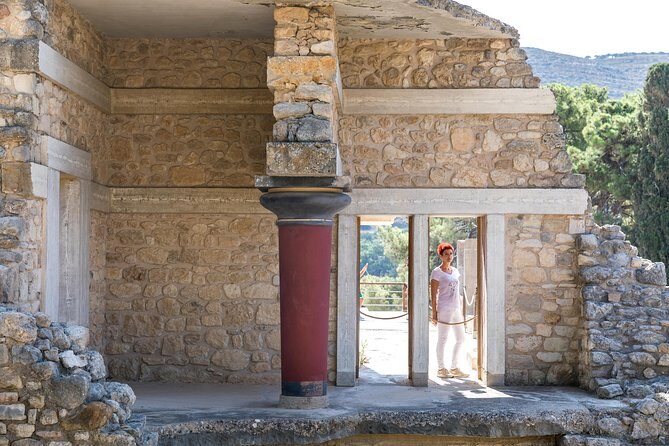
This ticket includes admission and uses an e-ticket time-slot system. The big benefit is simple: you’re entering during a time window you select, not waiting in a slow-moving queue when everyone else shows up at once.
There’s a strict detail that can make or break your timing: from 01-April-2024, entrance at archaeological sites and museums using e-tickets is only possible during your chosen time slot. You should be at the entrance 15 minutes before your time window. That’s not a “nice-to-do” buffer. It’s what keeps you from getting stuck at the gate while your group is already moving.
So how do you handle the timing pressure? Treat this like a timed appointment. Choose a time slot you can realistically reach from the meeting point, and then show up early enough to settle yourself before you reach the entrance area.
The 90-minute guided walk through the Palace of Knossos
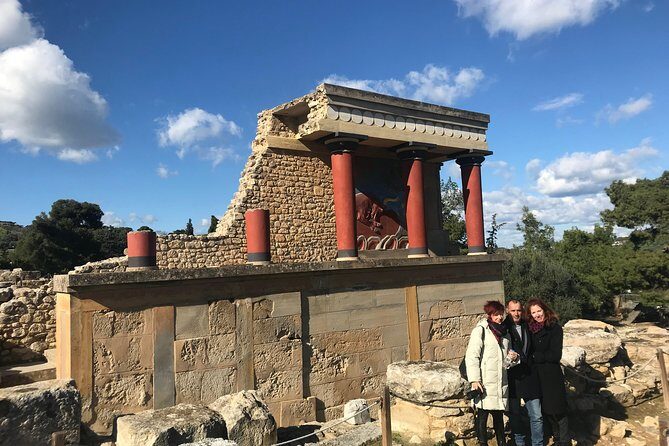
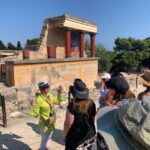
Once you’re at the Palace of Knossos, the tone shifts from transfer-mode to story-mode. You’ll meet your guide and get your tickets, then set off for a 90-minute guided tour in a small group.
The core experience is a tour through the palace areas where myth connects to structure. You’ll hear about King Minos and how the Labyrinth of the Minotaur became part of the Knossos identity. The point isn’t to memorize every story plot. It’s to learn what the palace meant to people, and how later cultures used these ancient spaces as myth material.
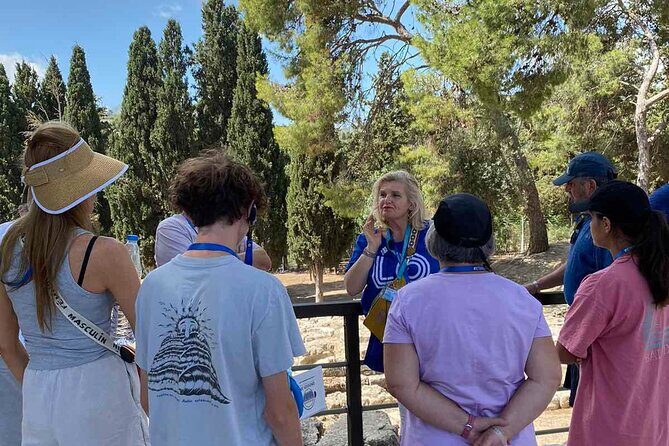
One of the biggest quality signals from guides here is how they frame the site. Several of the strongest experiences were led by guides who had deep academic ties. For example, I’ve seen mentions of Katarina, who was described as an archaeologist and able to connect myth and history in a clear, well-paced way. Another highlight was Yannis, who explained things clearly and even offered help like an umbrella, which tells you this group tour can be attentive to real on-the-ground needs, not just facts.
Guides also shape your pace. A good guide helps you slow down at the right moments and keeps you from spending your limited time looking at random walls. In the better experiences, the pacing was described as perfect, with lots of answers to questions.
And if you’re worried about walking, this can be a good sign: at least one guide was reported as accommodating for a walking issue. That doesn’t mean every route will be perfectly gentle, but it does suggest you should feel comfortable bringing up needs in advance so the guide can adapt where possible.
What you’ll want to notice at Knossos (beyond the headlines)
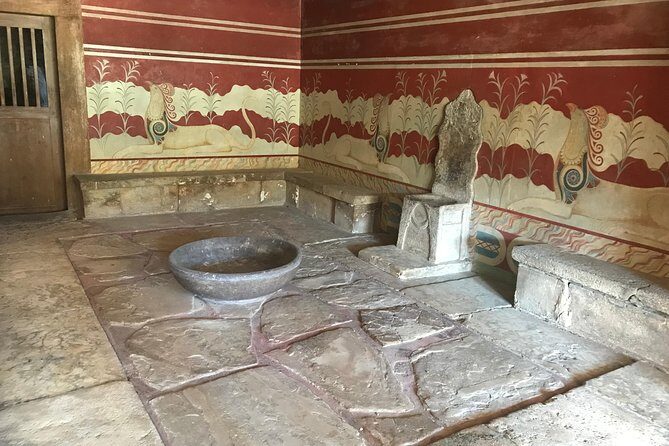
Knossos has a way of tempting you into one-track sightseeing. Don’t do that. Instead, try to notice the details your guide points out and ask why they matter.
Here are the kinds of moments that typically make this tour worth it:
- The “old throne” feature: you’ll learn why it’s singled out and how it represents power at the site.
- Spaces tied to the Labyrinth idea: even if you’re not literally tracking a maze, your understanding of the site improves once you hear a guide’s explanation.
- Minoan achievements as more than trivia: when a guide links daily life and architecture, it stops being a worksheet and starts being a story you can picture.
You’ll likely finish the tour with better mental order. Instead of feeling like you saw a lot of ruins, you’ll feel like you learned the site’s logic.
You can also read our reviews of more tours and experiences in Crete






Add-on value: pair your tour with the museum and a pause for coffee
One of the best ways to get more out of Knossos is to connect what you learn on-site with what you see indoors. A guide recommendation I saw strongly encouraged people to visit the archaeological museum, because the artifacts add meaning to what you just walked through.
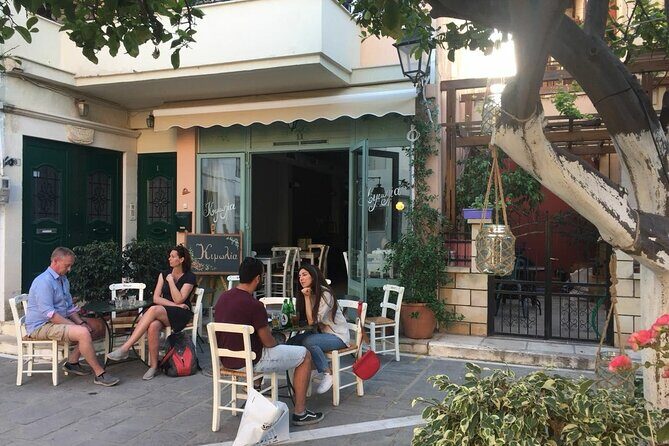
Also, plan for a short break. There’s a cafe on-site noted in one experience, including coffee. It’s a small thing, but it helps you reset after guided walking, especially if you chose a tight time slot and you want to keep the day easy.
If you have even a little extra time in Heraklion, this is the kind of day that can turn into a full history arc rather than a single stop.
Price and value: what $120.48 buys you (and when it might not)
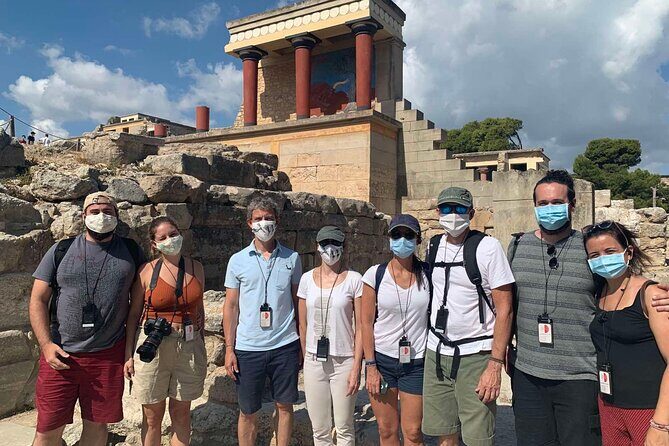
The price is $120.48 per person, and it includes several key pieces: a licensed English guide, the Knossos entry ticket, public bus transportation to and from the palace, and bottled water.
So is it worth it?
For most people, the value comes from reducing friction. You’re paying for a guide who organizes the myths and the archaeology into a clear route, plus you’re paying for admission handled through the e-ticket time-slot system. If you go self-guided, you can absolutely still enjoy Knossos, but you’ll spend more time figuring out what you’re looking at and less time connecting the story.
There’s also a real-world caution: sometimes local calendars can include free admission days. One experience described a weekend where entry was free because of a cultural holiday, which changes the math. You can’t control those dates, but you can control your homework. Before you buy, do a quick check for any local free-admission patterns around your exact travel days.
Also remember the “non-flexible” side. This tour is shared and starts at 10:00 AM no exceptions. If you have uncertain plans in the morning, or you know you’ll be delayed getting to Heraklion bus connections, the risk to value goes up because the tour can’t wait for you.
Who this Knossos Palace tour suits best
This is a strong match if you want:
- A guided myth-and-archaeology explanation rather than a purely visual visit
- A small group (up to 16) so you can ask questions
- A practical day plan with transfer by public bus rather than a complicated private setup
- Help understanding why specific features matter, like the throne and the Labyrinth storyline
It may be less ideal if you:
- Hate strict timing and timed entry rules
- Prefer wandering without structure
- Are traveling on a tight budget and you’re comfortable turning Knossos into a self-guided route
If you’re somewhere in the middle, this tour usually works because it gives you a framework. Once you get that framework, you can enjoy the ruins even more on your own.
Quick checklist to avoid stress at Knossos
- Pick your time slot and aim to be at the entrance 15 minutes early for e-ticket entry.
- Meet at the Capsis Astoria Hotel area in Heraklion at 10:00 AM, with enough buffer to find the WeGuide sign.
- Wear shoes that handle uneven ground. The palace site is not a smooth sidewalk.
- Bring a light layer or sun protection if weather is warm. One guide in a separate experience even offered an umbrella, which hints that conditions can change quickly.
- If you have walking needs, it’s smart to communicate them before the tour starts so the guide can help you plan your route.
Should you book this Knossos Palace tour?
If you want Knossos to make sense, not just look impressive, I think this is a good booking. The combination of licensed English guiding, included admission, and time-slot entry is built for efficiency, and the small group size helps the experience feel human instead of rushed.
Book it especially if Greek mythology is your entry point. The Labyrinth and Minotaur stories become much more satisfying when you’re walking through the place that inspired them.
Hold off only if your schedule is shaky or you’re traveling during a time you suspect free admission might apply. A quick check for local exceptions can save money, and then you can decide whether a guide is still worth it for you.
Either way, treat the day like an appointment: arrive early, respect the timing, and you’ll get more meaning out of those stones than you’ll get from winging it.
FAQ
How long is the Knossos Palace tour?
It runs for about 2 hours 30 minutes total, with 90 minutes of guided touring at the palace included.
What is the price per person?
The price is $120.48 per person.
What’s included in the tour?
You get the Knossos Palace entry ticket, a licensed English-speaking guide, public bus transportation to and from Knossos, bottled water, and assistance at the meeting point.
Where do I meet the group?
You meet in front of Capsis Astoria Hotel, next to the bus stop for Knossos, in Heraklion.
What time does the tour start?
The tour starts at 10:00 AM. Check-in begins 10 minutes before.
Is this a small-group tour?
Yes. It has a maximum group size of 16 travelers.
Does the ticket really help you avoid waiting in line?
Yes. The tour includes skip-the-line style access using an e-ticket time-slot, so you enter during your selected time window.
What time slot rules should I follow?
Entrance is only possible during your chosen time slot. You should be at the entrance 15 minutes before your time slot.
What if the weather is poor?
This experience requires good weather. If it’s canceled due to poor weather, you’ll be offered a different date or a full refund.
Can I cancel and get a refund?
Yes. You can cancel for a full refund up to 24 hours in advance. If you cancel less than 24 hours before, the amount paid is not refunded.