REVIEW · CRETE
Knossos & lasithi plateau villages,Zeus’s cave,&olive oil Mill
Book on Viator →Operated by Luxury Crete Tours · Bookable on Viator
Crete mythology is easier when you can see it. This day trip strings together Knossos and the Zeus Cave area with mountain villages, windmills, and real food stops. I love the hands-on olive oil stop at Omalia and the storytelling-led pace with guides like Mike and Stavros. One thing to keep in mind: if you’re on a cruise day, you have to be on time at pickup, because the whole schedule is built to get you back.
The value here is practical, not just scenic. You’re in a small group (up to 10) with an English-speaking driver guide, plus coffee, water, and tastings along the way. Another real consideration: Zeus Cave involves a hike and lots of steps, so comfortable shoes and a jacket for the mountains matter.
In This Review
- Key Highlights You’ll Actually Feel During the Day
- Starting in the Real Cretan Countryside, Not Just the Big Names
- Omalia Olive Press: How Olive Oil Became Crete’s Daily Life
- Lasithi Plateau Windmills: Old Tech With Real Agricultural Purpose
- Krasi’s Platanus Tree and the Old Aqueduct Walk
- Quick Photo Stops: Aposelemi Canyon and a Monastery Pass
- Mochos Village: Church, Square, and a Slower Pace
- Psychro Cave (Zeus Cave): The Steps, the Stalactite, and the Cool Air
- The hike and entry
- What you’ll see inside
- Important timing reality check
- Knossos Palace: The Big Ticket Site You Should Plan Around
- Lunch at Tzanakis Michael: Traditional Food, Extra Cost
- Timing, Pickup, and Cruise-Safe Logistics (What to Watch)
- The one drawback to manage
- Value for Money: What the $109.42 Covers, and What You Pay Separately
- Guides, Personality, and Why the Day Feels Fun Instead of Rushed
- What to Bring (So You’re Not Miserable in the Mountains)
- Should You Book This Knossos & Lasithi Plateau Villages Tour?
- FAQ
- How long is the tour and when do you return?
- What’s included besides transportation?
- Is lunch included?
- Do I need tickets for Knossos?
- Is Zeus Cave open all year?
- How hard is the Zeus Cave part?
Key Highlights You’ll Actually Feel During the Day
- Olive press + tastings: learn both modern and older olive oil methods, then sample the result with raki
- Lasithi Plateau windmills: see the old water-pumping windmills and get context for the farmland they served
- Krasi and its platanus: walk stone-paved lanes and spot the oldest and biggest plane tree plus an old aqueduct
- Mochos village time: a slower, traditional village stop with a church and central square
- Psychro Cave (Zeus Cave): illuminated chambers, dramatic formations, and a cool interior break from the road
- Knossos at your pace: you explore on your own, with an option to add an official guide inside
Starting in the Real Cretan Countryside, Not Just the Big Names
This trip works because it doesn’t treat Crete as one museum stop and done. You start in the food and farming world, then climb into the mountains and villages, then finish with the headline site most people come for: Knossos.
You’ll get a loop that feels like how locals move through the island: agriculture first, then communities, then myth and monuments. And because it’s a small group, the guide can keep the day moving without turning it into a cattle call.
You can also read our reviews of more tours and experiences in Crete.
Omalia Olive Press: How Olive Oil Became Crete’s Daily Life
The day begins at Omalia Olive Press for about an hour, and it’s the kind of stop that quietly changes how you look at the island. You’ll learn about olive trees and olives, and you’ll connect that to why olive oil became so central to Crete’s history and everyday routines.
What I like about this stop is that it’s not only pictures and explanations. You’re also set up for tasting: coffee, water, and an olive oil and raki sampling are part of what’s included. The operator also gives you some context on making olive oil both the modern way and the older way, so it makes sense when you see groves all over the island later.
Practical note: even though this is a relatively easy segment, it’s still a factory-style environment. Wear something comfortable and don’t plan on lingering for too long if you’re sensitive to crowds inside a working production area.
Lasithi Plateau Windmills: Old Tech With Real Agricultural Purpose
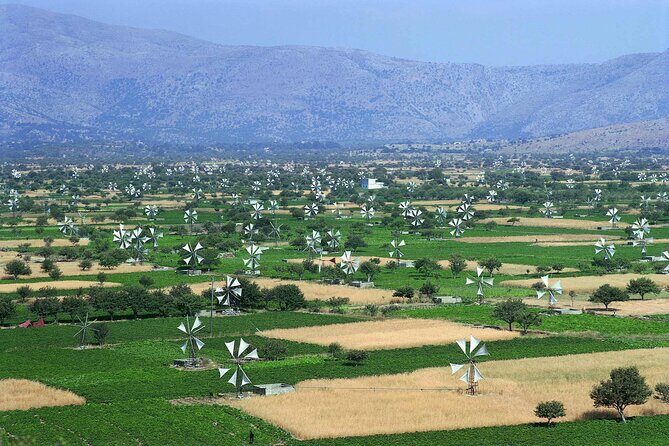
Next you’re at the Windmills of Lasithi Plateau for about an hour. These aren’t just decorative. The old windmills originally pumped water from underground to irrigate crops, and some were used for grinding grain to make flour.
This is one of those stops where the scenery and the function match. When you see the windmills in the setting of the plateau, you understand why this region mattered for feeding communities and keeping farms alive. And the guide usually ties it back to island geography, water access, and how people solved problems with the tools they had.
If you like photos, this is a good place to pause and take your time. The windmills are visually strong, and the explanations help you frame what you’re seeing.
Krasi’s Platanus Tree and the Old Aqueduct Walk
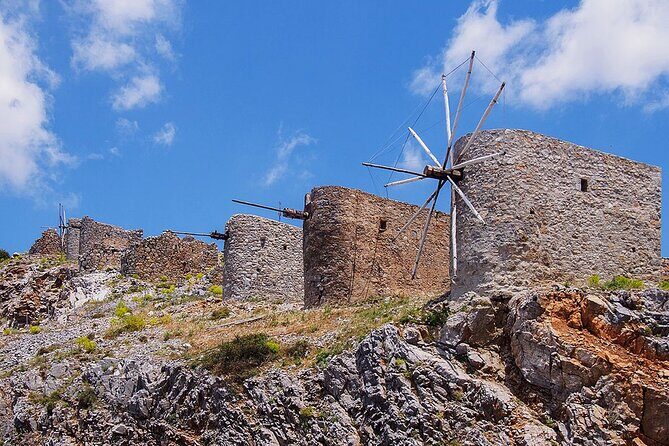
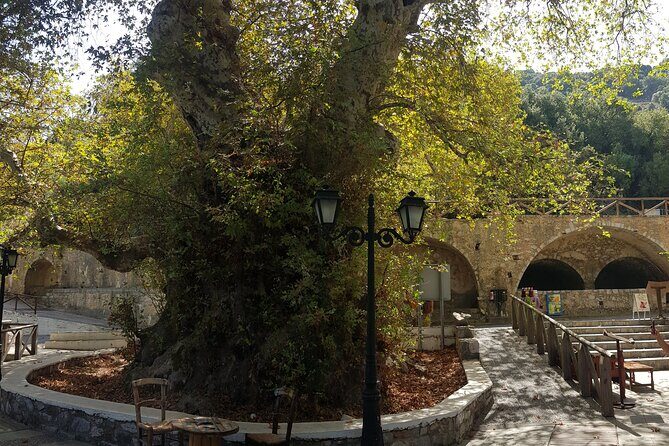
In Krasi village, you get around 30 minutes to wander the stone-paved narrow streets. This is one of the more “feel the place” stops, where you’re looking at traditional Cretan house shapes and village layout rather than ticketed attractions.
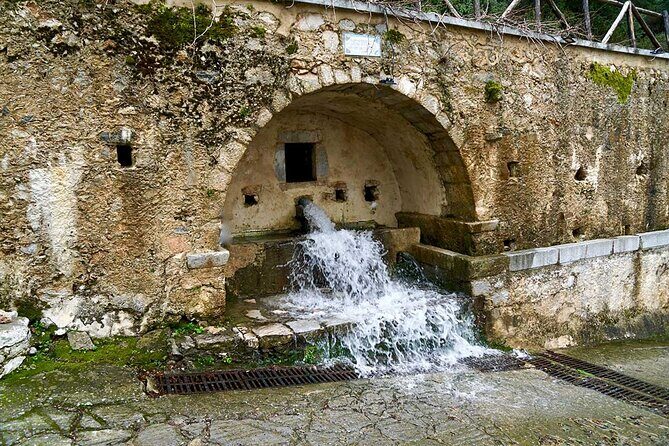
The highlight is the oldest and biggest platanus tree, plus an old aqueduct you can spot as you walk. It’s the kind of stop that works even if you’re not a big plant person, because the tree and the water system connect to the same theme as the windmills and olive groves: people managed land and water to survive and thrive.
Time is short here, so keep expectations simple. You’re not trying to do a full village tour; you’re getting a quick, authentic taste of Krasi’s character.
Quick Photo Stops: Aposelemi Canyon and a Monastery Pass
You’ll stop near the Aposelemis dam for about five minutes to take photos and enjoy the views. It’s brief, but if the weather’s clear, this kind of viewpoint stop is perfect for resetting your eyes between villages and longer site visits.
There’s also a short pass by an old monastery (about seven minutes). It’s not a deep visit, so treat it like a glimpse—good for orientation, great if you enjoy seeing small pieces of religious architecture even when time is limited.



Mochos Village: Church, Square, and a Slower Pace

Mochos gives you about an hour in an older village setting with a church and a central square. This is where the day feels less engineered and more human-scale.
If you like markets, village scenes, or just sitting in a square while the rhythm of daily life happens, Mochos is a good fit. You’re also well-positioned to shop lightly or grab a drink before the bigger-ticket stops come next.
Psychro Cave (Zeus Cave): The Steps, the Stalactite, and the Cool Air
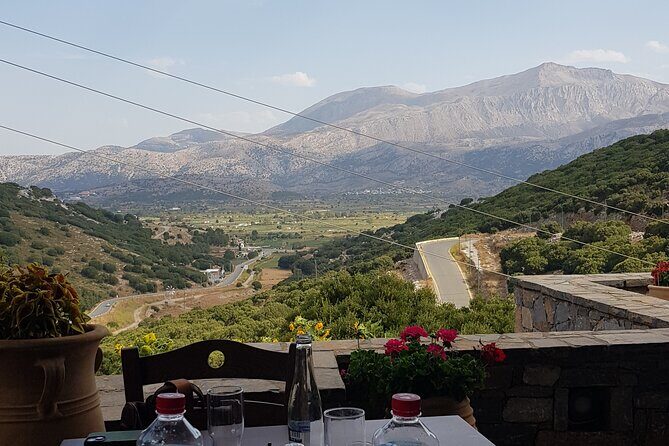
Now for the star of the myth side: Psychro Cave, also known as Zeus Cave. The tour descriptions set it up as a journey from mountain views into a cool underground world.
The hike and entry
You should expect a hike uphill for about 10 to 15 minutes of moderate effort to the cave entrance. Then it’s about 180 steps down into the cave, with handrails. There’s also mention of an ascent option by paved path or by a traditional donkey ride, so you’ll be looking at whatever option the day and staff make available.
What you’ll see inside
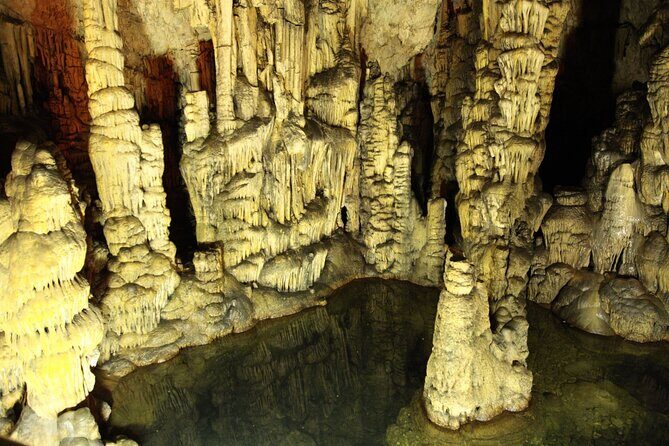
Once you’re in, you’ll get time in multiple illuminated chambers. The cave is known for a high density of stalactites and stalagmites formed over millions of years.
One formation gets extra attention: the Mantle of Zeus, described as a massive, curtain-like stalactite hanging like a chandelier over a hidden underground lake. You’ll also learn about ancient offerings associated with Minoan worship, tied to the legend of Zeus.
Important timing reality check
Zeus Cave is listed as closed until April and further notice. So if your date falls outside normal opening, the operator may adjust the day and remove or replace the cave visit. When you book, it’s smart to ask your guide what’s actually running on your specific day.
Also pack for the cold. Even when it’s warm higher up, caves and mountains can feel chilly, and one review noted being cold in the mountains even outside peak winter.
Knossos Palace: The Big Ticket Site You Should Plan Around
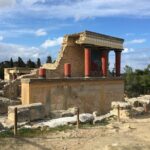
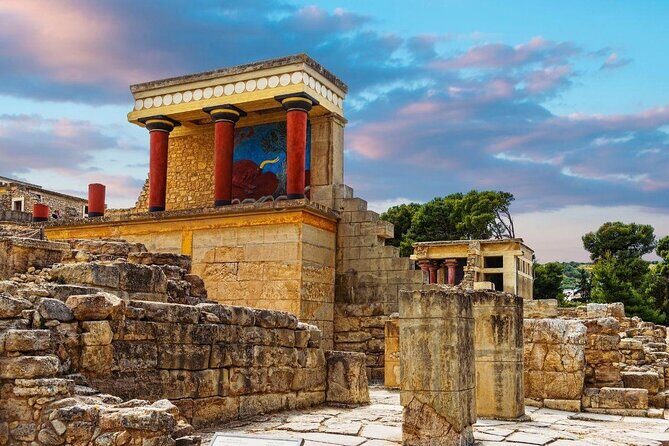
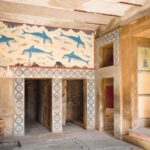
Knossos is the last major stop, with about an hour for you to explore the archaeological site on your own. Entrance to Knossos is not included, and it’s listed at 20 euro for adults and half price for kids.
A licensed official guide inside Knossos can be arranged for an extra charge, which can help a lot if you want more structure than self-guided wandering. If you’re the kind of person who likes to understand what you’re looking at as you go, you’ll get extra value from adding a guide.
If crowds are a concern, timing matters. One of the guides’ strengths shown in the shared experience is getting you onto major sites in a way that reduces stress—especially for cruise schedules.
Practical note: bring water and wear shoes you can walk in for an hour on uneven ground. Also, this stop is where “one more photo” can cost you time. Keep moving at a steady pace.
Lunch at Tzanakis Michael: Traditional Food, Extra Cost
You’ll have a lunch stop at Restaurant Tzanakis Michael for about an hour and a half. Lunch itself is not included, and house wine isn’t included either.
What’s included earlier in the day (coffee, water, and tastings) helps make the meal easier on the budget, but your lunch order will be your decision. One helpful detail: vegetarian options are available, so you won’t have to sit out completely if you don’t eat meat.
If you’re traveling with kids or anyone who dislikes waiting, this lunch window is usually a good break before Knossos. Just know that ordering quickly is smart when the group schedule is built around cruise returns.
Timing, Pickup, and Cruise-Safe Logistics (What to Watch)
This trip runs about 7 to 8 hours. It can also be a cruise-friendly choice, since the guide adjusts timing so you can make ship shuttle connections.
For cruise passengers, the guide meets you at the Heraklion port holding a sign with your name at the shuttle drop-off point. For most hotels in the Heraklion area, the pickup is right in front of the reception area.
There’s also a clear heads-up that if the tour starts later than 09:00 am for cruise days, you may have to skip one or a couple sites to get back on time. That means you should book with flexibility if you’re hoping to see every single stop without changing anything.
The one drawback to manage
One real caution from the experience style of this tour: late pickup or delay during big-ticket stops can create stress at the end of the day. The best way to avoid that is simple—be ready when the guide arrives, use the correct meeting point, and keep the group moving at Knossos.
This isn’t a dealbreaker. It’s just how a schedule like this works when it’s built around transport timing.
Value for Money: What the $109.42 Covers, and What You Pay Separately
At $109.42 per person, you’re buying a lot of logistics plus a chunk of local culture stops. Included items cover:
- Pickup and drop-off for the shared group from the Heraklion area (and pickup/drop-off options listed for private tours)
- An English-speaking driver guide
- Water and coffee
- Olive oil and raki tasting (with bread mentioned in the included tasting setup)
- Liability insurance
What’s not included is where you should plan ahead:
- Knossos entrance: 20 euro for adults, half price for kids
- Entrance for Zeus Cave (not included)
- Lunch (at Restaurant Tzanakis Michael)
So the value calculation comes down to this: you’re not just paying for driving and seats. You’re paying for curated stops that show you how Crete works—olive oil, irrigation windmills, villages, and myth underground—without needing to coordinate public transport on a single day.
Guides, Personality, and Why the Day Feels Fun Instead of Rushed
The strongest theme across the experience is the guide’s energy and ability to make facts stick. Guides named in the experience include Mike, Stavros, Michalis (often called Mike), Eddie, and Dimitri, and drivers like Manolis are mentioned for safe, confident driving on narrow mountain roads.
What you’ll enjoy most is the way the day turns educational without being boring. Expect interaction, humor, and explanations tied to what you’re seeing—plants and agriculture during the olive stops, geography on the road, and mythology once you’re underground or at Knossos.
That small-group format is also why this works. You don’t spend the day fighting for attention, and you can ask a question without waiting your turn for the bus microphone.
What to Bring (So You’re Not Miserable in the Mountains)
If you want the day to feel smooth, pack for both warm driving and cooler stops.
Bring:
- A light jacket or warmer layer for mountains and cave air
- Closed-toe shoes with traction for steps and uneven walking
- Water bottle awareness (water is included, but having your own helps)
- A practical attitude about time at Knossos if you’re on a cruise
One review specifically noted it can be freezing in the mountains even when it’s not winter, so don’t trust the beach forecast.
Should You Book This Knossos & Lasithi Plateau Villages Tour?
I’d book it if you want one day that mixes agriculture, villages, and mythology, and you don’t want to stitch together multiple taxis or buses. It’s especially strong if olive oil culture matters to you, you like village wandering (Krasi and Mochos), and you want the psychological payoff of seeing Zeus Cave and Knossos as part of the same route.
Skip or reconsider if you need a fully accessible day with no stairs or uphill walking, since Zeus Cave includes both a moderate uphill walk and 180 steps down. Also, if Zeus Cave is closed on your travel dates, the day may change.
If you’re traveling with a cruise and timing is tight, this can still be a great choice—just be ready at the pickup point and keep your schedule flexible.
FAQ
How long is the tour and when do you return?
The tour runs about 7 to 8 hours and ends back at the meeting point. For cruise passengers, the guide works around ship timing so you can make the ship shuttle, and the program may be adjusted if you start later than 09:00.
What’s included besides transportation?
The tour includes an English-speaking driver guide, liability insurance, water and coffee, plus olive oil and raki tasting. Pickup and drop-off are provided for the shared group from the listed Heraklion-area locations, and private options include additional drop-off areas.
Is lunch included?
Lunch is not included. There is a stop for lunch at Restaurant Tzanakis Michael where traditional food is served, and you pay for your meal there.
Do I need tickets for Knossos?
Yes. Entrance fees at Knossos are not included, and the listed price is 20 euro for adults and half price for kids.
Is Zeus Cave open all year?
No. Zeus Cave is listed as closed until April and further notice, so the cave visit may not be available depending on your date.
How hard is the Zeus Cave part?
There’s an uphill hike of about 10 to 15 minutes to the entrance (moderate level), and then you go down about 180 steps into the cave with handrails. The ascent option is described as either a paved path or a traditional donkey ride.