REVIEW · CRETE
Crete: Cretan Culture Tour and Pottery Workshop
Book on GetYourGuide →Operated by Allcretetours · Bookable on GetYourGuide
Pottery, olive oil, and a monastery in one day. This guided Cretan Culture Tour strings together big-picture history with hands-on craft stops, so your day doesn’t feel like a checklist. I like that it mixes serious sites (Arkadi and ancient Eleftherna) with tactile experiences in Margarites.
Two things I really enjoyed are the visit to the Monastery of Arkadi (including its on-site museum pieces) and the chance to learn Cretan food traditions through an olive oil tasting. The only drawback to keep in mind is that the pottery and olive oil parts can be more demo-focused on some days than others, even though the experience is advertised as workshop-style.
In This Review
- Key Things I’d Prioritize on This Tour
- A One-Day Crete Culture Tour That Moves at a Realistic Pace
- Morning Logistics From Rethymno Pick-Up to a Clear Day Schedule
- Monastery of Arkadi: Museum-First Meaning Before the Architecture
- Museum of Ancient Eleftherna: From 3000 BC to Later Centuries
- Margarites Pottery at TSIKALARIO: Hands-On If You’re Lucky, Still Worth Seeing
- Margarites Village Free Time: Lunch, Strolls, and Getting Off the Clock
- Olive Oil Manufactory and Tasting: Learning the Past Through a Sip
- Melidoni Cave (Gerodospilios): Stalactites, Stalagmites, and Religious Use
- Price and Value: What $40 Really Buys You
- Guide Quality and Day-of Details That Matter
- Who This Tour Suits Best (And Who Might Want a Different Day)
- Should You Book This Cretan Culture and Pottery Day?
- FAQ
- What’s included in the tour price?
- Are entrance fees included for the main sites?
- Will I make pottery during the workshop?
- Where does pick-up happen?
- What language is the guide?
- Can I cancel and get a full refund?
Key Things I’d Prioritize on This Tour
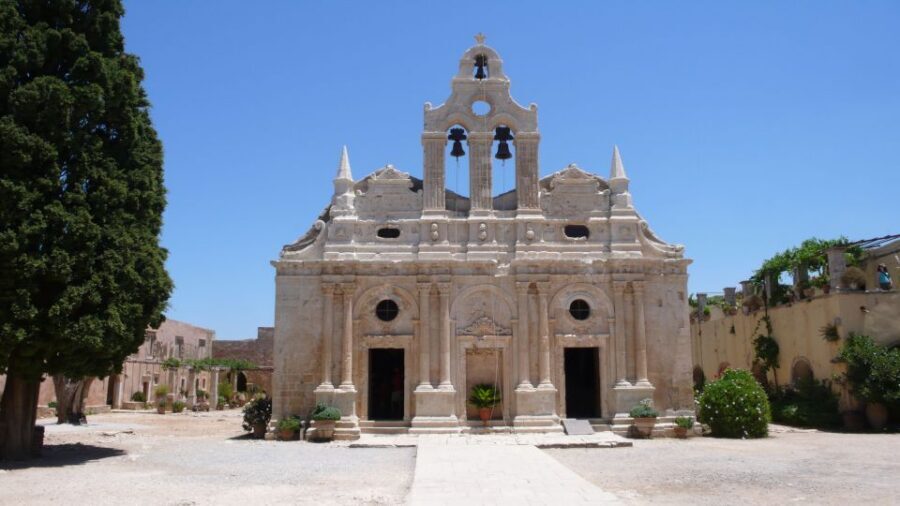
- Arkadi’s museum setting: icons, relics, and weapons give context before you just look at stone walls
- Eleftherna’s long timeline: the museum covers finds from Homer’s era all the way through later periods
- Margarites pottery at TSIKALARIO: you’ll either get hands-on shaping or a close-up workshop demonstration
- Olive oil tasting with local process: you’ll learn how production evolved from the past to today, with a tasting to end it
- Melidoni Cave (Gerodospilios): stalactites and stalagmites plus its use for religious ceremonies
A One-Day Crete Culture Tour That Moves at a Realistic Pace
This is the kind of day trip that fits people who want a strong hit of Crete without renting a car or stitching together multiple buses. You start in Rethymno with transportation handled, then you spend the day bouncing between history, craft, and a cave stop that’s more interesting than it sounds on paper.
The itinerary is built around variety. You get a monastery museum visit first, then a museum anchored to archaeology and timeline scale, then a village craft stop in Margarites, then olive oil, then the Melidoni Cave (Gerodospilios). The result is a day that keeps changing gears instead of repeating the same “look at view, take photo, leave” rhythm.
Value-wise, it’s also smart to understand the price structure. The tour is listed at about $40, but some key entrances aren’t included (more on that below). If you’re already planning to pay for a monastery, a museum, and a cave ticket anyway, the bundled transportation and guiding can make the whole day feel like a bargain.
You can also read our reviews of more tours and experiences in Crete
Morning Logistics From Rethymno Pick-Up to a Clear Day Schedule
Your tour starts with pick-up from your hotel or very close to it in Rethymno. You’ll receive a voucher by email with pick-up details (time and pick-up point) one day before the tour, and you can also view it online using your booking reference.
That matters more than it sounds. Good pick-up timing can mean the difference between a calm start and an anxious scramble with sunscreen and water. The tour itself runs for one day, and you’ll want to check available starting times when you reserve.
The guide is live and in English. In practice, it helps to remember that the guide’s main job is to connect the dots between stops—what you’re seeing and why it matters. Even if a portion of the day feels focused on museums or buildings, the guiding keeps it from being just standing around.
Finally, this is operated by Allcretetours, so if you have any special needs (timing concerns, kids, etc.), it’s worth messaging them early rather than assuming things will sort themselves out on the day.
Monastery of Arkadi: Museum-First Meaning Before the Architecture
The first big destination is the Monastery of Arkadi, and you’ll begin with the museum component. That’s a smart way to do it, because Arkadi isn’t just a pretty monastery—its story is tied to struggle and identity, and the museum pieces help you understand that before you wander.
You’re guided through the museum where you’ll see icons, monastic relics, and weapons. That mix is unusual in a good way: it reminds you that religion here wasn’t separate from daily life and politics. Then you get about an hour of free time, which gives you space to revisit details, step back for photos, and move at your own pace.
One thing to plan for: the Arkadi Monastery entrance isn’t included, and it costs about €3 per person. If you’re counting every euro, add that early in your mental budget so you don’t hit the gate surprised.
What makes Arkadi especially worth your attention on this tour is how it sets the tone. After Arkadi, the rest of your day feels more grounded, because you’ve already learned how people in Crete preserved faith and culture through turbulent periods.
Museum of Ancient Eleftherna: From 3000 BC to Later Centuries
Next comes the Museum of Ancient Eleftherna. This isn’t just a room of objects—it’s presented as a place that holds together a huge stretch of time. The museum covers findings from 3000 B.C. to 1300 A.D., and it’s described as the first archaeological site museum in Crete.
The tour frames Eleftherna in a way that’s easy to grasp: you’re moving through the long arc of a site, not just looking at one neat era. You’ll also hear how it connects to Homer’s era, which is a nice bridge if you’re the type who likes mythology and archaeology in the same conversation.
The museum entrance is also not included, and it costs about €4 per person. If you love history, don’t skip this stop. Museum time can feel passive on a tour, but Eleftherna’s time coverage helps you see patterns—how settlements and material culture change over centuries.
Also, Eleftherna works as a mental reset between “religious space” and “craft space.” By the time you reach pottery, your brain has already switched from monuments to objects, and then to making something with your own hands.
Margarites Pottery at TSIKALARIO: Hands-On If You’re Lucky, Still Worth Seeing
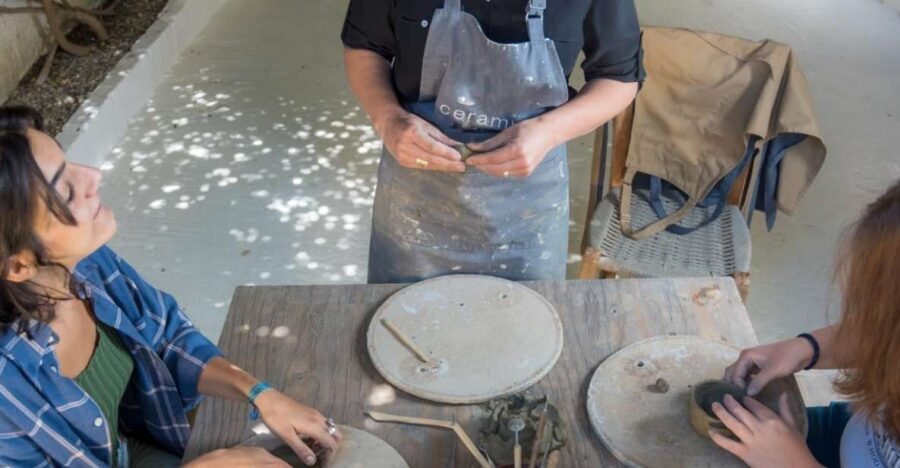
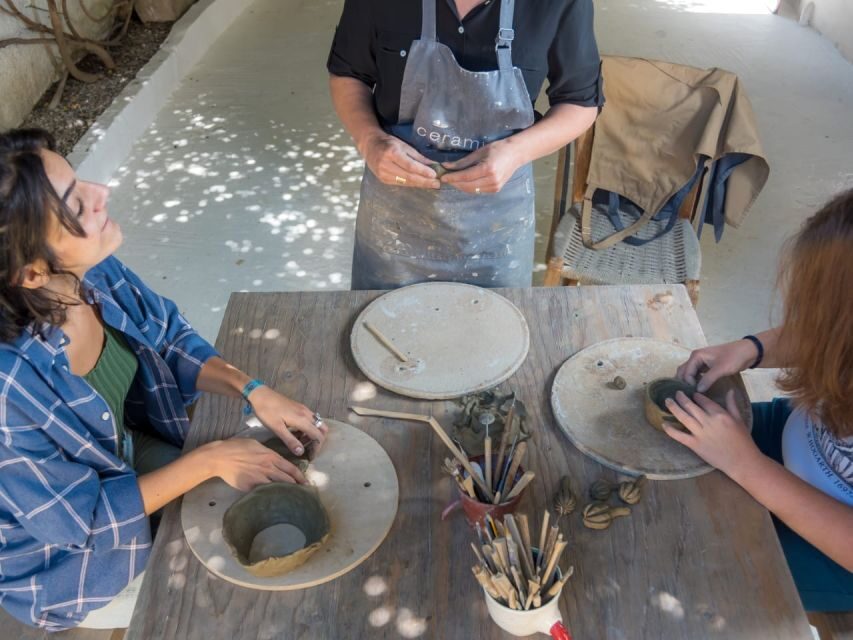
Your pottery stop is at the workshop branded TSIKALARIO in the village of Margarites. The tour description promises a workshop where you can create your own ceramic, and it also emphasizes how pottery tradition in the area runs through many generations.
Here’s the careful part. The experience can vary day to day. In one instance, people expected hands-on shaping but were given a demonstration instead, meaning participation was limited. That doesn’t make the visit pointless—it can still be fascinating to watch techniques up close—but it may not deliver the “I made this” memory you were hoping for.
What should you do with that information? If hands-on pottery is the main reason you booked, I’d treat this as a “hope for participatory” experience rather than a guaranteed craft session. Send a quick message to confirm what the day’s session looks like, or ask on pick-up so you’re not disappointed when you arrive.
Even when it’s demo-focused, Margarites is a good setting for pottery. The whole point is atmosphere: you’re not in a sterile studio. You’re in a village where craft is woven into local life, and the workshop visit helps you see that tradition isn’t museum-only.




Margarites Village Free Time: Lunch, Strolls, and Getting Off the Clock
After the pottery stop, you get free time in Margarites for lunch or a walk. This is more than a break; it’s where you can turn the day from guided interpretation into real place time.
If you want an easy win, use this period to:
- grab lunch without rushing,
- walk through small lanes at a slower pace,
- and take in how the village feels around the workshop area.
The tour doesn’t force you to fill the time with activities, which I appreciate. It lets you choose: you can rest, eat, or just wander for photos and atmosphere.
Olive Oil Manufactory and Tasting: Learning the Past Through a Sip
Then it’s on to an olive oil manufactory where you learn how Cretan people made olive oil in the past and how the process evolved to today. This is exactly the kind of “food history” stop that can be surprisingly meaningful, because olive oil isn’t an abstract product on Crete—it’s tied to how people farm, preserve, and survive.
The tour includes an olive oil tasting, which is the practical payoff. Even if the machinery isn’t running when you arrive, you’ll still get the sensory part that makes the lesson stick.
Still, keep your expectations grounded. One experience described machines that weren’t operating and presented a more static view of the process, plus tasting tied to a small food item. That means you might get the story more than you get a live production spectacle.
So approach it like this: you’re there for understanding and tasting, not for watching an entire olive-press cycle start to finish. When the tasting lands well, it turns a short lesson into something you’ll remember when you buy bottles later.
Melidoni Cave (Gerodospilios): Stalactites, Stalagmites, and Religious Use
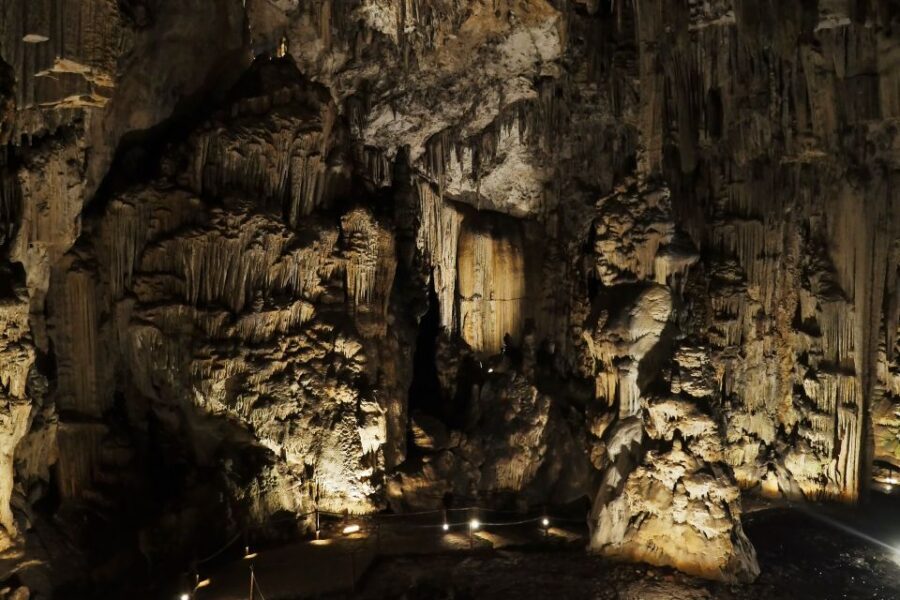
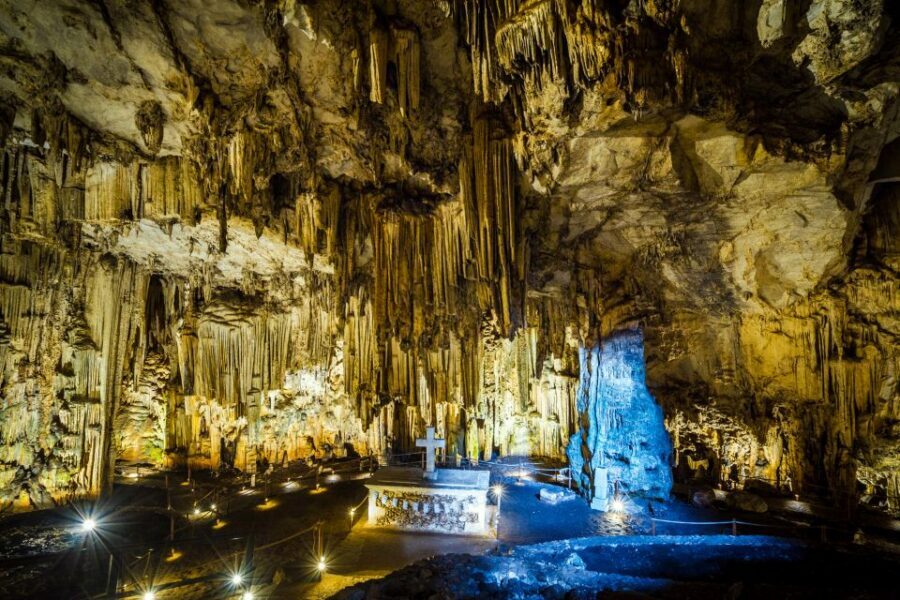
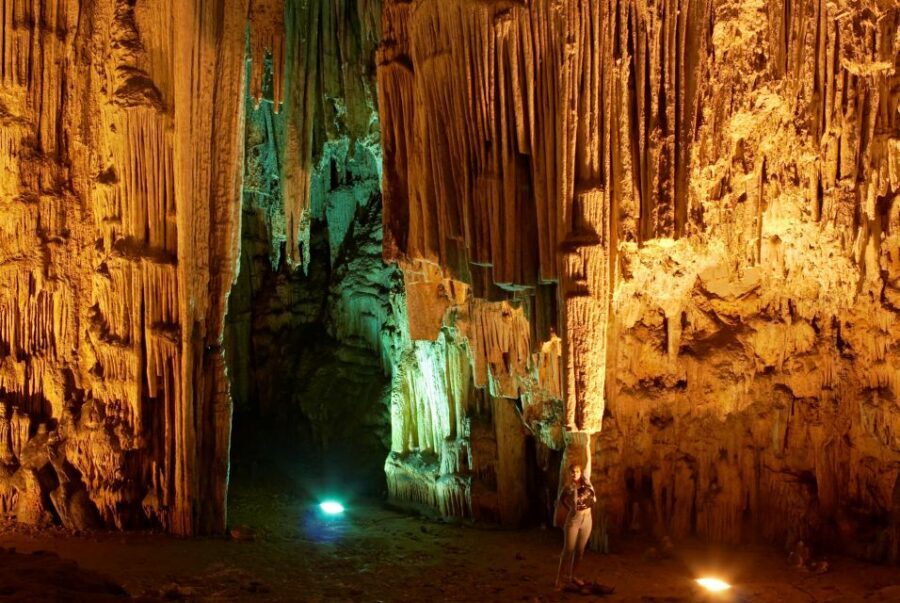
To close out the day, you head to Melidoni Cave, also known as Gerodospilios. This stop is priced in your imagination as “just a cave,” but the description gives it real weight: it’s a historic cave filled with stalactites and stalagmites, and it was used for religious ceremonies and worship.
The cave is noted as being at 220 meters altitude, and you’ll learn its archaeological and historical significance before heading back to Rethymno.
The Melidoni Cave entrance isn’t included either, and it costs about €3 per person. That’s small, but it’s still something to budget.
Caves can be hit-or-miss on tours when the group is rushed. Here, the cave is treated as a real educational end point—important for winding down after museums and workshops. By the time you’re underground, the day’s theme has turned toward ancient belief and human use of places, not just modern sightseeing.
Price and Value: What $40 Really Buys You
At $40 per person for a full-day guided program with transportation, this tour can be good value—especially if you’re staying near Rethymno and don’t want to piece together rides.
But let’s be clear about the extras. You should add entrance fees for:
- Arkadi Monastery: €3
- Museum of Ancient Eleftherna: €4
- Melidoni Cave: €3
That’s about €10 total in entrance costs, not counting anything you choose to buy during free time. When you consider those entrances would cost money anyway, the guiding and transport start to look like what you’re paying for.
Also, you’re paying for a day that includes both interpretation (history and archaeology) and participation elements (pottery opportunity and tasting). If you want a day where you learn and make a small memory, the structure is solid.
Guide Quality and Day-of Details That Matter
The tour is built around a live English guide, and that’s where the experience can really swing from “fine” to “great.” One guide named Nicolas received strong praise for being competent, passionate, and friendly. Another person noted the guide was polyglot and was able to provide the visit in French, which is a big plus if you’d rather understand everything than rely on English only.
That said, small operational issues can happen. One experience mentioned a toilet that couldn’t be used, and another noted air conditioning set too cold. There was also an instance where the guide seemed surprised about two little children on pick-up, despite prior confirmation—this is the kind of communication hiccup that can make the first 20 minutes feel stressful.
My advice: if you’re traveling with kids, bring any booking confirmations and be ready to show them at pick-up. If you’re sensitive to cold, wear a light layer in case the vehicle runs chilly.
These are not deal-breakers for everyone, but they’re good to factor in so you don’t expect everything to be perfect down to the AC setting.
Who This Tour Suits Best (And Who Might Want a Different Day)
This tour fits best if you want:
- history and culture without driving,
- a monastery visit plus an archaeological museum in one day,
- a craft stop in Margarites (pottery),
- and a local food tradition lesson through olive oil tasting.
It’s also a good match if you enjoy “structured wandering.” You get guided context, then a bit of free time for lunch and casual exploring.
If you’re the type who needs guaranteed hands-on pottery, don’t book on blind faith. The tour description points toward you making ceramics, but at least one experience suggests you may get a demonstration instead. In that case, confirm the session type when you reserve.
If you’re mainly looking for a dramatic cave walk with a lot of uninterrupted time, this tour still includes the cave, but it’s one stop among several. You’ll likely appreciate it more if you like variety and learning.
Should You Book This Cretan Culture and Pottery Day?
Book it if you want a well-rounded Crete day that combines Arkadi’s museum-driven storytelling, Eleftherna’s large timeline, a Margarites craft visit, olive oil tasting, and the Melidoni Cave experience. The $40 price becomes even more attractive once you remember transportation and guidance are included.
Don’t book this (or at least double-check) if:
- hands-on pottery is your top priority, because the day’s workshop format can shift,
- you’re expecting the olive oil facility to run machines visibly the whole time,
- or you prefer longer time at one site over a packed “see many places” schedule.
If you’re on the fence, here’s the simple decision test: if you’d enjoy learning in multiple ways (museums + making + tasting + cave), you’ll probably love the structure. If you want one deep, uninterrupted experience, pick a different style of tour.
FAQ
What’s included in the tour price?
The tour includes a guided tour, transportation, an opportunity related to pottery (creating a ceramic), and an olive oil tasting.
Are entrance fees included for the main sites?
No. You’ll need to pay entrance fees for Arkadi Monastery (€3 per person), Museum of Ancient Eleftherna (€4 per person), and Melidoni Cave (€3 per person).
Will I make pottery during the workshop?
The tour description says you’ll get the chance to create your own ceramic at the TSIKALARIO workshop. On some days, it may run more like a demonstration than a full hands-on session, so it’s worth confirming the format with the operator before you go.
Where does pick-up happen?
Pick-up is from your hotel or close to your hotel in Rethymno. Pick-up time and point are sent in your voucher one day before the tour.
What language is the guide?
The tour guide provides the experience in English.
Can I cancel and get a full refund?
Yes. There’s free cancellation up to 24 hours in advance for a full refund.