REVIEW · CRETE
Cooking experience in the most beautiful garden near Rethymno
Book on Viator →Operated by ECO EVENTS · Bookable on Viator
A wood-fired dinner starts with chopping, not waiting. In a beautiful garden near Rethymno, you’ll cook classic Cretan dishes with step-by-step help and then eat outdoors with raki and local wine. I’m drawn to how the class uses tools and ingredients you may not find at home, and how small-group hosting keeps things friendly and practical. The only real catch: it’s an outdoor-focused experience, so weather can affect comfort even though there’s covered shelter.
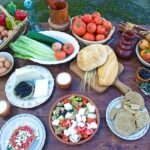
You can also look forward to a menu that’s more than a sampler. Expect homemade items like cheese, bread from a wooden oven, and crowd-pleasers such as ntakos-style dakos, tzatziki, gemista, and mizithropitakia with honey, finished with a proper lunch. One consideration: alcoholic drinks are free-flowing, so if you’re planning to drive afterward, you’ll want to stick to a simple plan (and use the included pickup if it applies to you).
In This Review
- Eco Events cooking in Pigi: why the garden matters
- What you pay and what you get for around $114
- Meet the small group hosts (Maria, Rebecca, and Michael)
- The pre-cooking flow in the garden near Rethymno
- Your Cretan menu: what you’ll cook in the wood oven
- Starters: dakos-style dakos or koukouvagia, plus bread
- Gemista: stuffed vegetables with the right kind of patience
- Mizithropitakia with honey
- Chicken with red sauce, plus potatoes
- Tzatziki: the cool counterpoint
- What “learned recipes” means here
- Lunch outdoors: raki, wine, and what to expect at the table
- Timing, group size, and what to bring
- Who this cooking class suits best
- The biggest drawbacks to think about before booking
- Should you book this Cretan garden cooking class?
- FAQ
- How long is the cooking class?
- What time does it start?
- Where do we meet?
- Is this class in English?
- Is lunch included?
- Are drinks included?
- What is the maximum group size?
- What if the weather is bad?
- Can I cancel for a full refund?
Eco Events cooking in Pigi: why the garden matters

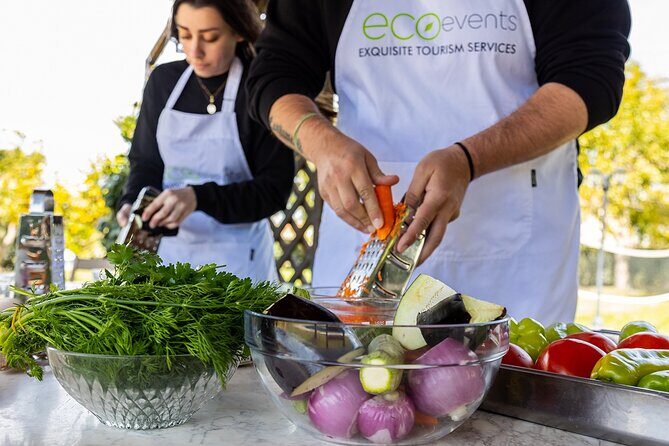
This isn’t a stuffy “watch and copy” cooking class. You start in the village of Pigi, near Rethymno, in a spacious garden where food, herbs, and downtime all share the same space. As you arrive, you get time to settle in, get to know the group, and even wander through the vegetable and herbs garden area. There’s also a swimming pool on-site, so if you want to cool off before or after cooking, bring a swimsuit.
That garden setting changes the feel of the evening. You’re not rushing across town, you’re not fighting parking, and you’re not searching for a meeting point. The vibe is more like being invited to cook at someone’s Cretan home, with the kitchen work done right there in front of you.
What you pay and what you get for around $114
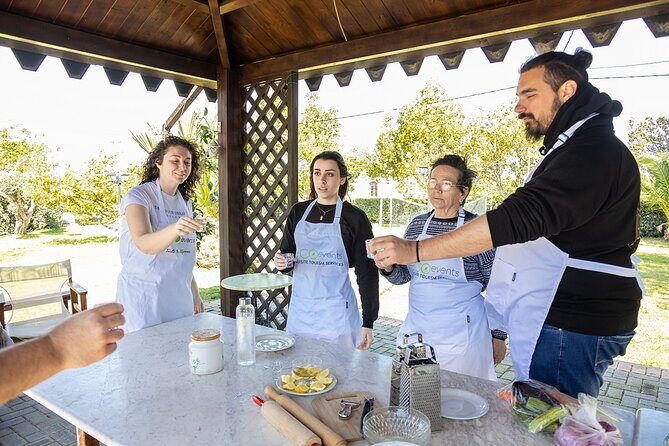
At about $114.02 per person for roughly 4 hours, you’re paying for three things that add up fast if you tried to recreate it on your own: instruction, ingredients, and a full meal you actually cook and eat. You also get apron and cooking utensils, plus all taxes and handling charges.
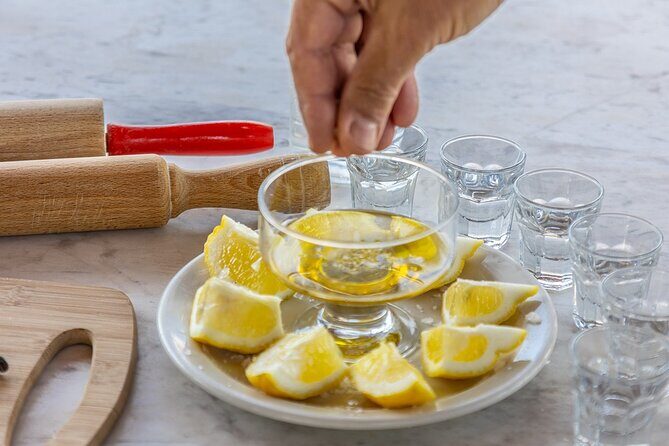
The drinks are part of the value too. There’s lots of raki and local wine during the meal, which turns the class into a full evening experience rather than a quick bite with a lesson attached. If you love Greek food and wine, this format makes sense: you learn, you cook, and then you taste everything you made in the same setting.
A note on “included” vs “extra.” If you need help getting from Rethymno to the meeting point, there may be an additional transfer charge. So before you book, check where your starting point will be and whether you’ll need that add-on.
You can also read our reviews of more cooking classes in Crete

Meet the small group hosts (Maria, Rebecca, and Michael)
One of the strongest signals here is how personally guided the class feels. The activity runs with a maximum of 8 travelers, so you’re not stuck in a mass room where you can’t ask questions. In the happiest experiences, the guidance is shared among the team, including hosts like Maria and Rebecca, and support from people like Michael as a guide and sous-chef.
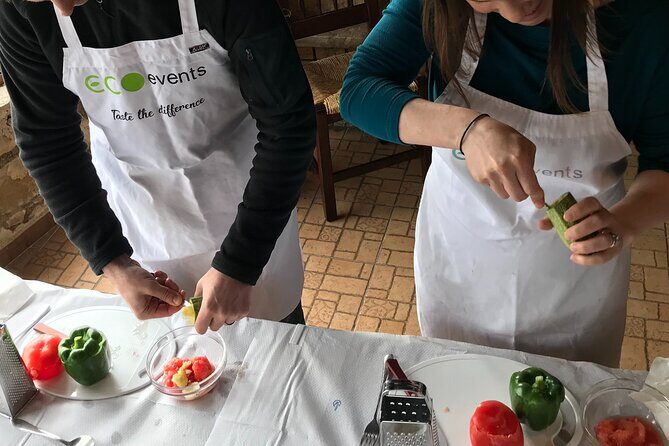
You’ll be put to work, but you’re not thrown into the deep end. The host dresses you with an apron and then moves through each recipe in a step-by-step way. If you’re cooking with others for the first time, this matters. It keeps the class from feeling intimidating and helps you pick up the logic behind what you’re doing, not just the final “recipe.”
Practical detail from real experience: if you have allergies, make sure you note them when booking. The hosting team can be accommodating when allergies are included in advance.
The pre-cooking flow in the garden near Rethymno
Your start time is 5:00 pm, and you’ll meet at Euphoria Homes in the village of Pigi (Epar.Od. Platanon-Moni Arkadiou, Pigi 741 50, Greece). From there, you’ll settle into the property and start with a relaxed welcome.
A typical rhythm goes like this:
- Get to know your group while you’re in the garden setting
- Browse the vegetable and herbs area if you want to see what’s being used or referenced in the meal
- If you’re cooling off, take advantage of the pool (bring your swimsuit)
- Once you’re ready, the host pulls you into kitchen work and outfits you with an apron
This “settle in first” timing is a big quality-of-life feature. You’re not arriving hungry and frantic. You can arrive, breathe, and then cook like you’re part of the process—not a spectator.
Weather tip from the way the class is set up: even when it’s chilly or rainy, the cooking happens outdoors with covered shelter. Still, I recommend dressing in layers. If you show up underdressed, there’s no guarantee you’ll have the right gear, so plan for cool evening air.
Your Cretan menu: what you’ll cook in the wood oven
The heart of the evening is the wood-fired cooking. A wood oven is hot and ready, and it changes how bread and savory dishes come out. You’re not just mixing ingredients; you’re learning how Cretan cooking relies on technique, heat, and timing.
Here’s a clear look at the menu you’ll build and taste:
Starters: dakos-style dakos or koukouvagia, plus bread
You’ll make a starter based on dakos (or a similar option like koukouvagia). Think of it as a Cretan flavor stack: tomatoes, xinomyzithra cheese (a tangy cheese), and an option to use a mixture of feta and anthotyros. Oregano flavors it all, which is what gives the starter that instantly “Greek” smell.
You’ll also get bread into the mix. The idea is simple and fun: create your own bread, then let the wooden oven do its job. If you’ve only ever baked bread at home in a regular oven, the wood oven is a real difference. It’s the kind of hands-on technique that makes the class feel worth the money.






Gemista: stuffed vegetables with the right kind of patience
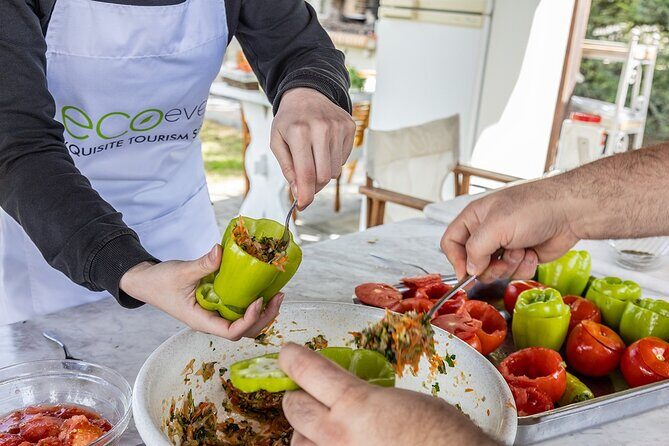
For the main, gemista is on the menu: traditional Greek stuffed vegetables. This is one of the dishes that rewards careful stuffing and a steady bake. You get juicy filling and fresh flavors, and you’ll see how the stuffing technique affects the final bite.
Mizithropitakia with honey
A second main or additional dish includes mizithropitakia. These are made with sweet mizithra cheese and served with honey. The pairing is classic: the cheese brings richness, and the honey adds contrast. It’s a dish that makes sense in a cooking class because it’s both “cookable” and very Cretan in flavor.
Chicken with red sauce, plus potatoes
Another main option is chicken with red sauce and potatoes. This gives you a heartier course and a chance to practice how Greek red sauces behave—thicker than you might expect, built for spooning, and designed to cling to the potatoes and chicken.
Tzatziki: the cool counterpoint
Finally, you’ll make tzatziki, the familiar garlic-yogurt-and-cucumber sauce. Even if you think you know it, the class approach helps you understand balance: how garlicky to go, how cucumber texture changes the sauce, and how to time it so it tastes fresh instead of flat.
What “learned recipes” means here
You won’t just get a list of instructions. You’re guided through each dish, and you’ll cook enough that you can actually recreate it later. That’s the main reason these classes are worth doing in Greece rather than waiting until you’re home with supermarket substitutions.
Lunch outdoors: raki, wine, and what to expect at the table
Once dishes are prepared, lunch follows, and it’s served outdoors in that garden setting. This is where the experience turns into a proper meal, not an activity that ends once the cooking finishes.
You’ll taste everything you made, and it comes with a glass of raki and local wine. Raki is part of the Cretan identity, and it fits naturally here because you’re sharing food you cooked together. It also makes the timeline feel less like a workshop and more like a real evening out.
Because alcohol is free-flowing, it’s smart to plan to relax afterward. If you’re booking as a couple, a family, or a group of friends, it can be a highlight. But if you’re the type who has to stay sharp for later activities, consider pacing your drinks.
Timing, group size, and what to bring
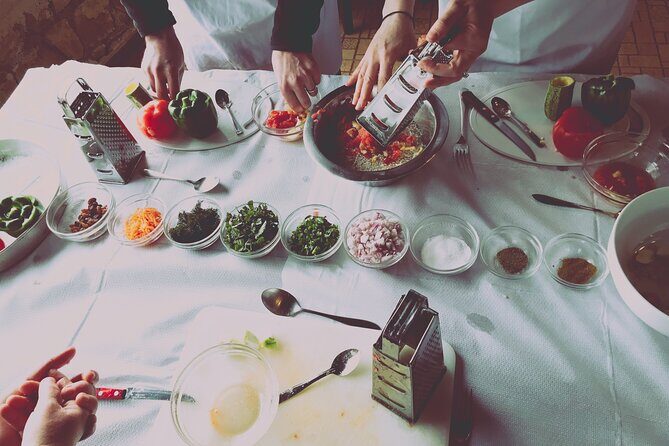
Start time is 5:00 pm and the class runs about 4 hours. With this schedule, it fits well between afternoon beach time and a late dinner. You also get a bit of daylight for the garden portions, which helps the whole evening feel more pleasant.
Group size is capped at 8 travelers, and many experiences run on the smaller side, which makes the class feel more personal. You’ll likely spend more time at the workstations and have more chances to ask questions.
Bring:
- A swimsuit if you want to use the pool
- Layers for cool or rainy evenings
- Any allergy information you have clearly stated when you book
- A light appetite at the start, because once you cook, you’ll want to taste everything you made
If you’re sensitive to sound or crowds, a small group is a plus. If you’re hard of hearing or need extra clarity, it helps to know the tour is offered in English, so you can ask questions in your language.
Who this cooking class suits best
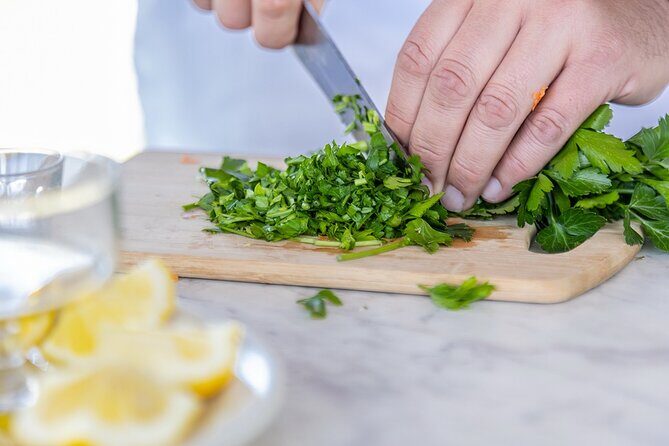
This is a great fit if:
- You love Greek food and wine and want to cook it, not just eat it
- You want to use kitchen tools and ingredients that feel more “Crete” than “home cook approximation”
- You’re traveling with food lovers, families, or a small group who likes hands-on activities
- You want a relaxed evening in a beautiful garden near Rethymno
It’s less ideal if:
- You dislike outdoor or semi-outdoor settings, even with covered space
- You’re looking for a long, sightseeing-focused day
- You’re not comfortable with alcohol during the meal (since raki and wine are part of the experience)
The biggest drawbacks to think about before booking

No experience is perfect, so here are the only caution flags worth taking seriously:
- Weather can affect how comfortable it feels outdoors, even though there’s covered shelter.
- The meal is extensive. You’ll likely leave full, and alcohol adds to the evening’s relaxed pace.
- If you’re staying in a different area than the standard meeting point setup, you may face an extra transfer charge from Rethymno to the meeting point.
If those aren’t dealbreakers for you, the rest is a pretty strong package.
Should you book this Cretan garden cooking class?
Yes, if you want an evening that mixes real cooking with real food culture. This kind of class is especially valuable in Crete because the wood oven, the local ingredient choices, and the hands-on technique are hard to replicate exactly later.
Book it sooner rather than later if you can. Demand tends to be steady, and the class keeps a small number of people, which is part of why it feels so friendly.
If you want a memorable, practical experience—where you cook, taste, and leave with leftovers—this is one of the best ways to spend a few hours near Rethymno.
FAQ
How long is the cooking class?
It runs for about 4 hours.
What time does it start?
The start time is 5:00 pm.
Where do we meet?
You start at Euphoria Homes (Epar.Od. Platanon-Moni Arkadiou, Pigi 741 50, Greece). The activity ends back at the meeting point.
Is this class in English?
Yes. The experience is offered in English (and French speaking options are also mentioned).
Is lunch included?
Yes. You get full lunch as part of the cooking lesson, and vegetarian options are included.
Are drinks included?
Yes. There are lots of raki and local wine included with your meal.
What is the maximum group size?
The class has a maximum of 8 travelers.
What if the weather is bad?
The experience requires good weather. If it’s canceled due to poor weather, you’ll be offered a different date or a full refund.
Can I cancel for a full refund?
You can cancel up to 24 hours in advance for a full refund. If you cancel less than 24 hours before the start time, you won’t get your money back.