REVIEW · CRETE
Chania Exploration Segway Tour
Book on GetYourGuide →Operated by CHANIA SEGWAY TOURS · Bookable on GetYourGuide
Segways make Chania feel like a movie set. In two hours, this small-group ride strings together Old City alleys, the Venetian harbor, and the waterfront districts east to west at a pace that feels fun, not rushed. You get a real local guide, plus an audio system that keeps the background info rolling while you focus on driving.
I like that you start with helmets and headsets, then get hands-on safety training and practice before you go. I also really like that guides like Betty tend to slow things down when someone feels unsure, so you can get comfortable fast and actually enjoy the ride.
One thing to consider: you are paying for a very short window, and some of that time can go toward training and practice. If you are the type who wants a longer, deeper walking experience, you may find 2 hours is tight.
In This Review
- Key things to know before you ride
- Why this Chania Segway route works so well in 2 hours
- Safety briefing, helmet fit, and the comfort factor
- Entering the Old City by Segway: the narrow-alley reality
- West-to-east overview: Venetian harbor to Old City lanes
- Nea Chora beach and the small-port feel
- Splantzia: when the Ottoman-era district shows up
- Kum Kapi and the east Venetian walls: more than a view
- Audio guide support: history without drowning you in facts
- The local guide factor: tips, pace control, and nerves management
- Timing and the real 2-hour expectation
- What to bring (and what to leave behind)
- Price value at $93: what you’re paying for
- Who this tour is best for
- Should you book the Chania Exploration Segway Tour?
- FAQ
- How long is the Chania Exploration Segway Tour?
- How much does the tour cost?
- What’s included in the price?
- Where do I need to check in and what ID do I need?
- What areas of Chania does the tour cover?
- What languages are available for the audio guide?
- Is this tour limited to small groups?
- What restrictions should I know about?
Key things to know before you ride
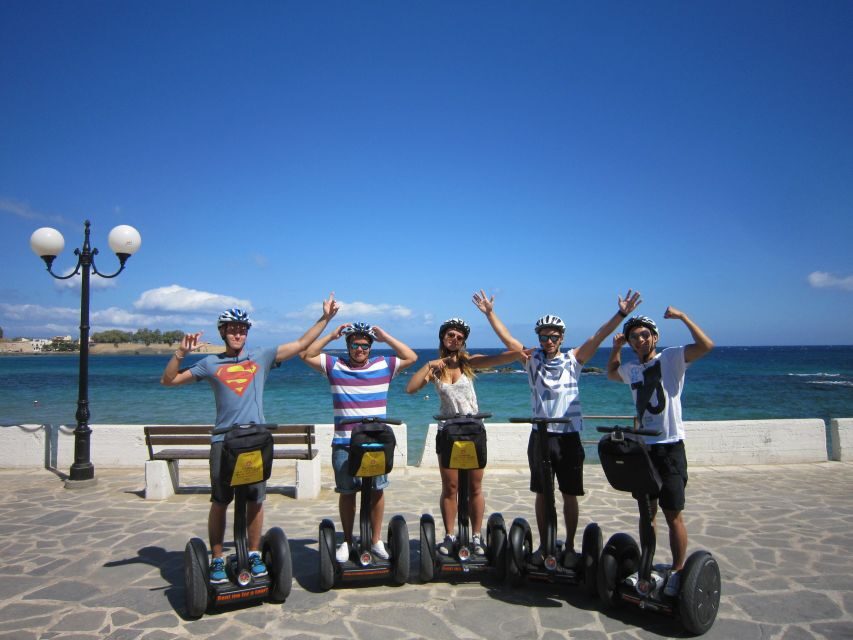
- Two-hour old-town route: west-to-east coverage linking Old City, harbor, Nea Chora, Splantzia, and Kum Kapi
- Small group size (max 6): easier attention when you’re learning the Segway
- Safety first: helmet/headset, short training, then practice so you feel steady
- Audio history in many languages: English, Greek, German, French, Russian, Spanish, Italian, Norwegian
- Tour leader local tips: you’re not just watching sights, you’re learning how locals see them
Why this Chania Segway route works so well in 2 hours
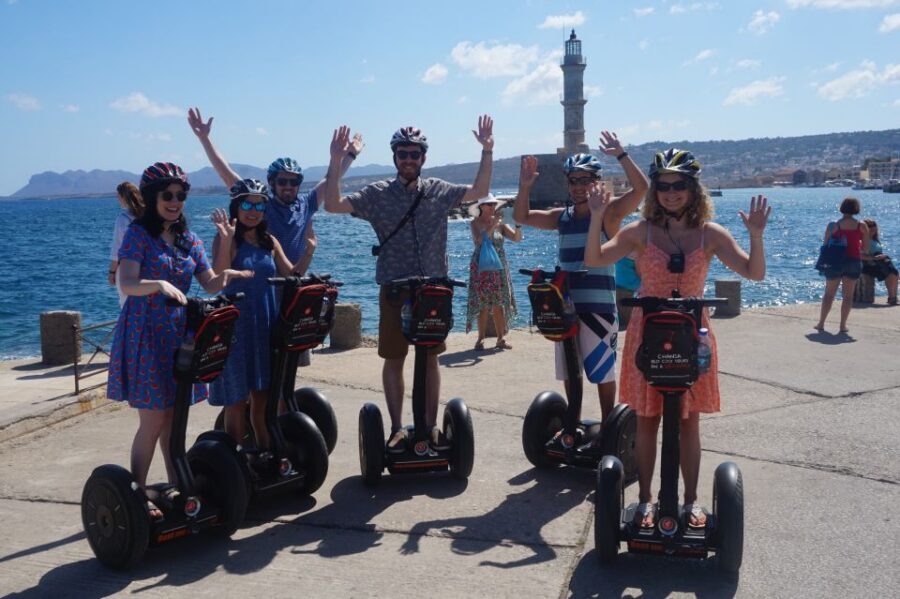
Chania Old City is the kind of place where you can easily spend a whole day just wandering. The problem is that wandering means you also miss the big connections: where the Venetian influence shows up, how the waterfront changes neighborhood by neighborhood, and what places like Splantzia and Kum Kapi actually refer to.
This tour keeps the focus on movement with purpose. You’re guided through the Old City from one end to the other, then out toward the harbor and east-side areas. The Segway changes the math: you cover more ground than a walking-only tour, without feeling like you’re stuck on a bus schedule. And because it’s built for small groups, the pace stays relaxed instead of turning into a traffic jam of helmets and sunglasses.
You can also read our reviews of more tours and experiences in Crete.



Safety briefing, helmet fit, and the comfort factor
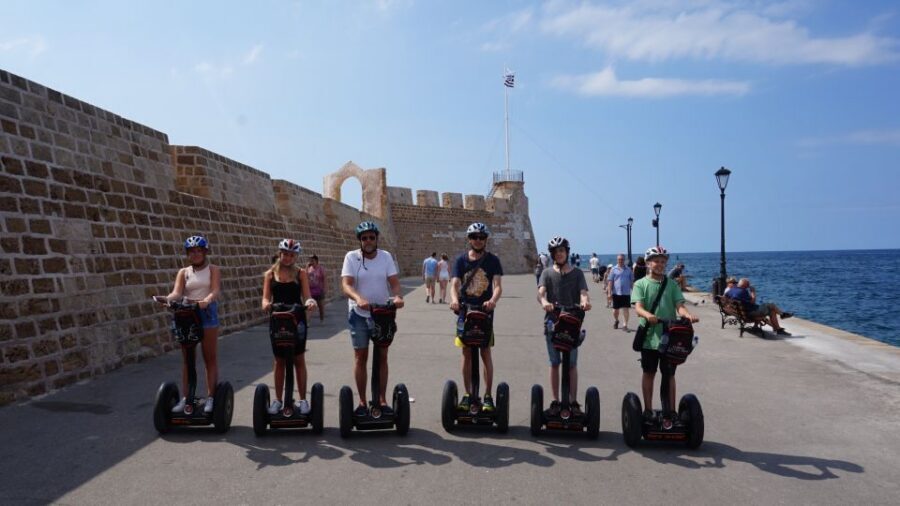
Before you ever touch the Segway, you get the gear: a helmet and a headset. Then the guide runs a short safety training session and has you practice so you can drive with confidence. That practice time matters, especially on cobbled streets and in narrow lanes where you’ll want smooth starts and steady turns.
Group size is capped at 6 participants, which is a big deal when you’re learning. With fewer people, the guide can watch your balance, coach your posture, and handle the little issues that pop up when someone is new to two-wheeled electric vehicles.
If you’re a bit nervous, this is one of the reasons I’d feel comfortable recommending it. One guide named Betty is specifically noted as patient and good at calming fears, which is exactly what you want when you’re learning something physical on a sightseeing schedule.
Entering the Old City by Segway: the narrow-alley reality

Chania’s Old City is all tight lanes and sudden openings to the sea. That’s where a Segway can be both great and slightly challenging. Great, because you’re not walking every step uphill and across irregular paving. Slightly challenging, because you need attention when lanes squeeze down or when you approach a corner.
That’s also why the training and practice matter. You’re not thrown into the thick of it right away. You get time to feel how the Segway responds before you start picking through the Old City’s smaller corridors.
Once you’re rolling, the tour leader becomes your filter. Instead of you trying to decode which street is which, the guide points you toward the “why” behind the views: how the harbor shaped the city, how Ottoman-era districts show up in place names, and where you can pause for a look without losing the group.
West-to-east overview: Venetian harbor to Old City lanes

The tour is designed to cover a broad sweep: starting from the west side of the Venetian harbor and moving toward the east side. That east-to-west logic is useful because Chania’s story isn’t limited to one pretty postcard spot. It unfolds across districts, and the harbor acts like the spine.
From the west-side harbor area, you’ll get your first big taste of Chania’s waterfront atmosphere. Expect you’ll be able to see the Old City from angles that are hard to reach on foot. It’s also where the Segway helps most: you can keep your momentum while you shift your attention between the water, the architecture, and the street-level life.
Practical note: the Old City office location has no parking allowed nearby, so plan where you’ll park before you go. Build in extra time for that, because the tour expects everyone to be ready.
Nea Chora beach and the small-port feel
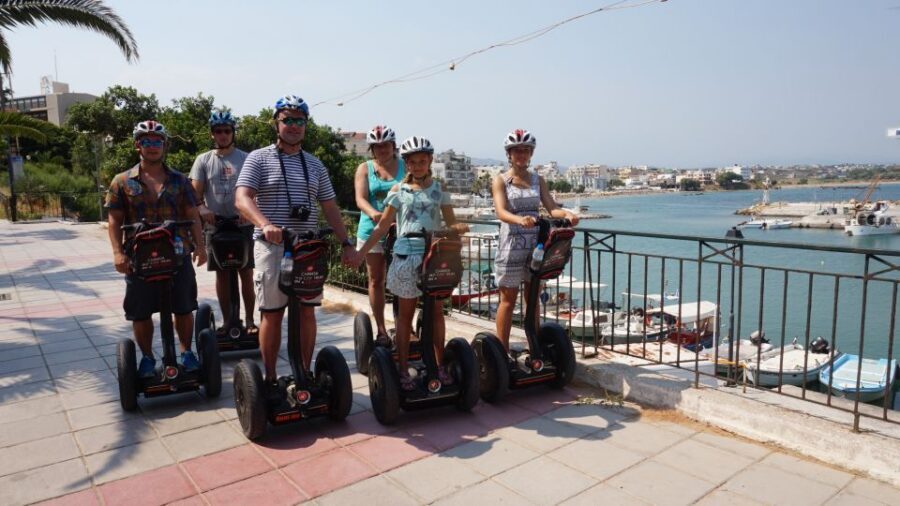
As you move along the route, Nea Chora comes into the picture. This is the part where the ride shifts from tight historic lanes toward a more open waterfront mood. You’ll get a chance to see Nea Chora’s sandy beach setting and a nearby small port vibe with traditional taverns along the waterfront.
What I like about including Nea Chora is that it balances the architecture-heavy sections. Even if you don’t stop for a swim, you get a sense of how locals and visitors experience Chania when they’re not inside museums or alleyways. The beach area also gives your body a breather after the concentration of driving through the Old City’s narrower turns.
One drawback to keep in mind: it’s still a 2-hour tour, so you won’t get a long, dedicated beach afternoon. Think of Nea Chora as a taste of the neighborhood, not a full day at the shore.






Splantzia: when the Ottoman-era district shows up

Splantzia is another key stop, and it helps the tour feel more than just scenic. This area is tied to the Turkish district of Chania, and that context changes how you read the streets. When the guide gives you local customs and useful tips, those small bits make the place names feel real instead of historical trivia.
On a Segway, Splantzia works because you can move past the lane structure quickly while still being in the right atmosphere. You’re not standing in one spot trying to guess what’s around the corner. You’re gliding along the network so the district pattern makes sense.
If you enjoy city texture—how neighborhoods transition, how waterfront and Old City overlap—this is one of the moments where the ride earns its value.
Kum Kapi and the east Venetian walls: more than a view
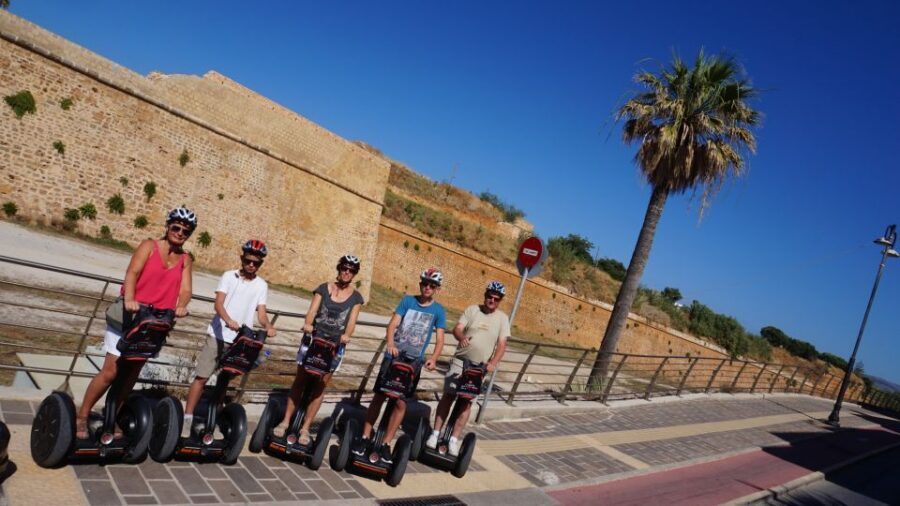
On the east side, you reach the exterior of the east Venetian walls and the Kum Kapi area. Kum Kapi is described as a place that historically housed North African slaves, and you may even hear the Turkish place-name reference Kum Kapisi. That’s heavier context than most “harbor tour” descriptions, and it’s exactly the kind of detail that can be useful when you’re trying to understand what you’re looking at.
What’s practical here is the combination: you get a structural city sight (the Venetian walls) plus a district narrative (Kum Kapi). The Segway doesn’t just hand you a pretty photo angle; it gives you a way to connect one section of Chania to another section of the harbor-city system.
You’ll likely use the audio guide for some of the background while the leader focuses on what you should notice in the moment. That split helps: audio covers history, the guide covers local meaning and little tips you wouldn’t find from signs alone.
Audio guide support: history without drowning you in facts
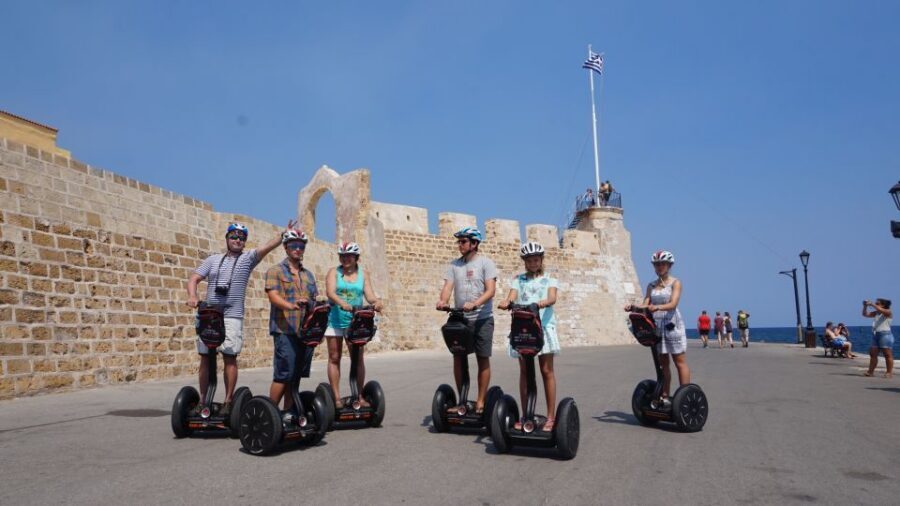
The tour includes an audio guide system with multiple language options: English, Greek, German, French, Russian, Spanish, Italian, and Norwegian. That means you can get historical information without the guide needing to stop the flow every time.
In practice, the audio support is helpful when you want context but you still want to keep moving. You can shift your attention: listen when you’re waiting for a safe spot to merge or pause, then turn it down when you’re focusing on driving and snapping photos.
One caution from real-world experiences: audio can feel more like a short update than a long lecture. If you’re the type who wants deep storytelling every minute, you’ll want to lean on the guide for the extra details and ask questions during brief stops.
The local guide factor: tips, pace control, and nerves management
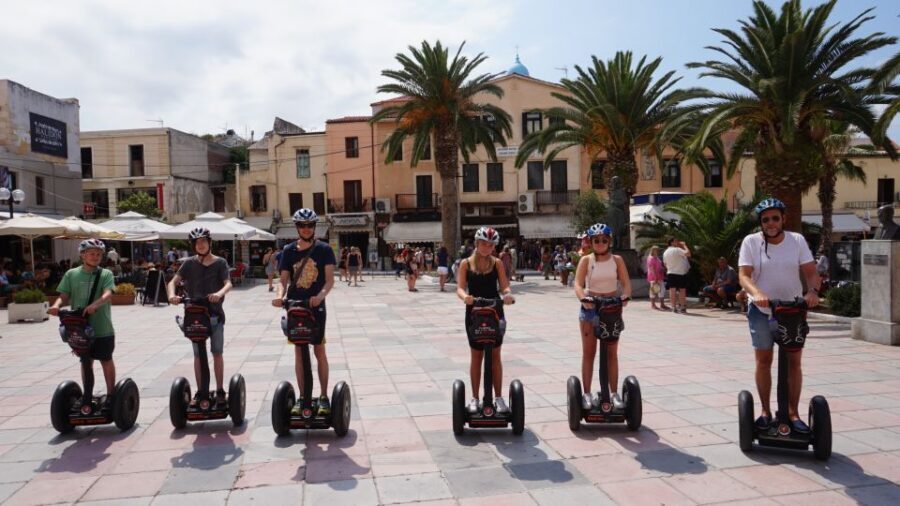
This is where the tour often wins points. You aren’t only following a route; you’re traveling with a tour leader who shares local customs and useful tips. That can mean advice about how to navigate Chania afterward, what to look for if you continue exploring on your own, and how to interpret what you’re seeing in the Old City.
Betty is one name you’ll hear in the feedback, and she’s described as patient—especially with people who feel apprehensive. That matters more than it sounds. A Segway isn’t just transportation; it’s a confidence game at first. When the guide is good at pacing the learning curve, the tour feels relaxed instead of stressful.
Timing and the real 2-hour expectation
The advertised duration is 2 hours. In real life, that window can shrink a bit depending on how long the group needs for instruction and practice. You should treat the tour as a 2-hour block that includes safety teaching, not just a pure sightseeing sprint.
That’s not automatically bad. The training is part of what makes the tour enjoyable and safer. But it does mean you shouldn’t schedule a tight dinner reservation right after, unless you build in buffer time.
Also remember the tour has a strict expectation: you must arrive at least 15 minutes early. Late arrivals can lose the tour without a refund, so if you’re trying to squeeze this between other plans, make sure you’re not gambling with time.
What to bring (and what to leave behind)
Keep it simple. Bring your passport or ID card for check-in at the Old City office. Wear shoes that work for steering and stable balance. High-heeled shoes are not allowed.
The tour also prohibits backpacks and smoking, plus alcohol and drugs. That’s standard safety-and-comfort thinking: a backpack can interfere with balance and handling, and the rest is about staying in control while riding.
If you need to carry essentials, pack them in a way that won’t create bulk—though the tour data doesn’t give a specific alternative bag policy, so use light, minimal carry.
Price value at $93: what you’re paying for
$93 per person for 2 hours isn’t cheap, especially compared with a regular walking tour. But you are paying for a few things that add up:
- Segway PT rental included
- Helmet and headset included
- A tour leader actively guiding the ride
- Small group size limiting how many people the guide must manage
- Audio guide layered into the sightseeing
The value logic is: you pay more than walking because you get speed, less physical strain, and broader coverage across multiple districts. If your priority is seeing both the harbor and the Old City’s internal lanes without spending your legs all day, this pricing can start to make sense.
The main price-related caution is that time is tight. If your personal preference is longer stops, extended beach time, or lots of off-the-road exploration, then you might feel the cost doesn’t match what you get. One experience noted the tour can run closer to 1.5 hours depending on training needs, which is the kind of detail that matters for your expectations.
Who this tour is best for
This Segway experience fits best if you:
- want to cover more of Chania in less time than walking
- enjoy practical city touring with local context, not just viewpoints
- are comfortable following basic driving guidance
- like the idea of a small-group setup with lots of attention
It’s not for everyone. It’s not suitable for pregnant women, and there are weight limits: people over 264 lbs (120 kg) and people under 66 lbs (30 kg) shouldn’t join. If you’re unsure whether it fits you physically, it’s worth checking those limits before booking.
Should you book the Chania Exploration Segway Tour?
Book this tour if you want a fun, low-effort way to connect Old City and harbor districts in a tight timeframe. The mix of Old City lanes, Venetian harbor views, Nea Chora, Splantzia, and Kum Kapi gives you a broader Chania picture than you’d likely stitch together on your own in one afternoon.
Skip—or at least reconsider—if your ideal tour is long stops, lots of walking, or deep storytelling all day. The time limit is real, and training time can affect how long you spend moving street-to-street.
If you’re excited by the idea of learning a Segway and getting local guidance from someone like Betty, and you can commit to arriving early, this is a strong way to kick off Chania sightseeing with momentum.
FAQ
How long is the Chania Exploration Segway Tour?
The tour lasts 2 hours.
How much does the tour cost?
It costs $93 per person.
What’s included in the price?
You get a Segway PT, a helmet, a headset, a bottle of water, and a tour leader.
Where do I need to check in and what ID do I need?
The meeting point is an office in the Old City, and you need to bring an ID (driving license or passport).
What areas of Chania does the tour cover?
You’ll visit parts of the Old City including areas like the Venetian harbor, Nea Chora, Kum Kapi, and the Splantzia area, moving from the west side toward the east side.
What languages are available for the audio guide?
The audio guide is available in English, Greek, German, French, Russian, Spanish, Italian, and Norwegian.
Is this tour limited to small groups?
Yes. It is a small group limited to 6 participants.
What restrictions should I know about?
The tour does not allow high-heeled shoes, smoking, backpacks, or alcohol and drugs. It also is not suitable for pregnant women, and there are weight limits (not for people over 264 lbs / 120 kg or under 66 lbs / 30 kg).